Civil Defence in India: Importance, Mock Drills & Legal Compliance You Must Know
Civil Defence in India

Anuj Anand Malik
Reviewed by AMA Legal Solutions
Civil Defence in India has become an increasingly vital component of national resilience in the face of natural calamities, wars, and terrorist threats. With the growing frequency of climate-induced disasters and geopolitical unrest, understanding the structure, purpose, and legal aspects of civil defence has never been more critical.
According to the National Disaster Management Authority (NDMA), over 68% of Indian territory is vulnerable to drought, 60% to earthquakes, and over 12% to floods and cyclones. Civil defence mechanisms offer frontline support in such crises, empowering communities through preparedness and rapid response.
This guide explains everything you need to know about Civil Defence in India, including mock drills, legal compliance, and the essential role of legal advisors in ensuring these drills meet statutory norms.
What is Civil Defence in India?
Civil Defence in India refers to organized measures for the protection of life and property during hostile attacks, natural disasters, and emergency situations. It includes both preventive and responsive strategies aimed at minimizing the damage and chaos during unforeseen events.
As per the Civil Defence Act, India, the main duties include:
Protection of civilians from the dangers of war and disasters
Maintenance of vital services
Assisting the emergency services
Facilitating recovery and reconstruction
Key Statistics
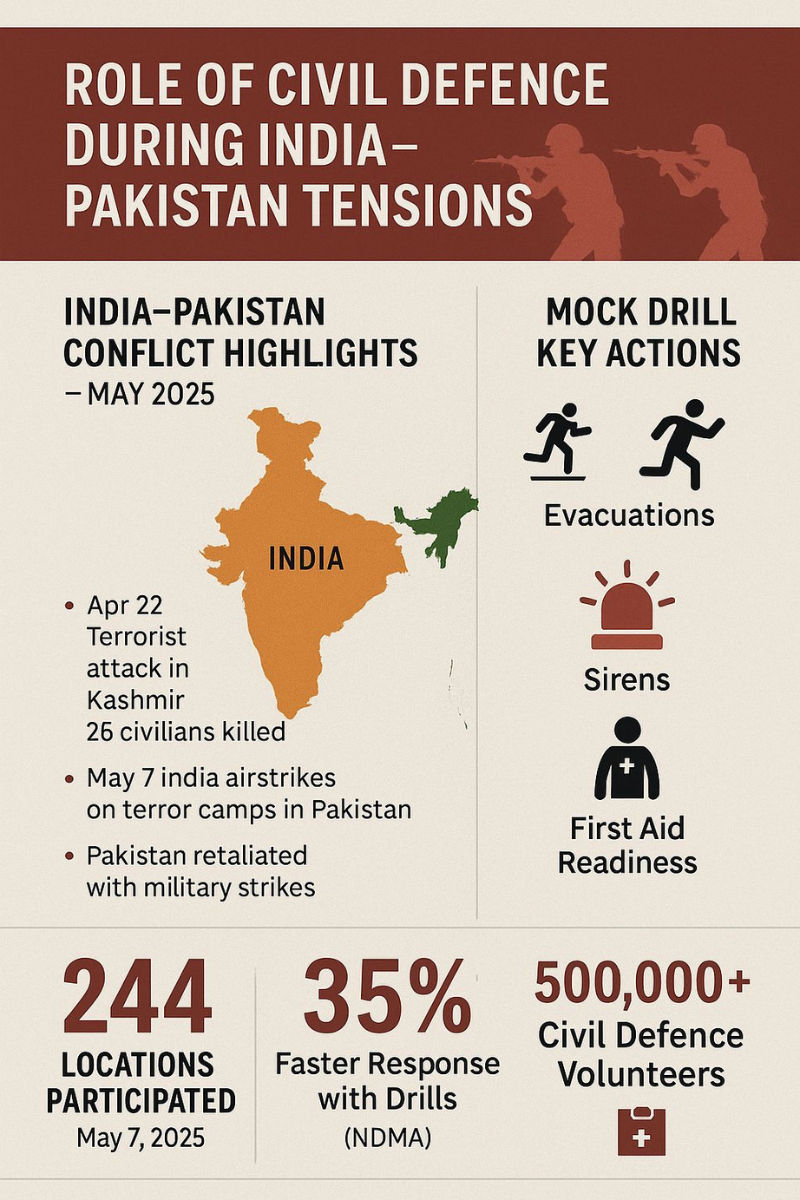
India has over 500,000 enrolled civil defence volunteers- Ministry of Home Affairs
Civil Defence was first officially recognized during World War II and continues to evolve in response to modern threats
Civil Defence Organisation in India
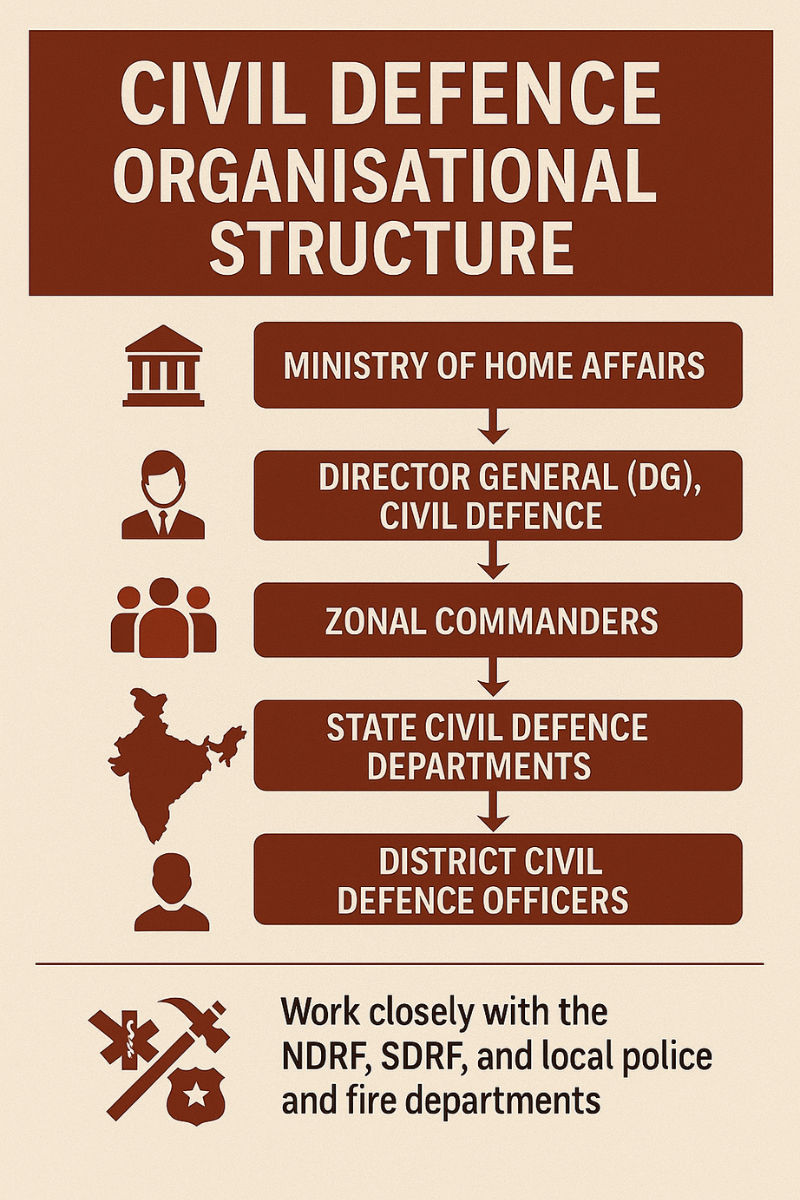
The civil defence organisation in India operates under the Ministry of Home Affairs. The organizational hierarchy includes:
Director General (DG), Civil Defence
Zonal Commanders
State Civil Defence Departments
District Civil Defence Officers
They work closely with the National Disaster Response Force (NDRF), State Disaster Response Forces (SDRF), and local police and fire departments.
What are Civil Defence Mock Drills?
Civil defence mock drills are simulated exercises designed to prepare volunteers, officials, and the general public for emergency response. These drills help assess preparedness and improve coordination among various emergency services.
Examples include:
Fire evacuation simulations
Earthquake response drills
Bomb threat simulations
Chemical leakage containment
Key Benefits:
Builds public confidence
Identifies gaps in existing protocols
Trains personnel and civilians alike
Legal Framework for Civil Defence Drills in India
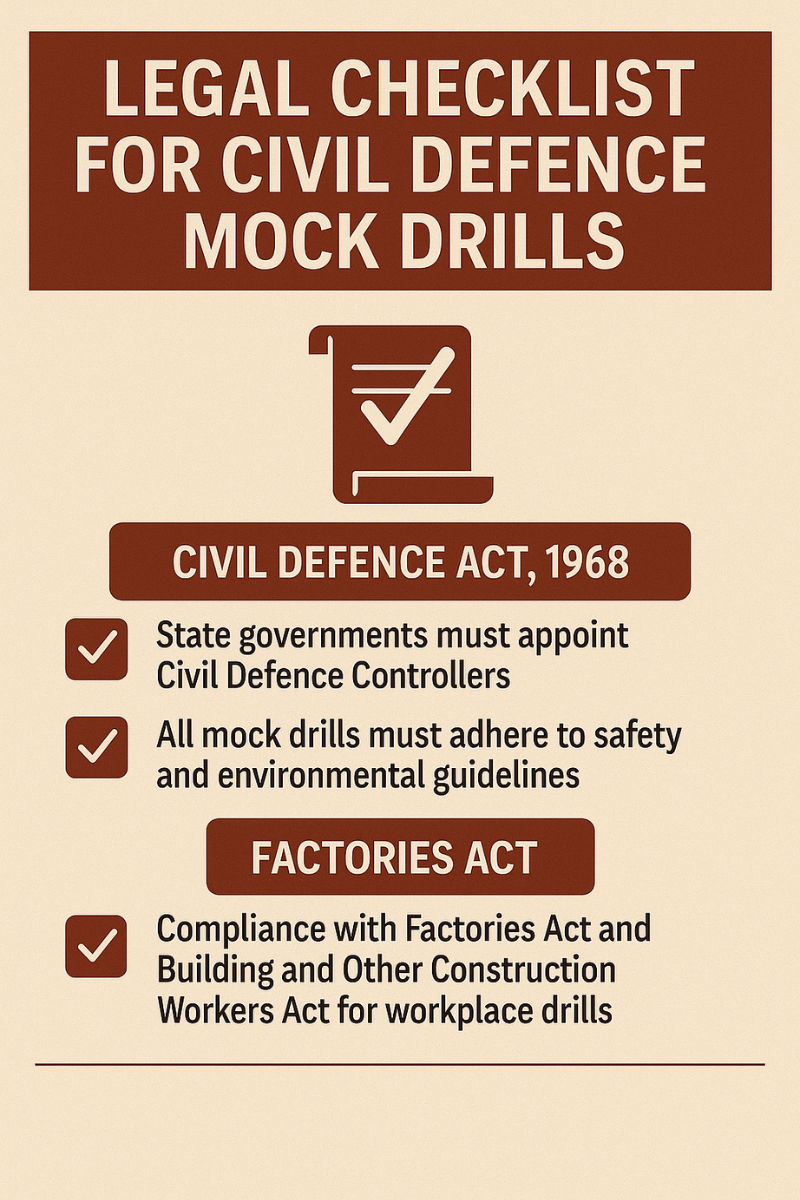
The Civil Defence Act, 1968, provides the legislative backing for civil defence activities. Important legal mandates include:
State governments must appoint Civil Defence Controllers
All mock drills must adhere to safety and environmental guidelines
Compliance with the Factories Act and the Building and Other Construction Workers Act for workplace drills
Why Civil Defence Drills Are Legally & Practically Essential
Mock drills are not just a formality. They are a legal necessity and practical lifesavers:
Legal Necessity:
Required under multiple Indian safety regulations
Mandatory for many industries and institutions
Practical Benefits:
Saves lives and reduces property loss
Prepares authorities for real-time execution
According to NDMA, mock drills improve response efficiency by 35% when done quarterly

Halt Recovery Agent Harassment Legally
Current India-Pakistan Conflict: A Snapshot
On April 22, 2025, a terrorist attack in Pahalgam, Kashmir, resulted in the deaths of 26 tourists. India attributed the attack to a Pakistan-backed group, leading to a series of retaliatory actions. On May 7, India launched "Operation Sindoor," targeting nine locations in Pakistan and Pakistan-administered Kashmir, including terror camps and hideouts of groups like Lashkar-e-Taiba and Jaish-e-Mohammed (Wikipedia).
In response, Pakistan initiated "Operation Bunyan Ul Marsoos," striking Indian military installations. The exchange has resulted in significant casualties on both sides and heightened the risk of further escalation (Al Jazeera).
Civil Defence's Role Amidst Rising Tensions
The current geopolitical climate has prompted India to bolster its civil defence strategies. Recognizing the potential threats to civilian areas, the Ministry of Home Affairs organized nationwide mock drills on May 7, 2025, under "Operation Abhyas." These drills aimed to prepare the populace for emergencies, including air raids and chemical attacks (Indian Express).
Key Features of the Drills:
Blackouts and Sirens: Simulated power outages and air raid sirens in cities like Delhi, Patna, and regions in Uttar Pradesh to mimic potential attack scenarios (Live Mint)
Evacuation Protocols: Training civilians on swift evacuation procedures and safe shelter practices
Coordination with Agencies: Involvement of local police, fire departments, and medical services to ensure a cohesive response
These drills not only test the readiness of emergency services but also educate the public on necessary precautions during crises.
Mock Drills in the Climate-Change & War-Risk Era
The growing threats of climate change, international conflict, and terrorism have made mock drills a frontline necessity.
Heatwaves and urban flooding in cities like Delhi and Mumbai show the need for timely evacuations
Border tensions with neighbouring countries make war-readiness crucial
Case Study:
In 2023, a coordinated civil defence drill in Uttarakhand helped evacuate over 3,000 residents during a flash flood warning, saving hundreds of lives.
Role of Legal Experts in Civil Defence
Legal experts ensure that all drills and civil defence activities comply with national and state laws. Their roles include:
Drafting legal SOPs (Standard Operating Procedures)
Ensuring statutory compliance
Risk assessment and liability management
Coordinating with government authorities for approvals
Steps to Conduct a Legally Compliant Civil Defence Mock Drill
Plan & Scope: Define objectives and identify risks
Get Legal Clearance: Involve legal advisors and get permits
Coordinate Teams: Involve police, fire, medical, and NDRF
Execute Drill: Conduct with observers and evaluators
Debrief & Report: Document outcomes and gaps
Revise Protocols: Update based on observations
Conclusion
Civil Defence in India plays a crucial role in safeguarding the lives and assets of citizens. With increasing environmental and geopolitical risks, both the government and private entities must prioritize civil defence mock drills, not just for legal compliance but for real safety.
As legal and civil experts work hand-in-hand, the goal should always be effective preparedness, minimum casualties, and public empowerment.
Final Stat:
Civil defence readiness has been linked to 40% faster response times in emergency zones (NDMA Report, 2024)
Need Strategic Legal Defense for Your Situation?
Our banking & litigation advocates review your notices, debt liability, and recovery issues under complete advocate-client secrecy.

AMA Legal Solutions
Trusted with a 4.7 Google Rating, over 10,000+ Clients Served, 25,000+ Cases Handled, and more than 40+ Years of Experience in providing strategic legal defense and debt resolution across India.
Our media coverages





Frequently Asked Questions
Related Articles
RuPay Credit Card on UPI Default & Credit Line on UPI Settlement (2026)
Micro-transactions on RuPay UPI Credit Cards and pre-approved 'Credit Lines on UPI' have triggered a massive wave of 42%+ APR revolving debt traps. Find out if defaulting blocks your personal savings UPI and how to settle RuPay UPI credit dues for 30%–50%.
Read Article
Paytm, PhonePe & BharatPe Daily EDI Merchant Loan Settlement (2026)
Drowning in Equated Daily Installment (EDI) merchant loans where 100% of your daily QR Soundbox collections are auto-swept before you can pay suppliers or rent? Learn how retail shopkeepers and MSMEs legally halt QR sweeps and negotiate a 50%+ OTS.
Read Article
Can Bank or Loan App Remotely Lock Phone for EMI Default? RBI Rules (2026)
An investigative breakdown of RBI's Remote Device Locking Directions—explaining why lenders cannot lock your phone for personal loans, the mandatory 30/60 DPD safeguards on financed devices, the Rs. 250/hour delay penalty, and how to settle device & app loans.
Read ArticleAbout Author
Anuj Anand Malik
View ProfileAnuj Anand Malik, Founder of AMA Legal Solutions, is a trusted advocate, loan settlement expert, legal advisor, and banking lawyer. With over a decade of experience in loan settlement, corporate law, financial disputes, and compliance, he leads a result-driven law firm based in India that helps individuals, startups, and businesses achieve legal and financial stability.
Connect on LinkedInNeed Legal Representation?
Evaluate your defense against recovery agents, notices, or structure your loan settlement directly with Senior Advocates.
Call +91-8700343611