
Debt settlement in India is a legally binding bilateral compromise contract executed under Section 63 of the Indian Contract Act, 1872 and the Reserve Bank of India (RBI) Prudential Framework for Resolution of Stressed Assets, wherein a lender formally agrees to accept a mutually negotiated discounted lump-sum payment to extinguish a borrower's outstanding debt obligation. The debt settlement mechanism completely discharges the borrower from active collection actions, halts third-party recovery agent harassment under the RBI Fair Practices Code, and mandates the withdrawal of pending Section 138 Negotiable Instruments Act or Section 25 Payment and Settlement Systems Act proceedings upon payment. Following the remittance of the sanctioned compromise amount directly to the lending institution's loan account, the lender issues an irrevocable, bank-sealed No Dues Certificate (NDC) that permanently terminates all legal claims against the borrower.
Note: A legal settlement is distinct from an internal bank write-off; debt settlement legally extinguishes liability, whereas write-offs maintain recovery rights until formally compromised.
Legal Meaning & Reserve Bank of India Framework for Debt Settlement
Many distressed Indian borrowers ask the foundational question: debt settlement kya hota hai? Under Indian jurisprudence, debt settlement is neither a loan default nor an informal evasion of liability. Rather, it is a formal, legally enforceable novation and compromise contract recognized by the highest monetary and judicial authorities in India. When a borrower faces insurmountable financial hardship—such as severe medical catastrophe, unexpected business liquidation, or sudden loss of primary livelihood—the borrower enters an acute debt trap where continuing routine EMIs is mathematically impossible.
The substantive legal backbone of debt settlement rests on three statutory pillars:
Section 63, Indian Contract Act
Codifies the doctrine of accord and satisfaction. Every promisee may dispense with or remit, wholly or in part, the performance of the promise made to him, or may accept instead of it any satisfaction which he thinks fit.
RBI Compromise Framework 2023
Circular DOR.STR.REC.20/21.04.048/2023-24 directs all scheduled commercial banks and NBFCs to maintain board-approved compromise policies empowering sanctioned authorities to approve genuine principal waivers.
Legal Services Authorities Act, 1987
Settlements formalized before a National Lok Adalat bench hold the statutory status of a final civil court decree under Section 21, barring all future appeals or recovery litigation by the creditor bank.
“Under Section 63 of the Indian Contract Act, 1872, the creditor has full statutory competence to accept a lesser sum in full satisfaction of a larger debt. Once such accord is executed and consideration is remitted, the original contract is completely superseded and extinguished.”
When executed under advocate guidance, debt settlement transforms an uncontrolled debt crisis into an orderly legal closing. Instead of enduring years of compounding penal charges, abusive recovery calls, and compounding civil suits, the borrower secures an institutional exit backed by verified banking seals and court compounding orders.
Why Free DIY Online Templates Fail & How Transparent Fixed Advisory Eliminates Corporate Retainers
When borrowers search for debt relief solutions online, they frequently encounter two dangerous commercial extremes: misleading automated “free DIY settlement templates” on the one hand, and traditional corporate law firms demanding exorbitant, open-ended billable hourly retainers on the other. Both approaches fail individual borrowers facing acute financial distress.
The Critical Pitfalls of Free Automated DIY Online Templates
Automated templates and generic draft letters downloaded from informal forums lack legal standing under the Advocates Act, 1961. Bank recovery managers and institutional compromise committees review hundreds of default accounts weekly; when they receive a copy-paste internet template, it is immediately discarded. More critically:
- Inadvertent Limitation Restart: Under Section 18 of the Limitation Act, 1963, any unqualified written acknowledgment of debt can reset the three-year limitation clock, giving the bank renewed rights to initiate civil recovery suits and asset attachments.
- Zero Courtroom Defense: Free online templates cannot appear before a Judicial Magistrate when the bank issues a criminal summons under Section 138 of the Negotiable Instruments Act or Section 25 of the Payment and Settlement Systems Act.
- No Privilege or Protection: Communications conducted via unregulated web portals or unauthorized agencies enjoy zero legal privilege, exposing sensitive personal income data directly to aggressive recovery agents.
The Corporate Law Firm Trap: Open-Ended Hourly Retainers
At the opposite extreme, traditional corporate law firms treat retail loan distress through the lens of large-scale commercial litigation. They impose multi-tier hourly billing schedules, recurring monthly retainers, and extra court appearance surcharges. For a borrower struggling to meet basic living costs, an open-ended corporate retainer adds legal insolvency on top of debt distress.
The AMA Legal Solutions Model: Transparent Fixed Legal Advisory
AMA Legal Solutions bridges this gap by providing institutional-grade advocate representation through a transparent fixed legal advisory model. Borrowers receive complete legal certainty: no hourly billing surprises, no recurring retainers, and no hidden markups. Every step—from initial forensic ledger audit to statutory cease-and-desist notices, compromise committee hearings, and No Dues Certificate authentication—is handled under a clear, single-engagement framework protected by statutory advocate-client privilege under Section 126 of the Indian Evidence Act, 1872.
| Key Evaluation Parameter | Free Online DIY Templates | Corporate Law Firm Retainers | AMA Legal Solutions (Advocate-Led) |
|---|---|---|---|
| Legal Standing & Representation | None; dismissed by banks | Full advocate standing | Direct High Court & DRT Advocate Counsel |
| Commercial Fee Structure | Zero upfront, severe hidden legal exposure | Unpredictable hourly billing & retainers | Transparent fixed legal advisory, zero hourly markups |
| Privilege & Data Protection | None; private portals leak data | Section 126 Evidence Act applies | Strict statutory advocate-client confidentiality |
| Section 138 & Section 25 Defense | Incapable of courtroom appearance | Covered at substantial extra billings | Comprehensive formal replies & compounding defense |
| RBI Anti-Harassment Notice | Ineffectual generic emails ignored | Standard legal notice | Immediate statutory cease-and-desist under Fair Practices Code |
| OTS Letter & NDC Authentication | Borrower vulnerable to fake letters | Document verification included | Multi-point forensic audit of bank seal, QR & ledger closure |
Eligible vs. Ineligible Debt Facilities Under the RBI Compromise Framework
Borrowers must understand which credit facilities qualify for compromise debt settlement under Reserve Bank of India prudential regulations. The RBI framework provides distinct resolution pathways for unsecured consumer loans versus secured asset-backed credit.
- Unsecured Personal Loans: Defaulted salary personal loans from public sector banks, private banks, and regulated NBFCs.
- Credit Card Outstanding Balances: Revolving credit balances, unmanageable finance charges, and over-limit penalties across commercial banks.
- Instant Digital App Loans: Micro-loans from RBI-registered NBFC apps facing recovery distress.
- Unsecured MSME & Business Loans: Clean business credit lines, vendor financing, and merchant cash advances without underlying real estate hypothecation.
- Consolidated Consumer Credit: Multiple fragmented unsecured liabilities merged into an institutional compromise agenda.
- Willful Defaulters: Borrowers formally classified as willful defaulters under the RBI Master Circular on Wilful Defaulters (having capacity but refusing payment).
- Accounts Under Fraud Investigation: Facilities red-flagged for fraud under Section 447 of the Companies Act or referred to CBI / Enforcement Directorate.
- Home Loans with Active SARFAESI: Secured residential mortgages where the bank has already issued Section 13(4) physical possession notices (requires restructuring or auction defense rather than pure unsecured OTS).
- Automobile Loans with Repossession Orders: Secured vehicle loans where the underlying asset remains readily accessible for physical impoundment.
If an account is categorized as a Non-Performing Asset (NPA) after passing the mandatory 90-day overdue threshold under RBI guidelines, banks face strict provisioning mandates. This regulatory requirement incentivizes institutional credit committees to agree to realistic One-Time Settlement terms when approached by legal counsel.
The 5-Step Statutory Debt Settlement Protocol
Executing a successful debt settlement requires an orderly, multi-stage legal protocol that protects the borrower at every juncture while systematically securing the maximum legal concessions authorized under banking regulations.
Forensic Ledger Audit & Penal Interest Dissection
Our legal team conducts an exhaustive review of all loan sanction agreements, repayment schedules, and bank account ledgers. We isolate unlawful compound interest, exorbitant late payment charges, and unauthorized collection fees added by the lender. Stripping away non-statutory penalties establishes the true baseline principal obligation, drastically strengthening our compromise bargaining position.
Statutory Cease-and-Desist Notice Under RBI Guidelines
We issue a formal Vakalatnama and legal representation notice to the head of retail credit and the board of directors of the lending institution. This notice formally notifies the bank that the borrower is represented by legal counsel under the Advocates Act, 1961 and invokes the RBI Master Directions on Fair Practices Code. The bank is statutorily directed to immediately withdraw third-party recovery agents, stop unauthorized phone calls, and route all communications exclusively through our legal office.
Advocate Hardship Dossier Compilation & Lok Adalat Submission
We compile an evidentiary Hardship Dossier substantiating genuine insolvency under Section 63 of the Indian Contract Act. This dossier incorporates audited income statements, bank statements showing cash flow disruptions, termination letters, medical diagnosis summaries, and dependency liabilities. The dossier is formally submitted to the bank's Zonal Stressed Assets Resolution Committee or placed before a National Lok Adalat bench for judicial sanction.
Bank Compromise Committee Negotiation & OTS Letter Vetting
Senior banking advocates represent the borrower during bilateral compromise negotiations with the bank's regional credit committee. Once terms are approved, we perform a rigorous forensic audit of the formal One-Time Settlement (OTS) sanction letter. We verify that the letter is issued on official bank letterhead, contains a verified internal reference number, explicitly itemizes full waiver of remaining balances, and contains no ambiguous revival clauses.
Settlement Remittance, No Dues Certificate Enforcement & CIBIL Rectification
The borrower remits the sanctioned compromise amount directly into the designated loan account via RTGS/NEFT—never to personal or agency accounts. Upon credit confirmation, we enforce the issuance of an unconditional, bank-sealed No Dues Certificate (NDC). Furthermore, we ensure the lender fulfills its statutory obligation under Section 21 of the Credit Information Companies (Regulation) Act, 2005 to update credit bureaus (CIBIL, Experian, Equifax, CRIF High Mark) to reflect the account as permanently closed and settled.
Debt Settlement Architecture & Workflow Infographic
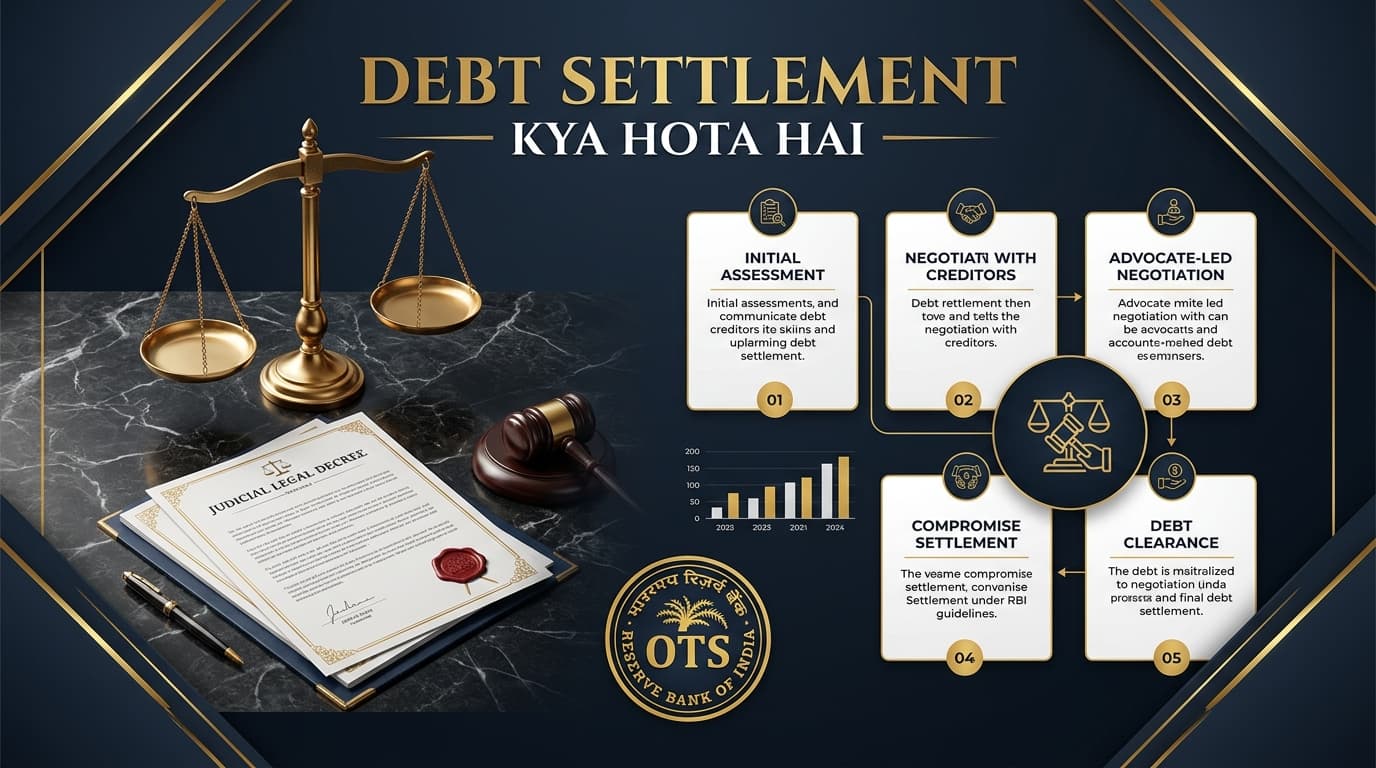
Figure 1.1: Complete Statutory Debt Settlement Architecture in India
From initial forensic ledger audit to statutory cease-and-desist notice, hardship dossier submission, compromise committee negotiation, and final No Dues Certificate enforcement under RBI directives.
Defending Against Section 138 NI Act & Section 25 PSSA Notices
A major anxiety for defaulted borrowers is the receipt of formal legal notices threatening criminal prosecution and imprisonment. Lending institutions routinely deploy two statutory instruments to enforce payment:
Section 138, Negotiable Instruments Act, 1881
Triggered when a post-dated security cheque submitted at the time of loan disbursement is presented by the bank and dishonoured for “insufficient funds”. The statute provides for imprisonment of up to two years and heavy financial fines.
Section 25, Payment & Settlement Systems Act, 2007
Triggered when an automated NACH/e-Mandate auto-debit fails due to insufficient balance. It mirrors the criminal provisions of Section 138, treating failed digital auto-debits as quasi-criminal offences before a Metropolitan Magistrate.
Advocate-Led Strategic Counter-Defense Protocol
Defaulting on a debt is fundamentally a civil breach of contract, not a criminal fraud. Under the landmark jurisprudence of the Supreme Court of India in Meters and Instruments Private Limited v. Kanchan Mehta and Dashrath Rupsingh Rathod v. State of Maharashtra, criminal courts cannot be converted into debt collection recovery agencies.
- Rebuttal of Section 139 Presumption: We draft and serve comprehensive legal replies disproving that the dishonoured cheque was issued for an existing, enforceable debt of the exact face value, demonstrating that blank security cheques were misapplied.
- Absence of Mens Rea: We demonstrate bona fide financial inability, establishing the complete absence of criminal fraudulent intention under Section 415 of the Indian Penal Code (or Bharatiya Nyaya Sanhita, 2023).
- Compounding of Offenses Under Section 147: Under Section 147 of the NI Act, offenses under Section 138 are expressly compoundable. Once an OTS compromise is executed, our advocates move a joint application before the trial court to compound the offense and quash all proceedings with zero criminal record.
Enforcing RBI Anti-Harassment Directives & Police Action Against Misconduct
One of the most destructive aspects of financial default is the psychological abuse inflicted by unregulated third-party collection agencies. Many borrowers do not know that such aggressive tactics are flagrantly illegal under binding guidelines issued by the Reserve Bank of India and multiple Supreme Court rulings.
Statutory Prohibitions Under RBI Fair Practices Code for Lenders
The Supreme Court in ICICI Bank Ltd. v. Prakash Kaur (2007) explicitly held that banks cannot employ musclemen or recovery agents to recover loans through coercion. When AMA Legal Solutions issues a statutory cease-and-desist notice, the bank is put on notice that any further harassment will trigger:
- Formal escalation to the RBI Banking Ombudsman under the RBI Integrated Ombudsman Scheme, 2021.
- First Information Report (FIR) for criminal intimidation, extortion, and criminal trespass under the Bharatiya Nyaya Sanhita, 2023.
- Criminal complaints under Section 66E of the Information Technology Act, 2000 for invasion of privacy.
OTS Sanction Letter Forensic Verification & Authentic No Dues Certificate
A debt settlement is only as good as the paper it is written on. Thousands of borrowers fall prey to unauthorized recovery agents who issue fabricated “settlement receipts” on plain paper, siphon off payments into private UPI handles, and leave the loan active with compounding penalties.
🔍 Mandatory Elements of an Authentic OTS Sanction Letter
- Printed on the official corporate letterhead of the bank or registered NBFC.
- Signed by an authorized branch manager, zonal head, or authorized collection officer with designation and employee ID.
- Contains an official, trackable internal dispatch or sanction reference number.
- Itemizes the exact loan account number, sanctioned compromise amount, and payment deadline.
- Unconditionally declares that upon receipt of the compromise sum, the remaining balance is waived and the account will be closed.
- Specifies payment directly into the designated bank loan account via internal bank teller, RTGS, or official virtual portal.
📜 The Irrevocable No Dues Certificate (NDC)
The No Dues Certificate (NDC) or No Objection Certificate (NOC) is the ultimate legal shield. Under Section 63 of the Indian Contract Act, the NDC constitutes an irrevocable discharge of liability. It legally bars the bank, its asset reconstruction companies (ARCs), and collection agencies from ever claiming any residual balance or pursuing future litigation against the borrower or legal heirs.
AMA Legal Solutions verifies the NDC directly against the bank's core banking database before certifying account extinguishment to our clients.
Credit Bureau (CIBIL) Impact, 'Settled' Remark & Step-by-Step Credit Rehabilitation
Borrowers must maintain a realistic and legally accurate understanding of how debt settlement impacts their credit profile. Under the Credit Information Companies (Regulation) Act, 2005 (CICRA), lending institutions are required to transmit monthly updates to all four operational credit bureaus in India: TransUnion CIBIL, Experian, Equifax, and CRIF High Mark.
Understanding the 'Settled' Tag vs Continuous Default
When an OTS compromise is executed, the bank updates the account status from “Overdue / Default / NPA” to “Settled”. While a “Settled” status indicates that the lender accepted less than the full contractual value—resulting in a temporary downward adjustment in credit score—it provides crucial legal and financial advantages over an ongoing default:
The 24-Month Credit Restoration Protocol
Rebuilding your credit profile to a prime 750+ score after a settlement is a proven, predictable process:
- Verify Bureau Reporting (Day 30–45): Download updated reports from all four bureaus to confirm the outstanding balance is reported as zero and the account status is updated to “Settled”. If discrepancies exist, our office files formal disputes under Section 21 of CICRA.
- Secure a Fixed Deposit-Backed Credit Card (Month 3): Apply for a secured credit card backed by a modest fixed deposit. This card requires no credit score verification and issues a fresh, active credit tradeline.
- Maintain Sub-30% Credit Utilization (Months 4–12): Use the secured card for routine, disciplined monthly expenses, always keeping utilization below thirty percent of the credit limit.
- Zero Late Payments: Pay the statement balance in full before the due date each month. Over 12 to 24 consecutive months of flawless reporting, your credit score steadily rehabilitates to prime eligibility.
Frequently Asked Questions on Debt Settlement in India
Explore More Legal Debt Relief & Settlement Guides
What is Debt Settlement? Complete Guide →
Comprehensive English legal overview of One-Time Settlement under RBI compromise guidelines.
Best Debt Settlement Service in India →
How advocate-certified compromise advisory protects borrowers from unregulated settlement agencies.
When to Choose Debt Settlement? →
Critical warning signs, legal timing, and NPA timelines to initiate compromise negotiations.
Loan Settlement Karwana Hai? Full Guide →
Hindi legal guide on RBI OTS process, stopping harassment, and securing genuine No Dues Certificates.
Loan Settlement vs. Debt Consolidation →
Compare debt consolidation loans with legal OTS settlements to determine the right financial reset.
Loan Write-Off vs. Loan Settlement →
Understand why a written-off loan leaves you legally vulnerable, while a settlement permanently discharges debt.
CIBIL Impact: Settlement vs. Closure →
Detailed statutory breakdown of credit bureau score implications and reporting under CICRA 2005.
How to Know if Settlement Letter is Valid →
Forensic checklist to identify fake collection agency letters and verify official bank seals.
Statutory References & Official Portals
The legal principles, rights, and regulatory frameworks discussed in this publication are anchored in the following official statutes and notifications:
- • Reserve Bank of India (RBI) Official Portal — Master Direction on Compromise Settlements and Technical Write-offs (June 8, 2023) & Master Direction on Fair Practices Code.
- • India Code (Ministry of Law and Justice) — Section 63 of the Indian Contract Act, 1872 (Accord & Satisfaction) and Section 126 of the Indian Evidence Act, 1872.
- • National Legal Services Authority (NALSA) — Legal Services Authorities Act, 1987 provisions regarding Lok Adalat compromise awards and civil decrees.
- • RBI Integrated Ombudsman Scheme (CMS Portal) — Statutory grievance redressal mechanism against recovery harassment and banking non-compliance.
- • Supreme Court of India Case Law Portal — Landmark judgments: ICICI Bank v. Prakash Kaur (anti-harassment) and Meters and Instruments v. Kanchan Mehta (compounding).

AMA Legal Solutions
Premier Banking Litigation, Debt Settlement & Dispute Resolution Law Firm
Founded by Senior Advocate Anuj Anand Malik, AMA Legal Solutions has represented thousands of distressed borrowers across India. Our firm provides transparent, fixed legal advisory without hourly markups, defending clients against recovery harassment, quashing Section 138 criminal notices, and executing institutional One-Time Settlements before bank compromise committees and Lok Adalat benches.