Comprehensive Guide to Loan Settlement in India
Expert Strategies & Legal Insights for Effective Loan Settlement

Anuj Anand Malik
Reviewed by AMA Legal Solutions

Key Takeaways: Loan settlement is a viable option for Indian borrowers facing financial distress, allowing them to negotiate a reduced repayment with lenders. While beneficial in terms of debt relief and preventing legal action, it can adversely affect credit scores. Understanding the SARFAESI Act, RBI guidelines, and engaging legal experts can significantly enhance negotiation outcomes and ensure compliance with the legal framework.
Understanding Loan Settlement: Key Concepts and Benefits
Loan settlement is a strategic option for borrowers who find it challenging to continue their regular loan repayments. Essentially, it involves negotiating with the bank or financial institution to pay a lump sum amount that is less than the total outstanding balance. This process, often used when borrowers face financial distress, allows them to clear dues without the burden of complete repayment.
Key Concepts in Loan Settlement
- Negotiation: The borrower and lender engage in discussions to agree on a reduced payment amount. This requires presenting a genuine inability to repay the full loan.
- Lump Sum Payment: A one-time payment settled to close the loan account. This amount is usually a percentage of the total dues.
- CIBIL Impact: Loan settlement might adversely affect your credit score, as it reflects an inability to repay the full amount.
Benefits of Loan Settlement
- Debt Relief: Settling a loan reduces financial stress by eliminating the debt burden.
- Financial Reset: It provides an opportunity to reset finances, especially when managing multiple debts.
- Avoiding Legal Actions: It can prevent legal proceedings that might arise from loan defaults, such as those outlined in Loan Settlement Services.
It is crucial to weigh these benefits against the potential drawbacks, particularly the impact on your credit score. Engaging with legal experts, like the best lawyers for loan settlement in India, can provide clarity and assist in navigating this complex process.
Legal Framework: Navigating Indian Banking Laws for Loan Settlement
The legal landscape governing loan settlement in India is complex, involving various statutes and regulatory bodies. The primary legislation includes the Securitisation and Reconstruction of Financial Assets and Enforcement of Security Interest (SARFAESI) Act, 2002, which empowers banks and financial institutions to recover non-performing assets without court intervention. It's crucial to comprehend this act's implications when negotiating settlements.
Additionally, the Reserve Bank of India (RBI) plays a pivotal role in setting guidelines on loan recovery and settlements. RBI's directives aim to protect borrower rights while ensuring that financial institutions recover dues efficiently. Familiarity with these guidelines is essential for borrowers to negotiate effectively and avoid undue pressure.
Understanding Key Provisions
- SARFAESI Act: Enables the enforcement of security interests and management of defaulting borrowers' assets.
- RBI Guidelines: Establishes fair practices for recovery agents, including prohibitions against harassment and guidelines for restructuring loans.
When engaging in loan settlement discussions, borrowers should consider seeking professional legal assistance to navigate these complexities. Consulting experienced professionals familiar with Banking and Finance Law can enhance negotiation outcomes and ensure compliance with the legal framework. Understanding these laws not only aids in settlement negotiations but also provides insights into potential restructuring or consolidation of debt.
The Role of the Reserve Bank of India in Loan Settlements
The Reserve Bank of India (RBI) plays a pivotal role in loan settlements by setting regulatory frameworks that banks and financial institutions must follow. RBI's directives ensure that borrowers are treated fairly while maintaining the integrity of the banking system. The central bank periodically issues guidelines that influence how loans are restructured or settled, directly impacting borrowers facing financial stress.
Key Guidelines and Regulations
- RBI mandates that banks must have a board-approved policy for loan settlements, ensuring transparency and fairness.
- The loan settlement process should include a clear communication channel between the borrower and the bank, reducing the risk of disputes.
- Guidelines on restructuring frameworks provide flexibility to borrowers, allowing for loan modifications under specific circumstances without being classified as non-performing assets (NPAs).
Moreover, RBI's interventions such as moratoriums during financial crises help borrowers manage repayments without the fear of immediate default. These measures are crucial for banking and finance stability, offering protection to borrowers while enabling financial institutions to recover dues effectively.
Understanding these regulations can empower borrowers to negotiate better terms during settlements, ensuring compliance with RBI's standards while safeguarding consumer rights.
Initial Steps: Assessing Your Financial Situation and Loan Terms
Before embarking on the loan settlement process, it’s crucial to thoroughly evaluate your current financial situation and the terms of your loan. Begin by tallying all your financial commitments, including any outstanding debts, monthly expenses, and income sources. This will give you a clear picture of your liquidity and ability to engage in settlement discussions.
Understanding Your Loan Terms
Review your loan agreement meticulously. Key aspects to focus on include the interest rate, repayment schedule, penalties for late payments, and any clauses related to loan default. Understanding these terms will aid in negotiations and ensure you are well-prepared to discuss realistic settlement options.
- Check if your loan has any pre-settlement penalties or charges.
- Identify any grace periods or extensions that might be applicable.
- Determine the outstanding balance, including interest and penalties.
Once you have a clear picture of your financial standing, consider consulting a legal expert who specializes in banking and finance law. Legal guidance can provide insights into potential settlement offers and negotiation strategies, ensuring your interests are protected and you achieve the best possible outcome.
Communicating with Banks: Crafting Effective Negotiation Strategies
Engaging with banks for a loan settlement requires a well-prepared strategy. The first step is to assess your current financial situation comprehensively. This involves understanding your income, expenses, and debt obligations. When communicating with the bank, it's crucial to be transparent about your financial constraints and propose a realistic payment plan.
Know Your Rights and Obligations
Before initiating any negotiation, familiarize yourself with your rights and obligations under Indian banking laws. For detailed insights, visit our Banking and Finance Law page. This knowledge empowers you to negotiate confidently and avoid common pitfalls.
Effective Communication Tips
- Prepare Documentation: Gather all relevant financial documents to support your negotiation position. This includes bank statements, proof of income, and expenses.
- Structured Approach: Start communication via email to maintain a record of your discussions. Clearly outline your situation and proposed terms.
- Professional Tone: Maintain a respectful and professional tone in all interactions. Avoid emotional language, and stick to factual statements.
- Legal Support: Consider seeking assistance from a legal professional experienced in loan settlement negotiations to guide you through the process and enhance your negotiating position.
Effective negotiation with banks is a meticulous process, and each interaction should aim to build trust and demonstrate your commitment to resolving the debt amicably. Remember, a well-prepared plan and professional communication can make a significant difference in achieving a favorable settlement outcome.
Recovery Agents: What They Can and Cannot Do Legally
Recovery agents play a critical role in loan settlement processes by communicating with borrowers regarding overdue payments. However, their actions are governed by strict legal frameworks to protect borrowers' rights. Understanding these legal limits is crucial for both recovery agents and borrowers.
Legal Permissions for Recovery Agents
- Agents can contact borrowers through phone calls, personal visits, and written communication during reasonable hours, typically between 7 AM to 7 PM.
- They are allowed to discuss the overdue loan amounts and negotiate repayment plans that align with the lender’s policies.
- Agents may convey the possible consequences of non-payment, such as legal action or credit score impact, provided it is factual and not exaggerated.
Prohibited Actions for Recovery Agents
- Agents cannot use abusive, threatening, or coercive language during communications.
- They are not permitted to harass borrowers, including repeated calling or visiting, which may amount to mental harassment.
- Confidentiality is key; agents cannot disclose debt information to unauthorized third parties, like neighbors or employers, to embarrass the borrower.
- Physical harm, intimidation, or any form of unauthorized possession of borrower assets is strictly against the law.
In case of any misconduct, borrowers can file a complaint with the bank or approach regulatory bodies like the Reserve Bank of India. Additionally, they can seek legal guidance on Legal Rights Against Recovery Agent Harassment to ensure their rights are protected.
Key Insights & Data Infographic
Visual summary, statistical trends & procedural breakdown
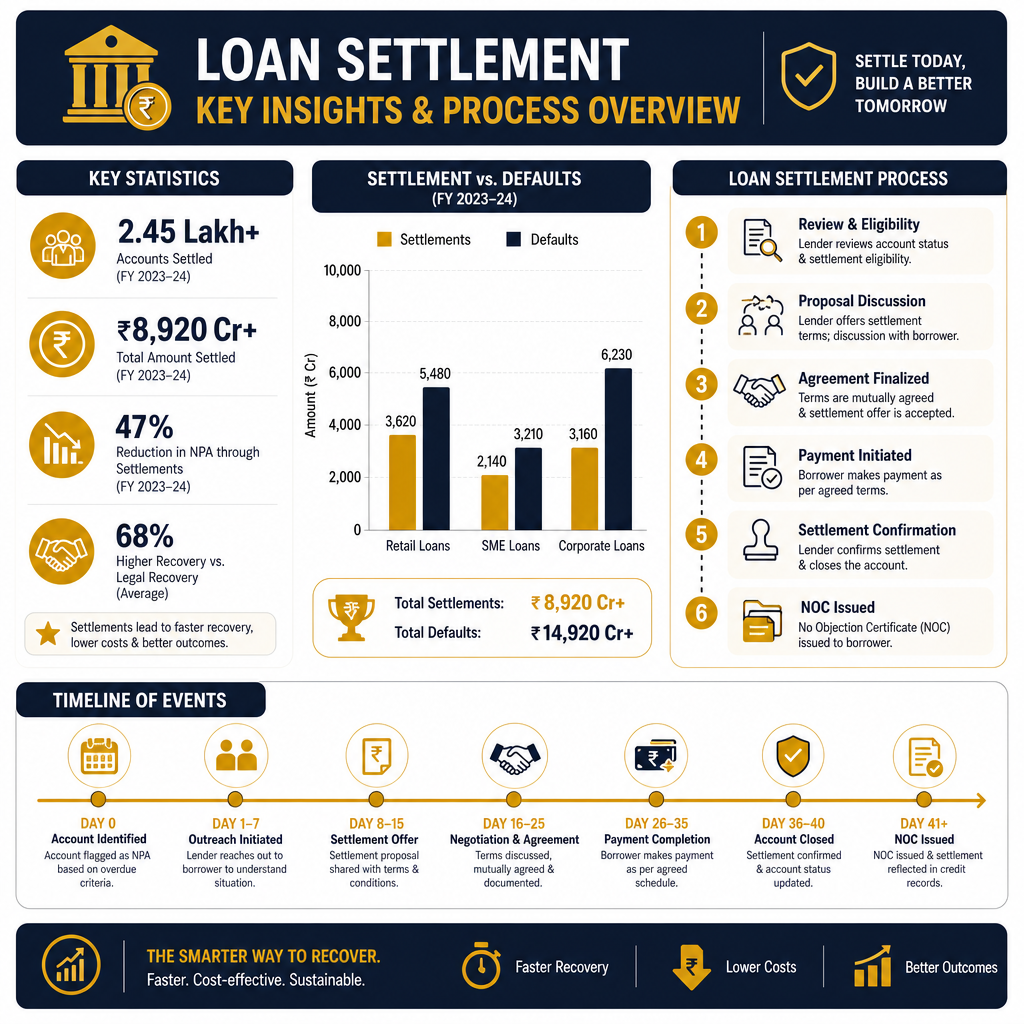
Prepared by AMA Legal Solutions Research & Analytics Team • Data & Compliance Overview

Halt Recovery Agent Harassment Legally
Exploring Settlement Options: Lump Sum vs. Installments
When considering a loan settlement, borrowers can choose between a lump-sum payment or installment options. Each choice has its distinct advantages and impacts, depending on the borrower's financial circumstances and ability to negotiate favorable terms. Lump-sum settlements often result in a more significant reduction in the outstanding amount, whereas installment plans provide flexibility in cash flow management.
Lump Sum Settlement
A lump-sum settlement involves paying a single, negotiated amount to settle the loan. This option is ideal for borrowers who can access funds quickly, as it usually results in a significant reduction in the total payable amount. However, if the funds are not readily available, this option may not be practical.
Installment Settlement
Alternatively, settling through installments allows borrowers to pay off their debt over time. This flexibility can alleviate immediate financial pressure but might involve paying more in the long run. Understanding the terms and ensuring the total cost of repayment is vital to avoid additional financial strain.
| Parameter / Criterion | Lump Sum Settlement | Installment Settlement |
|---|---|---|
| Immediate Financial Impact | High, requires available funds | Spread over time, less immediate pressure |
| Negotiation Leverage | Higher, potential for greater discounts | Lower, may incur additional interest |
| Impact on Credit Score | Can improve score if settled favorably | Depends on consistency of payments |
| Legal Implications | Quick resolution | Ongoing obligations |
Choosing the right loan settlement service can significantly impact the outcome. For a comprehensive understanding of banking and finance law in relation to loan settlements, it is crucial to evaluate personal financial conditions and consult with an experienced legal expert to navigate both options effectively.
Impact of Loan Settlement on Credit Score: What Borrowers Need to Know
For borrowers, understanding the implications of a loan settlement on their credit score is crucial. Settling a loan can provide immediate relief but may adversely affect your creditworthiness. When a loan is settled, it is marked as "settled" rather than "closed" in your credit report. This indicates that the lender accepted less than the total owed amount, which can be seen as a red flag by future creditors.
Why Loan Settlement Affects Credit Score
The primary reason loan settlements negatively impact your credit score is that they reflect an inability to fulfill the original loan obligations. This outcome can remain on your credit report for up to seven years, affecting your ability to secure future credit at favorable terms. Hence, opting for settlement should be a last resort, only after exploring other options like debt restructuring or negotiating modified payment terms.
Improving Your Credit Score Post-Settlement
After settling a loan, focus on rebuilding your credit score. Timely payments on other obligations can gradually improve your score. For more comprehensive strategies, consider reviewing our guide on how to repair your credit score.
For detailed advice on loan settlements, visit our Loan Settlement Services page, which provides insights into navigating the process effectively.
Common Mistakes in Loan Settlement Negotiations and How to Avoid Them
Negotiating a loan settlement can be daunting, especially when emotions run high. Missteps are common but can be avoided with the right guidance. Below are some frequent errors and strategies to steer clear of them:
1. Lack of Preparation
Approaching negotiations without a clear understanding of your financial situation can be detrimental. It's imperative to gather all relevant documents and analyze your financial capacity. Utilize resources like Loan Settlement Services to better prepare.
2. Not Understanding Legal Rights
Borrowers often underestimate their legal rights. Familiarize yourself with Legal Rights Against Recovery Agent Harassment to ensure you're not taken advantage of during the process.
3. Accepting the First Offer
Tentative borrowers may hastily accept initial offers from lenders. Negotiating for better terms is not only possible but advisable. Evaluate multiple options before concluding.
4. Failing to Communicate Effectively
Ineffective communication can derail negotiations. Remain calm, articulate, and document discussions in writing. For strategies, visit Mastering Loan Settlement: Tips for a Smooth Process.
5. Ignoring Long-term Consequences
Settlements affect credit scores. Understand the distinction between settlements and closures through resources like Loan Settlement vs Loan Closure Impact on CIBIL.
By avoiding these common pitfalls and seeking professional assistance when necessary, borrowers can enhance their chances of a favorable loan settlement outcome.
Timeline and Process: How Loan Settlements Typically Unfold
Understanding the timeline and process of a loan settlement can offer a sense of control and preparedness. Typically, the process begins with the borrower acknowledging the inability to meet loan obligations. This acknowledgment is a crucial first step, leading to communication with the lender. The borrower may then present their financial situation, possibly with the assistance of a legal advisor.
Once initial communications are established, the formal negotiation process begins, which may include restructuring or settling the debt under new terms. It's important to note that each bank might have its own procedures, which can slightly alter this timeline. During negotiations, the borrower should be aware of their legal rights and guidelines governing loan recovery in India to ensure a fair settlement.
| Parameter / Criterion | Key Details / Legal Provision | Timeline / Practical Impact |
|---|---|---|
| Initial Acknowledgment | Borrower communicates inability to pay | Immediate upon financial distress |
| Negotiation Start | Discussion of possible new terms | Within 1-2 weeks of acknowledgment |
| Formal Agreement | Settlement terms documented | 1-3 months |
| Execution of Settlement | Payment according to new terms | Varies by agreement |
Throughout the process, both parties need to maintain open communication to ensure the successful execution of the settlement terms. For personalized guidance, understand the nuances by exploring our Debt Consolidation & Restructuring services.
Real-Life Case Studies: Successful Loan Settlements
To illustrate the practicalities and nuances of loan settlement, consider the case of Mr. Gupta, a small business owner facing financial difficulties due to unexpected market downturns. With an outstanding loan of ₹10 lakhs, he was under significant pressure from his bank. By leveraging legal guidance, Mr. Gupta engaged in effective negotiations and successfully reduced his liability to ₹6 lakhs, preserving his business. This was achieved through a comprehensive Loan Settlement Services plan.
Another noteworthy example involves Ms. Reddy, a salaried individual who defaulted on her personal loan due to sudden job loss. Receiving continuous recovery calls, she sought assistance from legal experts. Through a structured approach focusing on her rights and financial situation, she managed to negotiate a one-time settlement. This allowed her to clear her dues with a significant waiver.
These cases emphasize the importance of understanding the Banking and Finance Law, as well as the strategic use of available legal remedies. Successful settlements often hinge upon timely legal intervention and robust negotiation strategies. It’s crucial for borrowers to recognize the potential for settlement and act proactively to protect their interests and financial well-being.
Legal Protections: Understanding Your Rights as a Borrower
Borrowers in India have specific legal protections when dealing with loan settlements and financial stress. The Banking and Finance Law ensures that borrowers are treated fairly, and the Reserve Bank of India (RBI) has set guidelines to regulate bank recovery practices. Understanding these rights is crucial to protect oneself from undue harassment and unfair practices.
The RBI Guidelines
The RBI has laid down guidelines that banks and financial institutions must follow during the recovery process. These include restrictions on recovery agents, ensuring they do not use abusive language or employ intimidating tactics. Borrowers must be informed in writing about their account status before any recovery action is taken.
- You have the right to be treated with dignity and respect.
- Recovery agents must adhere to a prescribed code of conduct.
- You can request all communications to be in written form.
Being aware of these rights empowers borrowers to effectively handle loan settlement negotiations. If faced with harassment, borrowers can take legal action by approaching either the banking ombudsman or the consumer forums. For more detailed guidance, consider consulting a legal expert experienced in Loan Settlement Services.
Popular Searches & Topics
Commonly searched legal queries and keywords related to this article
Need Strategic Legal Defense for Your Situation?
Our banking & litigation advocates review your notices, debt liability, and recovery issues under complete advocate-client secrecy.

AMA Legal Solutions
Trusted with a 4.7 Google Rating, over 10,000+ Clients Served, 25,000+ Cases Handled, and more than 40+ Years of Experience in providing strategic legal defense and debt resolution across India.
Our media coverages





Client Reviews
"The legal team at AMA Legal Solutions was incredibly helpful in negotiating my loan settlement. Their professionalism and knowledge were evident throughout the process."
Priya Sinha
"Outstanding service from AMA Legal Solutions in my loan settlement case. Their commitment to client welfare and attention to detail is unmatched."
Vikram Singh
"I'm grateful to AMA Legal Solutions for their expert handling of my loan settlement. Their strategic advice made all the difference."
Rajesh Kumar
"AMA Legal Solutions provided exceptional guidance in my loan settlement case. Their expertise in banking law ensured a favorable outcome for me."
Arjun Mehta
"AMA Legal Solutions' deep understanding of RBI guidelines helped me navigate the complexities of my loan settlement smoothly. Highly recommend their services."
Neha Kapoor
Frequently Asked Questions
Related Articles

willdrafting.in indias first online will drafting platform get your will in few minutes
Discover the swift and secure way to draft your will online in India today
Read Article
Why Loan Settlement in the Month of Oct is Beneficial for Borrowers (2026)
Explore key advantages of settling loans in October for a fresh financial start.
Read Article
Will Drafting Services for NRI: How Global Indians Can Protect Indian Assets from Abroad (2026)
A comprehensive legal guide on modern Will drafting services for Non-Resident Indians (NRIs) and OCIs managing real estate, bank accounts, and investments across India.
Read ArticleAbout Author
Anuj Anand Malik
View ProfileAnuj Anand Malik, Founder of AMA Legal Solutions, is a trusted advocate, loan settlement expert, legal advisor, and banking lawyer. With over a decade of experience in loan settlement, corporate law, financial disputes, and compliance, he leads a result-driven law firm based in India that helps individuals, startups, and businesses achieve legal and financial stability.
Connect on LinkedInNeed Legal Representation?
Evaluate your defense against recovery agents, notices, or structure your loan settlement directly with Senior Advocates.
Call +91-8700343611