Mastering Loan Settlement: Tips for a Smooth Process
Navigate loan settlement with confidence and ease.

Anuj Anand Malik
Reviewed by AMA Legal Solutions

Key Takeaways: Successfully navigating a loan settlement involves understanding the loan agreement, maintaining open communication with lenders, and being aware of legal protections available to borrowers. Engaging experienced legal advisors can prevent costly errors, and understanding RBI guidelines ensures a fair process. Borrowers should prepare thoroughly to minimize risks and complications.
Navigating Loan Settlement: The Essentials
Navigating the intricacies of loan settlement is crucial for borrowers aiming for financial closure without hiccups. The process can be complex, involving various stakeholders such as lenders, legal advisors, and sometimes settlement agents. Understanding each step and its significance can help borrowers manage the process more effectively.
Understand Your Loan Agreement
Begin by thoroughly reviewing your loan agreement and any amendments made during the loan term. Pay attention to clauses on prepayment penalties and other potential charges. These details are vital to avoid unexpected financial liabilities.
Gather Essential Documents
Compiling the necessary documents well in advance can prevent delays. Key documents include the loan agreement, payoff statement, and identification documents. For secured loans, property-related documents like title deeds are essential for a smooth transition.
Effective Communication
Maintaining open communication with your lender is paramount. Inform them of your intent to settle and request a payoff statement. This ensures clarity on the total amount needed and helps address any discrepancies early on.
- Seek professional guidance to navigate complex legal and financial nuances.
- Consider engaging a reputable settlement agent for coordination and compliance.
Understanding and preparing for these essentials can simplify the loan settlement process, ensuring a seamless experience for borrowers.
Understanding the Legal Framework of Loan Settlement
The legal framework governing loan settlement in India is complex, involving multiple laws and guidelines. Primarily, the Negotiable Instruments Act, 1881, and the Securitisation and Reconstruction of Financial Assets and Enforcement of Security Interest (SARFAESI) Act, 2002, play critical roles. These laws provide the legal backing for lenders to recover dues through different methods, including asset liquidation.
Furthermore, the Reserve Bank of India (RBI) issues circulars and guidelines that shape the operational procedures for settlements. Borrowers must be aware that these regulations are designed to protect both lenders and borrowers, ensuring a fair settlement process. For instance, the RBI mandates transparency in the calculation of outstanding dues and prohibits coercive recovery practices.
Key Legal Protections for Borrowers
- Right to receive a written notice before legal proceedings are initiated.
- Right to be informed of the total outstanding amount, including interest and penalties.
- Protection against harassment from recovery agents as per RBI guidelines.
Engaging with a knowledgeable legal advisor is advisable to navigate these intricate legalities. Lawyers experienced in banking and finance law can provide invaluable assistance during the settlement process, ensuring compliance and safeguarding your rights.
The Importance of a Well-Prepared Loan Settlement
A well-prepared loan settlement is crucial for minimizing potential difficulties and ensuring a seamless resolution of financial obligations. The process of loan settlement involves numerous legal and administrative steps that, if not properly addressed, can lead to significant complications. By methodically preparing for each phase, borrowers are better positioned to avoid costly errors and unnecessary delays.
Mitigating Financial Risks
A comprehensive understanding of the financial requirements involved in loan settlement is essential. When borrowers proactively plan for all costs, including any potential hidden fees or charges, they can secure the necessary funds to cover these expenses and prevent unexpected financial strain. This foresight is particularly critical when dealing with complex loans such as mortgages and business loans.
Ensuring Legal Compliance
Legal compliance is a key aspect of any loan settlement. By preparing all requisite legal documents ahead of time, borrowers can ensure that they meet all regulatory requirements, thereby avoiding legal disputes. Engaging with legal experts in banking and finance law can provide crucial guidance in navigating the legal intricacies of the settlement process.
- Review loan agreements for any settlement clauses.
- Request and verify all payoff statements from lenders.
- Ensure thorough documentation of all communications and agreements.
By methodically preparing for loan settlement, borrowers not only safeguard their financial standing but also facilitate a smoother transition to the next phase of their financial journey.
Common Obstacles in Loan Settlement and How to Overcome Them
Loan settlement can be fraught with challenges, often stemming from a blend of legal, financial, and administrative issues. One primary obstacle is the lack of understanding about the settlement process itself. Many borrowers become overwhelmed by the numerous procedural steps, which can result in errors and delays. To counter this, it's critical to educate oneself on the process and possibly engage a professional legal advisor to guide the way.
Another significant challenge is managing unexpected financial hurdles. Many borrowers discover they have insufficient funds for the final settlement at the last minute. To address this, it's advisable to prepare a financial buffer well in advance, ensuring all potential fees, such as prepayment penalties, are considered. For more detailed guidance, consider consulting our Loan Settlement Services.
Communication breakdowns also pose a significant challenge. Misunderstandings or untimely information exchanges between the borrower, lender, and settlement agent can lead to disputes. Maintaining clear, consistent communication and establishing a primary point of contact within each party can mitigate such issues.
Lastly, documentation errors can severely disrupt the settlement process. Ensure all documents are in order and verified for accuracy. A proactive approach is key-start by compiling a checklist of necessary paperwork to avoid last-minute scrambles. For more insights on avoiding such pitfalls, delve into our Banking and Finance Law page. By anticipating these obstacles and employing strategic solutions, a smoother loan settlement is achievable.
Key Documents and Their Role in Loan Settlement Success
In the loan settlement process, having the right documents organized and ready is crucial to ensuring a smooth completion. The loan agreement is foundational, as it outlines the terms and conditions of the loan, including interest rates, repayment schedules, and any modifications made over the loan term. Reviewing this document helps avoid misunderstandings and ensures compliance with all stipulations.
A critical document is the payoff statement, which details the exact amount required to settle the loan fully. This statement includes principal balance, accrued interest, and any fees or charges. Scrutinizing this statement is essential to identify and rectify discrepancies, preventing delays in the settlement.
Identification proof, such as a government-issued ID and address verification, is commonly required for validation. For secured loans like mortgages, property-related documents, including title deeds and insurance, must be in order. These documents confirm ownership and the terms of security against the loan.
Proper documentation is a pivotal part of the banking and finance law process, impacting the efficiency and legality of the settlement. Having all necessary paperwork at hand not only expedites the settlement but also minimizes potential conflicts or legal issues, ensuring a successful culmination of the loan agreement.
Proactive Steps for a Successful Loan Settlement
Mastering the loan settlement process involves taking several proactive steps to ensure a smooth and successful outcome. Begin by thoroughly reviewing your loan agreement. Understanding all the terms, especially those related to prepayment penalties and fees, can help avert unexpected financial surprises.
Document Preparation
Organize your documents in advance. Essential documents include the loan agreement, payoff statement, and identification proofs. A checklist can streamline the gathering process, reducing stress as the settlement date approaches. For further guidance on essential documentation, consider exploring our Loan Settlement Services.
Engage with Your Lender
Maintain open communication with your lender. Inform them of your intent to settle the loan and request a clear payoff statement. This document is crucial for understanding the exact amount required for settlement. Address any discrepancies promptly to avoid delays.
Select a Qualified Settlement Agent
Choosing the right settlement agent is vital. Research potential agents and consider their experience and reputation. Cost should not be the sole deciding factor; prioritize quality and reliability. For additional support, you might find our Banking and Finance Law services helpful.
Financial Preparedness
Financially preparing for settlement is crucial. Ensure you have sufficient funds to cover the settlement amount and any additional expenses. Setting aside extra funds can buffer against unforeseen costs, preventing last-minute financial hurdles. By taking these proactive steps, you can navigate the loan settlement process with confidence and success.
Key Insights & Data Infographic
Visual summary, statistical trends & procedural breakdown
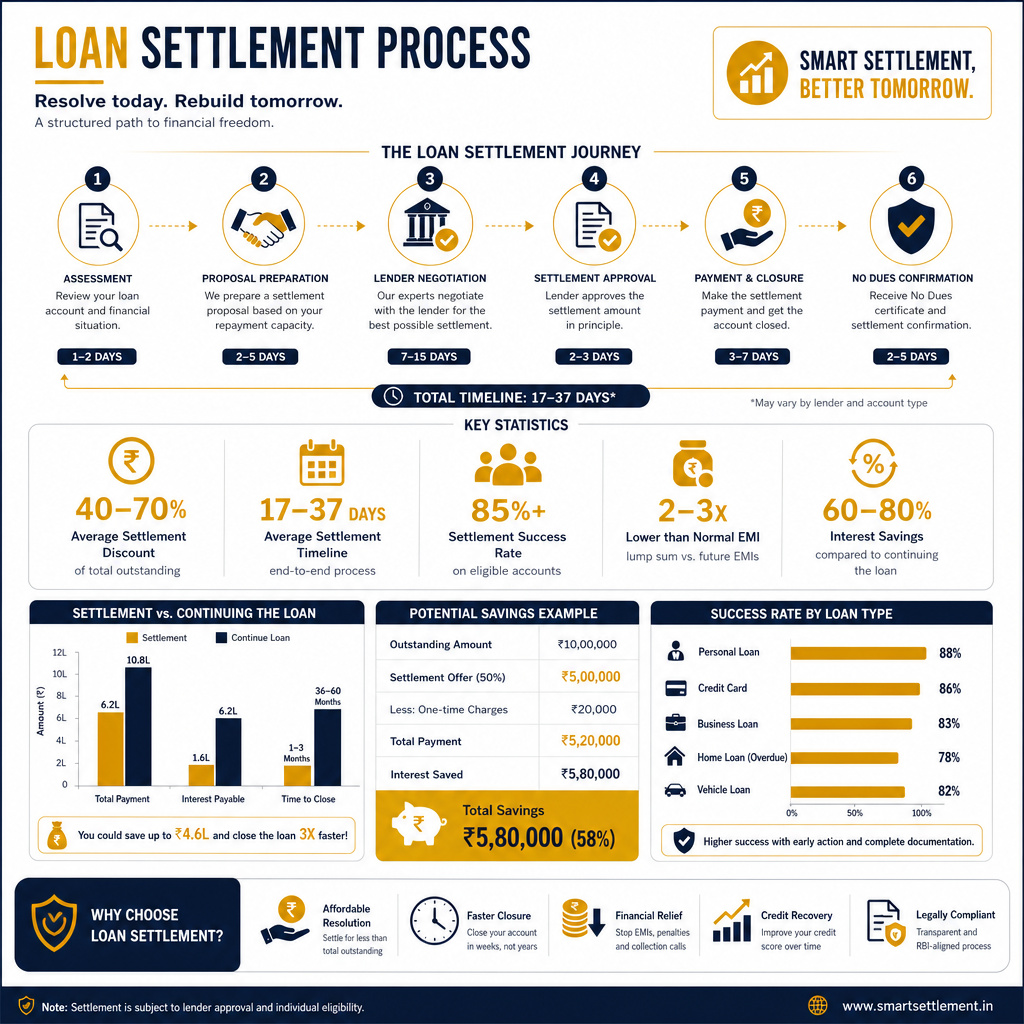
Prepared by AMA Legal Solutions Research & Analytics Team • Data & Compliance Overview

Halt Recovery Agent Harassment Legally
Choosing the Right Settlement Agent: A Checklist
Selecting the right settlement agent is pivotal in ensuring a seamless loan settlement process. These professionals handle the coordination of legal documents and fund distribution. Here's a checklist to guide you in making an informed decision:
Research and Reputation
- Verify the agent's licensure and credentials in the banking and finance sector.
- Conduct online research, reading reviews, and ratings to gauge their reputation.
- Seek recommendations from trusted sources like your lender or legal advisors.
Experience and Expertise
- Opt for agents with a track record in handling similar loan settlements.
- Ensure they are familiar with the latest RBI guidelines and legal protocols.
Cost and Fees
- Request detailed fee structures and compare costs across agents.
- Understand what services are included to avoid hidden charges.
Communication and Compatibility
- Assess their responsiveness and clarity in communication.
- Ensure they are accessible and can provide timely updates throughout the process.
For those looking to delve deeper into loan settlements, consider our Loan Settlement Services for comprehensive support.
| Parameter / Criterion | Key Details / Legal Provision | Timeline / Practical Impact |
|---|---|---|
| Licensure and Credentials | Ensure valid licenses; check compliance with RBI guidelines. | Immediate; resolves potential legal issues upfront. |
| Reputation and Reviews | Online reviews, peer recommendations. | Initial research phase; impacts trust and confidence. |
| Experience in Settlements | Expertise in handling specific loan types. | Throughout the settlement; ensures smooth process. |
| Fee Structure | Transparent pricing, no hidden fees. | Before engagement; affects budget and planning. |
| Communication Skills | Responsiveness, clarity of communication. | Throughout the process; avoids delays and miscommunication. |
Choosing wisely can significantly impact your success in Banking and Finance Law engagements and ensure a smooth settlement journey.
Avoiding Delays: Tips for a Timely Loan Settlement
Ensuring a timely loan settlement requires strategic planning and diligence. Start by compiling all necessary documents as soon as possible. Key documents include the loan agreement, payoff statement, and identification documents. Having these ready can prevent last-minute scrambles that often lead to delays.
Early Communication with Stakeholders
Maintain clear and open communication with your lender and settlement agent. Notify them of your intent to settle the loan well in advance. Request a detailed payoff statement and clarify any discrepancies immediately. Effective communication is crucial in avoiding misunderstandings and ensuring all processes are synchronized.
Financial Preparedness
Ensure you have the required funds available for settlement, including any additional fees that may emerge. It's prudent to set aside extra funds to cover unforeseen expenses. By being financially prepared, you can circumvent any last-minute financial obstacles that might delay the process.
Choosing the Right Settlement Agent
Select a reliable settlement agent by researching their reputation and experience. This can significantly impact the efficiency of the settlement process. For more insights, consider exploring our Loan Settlement Services and Banking and Finance Law resources.
Timely Notifications and Follow-ups
- Keep all parties updated on progress.
- Regularly check in with your lender and settlement agent to ensure timelines are being met.
- Promptly address any issues that arise to prevent them from causing delays.
By adhering to these practices, you can significantly reduce the risk of delays in the loan settlement process and achieve a smooth, timely conclusion.
The Role of Effective Communication in Loan Settlement
Effective communication is crucial for a successful loan settlement, ensuring that all parties-borrowers, lenders, and settlement agents-are aligned and informed. From initiation to conclusion, clear communication helps maintain transparency, avoid misunderstandings, and resolve issues efficiently.
Establishing a Primary Contact
Identify a primary point of contact with both your lender and settlement agent. This person will be responsible for managing updates, addressing queries, and coordinating actions. Regular check-ins with these contacts ensure you're updated on the progress and can promptly address any issues.
Maintaining Written Records
Utilize written communication extensively. Emails, letters, and official documents provide a documented trail, invaluable for resolving disputes or clarifying agreements. This practice is crucial when navigating complex financial processes, such as loan settlements.
- Regularly update all involved parties on any changes.
- Document every step for future reference.
- Establish clear deadlines and expectations early on.
By fostering open communication, you create an environment conducive to a smooth loan settlement. It's also wise to explore resources like our Banking and Finance Law page for additional support and information, ensuring that you're fully prepared for each step of the process.
What to Anticipate on the Day of Settlement
The day of settlement marks the final chapter in your loan journey. It's vital to approach this day with preparedness and clarity to ensure a seamless process. Expect to engage in the formal signing of documents, a crucial step to officially conclude the loan.
Document Signing
You will sign various documents, such as the loan payoff statement and the settlement agreement. Carefully review each document to ensure all details are correct. Mistakes here can lead to costly delays or complications. It’s advisable to have an expert review these documents if you have any doubts.
The Role of Your Settlement Agent
Your settlement agent plays an essential role in coordinating the activities. They will ensure all documents are accurately executed and that funds are properly disbursed. Be ready to provide identification and any additional necessary documents. This coordination is critical for avoiding any last-minute hurdles.
- Ensure you have all required documents organized and ready.
- Double-check all figures on the payoff statement and settlement agreement.
- Maintain open communication with your settlement agent for last-minute adjustments.
- Have a clear understanding of any remaining obligations post-settlement.
After the successful signing and fund disbursement, your loan settlement is complete. Celebrate reaching this significant milestone and take confidence in the financial freedom ahead. Understanding each step ensures that you close this financial chapter successfully.
Legal Remedies and Rights in Loan Settlement: A Comparison
Understanding legal remedies and rights in loan settlement is essential for borrowers. These remedies ensure protection against unfair practices and provide avenues for dispute resolution. Borrowers should be familiar with their rights to negotiate, restructure, or contest wrongful recovery actions. Comparing these remedies with those available in other financial disputes can offer deeper insights into the legal landscape.
| Parameter / Criterion | Key Details / Legal Provision | Timeline / Practical Impact |
|---|---|---|
| Negotiation Rights | Borrowers can negotiate with the lender for a reduced settlement amount under RBI guidelines. | Varies based on lender's policy; typically takes a few weeks. |
| Dispute Resolution | Engage in Arbitration to resolve disputes outside court. | Faster resolution compared to litigation, usually within 3-6 months. |
| Legal Protection Against Harassment | Legal actions can be taken against recovery agents violating RBI codes of conduct. | Immediate effect upon filing a complaint; resolution in 1-3 months. |
| Restructuring Options | Borrowers may opt for Debt Consolidation & Restructuring. | Process can take 1-2 months, depending on lender evaluation. |
These remedies ensure borrowers have avenues to protect their interests and seek fair resolutions. Familiarity with these rights can aid in effectively navigating the loan settlement process.
Ensuring a Successful Loan Settlement Experience: A Lawyer’s Perspective
As an experienced banking lawyer, I emphasize the importance of preparation in achieving a seamless loan settlement experience. Begin by thoroughly reviewing the loan agreement to understand all obligations and penalties. This foundational knowledge is critical to avoid any unexpected surprises during settlement.
Proactive Communication and Document Readiness
Maintain open lines of communication with your lender from the outset. Contact them early to inform your intention to settle and request a payoff statement. This document will clarify the total settlement amount, including any additional charges. Address any discrepancies immediately to prevent future complications.
- Ensure all necessary documents, like identification and loan agreements, are organized and readily available.
- Consider engaging a settlement agent if the process appears overwhelming. They can coordinate with multiple parties to ensure all procedures are followed correctly, reducing the risk of errors.
For further support, consider exploring our specialized Loan Settlement Services or seek advice from professionals adept in Banking and Finance Law.
Finally, be financially prepared. Unexpected fees can arise, so having a contingency fund is wise. By approaching the process methodically and with legal guidance, you can ensure a smooth and successful loan settlement experience.
Popular Searches & Topics
Commonly searched legal queries and keywords related to this article
Need Strategic Legal Defense for Your Situation?
Our banking & litigation advocates review your notices, debt liability, and recovery issues under complete advocate-client secrecy.

AMA Legal Solutions
Trusted with a 4.7 Google Rating, over 10,000+ Clients Served, 25,000+ Cases Handled, and more than 40+ Years of Experience in providing strategic legal defense and debt resolution across India.
Our media coverages





Client Reviews
"AMA Legal Solutions offered superb service during my loan settlement. Their attention to detail and understanding of RBI guidelines was outstanding."
Vikram Joshi
"AMA Legal Solutions provided exceptional guidance during my loan settlement process. Their expertise and professionalism ensured a smooth and stress-free experience."
Rajesh Sharma
"AMA Legal Solutions' assistance in my loan settlement was remarkable. They ensured every step was handled efficiently and transparently."
Suresh K.
"Thanks to AMA Legal Solutions, I was able to navigate my loan settlement with confidence. Their knowledge of banking laws was invaluable."
Priya Kapoor
"The team at AMA Legal Solutions made my loan settlement effortless. Their clear communication and legal expertise were a great help."
Anita Verma
Frequently Asked Questions
Related Articles

Can Bank or Loan App Remotely Lock Phone for EMI Default? RBI Rules (2026)
An investigative breakdown of RBI's Remote Device Locking Directions—explaining why lenders cannot lock your phone for personal loans, the mandatory 30/60 DPD safeguards on financed devices, the Rs. 250/hour delay penalty, and how to settle device & app loans.
Read Article
How Recovery Agents Get Your Personal Details and How to Prevent It in India (2026)
An investigative legal breakdown of the 7 hidden channels debt collectors use to trace your phone numbers, family contacts, employer, and address - and the exact statutory shields under RBI 2026 Directions and the DPDP Act, 2023 to stop them.
Read Article
willdrafting.in indias first online will drafting platform get your will in few minutes
Discover the swift and secure way to draft your will online in India today
Read ArticleAbout Author
Anuj Anand Malik
View ProfileAnuj Anand Malik, Founder of AMA Legal Solutions, is a trusted advocate, loan settlement expert, legal advisor, and banking lawyer. With over a decade of experience in loan settlement, corporate law, financial disputes, and compliance, he leads a result-driven law firm based in India that helps individuals, startups, and businesses achieve legal and financial stability.
Connect on LinkedInNeed Legal Representation?
Evaluate your defense against recovery agents, notices, or structure your loan settlement directly with Senior Advocates.
Call +91-8700343611