Understanding Summons for Non-Payment of Loans in India
Navigate the complexities of loan defaults and legal summons effectively

Anuj Anand Malik
Reviewed by AMA Legal Solutions
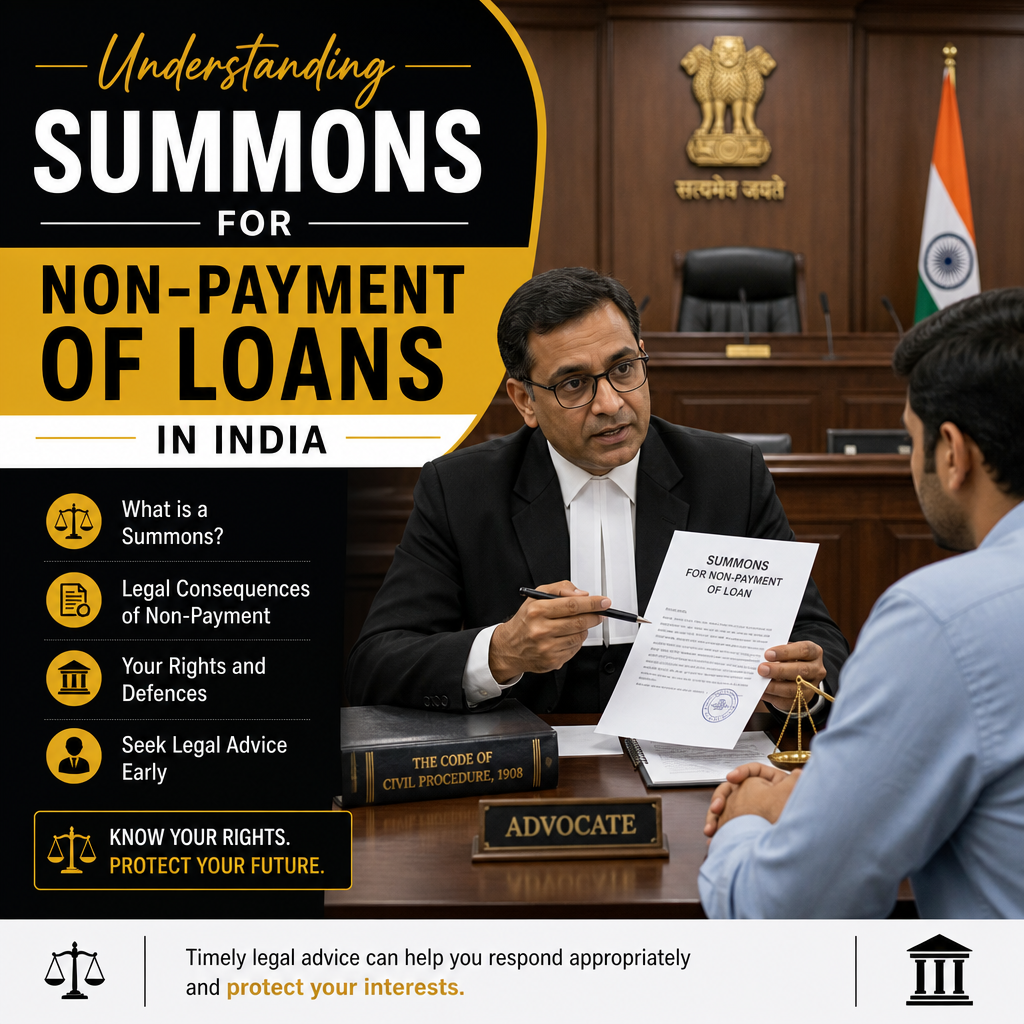
Key Takeaways: Receiving a summons for loan non-payment in India is a critical matter requiring immediate legal attention. Understanding the summons, the legal frameworks like SARFAESI and RBI guidelines, and the borrower’s rights under the Consumer Protection Act is essential. Engaging legal counsel can help navigate defenses, negotiate settlements, and avoid detrimental legal outcomes.
Introduction to Summons for Non-Payment of Loans
Receiving a summons for non-payment of loans is a serious legal matter that requires immediate attention. When a borrower defaults on a loan, lenders often pursue legal action as a final recourse. This step is typically initiated after multiple failed attempts to recover the outstanding debt through regular channels. A loan settlement may still be possible, but understanding the summons process is crucial.
A summons is essentially a legal document issued by a court that informs the borrower of the impending legal proceedings. It outlines the nature of the claim, the amount owed, and the timeline for the borrower to respond. Not responding to a summons can lead to a default judgment, which may result in wage garnishments, asset seizure, or other legal penalties.
It is important for borrowers to assess their legal stance upon receiving a summons. This can involve reviewing the terms of the loan agreement, the legitimacy of the lender's claims, and any possible defenses. Consulting with a legal expert, such as those experienced in banking and finance law, can provide invaluable guidance on how to proceed. Timely action and professional advice can often lead to negotiating a more favorable settlement or defending against the claims effectively.
Legal Framework Surrounding Loan Defaults in India
In India, the legal framework governing loan defaults is designed to protect both lenders and borrowers while ensuring financial discipline. The Reserve Bank of India (RBI) provides guidelines under the Banking Regulation Act, 1949, which banks must follow when handling loan defaults. These guidelines include provisions for classifying assets and managing non-performing assets (NPAs).
When a borrower defaults, banks can issue a legal notice, which may be followed by a summons for non-payment of loans. This is a formal court order requiring the borrower to appear before a judge. The summons serves as a legal reminder of the obligation to repay the debt and outlines the consequences of continued default.
Under the Banking and Finance Law, creditors can initiate proceedings under the SARFAESI Act, 2002, enabling them to seize and sell collateral assets without court intervention. Additionally, the Insolvency and Bankruptcy Code, 2016, provides mechanisms for restructuring liabilities and resolving insolvency.
However, borrowers have rights too. The Consumer Protection Act, 2019, protects against unfair practices, and the RBI's Fair Practices Code mandates transparent dealings by banks. Borrowers should seek legal counsel to understand their rights and respond appropriately to recovery actions.
Understanding the Summons: What It Means and What to Do
Receiving a summons for non-payment of loans can be an overwhelming experience. A summons is a legal document issued by a court, requiring your presence to respond to a creditor's complaint regarding the defaulted loan. It signifies the commencement of legal proceedings by the bank or financial institution seeking recovery of the outstanding amount.
What to Expect
Upon receiving a summons, it's crucial to understand its implications. The document will outline the details of your loan default, the amount claimed, and the court's schedule for hearings. Ignoring it can lead to adverse judgments, resulting in wage garnishments or asset seizures. Therefore, timely action is essential.
Immediate Steps to Take
- Review the Summons: Carefully read the document to understand the claims and deadlines.
- Seek Legal Counsel: Consult with a specialized lawyer in Civil Litigation and Disputes to evaluate your options and prepare a defense.
- Respond Promptly: File a written response within the stipulated time, addressing each claim.
- Negoatiate: Consider discussing a Loan Settlement with the lender to potentially resolve the matter outside court.
Understanding and responding to a summons is crucial to protect your financial and legal interests. Procrastination can escalate the situation, so act promptly and wisely.
Borrower's Rights and Obligations Upon Receiving a Summons
Receiving a summons for non-payment of loans can be daunting, but it's crucial to understand your rights and responsibilities. Firstly, borrowers have the right to a fair hearing. This means the borrower can present their side of the story in court. It's essential to respond to the summons promptly, as ignoring it can lead to a default judgment, which might worsen the situation.
Upon receiving a summons, the borrower should verify the details, including the loan amount and the lender's claims. If discrepancies are found, they should be addressed immediately. Consulting with a legal expert can provide clarity on the situation and help formulate a defense strategy. It’s advisable to explore loan settlement options as a proactive measure to negotiate terms with the lender.
Action Steps
- Review the summons thoroughly for accuracy.
- Consult a lawyer to understand your legal standing.
- File a response within the stipulated time frame to avoid a default judgment.
- Consider options like civil litigation and disputes if necessary.
- Explore potential settlement or restructuring plans with the lender.
Taking timely action and understanding your legal rights can help mitigate the consequences associated with loan defaults.
Procedural Steps After Receiving a Summons for Non-Payment
Upon receiving a summons for non-payment of loans, it is crucial to act swiftly and strategically. Ignoring the summons can lead to unfavorable legal consequences. Here's a detailed guide on how to proceed:
1. Understand the Summons
Thoroughly read the summons to comprehend the claims made against you. It will typically detail the loan amount, the lender's identity, and the court date. Clarifying these details is vital for preparing an appropriate response.
2. Consult a Lawyer
Engage an experienced banking lawyer without delay. They can pinpoint the legal issues and provide expert advice on the best course of action. If you need assistance finding a legal expert, explore our Banking and Finance Law services.
3. Gather Documentation
Compile all relevant documents, including loan agreements, payment records, and communication with the lender. These documents will form the backbone of your defense strategy.
4. Draft a Response
Your lawyer will help you draft a formal response to the summons. This response should address every point raised in the summons and outline your defense strategy. Visit our page on Reply to Bank Legal Notice for Loan Default for more insights.
5. Attend the Court Hearing
Ensure you are present at the court on the scheduled date. Absence may result in a default judgment against you. Dress appropriately and be prepared to present your case or follow your lawyer's guidance.
By following these steps diligently, you can better navigate the legal landscape after receiving a summons for non-payment of loans, protecting your rights and interests effectively.
Legal Remedies Available for Borrowers Facing Loan Defaults
When borrowers are unable to meet loan repayment obligations, they may face legal actions such as summons for non-payment. However, there are several legal remedies available to protect borrowers. Understanding these options can significantly impact how borrowers navigate financial distress.
Negotiation and Settlement
One of the most effective strategies is negotiating with the lender for possible loan settlements. Borrowers can propose restructuring plans or request a reduction in interest rates. For more details, consider exploring our Loan Settlement Services.
Filing for Insolvency
If repayment is unfeasible, borrowers may consider filing for insolvency under the Insolvency and Bankruptcy Code, 2016. This option provides relief and halts further legal actions, giving borrowers a structured way to resolve debts.
Legal Protection Against Harassment
Borrowers facing aggressive recovery tactics can seek protection under RBI guidelines, which prohibit harassment and abusive collection practices. Understanding Legal Rights Against Recovery Agent Harassment is crucial for borrowers.
| Parameter / Criterion | Key Details / Legal Provision | Timeline / Practical Impact |
|---|---|---|
| Negotiation | Discuss restructuring or settlement with the lender. | Immediate impact if the lender agrees; can prevent further legal steps. |
| Insolvency Filing | File under the Insolvency and Bankruptcy Code, 2016. | Can stop legal actions; process may take several months. |
| Legal Protection | Use RBI guidelines against unlawful recovery practices. | Immediate relief from harassment; requires formal complaint. |
| Repayment Plan | Propose a new repayment plan with reduced EMIs. | May take a few weeks to negotiate; effective upon agreement. |
Each of these legal remedies provides different avenues for borrowers to manage their debt issues effectively. It’s advisable to consult with a legal expert to explore these options in detail. For further assistance, see our Banking and Finance Law services.
Key Insights & Data Infographic
Visual summary, statistical trends & procedural breakdown
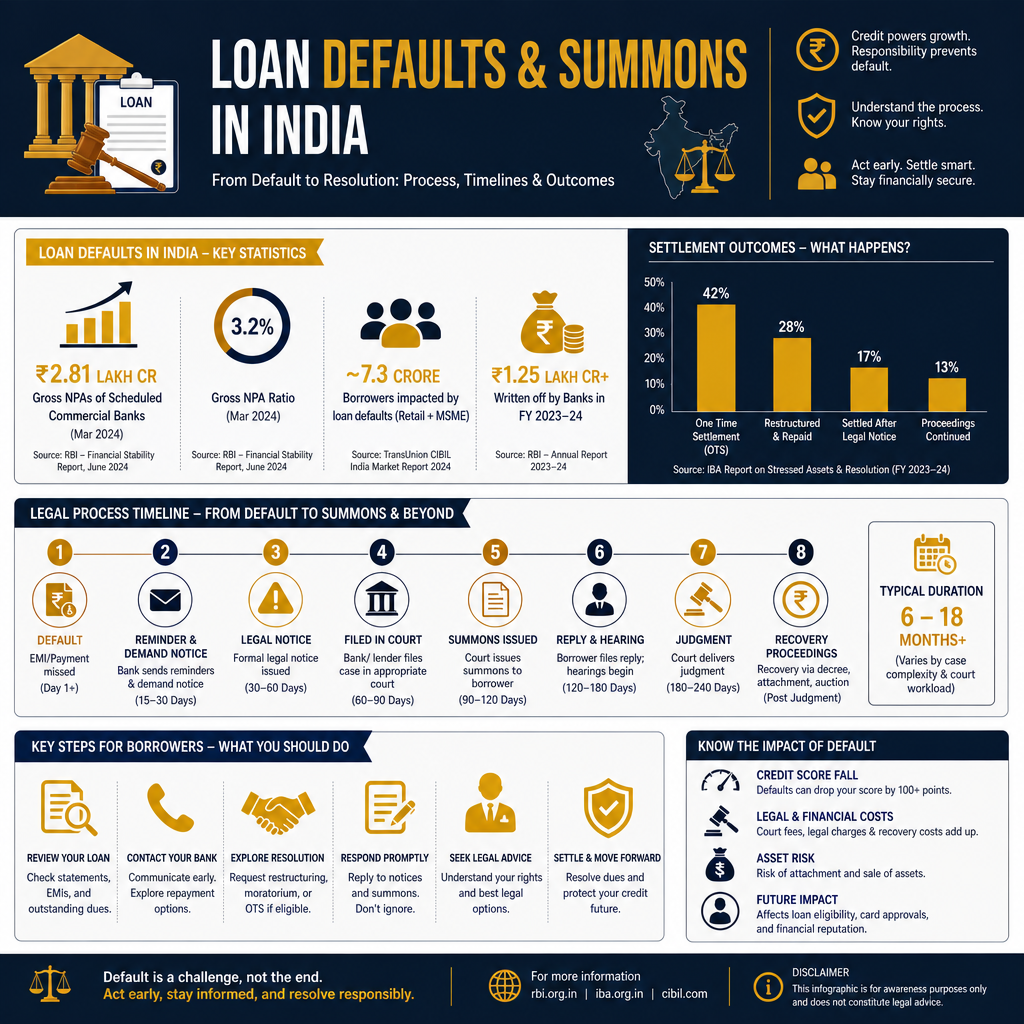
Prepared by AMA Legal Solutions Research & Analytics Team • Data & Compliance Overview

Halt Recovery Agent Harassment Legally
Comparing Loan Repayment Strategies: Settlement vs. Litigation
When facing a summons for non-payment of loans, borrowers often find themselves deciding between settlement and litigation. Understanding the nuances can be crucial in making informed decisions. Settlement usually involves negotiating with the bank to reduce the total amount payable, often resulting in a quicker resolution. In contrast, litigation entails defending oneself in court, which can be a lengthy and expensive process but might be necessary if negotiations fail.
Here is a detailed comparison of key aspects between these two strategies:
| Parameter / Criterion | Key Details / Legal Provision | Timeline / Practical Impact |
|---|---|---|
| Initial Steps | Settlement requires negotiation and offers; litigation involves filing a defense or counterclaim. | Settlement can be initiated immediately; litigation may start only after the legal notice period. |
| Legal Costs | Generally lower in settlements due to reduced legal involvement. | Litigation costs accumulate over time with court fees and lawyer charges. |
| Timeframe | Settlements may conclude within weeks; litigation can span months or years. | Quick resolution in settlements; extended timelines in court cases. |
| Impact on Credit Score | Settlements might negatively impact credit scores but provide immediate relief. | Litigation outcomes can either restore or further damage credit scores based on the ruling. |
Before making a decision, consider consulting with professionals who specialize in both Loan Settlement Services and Civil Litigation and Disputes to evaluate your situation and find a balanced approach that aligns with your objectives and financial standing.
RBI Guidelines on Loan Recovery and Borrower Protections
The Reserve Bank of India (RBI) has established comprehensive guidelines to ensure ethical practices in loan recovery processes and protect borrowers from undue harassment. These guidelines aim to maintain a balance between recovery agents' actions and the borrowers' rights, particularly when dealing with loan settlement and default scenarios.
Communication Protocol: Recovery agents must adhere to a professional code of conduct, which includes contacting borrowers only at prescribed hours to ensure minimal disturbance. Intimidation or coercive tactics are strictly prohibited.
Information Transparency: Banks and financial institutions are required to provide borrowers with clear information regarding their loans, including outstanding amounts, repayment schedules, and any associated penalties. This transparency helps borrowers make informed decisions on their financial obligations.
Dispute Resolution: In case of disputes or grievances, borrowers have the right to approach the bank's grievance redressal mechanism. Should these issues remain unresolved, borrowers can escalate the matter to the Banking Ombudsman.
For borrowers facing legal action, such as receiving a legal notice for loan default, it's crucial to understand their rights and available recourse. These protections help prevent undue stress and facilitate a fair recovery process.
Practical Tips for Negotiating with Lenders Post-Summons
Receiving a summons for non-payment of loans is undoubtedly stressful, but with a strategic approach, you can negotiate effectively with your lender. Here are some practical tips to guide you through this process:
1. Assess Your Financial Position
Before initiating any negotiation, have a clear understanding of your financial situation. Identify your monthly income and expenses to determine how much you can realistically offer as a settlement. This groundwork is vital in presenting a feasible repayment plan to your lender.
2. Open Transparent Communication
Approach your lender with honesty. Explain the reasons behind your default and provide any supporting documentation. Transparency can foster trust and facilitate a more cooperative negotiation process.
3. Propose a Reasonable Settlement Plan
Based on your financial assessment, present a well-structured repayment plan. Consider exploring options like Debt Consolidation & Restructuring for a more manageable solution. Clearly outline how you intend to meet your obligations, focusing on long-term feasibility.
4. Seek Professional Guidance
Engage the services of a legal expert specializing in Loan Settlement Services. A knowledgeable professional can offer valuable insights and negotiate on your behalf, ensuring your rights are protected throughout the process.
5. Remain Calm and Composed
Negotiations can be intense, but maintaining a calm demeanor is crucial. Emotional reactions can hinder the process. Focus on constructive dialogue aimed at reaching a mutually beneficial agreement.
Implementing these strategies will enhance your negotiation position, potentially leading to favorable outcomes despite the stress of a legal summons.
Common Mistakes Borrowers Make When Dealing with Summons
Receiving a summons for non-payment of loans can be daunting, and borrowers often make mistakes that could jeopardize their case. One frequent error is ignoring the summons altogether, assuming the issue will disappear. Failing to respond can lead to a default judgment against you, significantly complicating matters.
Another mistake is trying to handle the situation without professional guidance. Legalese can be complex and overwhelming. Engaging a knowledgeable banking lawyer ensures you comprehend the implications and options available to you. It’s advisable to explore loan settlement services to potentially negotiate better terms.
Borrowers often panic and make uninformed decisions, such as hastily agreeing to unfavorable terms under pressure. It's crucial to take time to understand the proposals and consult experts before committing. Misinterpreting legal documents is another pitfall; always clarify doubts with your lawyer.
Lastly, borrowers sometimes overlook utilizing legal rights and remedies available to them, such as filing for debt consolidation and restructuring or responding to the summons with a well-drafted reply. Each step should be strategic to safeguard your interests and financial future.
Timeline of Legal Proceedings in Loan Default Cases
When a borrower defaults on a loan, legal proceedings generally commence after several attempts by the bank to recover the debt. Understanding the timeline can help borrowers prepare and respond appropriately.
Initial Communication and Notices
The bank usually begins with legal notices demanding payment. This stage aims to prompt the borrower to settle the dues before legal action.
Filing of the Summons
If the borrower fails to respond, the bank may file a suit in the appropriate court. A summons is then issued, notifying the borrower of the legal action and requiring their appearance.
Response to Summons
Upon receiving the summons, the borrower must file a reply within the stipulated period, usually 30 days. It's advisable to consult with a lawyer during this stage to formulate a defense.
Court Hearings and Evidence
The court schedules hearings to examine the evidence submitted by both parties. Borrowers should gather all relevant documentation, including any communication with the bank and payment proofs.
Judgment and Enforcement
Once hearings conclude, the court will issue a judgment. If the decision favors the bank, the borrower may face enforcement actions, such as asset attachment. It is crucial to understand loan settlement options that may help mitigate negative outcomes.
Effective Communication with Lenders and Legal Representatives
Effective communication is crucial when dealing with summons for non-payment of loans. The first step is to acknowledge the notice and respond promptly, demonstrating your willingness to cooperate. Contact your lender to discuss your situation, emphasizing any temporary setbacks causing delays in payment. It is advisable to document all interactions in writing, keeping a record of what is agreed upon.
When communicating, be honest about your financial position. Offer a realistic repayment plan and explore options such as restructuring or settlement. Seek clarity on the lender's policies and processes, as this knowledge can guide your approach.
Engaging Legal Representatives
If you receive a summons, consulting with a legal representative is essential. An experienced lawyer can assist in understanding the legal complexities and negotiating with lenders on your behalf. This is particularly important if the case proceeds to court. Legal counsel can help ensure your rights are protected, and they can help you prepare an appropriate defense strategy.
- Prepare a list of all relevant documents before meetings with your legal counsel.
- Clearly communicate your objectives and any prior agreements made with the lender.
- Avoid making verbal commitments; insist on formalizing agreements in writing.
For further insights on managing loan disputes and understanding legal rights, consider exploring resources on Banking and Finance Law.
Popular Searches & Topics
Commonly searched legal queries and keywords related to this article
Need Strategic Legal Defense for Your Situation?
Our banking & litigation advocates review your notices, debt liability, and recovery issues under complete advocate-client secrecy.

AMA Legal Solutions
Trusted with a 4.7 Google Rating, over 10,000+ Clients Served, 25,000+ Cases Handled, and more than 40+ Years of Experience in providing strategic legal defense and debt resolution across India.
Our media coverages





Client Reviews
"The professional approach of AMA Legal Solutions in handling my SARFAESI notice was commendable. They ensured my rights were protected throughout the process."
Ravi Menon
"I was overwhelmed by a legal summons for my loan default, but the team at AMA Legal Solutions was incredibly supportive and knowledgeable, helping me reach a favorable settlement."
Priya Sharma
"The legal team at AMA Legal Solutions was instrumental in helping me counter a wrongful loan default summons. Their dedication to my case was truly reassuring."
Shantanu Deshmukh
"AMA's in-depth understanding of banking law was evident in their handling of my case. Their strategic advice was pivotal in resolving the issues with my lender."
Sneha Iyer
"AMA Legal Solutions provided exceptional guidance during my loan default case. Their expertise and timely advice helped me navigate through the legal complexities successfully."
Arjun Patel
Frequently Asked Questions
Related Articles
RuPay Credit Card on UPI Default & Credit Line on UPI Settlement (2026)
Micro-transactions on RuPay UPI Credit Cards and pre-approved 'Credit Lines on UPI' have triggered a massive wave of 42%+ APR revolving debt traps. Find out if defaulting blocks your personal savings UPI and how to settle RuPay UPI credit dues for 30%–50%.
Read Article
Paytm, PhonePe & BharatPe Daily EDI Merchant Loan Settlement (2026)
Drowning in Equated Daily Installment (EDI) merchant loans where 100% of your daily QR Soundbox collections are auto-swept before you can pay suppliers or rent? Learn how retail shopkeepers and MSMEs legally halt QR sweeps and negotiate a 50%+ OTS.
Read Article
Can Bank or Loan App Remotely Lock Phone for EMI Default? RBI Rules (2026)
An investigative breakdown of RBI's Remote Device Locking Directions—explaining why lenders cannot lock your phone for personal loans, the mandatory 30/60 DPD safeguards on financed devices, the Rs. 250/hour delay penalty, and how to settle device & app loans.
Read ArticleAbout Author
Anuj Anand Malik
View ProfileAnuj Anand Malik, Founder of AMA Legal Solutions, is a trusted advocate, loan settlement expert, legal advisor, and banking lawyer. With over a decade of experience in loan settlement, corporate law, financial disputes, and compliance, he leads a result-driven law firm based in India that helps individuals, startups, and businesses achieve legal and financial stability.
Connect on LinkedInNeed Legal Representation?
Evaluate your defense against recovery agents, notices, or structure your loan settlement directly with Senior Advocates.
Call +91-8700343611