Latest RBI Guidelines on Repo Rate Reduction as of 18th Aug
Implications of the New Repo Rate Cut for Borrowers and Lenders

Anuj Anand Malik
Reviewed by AMA Legal Solutions

Key Takeaways: The recent RBI repo rate reduction aims to stimulate economic growth by lowering borrowing costs for individuals and businesses. While floating-rate loan borrowers may benefit from immediate EMI reductions, fixed-rate loans require refinancing for similar advantages. Though beneficial, borrowers should avoid over-borrowing and assess financial capacities carefully. Understanding these dynamics helps in strategic financial planning and maximizing the benefits of rate cuts.
Understanding the Latest RBI Repo Rate Reduction
On 18th August, the Reserve Bank of India announced a reduction in the repo rate, a decision that holds significant implications for borrowers, lenders, and the wider economy. The repo rate is the rate at which the RBI lends money to commercial banks, influencing the lending rates that consumers encounter. This reduction aims to stimulate economic growth by making borrowing cheaper for businesses and individuals.
Why the Repo Rate Reduction Matters
A lower repo rate can lead to decreased loan interest rates, providing relief to borrowers struggling with high EMIs. It also encourages businesses to invest by reducing their borrowing costs, potentially leading to increased economic activity. For salaried individuals or businesses facing financial stress, this reduction might offer an opportunity to refinance existing debts at more favorable terms.
- Individuals with home loans or personal loans may see a reduction in their monthly payments.
- Businesses can benefit from lower interest rates on working capital loans.
For those navigating financial challenges, understanding and utilizing the benefits of such reductions is crucial. Refer to our Loan Settlement Services to learn how you can leverage these changes effectively. Additionally, explore our Banking and Finance Law expertise to ensure you make informed financial decisions.
Impact of Repo Rate Cuts on Borrowers
Repo rate cuts by the Reserve Bank of India (RBI) can significantly influence borrowers, primarily by altering the interest rates on loans. When the RBI reduces the repo rate, banks tend to follow by lowering the interest rates on loans, which can benefit borrowers by reducing their monthly installments and overall loan burden.
The immediate relief is seen in the form of reduced EMIs for borrowers with floating interest rate loans. However, the impact on fixed-rate loans is negligible unless borrowers choose to refinance. Furthermore, borrowers seeking new loans can benefit from the lowered rates, which encourages borrowing and stimulates economic growth.
While the benefits are palpable, borrowers should be cautious. Reduced EMIs might tempt over-borrowing, leading to potential financial strain in the future. Therefore, it's crucial to assess one's financial capacity before opting for additional credit.
| Parameter / Criterion | Key Details / Legal Provision | Timeline / Practical Impact |
|---|---|---|
| Floating Rate Loans | Immediate reduction in EMIs | Typically within one month of rate cut |
| Fixed Rate Loans | No change unless refinanced | Depends on refinancing decision |
| New Loan Applications | Lower interest rates | Immediate access to reduced rates |
| Loan Over-borrowing Risk | Potential financial strain | Long-term financial planning required |
For borrowers in financial distress, exploring debt consolidation might provide additional relief alongside the benefits of a repo rate cut. It's essential to stay informed and make strategic financial decisions to maximize the benefits of the reduced rate.
How the Repo Rate Affects Loan Interest Rates
The repo rate, set by the Reserve Bank of India (RBI), significantly influences the lending rates offered by banks and financial institutions. When the repo rate is reduced, banks can borrow funds at a lower cost, enabling them to offer loans at reduced interest rates. This is advantageous for borrowers as it decreases the cost of borrowing and can lead to lower loan settlement amounts.
Conversely, when the repo rate increases, borrowing costs for banks rise, which often translates into higher interest rates for borrowers. This makes loans more expensive and can impact monthly repayment amounts, affecting borrowers' financial planning and debt management strategies.
Impact on Different Types of Loans
- Home Loans: A reduced repo rate typically results in lower home loan interest rates, making housing more affordable. This can also encourage prospective buyers to enter the market.
- Personal Loans: These loans often see quick adjustments based on repo rate changes, impacting borrowers directly. Lower rates can ease financial burdens.
- Business Loans: For businesses, reduced rates can lower capital costs, which is crucial for growth and banking and finance operations.
Borrowers must stay informed about the latest RBI guidelines and repo rate changes to effectively manage their loans and financial obligations.
RBI's Role in Monetary Policy and Economic Stability
The Reserve Bank of India (RBI) plays a pivotal role in maintaining economic stability through its monetary policy decisions. By adjusting the repo rate, which is the rate at which commercial banks borrow from the RBI, it influences inflation and economic growth. A reduction in the repo rate can stimulate economic activity by making borrowing cheaper, encouraging spending and investment.
Monetary Policy Tools
RBI employs various tools to implement monetary policy effectively:
- Repo Rate: Lowering the repo rate can enhance liquidity in the economy, while raising it can help control inflation.
- Reverse Repo Rate: This rate allows RBI to absorb excess funds from banks, thereby managing liquidity levels.
- Cash Reserve Ratio (CRR): This requirement regulates the amount of funds that banks must hold as reserves, impacting their lending capacity.
The RBI's monetary policy is guided by its objective to maintain price stability while ensuring adequate flow of credit to productive sectors of the economy. By calibrating these tools, the RBI aims to foster balanced economic growth and financial stability.
For more insights on how the RBI’s monetary decisions affect loan settlements, explore our Loan Settlement Services.
Comparison of Previous and Current Repo Rate Changes
The Reserve Bank of India (RBI) frequently reviews and adjusts the repo rate to manage inflation and stimulate economic growth. The most recent adjustment, detailed in the Banking and Finance Law guidelines, marks a significant shift in monetary policy as of 18th August. Understanding these changes is crucial for borrowers and financial institutions alike.
Key Differences between Previous and Current Repo Rates
- The previous repo rate was higher, set at 6.5%, while the current rate has been reduced to 6.25%.
- This reduction aims to provide relief to borrowers by lowering lending rates, thus encouraging borrowing and investment.
- The change impacts the cost of loans and repayments directly, affecting both individual borrowers and businesses.
| Parameter / Criterion | Key Details / Legal Provision | Timeline / Practical Impact |
|---|---|---|
| Previous Repo Rate | 6.5% | Until August 17th |
| Current Repo Rate | 6.25% | Effective from August 18th |
| Expected Borrower Impact | Lower interest rates on loans | Immediate effect on new loans |
| Strategic Rationale | Stimulate economic activity | Expected medium-term benefits |
Borrowers seeking to understand the implications of these changes can benefit from consulting resources like our Loan Settlement Services. These services can offer strategic advice tailored to leveraging the lower repo rate for debt restructuring or new financial ventures.
Legal Implications for Loan Agreements Post-Repo Rate Cut
The recent reduction in the repo rate as per the NEW RBI Guidelines released on 18th August has notable legal implications for both existing and new loan agreements. Borrowers can expect a decrease in their EMI payments, which provides temporary relief, especially for those under financial strain. However, it's crucial to understand how these changes affect your contractual obligations.
Impact on Existing Loan Agreements
For borrowers with variable interest rate loans, the reduction should ideally translate to lower interest rates, leading to reduced EMI amounts. Lenders may automatically adjust these rates, but it's advisable to verify the changes in your loan statements. Contact your bank if adjustments do not reflect within a reasonable period.
- Check for recalculated interest rates in your monthly loan statements.
- Confirm any changes with your bank, especially if you're not seeing expected reductions.
Implications for New Loan Agreements
New borrowers entering into loan agreements should negotiate terms that reflect the updated rates. Lower repo rates typically mean more favorable borrowing terms, but this can vary based on the lender. It's prudent to compare offers from different banks and understand how each incorporates the recent changes.
- Ensure the loan agreement reflects the latest RBI guidelines.
- Negotiate for the most competitive interest rates available.
For those considering restructuring their existing loans, now might be an opportune time. Services like Loan Settlement Services can provide comprehensive support in renegotiating terms that align with your financial goals.
Key Insights & Data Infographic
Visual summary, statistical trends & procedural breakdown
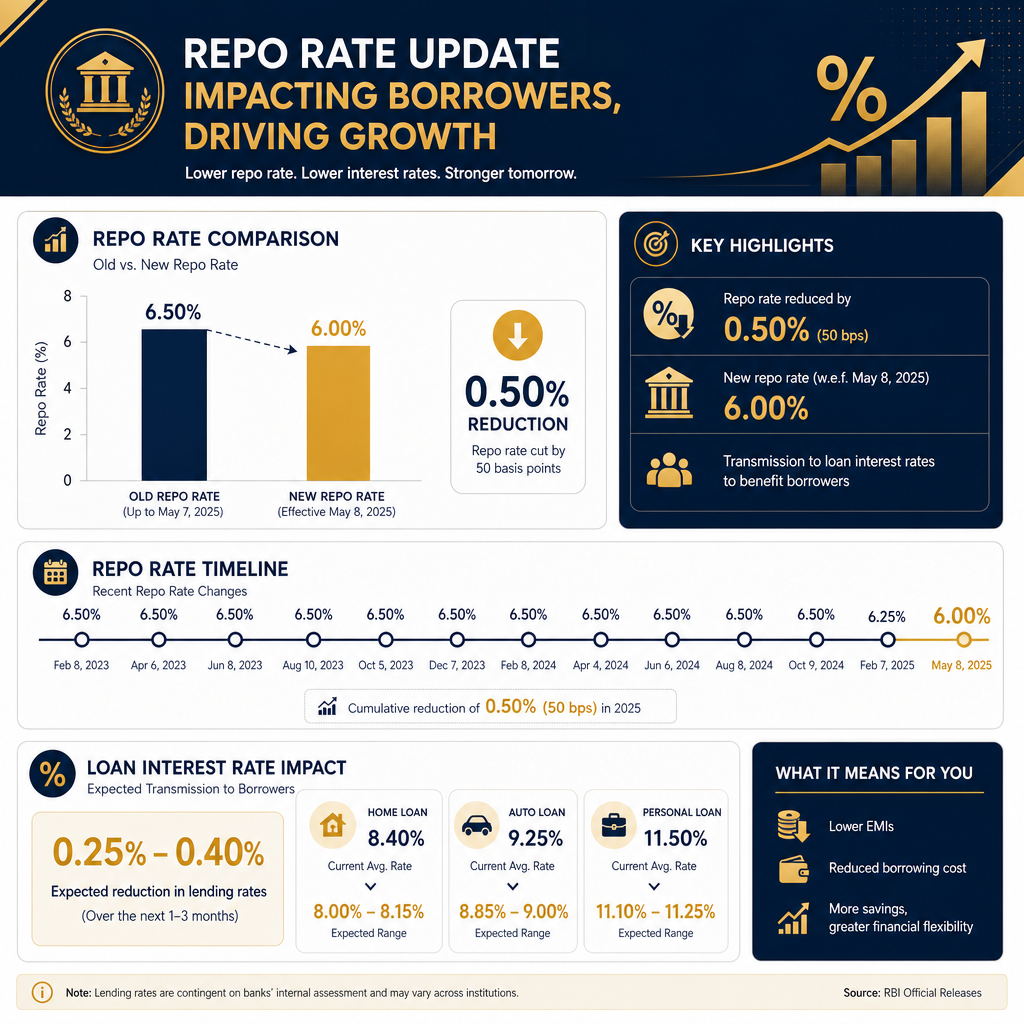
Prepared by AMA Legal Solutions Research & Analytics Team • Data & Compliance Overview

Halt Predatory Loan App Harassment & Blackmail
Strategies for Borrowers to Optimize Loan Terms
With the latest reduction in the RBI repo rate, borrowers have a unique opportunity to renegotiate and optimize their loan terms effectively. Here are some strategies to consider:
Understand the Impact
The reduced repo rate can lower your interest burden, making it an ideal time to reassess your existing loan commitments. Analyze how this change affects your particular loan by reviewing the terms and conditions outlined by your lender.
Negotiate with Your Lender
Approach your lender to discuss possible adjustments in your loan terms. Whether it's a reduction in interest rates or an extension of tenure, lenders are often open to modifying terms under compelling circumstances. Highlight how the RBI's decision impacts your financial situation.
Explore Loan Restructuring
Consider loan restructuring options if you face financial challenges. This could involve modifying the repayment schedule or consolidating multiple debts into a single loan. Our Debt Consolidation & Restructuring services can provide tailored solutions.
Increase EMI Payments
If your financial situation allows, consider increasing your EMI payments. This strategy can help you reduce the loan tenure and overall interest costs, capitalizing on the lower interest rate environment.
- Review your financial plan and set clear goals.
- Communicate openly with your lender for better terms.
- Make use of professional services for legal and financial advice.
By adopting these strategies, borrowers can effectively take advantage of the favorable conditions created by the recent RBI guidelines.
Effect of Repo Rate Changes on Banking Sector Profitability
The Reserve Bank of India’s adjustment of the repo rate directly influences the profitability of the banking sector. When the repo rate is reduced, banks can borrow funds from the RBI at a lower interest, thus decreasing their cost of funds. However, the extent of profitability is contingent on several factors, including the banks' ability to pass on these benefits to borrowers in the form of reduced loan interest rates.
Impact on Loan Interest Rates
A reduction in the repo rate encourages banks to lower interest rates on loans. This can potentially increase the demand for credit, thereby stimulating economic activity. However, if banks are unable to adjust their deposit rates accordingly, their interest margins may shrink, impacting overall profitability. For a deeper understanding of how repo rate changes affect loan settlements, you can refer to our Loan Settlement Services.
Impact on Net Interest Margin
- Lowering the repo rate may compress the net interest margin if the decline in lending rates is not matched by similar reductions in deposit rates.
- Profitability may also be affected by the increased volume of loans disbursed due to lower rates.
Additionally, banks engaged in Banking and Finance Law must adapt their strategies to maximize the benefits of repo rate changes while mitigating risks associated with reduced interest income.
Consumer Rights in the Wake of Repo Rate Adjustments
Repo rate adjustments by the Reserve Bank of India (RBI) can significantly impact loan interests, influencing the monthly EMI amounts for borrowers. Consumers must be aware of their rights and how these adjustments affect their financial obligations. When the RBI reduces the repo rate, banks are expected to pass on the benefit to borrowers, which can lead to a reduction in EMIs for floating-rate loans.
Key Consumer Rights
- Transparency: Banks must clearly communicate changes in interest rates and their impact on loan EMIs. It is crucial for consumers to regularly check their bank statements and loan account details.
- Timely Adjustments: Consumers should expect prompt adjustments to their loan terms following a repo rate change. If delays occur, borrowers have the right to inquire about the reasons.
- Access to Information: Borrowers can access detailed information regarding how these changes affect their specific loans. For further understanding, consult our Loan Settlement Services.
In case of discrepancies or non-compliance by banks, consumers can seek assistance from the Banking Ombudsman or legal advice. Understanding these rights and the implications of repo rate adjustments is essential for safeguarding one's financial position. For comprehensive legal support, explore our services in Banking and Finance Law.
Practical Tips for Managing Loan Repayments After Rate Cuts
Following the latest RBI guidelines on repo rate reduction as of 18th Aug, borrowers can strategically manage their loan repayments to benefit from reduced interest rates. The key is to leverage these rate cuts effectively to improve financial health and reduce loan burdens.
Assess Your Current Loan Terms
Start by reviewing your existing loan agreements to understand how the new rates will impact your EMI. Reduced rates can lead to lower EMIs or the possibility of decreasing the loan tenure. This is a perfect opportunity to explore loan settlement services if you are struggling with repayments.
Communicate with Your Bank
Engage in transparent communication with your bank. Request a revised amortization schedule reflecting the new rates. Sometimes, proactive borrowers can negotiate further reductions or benefits in loan terms.
- Request a clarification from your bank on how much you save due to the rate cut.
- Negotiate for a better deal or waiver on prepayment penalties if you decide to pay off the loan faster.
Consider Consolidation
If you have multiple loans, consolidating them could be beneficial. This might be a good time to look into debt consolidation and restructuring options.
Adjust Your Budget
With lower EMIs, you may have extra funds available. Consider channeling these into a savings plan or making additional repayments to lower your principal faster.
RBI Circulars and Guidelines: A Detailed Overview
The Reserve Bank of India (RBI) recently released comprehensive guidelines on the reduction of the repo rate as of 18th August, impacting various aspects of banking and finance in India. This pivotal move is designed to stimulate economic growth and ease financial pressures on borrowers.
Impact on Borrowers and Lenders
The revised repo rate signifies a reduction in the cost of borrowing for banks. This, in turn, can lead to lower interest rates for various loans, including personal loans, mortgages, and MSME finance. Borrowers should stay informed about how these changes may affect their existing and future loan terms.
- Lower EMIs and interest rates can benefit borrowers.
- Banks may pass on the reduced rates to new customers more quickly.
- Existing loan agreements might take time to reflect the new rates.
For those considering debt restructuring, this environment may present favorable terms. To delve deeper into these nuances, explore our Loan Settlement Services and Banking and Finance Law for expert guidance.
Guidelines for Implementation
The RBI has issued directives to all financial institutions to ensure quick implementation of the revised repo rate. Adherence to these guidelines is crucial for banks to maintain compliance and customer trust. Regular monitoring and transparent communication of rate changes can also help mitigate any confusion among borrowers.
Case Studies on Past Repo Rate Cuts and Borrower Outcomes
The impact of Repo Rate cuts by the Reserve Bank of India is significant on Indian borrowers, influencing both EMI payments and loan eligibility. Historically, repo rate reductions have led to lower EMIs, offering relief to borrowers. Here, we explore notable case studies that exemplify these outcomes.
Case Study 1: MSME Sector Relief
In April 2020, the RBI reduced the repo rate by 75 basis points, a move that was pivotal for MSMEs grappling with financial constraints due to lockdowns. The lower rate enabled many MSMEs to renegotiate loan settlements, reducing monthly payment burdens and improving cash flow. This ultimately prevented defaults and ensured business continuity.
Case Study 2: Home Loan Borrowers
Another significant instance occurred in June 2019 when the RBI slashed the repo rate by 25 basis points. Home loan borrowers benefited as banks passed on the rate cuts, reducing EMIs. Many borrowers opted for a debt consolidation strategy to leverage the lower rates, thereby streamlining their monthly payments.
- MSMEs saw immediate cash flow improvements.
- Homeowners benefited from reduced financial stress.
- Increased affordability led to more housing market activity.
These case studies underscore that while repo rate cuts often lead to favorable outcomes for borrowers, the timing and magnitude of the cuts can significantly vary in impact. For personalized advice, our experts at AMA Legal Solutions can assist borrowers in navigating these changes.
Popular Searches & Topics
Commonly searched legal queries and keywords related to this article
Need Strategic Legal Defense for Your Situation?
Our banking & litigation advocates review your notices, debt liability, and recovery issues under complete advocate-client secrecy.

AMA Legal Solutions
Trusted with a 4.7 Google Rating, over 10,000+ Clients Served, 25,000+ Cases Handled, and more than 40+ Years of Experience in providing strategic legal defense and debt resolution across India.
Our media coverages





Client Reviews
"AMA Legal Solutions provided exceptional insight into how the recent repo rate cut affected my home loan. Their expertise saved me money and stress."
Rajesh Kumar
"AMA Legal Solutions is a treasure trove of knowledge. Their understanding of RBI guidelines and banking laws is unmatched. Highly recommend!"
Anil Joshi
"The legal advice I received from AMA was top-notch. They helped me understand the implications of the repo rate cut and made informed decisions possible."
Vikram Mehta
"The team's guidance on refinancing was invaluable. I was able to reduce my EMIs significantly, thanks to AMA's thorough analysis and professional advice."
Priya Singh
"Excellent service! AMA helped me navigate the complexities of loan settlements amid changing repo rates. Their support was instrumental."
Sneha Patel
Frequently Asked Questions
Related Articles

willdrafting.in indias first online will drafting platform get your will in few minutes
Discover the swift and secure way to draft your will online in India today
Read Article
Why Loan Settlement in the Month of Oct is Beneficial for Borrowers (2026)
Explore key advantages of settling loans in October for a fresh financial start.
Read Article
Will Drafting Services for NRI: How Global Indians Can Protect Indian Assets from Abroad (2026)
A comprehensive legal guide on modern Will drafting services for Non-Resident Indians (NRIs) and OCIs managing real estate, bank accounts, and investments across India.
Read ArticleAbout Author
Anuj Anand Malik
View ProfileAnuj Anand Malik, Founder of AMA Legal Solutions, is a trusted advocate, loan settlement expert, legal advisor, and banking lawyer. With over a decade of experience in loan settlement, corporate law, financial disputes, and compliance, he leads a result-driven law firm based in India that helps individuals, startups, and businesses achieve legal and financial stability.
Connect on LinkedInNeed Legal Representation?
Evaluate your defense against recovery agents, notices, or structure your loan settlement directly with Senior Advocates.
Call +91-8700343611