Achieving Loan Settlement in Minimum Time
Expert Strategies to Quickly Resolve Loan Defaults

Anuj Anand Malik
Reviewed by AMA Legal Solutions

Key Takeaways: Loan settlement is a strategic resolution for borrowers under financial distress, allowing them to negotiate reduced payoffs with banks under frameworks like the SARFAESI Act and IBC. Understanding NPA classifications and RBI guidelines can facilitate quicker settlements, while professional legal advice ensures a legally sound agreement.
Understanding Loan Settlement: A Quick Overview
Loan settlement is a process where a borrower and a lender agree on a reduced payoff amount, resolving outstanding debts more swiftly. This approach is particularly beneficial for borrowers facing financial distress, as it can alleviate the burden of large balances and halt further legal action. Settling loans is a viable option when paying the full debt amount is no longer feasible.
Why Opt for Loan Settlement?
Borrowers typically choose loan settlement to avoid prolonged financial stress and potential legal entanglements. This alternative is preferable when a borrower's financial situation has deteriorated significantly and traditional repayment is impractical. Settlement helps in preventing damage to credit scores over the long term while relieving immediate financial pressure.
Steps to Achieve Loan Settlement Quickly
- Evaluate financial condition to determine feasibility.
- Initiate discussions with the lender to negotiate terms.
- Propose a realistic lump sum payment or structured settlement plan.
- Ensure clear documentation of the settlement agreement.
For expert assistance, consider consulting professionals in Loan Settlement Services to navigate this complex process efficiently. Understanding the intricacies of loan settlement demands careful attention to detail, ensuring that agreements are legally sound and beneficial.
For further insights into banking and finance management, visit our Banking and Finance Law section.
Legal Framework for Loan Settlements in India
The legal framework governing loan settlements in India is primarily anchored in the provisions of the Securitisation and Reconstruction of Financial Assets and Enforcement of Security Interest (SARFAESI) Act, 2002, and the guidelines issued by the Reserve Bank of India (RBI). These laws empower banks and financial institutions to recover non-performing assets (NPAs) without the intervention of courts, which can expedite the settlement process.
The SARFAESI Act allows lenders to take possession of secured assets, manage them, or sell them to recover dues. However, borrowers have the right to file objections, seek redressal, and appeal to the Debt Recovery Tribunal, which provides a check against misuse. The RBI regularly updates its guidelines to ensure fair practices, including transparent communication and fair valuation of assets.
Furthermore, the Insolvency and Bankruptcy Code (IBC), 2016, provides an additional mechanism for resolving distressed assets by facilitating negotiations between borrowers and creditors. This can lead to a quicker settlement if both parties reach a consensus. It's crucial for borrowers to understand these legal aspects, as they significantly impact how swiftly a loan settlement can be achieved. For more information on how these frameworks apply to your situation, consider consulting experts in Banking and Finance Law.
How Banks Classify NPAs and Its Impact on Settlements
Non-Performing Assets (NPAs) are loans or advances for which the principal or interest payment remains overdue for a period of 90 days. Banks classify NPAs into three categories-Substandard, Doubtful, and Loss assets-each affecting the settlement process differently. Understanding this classification is crucial for borrowers aiming for loan settlement in minimum time.
Substandard Assets
Substandard assets are loans overdue for more than 90 days but less than 12 months. Banks are generally more flexible with settlements at this stage, as they aim to improve their financial statements quickly.
Doubtful Assets
Loans classified as doubtful have been non-performing for over 12 months. Settlements here often involve significant negotiation due to increased risk perception. However, banks may still be willing to settle to avoid legal costs associated with prolonged recovery.
Loss Assets
Loss assets are those banks or auditors consider unrecoverable. Quick settlements are often feasible as banks aim to write off these loans to clear their books. Nevertheless, the settlement amount might be higher to mitigate losses.
Understanding these classifications helps borrowers negotiate effectively. For instance, a loan settlement during the substandard phase is usually more favorable. It's advisable to consult professionals specializing in banking and finance law to navigate these complexities efficiently.
Key RBI Guidelines on Loan Settlement
The Reserve Bank of India (RBI) has established pivotal guidelines to streamline the loan settlement process, ensuring both borrowers and lenders have a clear framework to operate within. These guidelines are particularly important for achieving loan settlement in minimum time, reducing financial stress for borrowers.
One-Time Settlement (OTS) Scheme
- Eligibility: Primarily targets non-performing assets (NPAs) and aims to provide borrowers relief by settling these at a mutually agreed amount.
- Process: Borrowers apply through their banks, presenting their case for financial difficulty.
- Advantages: Offers a significant reduction in outstanding debt, allowing borrowers to clear dues without the burden of full repayment.
RBI encourages banks to offer OTS schemes, especially for small and medium-sized enterprises (SMEs), thus facilitating quicker settlements. For detailed guidance, borrowers may consider consulting banking and finance law experts.
Compromise Settlement
- Purpose: Aims at reaching an amicable settlement between the borrower and the bank by negotiating the payable amount.
- Flexibility: Offers scope for tailored agreements based on the borrower's financial condition and repayment capacity.
RBI guidelines mandate banks to assess each case individually, ensuring fair treatment and consideration of the borrower's financial situation. This personalized approach often expedites the debt consolidation process.
Common Mistakes Borrowers Make During Settlements
When aiming for a loan settlement in minimum time, borrowers often falter due to avoidable mistakes. Recognizing and rectifying these errors can expedite the settlement process significantly. Here's what you need to watch out for:
Ignoring Initial Communication
Many borrowers neglect initial communication from the bank or financial institution. This oversight can escalate the situation, leading to legal actions. Early engagement demonstrates willingness and can provide you with leverage to negotiate better terms.
Lack of Preparation
Failing to gather all necessary documents, such as loan statements and correspondence, can delay settlement talks. Comprehensive documentation supports your case and aids in presenting a clear and credible narrative during negotiations.
Not Consulting a Legal Expert
Understanding the intricacies of banking laws and settlement procedures is crucial. Borrowers should consider consulting a legal expert in banking and finance law to guide them through the process. Legal guidance ensures that your rights are protected and that you receive a fair settlement.
Overpromising Repayment Capabilities
Borrowers often commit to repayment plans beyond their actual financial capacity. Overpromising can lead to further defaults, complicating the settlement process. It's vital to present a realistic financial plan that you can adhere to.
Ignoring Professional Help
Some borrowers attempt to settle on their own, which can be detrimental. Engaging with professionals who have experience in loan settlements can significantly reduce the time taken to reach a favorable outcome.
Effective Negotiation Tips for Settling Loans Fast
Negotiating a loan settlement swiftly requires strategic planning and effective communication. Here are practical tips to expedite the process:
Understand Your Financial Position
Before approaching lenders, have a clear picture of your financial situation. Collect all relevant documents such as income statements, bank accounts, and any previous communication with the bank. This preparation empowers you to discuss realistic settlement terms.
Communicate Clearly and Professionally
Initiate contact with your lending institution to discuss a possible settlement. Be honest about your circumstances and avoid fabricating stories. Keep a professional tone and outline your proposed settlement terms during the conversation.
Present a Compelling Proposal
Offer a lump-sum payment if possible, as banks often prefer upfront settlements. If not feasible, suggest a structured repayment plan. Ensure your proposal is feasible and consider what your lender might accept.
Leverage Legal Assistance
Engage with legal professionals who specialize in Banking and Finance Law to navigate complex negotiations. Their expertise can provide you with leverage, ensuring your rights are protected and the process is streamlined.
Follow Up Diligently
Persistence is key in negotiations. Follow up regularly with your lender to keep the momentum. This demonstrates your commitment and eagerness to resolve the debt quickly.
By implementing these strategies, you can create favorable conditions for a quick and effective loan settlement.
Key Insights & Data Infographic
Visual summary, statistical trends & procedural breakdown
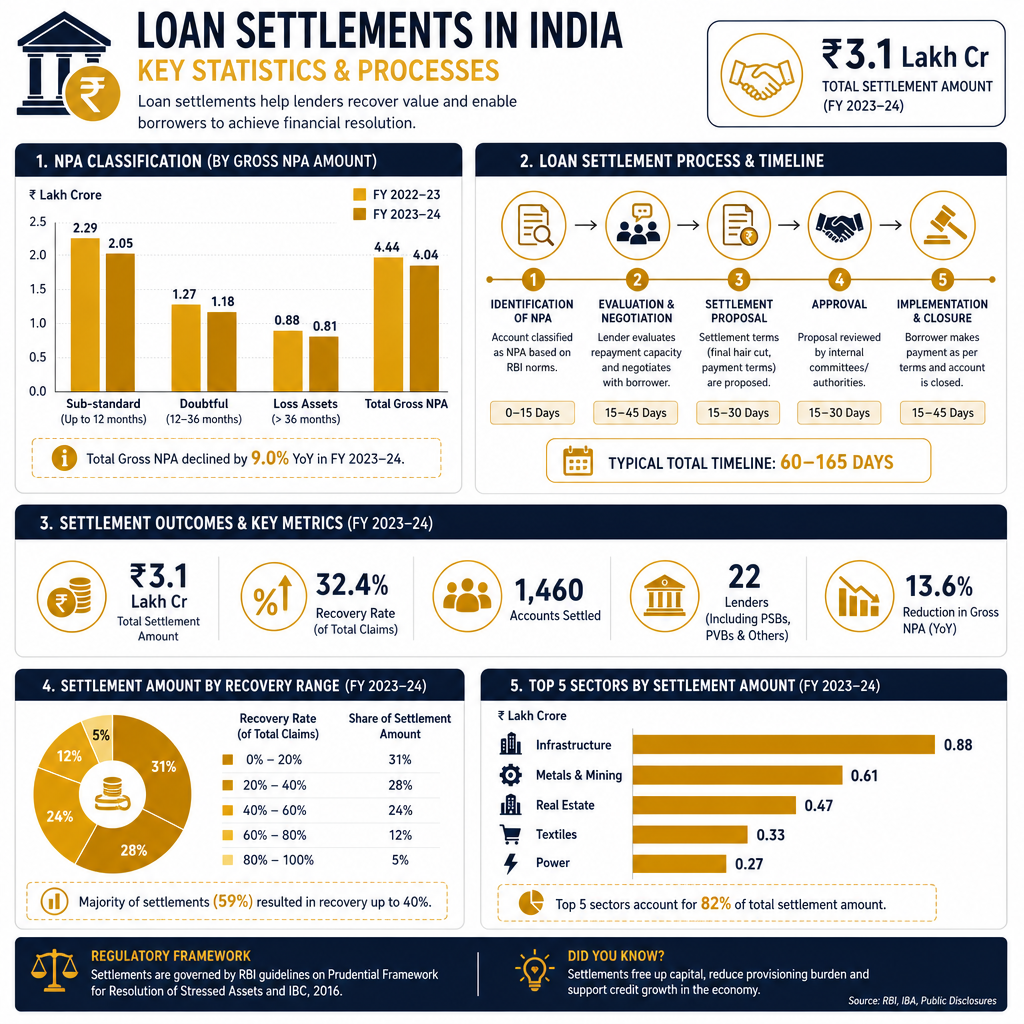
Prepared by AMA Legal Solutions Research & Analytics Team • Data & Compliance Overview

Halt Recovery Agent Harassment Legally
What Banks Typically Don’t Reveal About Settlements
Banks often hold back certain key aspects when negotiating loan settlements. Understanding these can significantly expedite the process. Firstly, banks prioritize settlements that are likely to improve their balance sheets quickly. They might not disclose that a well-drafted reply to a legal notice can leverage negotiations in your favor. Also, banks typically prefer settlements before the loan is classified as a Non-Performing Asset (NPA), which usually occurs after 90 days of non-payment.
Another crucial point is that settlement offers can vary drastically based on internal classifications of the borrower. For instance, a borrower in a strategic industry might receive more lenient terms. Moreover, banks may not openly share that they have thresholds for acceptable settlement offers, often ranging from 50% to 80% of the outstanding amount, depending on the borrower's repayment history.
| Parameter / Criterion | Key Details / Legal Provision | Timeline / Practical Impact |
|---|---|---|
| Settlement Timing | Prior to NPA classification | Within 90 days of default |
| Offer Range | 50%-80% of outstanding | Immediate negotiation leverage |
| Borrower Classification | Industry-based leniency | Custom terms offered |
| Legal Negotiations | Impactful legal replies | Can expedite settlement |
Furthermore, banks might not openly reveal that a professional legal intervention can often secure a better deal. Engaging with a legal expert, such as through our Loan Settlement Services, can significantly enhance negotiation power, ensuring that borrowers achieve settlements in minimum time.
Steps to Stop Harassment from Recovery Agents
Dealing with recovery agents can be daunting, but knowing the right steps can help you address the issue effectively and protect your rights. Here’s how you can take action:
1. Understand Your Rights
Familiarize yourself with your legal rights against recovery agent harassment. Recovery agents must follow guidelines set by the Reserve Bank of India, and any intimidation or misbehavior is strictly prohibited.
2. Keep All Communications Documented
Always maintain records of all communications with recovery agents. If an agent contacts you, insist on written communication. This approach not only provides a record but also ensures that there's a formal trail.
3. Notify the Bank
If you experience harassment, promptly inform the bank holding your loan. Banks are required to take responsibility for the actions of their agents. This notification can be a crucial step in putting an end to aggressive tactics.
4. File a Complaint
If the harassment continues, you can file a complaint with the banking ombudsman or even approach a civil court. Consider seeking assistance from professionals experienced in loan settlement services for guidance.
5. Explore Settlement Options
To achieve a loan settlement in minimum time, engage with the bank to negotiate a feasible repayment plan. Opt for professionals who specialize in debt consolidation and restructuring to assist you in this process.
By following these steps, you can effectively reduce harassment and work towards a timely resolution of your financial obligations.
Using Arbitration for Speedy Loan Resolution
Arbitration is increasingly being utilized as an efficient mechanism for resolving loan disputes swiftly. For borrowers facing loan settlement challenges, arbitration offers a structured yet flexible forum, which is often less time-consuming than traditional court proceedings. The streamlined process allows both parties to present their case before a neutral arbitrator, who is empowered to deliver a binding decision.
Why Choose Arbitration?
- Time Efficiency: Compared to litigation, arbitration can significantly reduce the resolution timeline, facilitating loan settlement in minimum time.
- Confidentiality: Unlike court cases, arbitration proceedings are private, a feature that appeals to many individuals and businesses seeking discretion.
- Control Over Proceedings: Parties have more control over selecting arbitrators with specific expertise in banking and finance law.
Process of Arbitration
Initiating arbitration begins with a mutual agreement between the borrower and lender, often specified within the loan contract. Once initiated, procedures include the submission of claims, responses, and subsequent hearings. The arbitrator evaluates the evidence and arguments before rendering a decision.
Potential Risks and Considerations
- Binding Nature: The arbitrator’s decision is typically final and binding, with limited grounds for appeal.
- Cost Implications: While generally quicker, arbitration can sometimes be costly, depending on the complexity of the case and the arbitrator's fees.
For those considering arbitration, it is advisable to seek guidance from Arbitration and Dispute Resolution experts to navigate the intricacies effectively and ensure the best outcome.
Real-Life Scenarios: Successful Loan Settlements
Securing a loan settlement in the shortest time requires strategic negotiation and timely action. Consider the case of Rajesh, a small business owner. Faced with mounting debts, he approached his bank with a clear repayment plan and financial documents highlighting his capacity for partial repayment. Within weeks, he successfully reduced his debt by 40% and restructured the remaining balance into manageable installments.
In another instance, Priya, a salaried employee, was receiving constant calls from recovery agents. She opted to communicate only via email, allowing her to keep a record of all communications. By referencing RBI guidelines, she managed to negotiate a settlement that waived off late fees and reduced the principal amount. This approach helped her settle the matter in just four weeks.
Key Strategies for Quick Settlements
- Engage with professional legal advisors early. Consult legal services to draft replies to bank notices effectively.
- Present a realistic and documented financial status to your lender.
- Highlight circumstances like job loss or medical emergencies to garner a sympathetic ear from the bank.
These scenarios underscore the importance of proactive engagement and strategic negotiation, proving that borrowers can achieve a swift resolution with the right approach.
Comparison of Legal Remedies: Settlement vs. Litigation
When facing financial distress, choosing between loan settlement and litigation is crucial. Settlement aims to resolve debts amicably and quickly, whereas litigation involves legal proceedings, often resulting in prolonged timelines. Understanding these differences can help borrowers make informed decisions and achieve a loan settlement in minimum time.
Settlement
- Negotiation-based resolution.
- Focuses on reducing outstanding debt through discussion.
- Generally faster and cost-effective.
Litigation
- Involves formal legal processes in court.
- Can be lengthy and expensive.
- May result in a court-directed repayment plan.
| Parameter / Criterion | Key Details / Legal Provision | Timeline / Practical Impact |
|---|---|---|
| Cost | Settlement generally involves lower legal fees compared to litigation. | Reduces financial burden and can expedite resolution. |
| Timeframe | Settlement can be completed in weeks; litigation can take years. | Fast resolution prevents prolonged financial strain. |
| Flexibility | Settlement allows for tailored solutions between parties. | Encourages cooperation and mutual agreement. |
| Outcome | Settlement typically results in debt reduction; litigation may enforce full payment. | Potentially lessens total debt liability. |
| Enforceability | Litigation outcomes are legally binding and enforceable by court. | Ensures compliance but can delay resolution. |
For borrowers seeking a swift resolution, opting for settlement provides an efficient alternative. However, in cases where negotiation fails, litigation remains a viable option. Understanding these legal remedies can help borrowers approach bank dealings strategically, potentially leading to a favorable outcome.
Sample Conversations with Recovery Agents and Banks
Successful negotiation with recovery agents and banks is crucial for achieving loan settlement in minimum time. The key is to maintain a calm yet assertive demeanor. Here are some sample conversations that might guide you through your interactions with these entities.
Conversation with a Recovery Agent
Recovery Agent: "You need to pay at least two installments immediately to avoid further action."
Borrower: "I understand the urgency, but due to recent financial constraints, I am unable to make such payments. I have lost my job recently and am actively seeking new employment. Could we discuss a feasible payment plan?"
By demonstrating your willingness to cooperate and providing a reasonable explanation, you can often find a more manageable solution.
Discussion with Bank Officials
Bank Official: "Can you provide us with a detailed proposal for restructuring your loan?"
Borrower: "Certainly. I am prepared to submit a proposal that considers my current financial situation. I believe restructuring could be beneficial for both parties. Could we schedule a meeting to discuss this further?"
When engaging with bank officials, present your case clearly and back it with practical suggestions.
Request for Written Communication
Recovery Agent: "We will be visiting your premises next week for further discussion."
Borrower: "I request that all communications be conducted via email for documentation purposes. This will ensure clarity and help in reaching an agreement swiftly."
Requesting written communication can prevent misunderstandings and provide a record of all discussions. For more on handling recovery agents, consider reading about your legal rights against recovery agent harassment.
Popular Searches & Topics
Commonly searched legal queries and keywords related to this article
Need Strategic Legal Defense for Your Situation?
Our banking & litigation advocates review your notices, debt liability, and recovery issues under complete advocate-client secrecy.
AMA Legal Solutions
Trusted with a 4.7 Google Rating, over 10,000+ Clients Served, 25,000+ Cases Handled, and more than 40+ Years of Experience in providing strategic legal defense and debt resolution across India.
Our media coverages





Client Reviews
"AMA Legal Solutions provided exceptional guidance and support throughout my loan settlement journey. Truly grateful!"
Anjali Verma
"AMA Legal Solutions efficiently resolved my loan settlement, easing my financial burden quickly. Highly recommended!"
Rajesh Kumar
"The team's expertise in banking law ensured my loan settlement was handled swiftly and effectively. Thank you!"
Kunal Bhattacharya
"Professional and knowledgeable team. AMA Legal Solutions secured a favorable settlement for my overdue loans."
Sanjay Patel
"Expert legal advice that helped me navigate the complex loan settlement process with ease. Excellent service!"
Priya Menon
Frequently Asked Questions
Related Articles
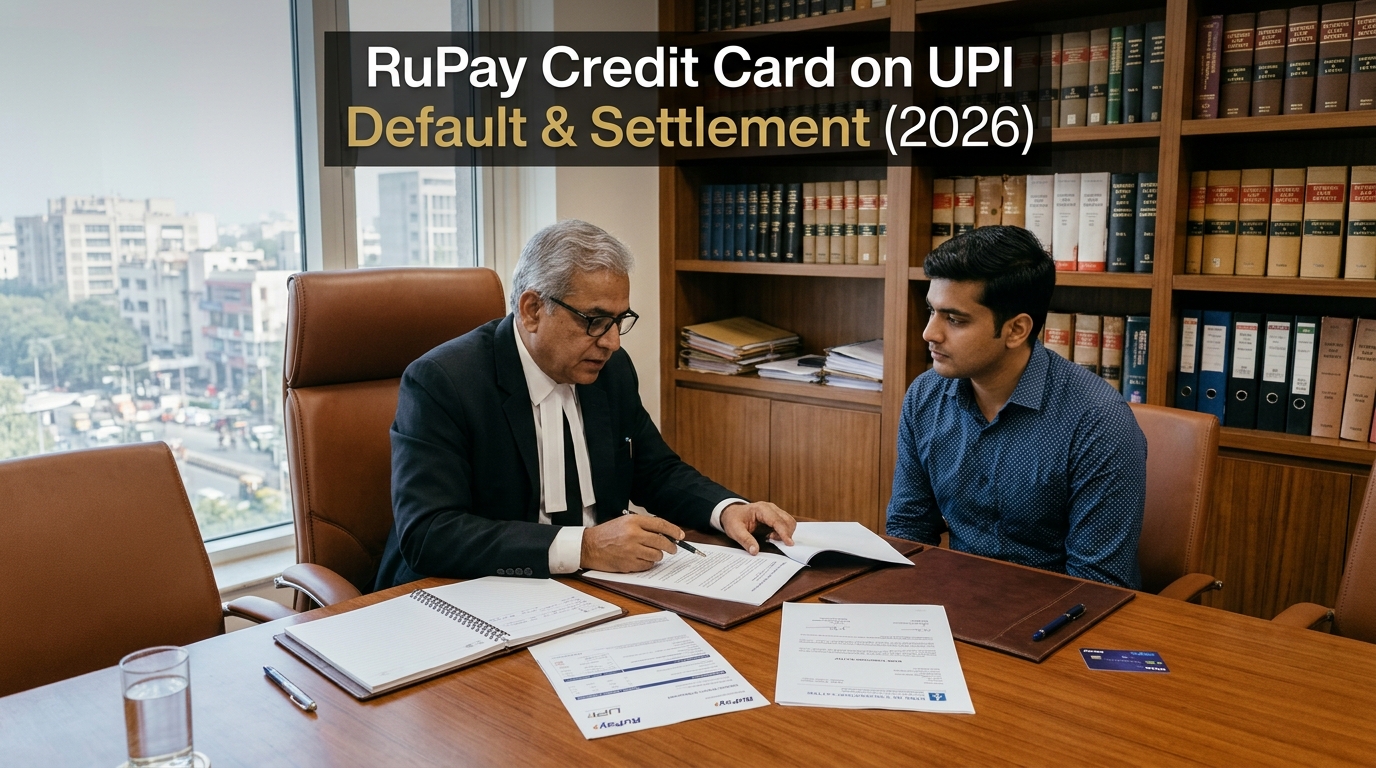
RuPay Credit Card on UPI Default & Credit Line on UPI Settlement (2026)
Micro-transactions on RuPay UPI Credit Cards and pre-approved 'Credit Lines on UPI' have triggered a massive wave of 42%+ APR revolving debt traps. Find out if defaulting blocks your personal savings UPI and how to settle RuPay UPI credit dues for 30%–50%.
Read Article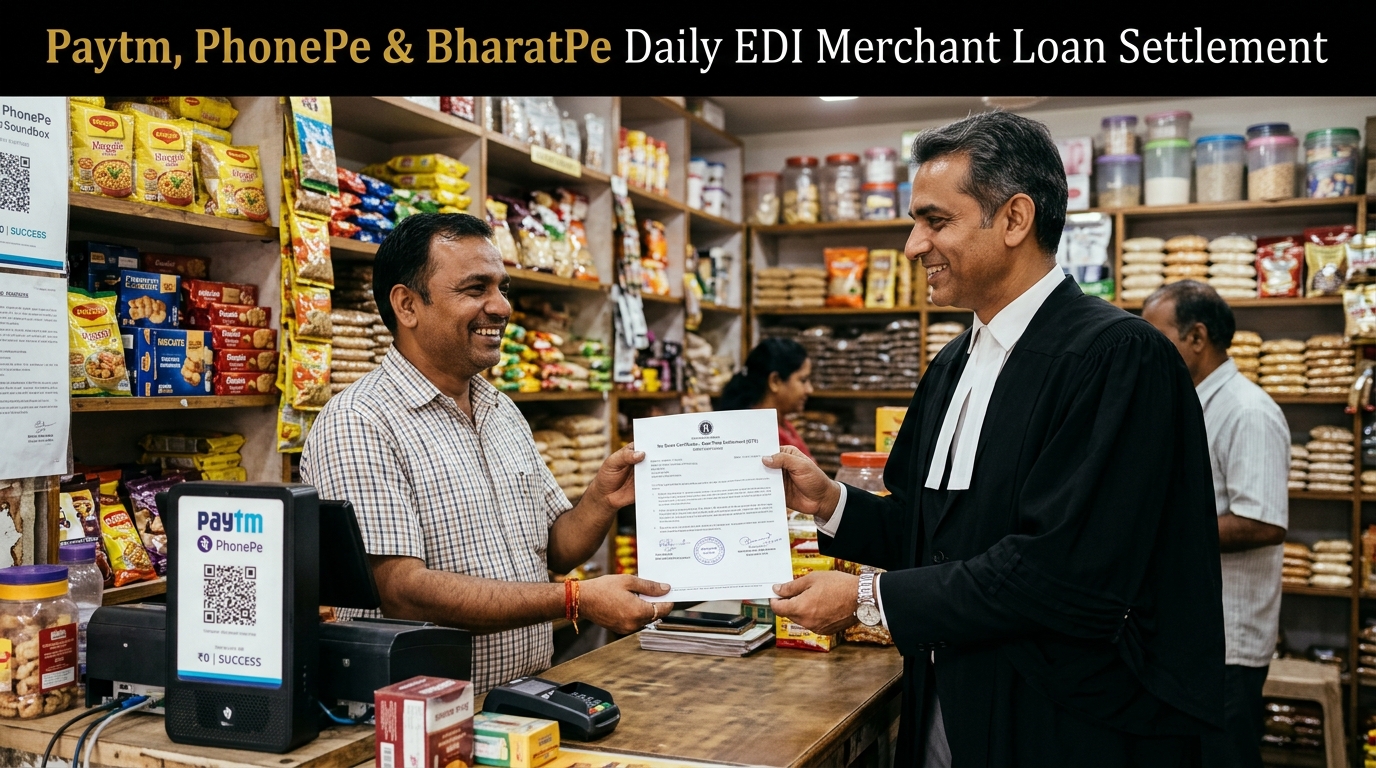
Paytm, PhonePe & BharatPe Daily EDI Merchant Loan Settlement (2026)
Drowning in Equated Daily Installment (EDI) merchant loans where 100% of your daily QR Soundbox collections are auto-swept before you can pay suppliers or rent? Learn how retail shopkeepers and MSMEs legally halt QR sweeps and negotiate a 50%+ OTS.
Read Article
Can Bank or Loan App Remotely Lock Phone for EMI Default? RBI Rules (2026)
An investigative breakdown of RBI's Remote Device Locking Directions—explaining why lenders cannot lock your phone for personal loans, the mandatory 30/60 DPD safeguards on financed devices, the Rs. 250/hour delay penalty, and how to settle device & app loans.
Read ArticleAbout Author
Anuj Anand Malik
View ProfileAnuj Anand Malik, Founder of AMA Legal Solutions, is a trusted advocate, loan settlement expert, legal advisor, and banking lawyer. With over a decade of experience in loan settlement, corporate law, financial disputes, and compliance, he leads a result-driven law firm based in India that helps individuals, startups, and businesses achieve legal and financial stability.
Connect on LinkedInNeed Legal Representation?
Evaluate your defense against recovery agents, notices, or structure your loan settlement directly with Senior Advocates.
Call +91-8700343611