How to Negotiate Credit Card Write-Off: A Practical Guide (2026)
Unlock effective strategies for negotiating credit card write-offs and reclaim financial control.

Anuj Anand Malik
Reviewed by AMA Legal Solutions

Key Takeaways: Negotiating a credit card write-off involves understanding the legal obligations surrounding debt repayment and utilizing strategic communication with creditors. It is crucial to assess your outstanding debts thoroughly and to negotiate within the scope of RBI guidelines to potentially reduce your repayment burden while protecting your credit score.
Introduction to Negotiating Credit Card Write-Offs in India
Understanding how to negotiate credit card write-off processes can be crucial for individuals struggling with overwhelming debt. A "write-off" occurs when a credit card issuer designates an account as uncollectible after payments are overdue for more than 90 days, categorizing it as a Non-Performing Asset (NPA). This accounting measure allows financial institutions to clear the bad debt from their balance sheets. However, it's important to note that a write-off does not absolve the borrower from the obligation to repay the outstanding amount.
In this guide, we will explore effective strategies for negotiating a credit card write-off, highlighting the legal framework, procedural guides, and strategic communication techniques essential for modifying debt in India in 2026. Readers will gain insight into managing their financial burdens effectively while maintaining compliance with relevant legal provisions.
Statutory Framework & Governing Legal Provisions
The process of negotiating a credit card write-off is deeply rooted in certain legal frameworks and provisions regulated by the Reserve Bank of India (RBI) and other financial statutes.
- Reserve Bank of India Guidelines: According to the RBI's Master Circular on Prudential Norms, a write-off is recognized as an accounting action that does not eliminate the owner’s liability.
- Credit Information Companies (Regulation) Act, 2005: This Act compels banks to report all credit-related information accurately to credit agencies, which reflects on credit reports for approximately seven years.
- Fair Practices Code: Mandates fair treatment and transparency during debt recovery processes, prohibiting coercive measures by recovery agents as reinforced in the ruling Manager, ICICI Bank Ltd. v. Prakash Kaur & Ors. (2007 2 SCC 711).
These provisions underscore the significance of conducting write-off negotiations within the bounds of the law to safeguard credit scores and avoid potential legal consequences.
Comprehensive Analysis & Practical Evaluation of Credit Card Write-Off
Learning how to negotiate credit card write-off terms involves understanding the nuances of credit reporting and the banking sector's operations. Negotiating effectively can potentially reduce the total repayment burden through agreed settlements.
The initial step in this process revolves around understanding the outstanding debt profile. This includes reviewing credit statements, analyzing accrued interest, and tallying any additional charges or fees. Borrowers are advised to seek clarity on their financial positioning before entering negotiations.
Comparative Parameters / Procedural Workflow Matrix
| Parameter / Option | Legal Basis & Requirements | Key Procedures / Considerations | Strategic Advantage with Counsel |
|---|---|---|---|
| Debt Assessment | Review of outstanding principal, interest, and fees | Analyze all debts comprehensively | Expert evaluation and advice |
| Communication | No specific statutory requirement | Formal written communication with the bank | Structured communication strategies |
| Settlement Negotiation | RBI Guidelines for Fair Practices | Mutual agreement on reduced payoff | Advocacy and negotiation leverage |
| Documentation | Need for legally binding settlement letter | Ensure clarity on terms and conditions | Ensures legally sound agreements |
| Final Payment | Bank's procedural requirements | Formalize payment through official channels | Guidance on secure payment protocols |
Negotiating a settlement is often a strategic decision, informed by understanding both the potential benefits and the implications for future creditworthiness. Such steps are vital for those considering how to manage credit card debt settlement effectively.
Legal Safeguards, Consumer Rights, and Critical Risks to Avoid
Throughout the process of negotiating a credit card write-off, consumers have various rights and protections:
- Consumer Rights: Borrowers have the right to fair treatment during proceedings. Legal frameworks offer protection against coercive recovery practices, emphasizing the importance of a respectful negotiation process.
- Risks To Avoid: Beware of unauthorized agents proposing guaranteed settlements for upfront fees. All agreements should be confirmed on official bank letterhead to ensure their legitimacy.
- Remedies: If banks fail to adhere to RBI guidelines, complaints can be lodged under the RBI Integrated Ombudsman Scheme, establishing a route for grievance resolution.
Ensuring these rights are upheld is crucial when learning how recovery agents get your personal details and act upon them, specifically when finding a way to negotiate effectively.
Key Insights & Data Infographic
Visual summary, statistical trends & procedural breakdown
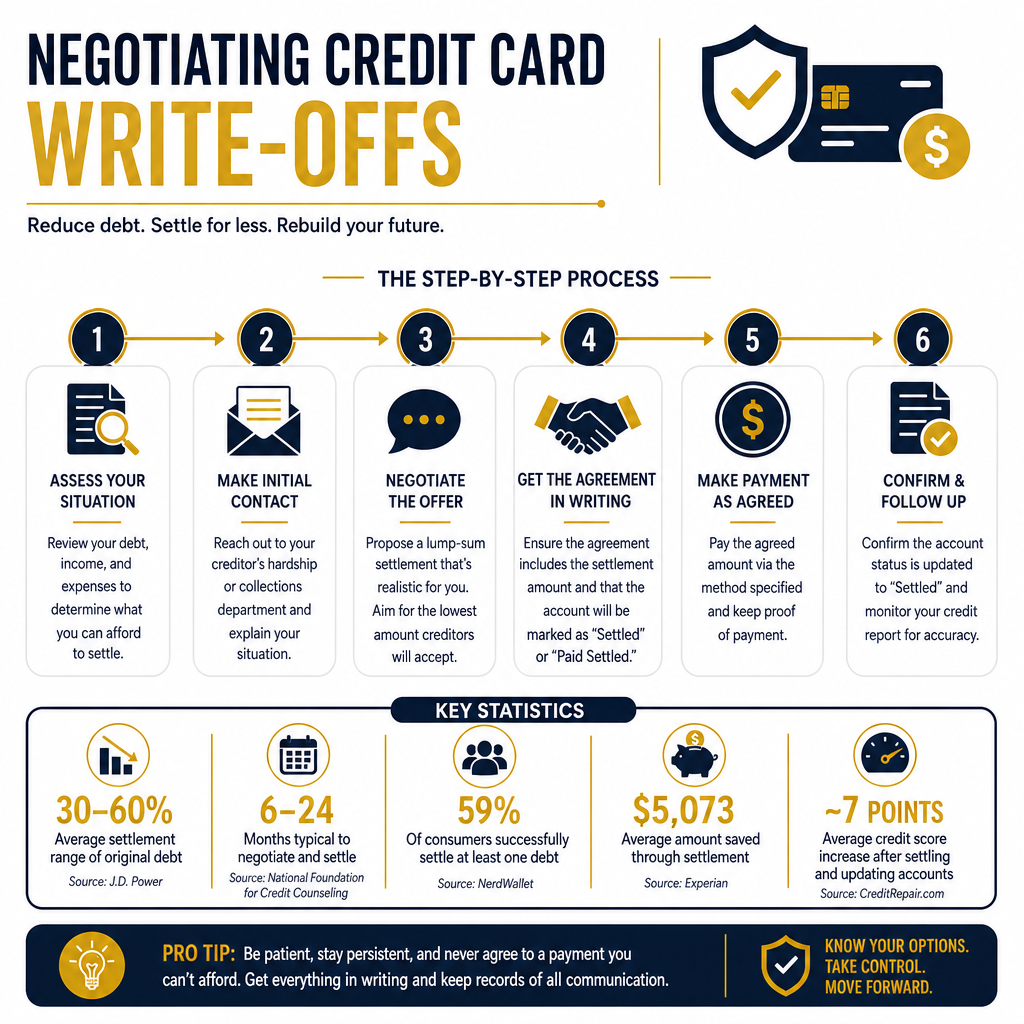
Prepared by AMA Legal Solutions Research & Analytics Team • Data & Compliance Overview

Halt Recovery Agent Harassment Legally
Understanding the Role of Credit Bureaus in Write-Off Negotiations
Credit bureaus play an essential role in influencing the practical outcomes of how to negotiate credit card write-off. Recorded write-offs can drastically affect credit scores, making it critical to understand their effect. Interaction with banks should include affirming correct reporting post-negotiation.
Ensuring that settlement agreements translate into NOCs (No Objection Certificates) can substantially aid in repairing the credit report impact and is part of maintaining a clean record post-settlement.
Steps to Prepare for Negotiation with Creditors
Effective preparation is fundamental when considering how to negotiate credit card write-off. Here are the key steps:
- Review Financials: Analyze all credit debt components to understand your repayment capacity.
- Document Communication: Initiate contact with the creditor using a formal hardship letter.
- Negotiate Thoughtfully: Propose achievable settlement amounts, ideally ranging from 40% to 70% of owed debt.
- Confirm Agreements: Ensure all consensual terms are documented in writing and payment is traceable.
These actions not only provide a structured approach but also help reinforce the borrower's position during negotiations.
Common Pitfalls in Negotiating Credit Card Write-Offs And How to Avoid Them
Facing pitfalls is common when negotiating a credit card write-off:
- Inadequate Documentation: Remember to formalize every negotiated agreement with official documents.
- Insufficient Preparation: Failing to assess one's financial situation can lead to illogical settlements.
- Reliance on Unverified Agents: Sticking to reputable firms is essential to avoid scams.
Avoidance of these pitfalls strengthens one’s negotiation efforts and avoids unwanted financial stress.
Strategies for Effective Communication with Creditors
The articulation of one's financial status critically affects how to engage creditors effectively, influencing how your propositions are perceived.
- Transparent Dialogue: Express genuine hardships clearly while proposing settlements.
- Consistent Follow-Through: Regular communication helps in tracking and resolving disputes directly with creditor representatives.
- Professional Assistance: Legal intermediaries may offer insight into securing better settlements, underscoring the advantage of professional representation.
These strategies enhance one's capability to effectively progress through the negotiation process.
Real-life Success Stories: Negotiating Write-Offs Successfully
Numerous individuals have successfully navigated the complexities of credit card write-off negotiations, transforming their financial status with proactive strategies.
For instance, a notable case involved a debtor negotiating a settlement for 50% of the total outstanding balance with comprehensive documentation as advised by a legal representative. This outcome not only resolved their immediate financial pressures but also improved their credit standing over time.
Such real-world examples highlight the profound impact of strategic negotiation and illustrate the path forward for those struggling with significant credit burdens.
Strategic Conclusion: Securing Legal Assurance with AMA Legal Solutions
In conclusion, mastering how to negotiate credit card write-off is paramount for individuals facing debt challenges in India. Utilizing available legal frameworks, executing effective negotiation strategies, and engaging with credible legal representation can substantially enhance the prospects for a favorable debt settlement experience.
For those seeking professional guidance, AMA Legal Solutions offers tailored legal support, aiding clients with registered advocate counsel skilled in handling credit issues under the Advocates Act, 1961. By contacting AMA Legal Solutions, borrowers can receive unparalleled assistance, ensuring all aspects of credit card debt settlement are handled precisely, legally, and effectively. For more details, visit our services page on all legal practice areas.
The support and professional insights provided can help individuals transition towards financial stability with the assurance of expert legal standards.
Popular Searches & Topics
Commonly searched legal queries and keywords related to this article
Need Strategic Legal Defense for Your Situation?
Our banking & litigation advocates review your notices, debt liability, and recovery issues under complete advocate-client secrecy.

AMA Legal Solutions
Trusted with a 4.7 Google Rating, over 10,000+ Clients Served, 25,000+ Cases Handled, and more than 40+ Years of Experience in providing strategic legal defense and debt resolution across India.
Our media coverages





Frequently Asked Questions
Related Articles
What Is the Difference Between Credit Card Write-Off and Settlement?
Explore how credit card write-offs and settlements differ in legal implications and processes.
Read Article
Earned Wage Access & Salary Advance App Loan Settlement in India (2026)
Protect your relieving letter and FnF pay while settling salary-advance loans.
Read Article
Can You Get Another Credit Card After Settlement? Understanding Your Options in 2026
Explore your eligibility for a new credit card post-settlement and essential legal insights.
Read ArticleAbout Author
Anuj Anand Malik
View ProfileAnuj Anand Malik, Founder of AMA Legal Solutions, is a trusted advocate, loan settlement expert, legal advisor, and banking lawyer. With over a decade of experience in loan settlement, corporate law, financial disputes, and compliance, he leads a result-driven law firm based in India that helps individuals, startups, and businesses achieve legal and financial stability.
Connect on LinkedInNeed Legal Representation?
Evaluate your defense against recovery agents, notices, or structure your loan settlement directly with Senior Advocates.
Call +91-8700343611