Understanding Debt Clearance Companies in India
Navigate debt settlement with top legal tips and insights

Anuj Anand Malik
Reviewed by AMA Legal Solutions

Key Takeaways: Debt clearance companies in India assist borrowers by negotiating with creditors, consolidating debts, and providing financial education. They operate within legal frameworks like the IBC 2016 and RBI guidelines to ensure fair practices. Understanding these services and protections can empower borrowers to manage financial obligations effectively and prevent unethical treatment by recovery agents.
Introduction to Debt Clearance Companies and Their Role
Debt clearance companies play a crucial role in assisting individuals and businesses in India to manage and settle their outstanding debts. These companies act as intermediaries between the debtor and the creditor, helping to negotiate favorable terms for debt settlement. By employing their expertise, they can significantly reduce the financial burden on borrowers who are struggling with repayments.
Functions of Debt Clearance Companies
Debt clearance companies provide a range of services aimed at alleviating the financial stress of borrowers. These include negotiating with creditors for lower interest rates, consolidating multiple debts into a single manageable payment, and offering strategic advice on debt management. They tailor their strategies to meet specific needs, ensuring optimal outcomes for their clients.
- Negotiation: Companies negotiate with creditors to reduce the total debt amount or secure a manageable repayment plan.
- Debt Consolidation: By combining multiple debts, they simplify repayments and often reduce interest rates.
- Financial Education: These companies also provide advice on how to repair your credit score and manage finances effectively.
Understanding their role can empower borrowers to take proactive steps towards financial stability. For further assistance with loan settlement, you may explore our Loan Settlement Services.
Legal Framework Governing Debt Clearance in India
Debt clearance companies operate within a specific legal framework in India to ensure consumer protection and transparency. The Insolvency and Bankruptcy Code (IBC) 2016 is a significant aspect of this framework, providing a structured process for the resolution of financial distress. Under the IBC, both borrowers and creditors can initiate insolvency proceedings, making it pivotal for debt consolidation and restructuring.
Additionally, the Reserve Bank of India (RBI) plays a crucial role by issuing guidelines to govern debt settlement and clearance practices. RBI mandates that creditors must engage in fair practices when recovering debts, protecting borrowers from harassment by recovery agents. For borrowers facing unjust practices, understanding one's legal rights against recovery agent harassment is essential.
Moreover, the Consumer Protection Act empowers individuals by allowing them to file complaints against unethical practices by debt clearance companies. This act ensures that the borrowers’ rights are protected, providing a legal recourse against companies violating established norms. Understanding these legal intricacies can aid borrowers in making informed decisions while engaging with debt clearance services.
How Debt Clearance Companies Operate: A Step-by-Step Guide
Debt clearance companies in India provide structured services to assist borrowers in settling outstanding debts. Understanding their operation can enable borrowers to effectively manage their financial obligations. Here's a step-by-step guide to how these companies function:
Step 1: Initial Consultation
The process begins with an initial consultation, where the borrower discusses their financial situation with the company's debt advisors. This step is crucial to evaluate the extent of the debt and tailor a personalized plan.
Step 2: Financial Assessment
Debt clearance companies conduct an in-depth financial assessment to understand the borrower's income, expenses, and existing debts. This helps in formulating a viable strategy for debt settlement. For related legal advice, you might explore our Loan Settlement Services.
Step 3: Negotiation with Creditors
Post-assessment, the company negotiates with creditors on behalf of the borrower. The aim is to reduce the total debt amount, lower interest rates, or extend repayment terms. Successful negotiation can significantly ease financial stress.
Step 4: Implementation of Settlement Plan
Once a settlement agreement is reached, the company oversees the execution of the plan. This includes ensuring timely payments and adherence to the agreed terms. For more about legal frameworks in such settlements, visit our Banking and Finance Law section.
Step 5: Monitoring and Support
Continuous monitoring is provided to ensure the borrower adheres to the debt repayment schedule. The company also offers ongoing support to address any issues that may arise during the settlement process.
Comparing Debt Clearance Companies: What to Look For
When evaluating debt clearance companies, it's essential to consider several critical factors to ensure you choose the right partner for your financial journey. Start by assessing their reputation and track record. A company with a history of successful debt settlements and positive client feedback is more likely to deliver favorable results.
Experience and Expertise
Look for companies that have substantial experience in the banking and finance law sector and specialize in debt resolution. An experienced firm will have a deeper understanding of industry nuances and offer tailored solutions.
- Transparency: The company should clearly outline its fees, processes, and expected timelines. Hidden fees or vague promises can lead to misunderstandings.
- Accreditation: Ensure the company is accredited by relevant regulatory bodies, which adds a layer of credibility and trust.
- Customized Solutions: Effective debt clearance is not one-size-fits-all. The company should offer personalized strategies to suit your specific financial situation.
- Communication: Regular and open communication channels are vital. The company should keep you informed of every step in the process.
By carefully evaluating these factors, you can select a debt clearance company that aligns with your financial goals and provides the necessary support to navigate complex debt situations effectively.
Understanding Your Rights as a Borrower
As a borrower in India, you have specific rights that protect you from unfair practices by debt clearance companies and financial institutions. It is crucial to understand these rights to safeguard your interests and navigate the debt settlement process effectively.
Right to Transparent Information
Financial institutions and debt clearance companies are legally obligated to provide clear and complete information about your loan terms, interest rates, and any additional charges. Always request a written agreement detailing all aspects of the debt settlement.
Right to Fair Treatment
Borrowers should not be subjected to harassment or unethical practices during debt recovery. If you experience undue pressure, you can invoke your Legal Rights Against Recovery Agent Harassment.
Right to Seek Settlement
When facing financial difficulties, you have the right to negotiate a settlement. This involves discussing your financial situation openly to reach a mutually agreeable solution. Consider consulting a professional specializing in Loan Settlement Services for guidance.
Right to Privacy
Your personal and financial information must be kept confidential by debt clearance companies. Unauthorized sharing of this information violates your privacy rights and can be legally challenged.
Right to Legal Recourse
If any of your rights as a borrower are violated, you can take legal action. Understanding avenues like Arbitration and Dispute Resolution can be beneficial in resolving disputes amicably.
Debt Settlement vs. Debt Consolidation: Key Differences
When considering debt clearance companies, it's vital to understand the distinction between debt settlement and debt consolidation, as they serve different purposes and legal frameworks. Debt settlement involves negotiating with creditors to reduce the total amount owed, typically resulting in a lower lump-sum payment that clears the debt. Conversely, debt consolidation merges multiple debts into one loan with a single monthly payment, often with reduced interest rates but without altering the principal amount.
Here’s a comparison to help you decide which may be more suitable:
| Parameter / Criterion | Key Details / Legal Provision | Timeline / Practical Impact |
|---|---|---|
| Objective | Debt Settlement aims to reduce the overall debt amount; Debt Consolidation combines debts for easier management. | Settlement offers immediate relief; Consolidation provides long-term repayment structure. |
| Impact on Credit Score | Settlement may negatively impact credit scores initially; Consolidation can have a neutral or positive effect. | Settlement impact is immediate but can be repaired; consolidation can improve scores over time. |
| Legal Considerations | Settlement may involve negotiations and legal implications; Consolidation often involves refinancing existing loans. | Requires careful legal handling during settlement; simpler legal process in consolidation. |
| Financial Implications | Settlement might lead to tax liabilities; Consolidation might incur processing fees. | Tax impacts occur during settlement; fees spread across loan tenure in consolidation. |
Choosing between these options depends on your financial situation and goals. Engaging with professionals in loan settlement services or banking and finance law is advisable to evaluate the best path forward for effective debt management.
Key Insights & Data Infographic
Visual summary, statistical trends & procedural breakdown
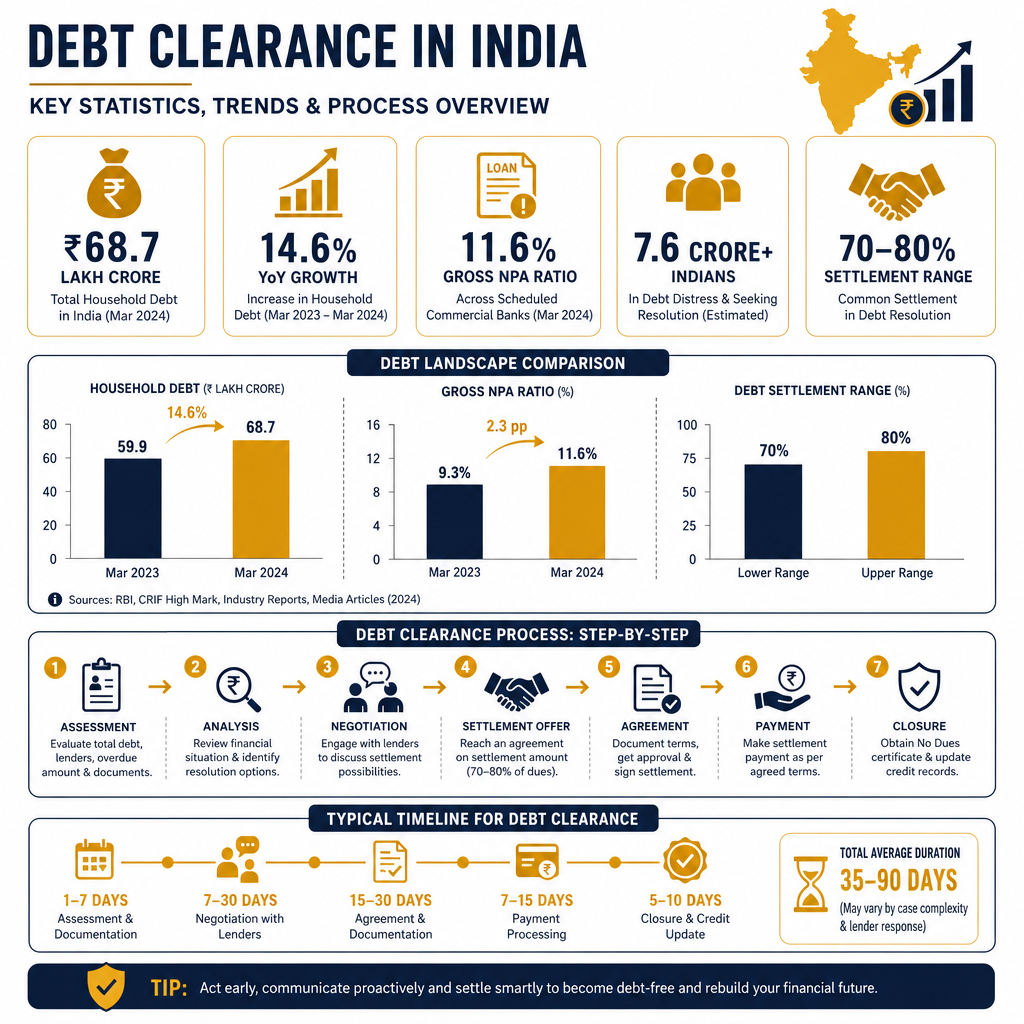
Prepared by AMA Legal Solutions Research & Analytics Team • Data & Compliance Overview
RBI Guidelines on Debt Settlement and Recovery Practices
In India, the Reserve Bank of India (RBI) has established comprehensive guidelines to ensure fair practices in debt settlement and recovery. These guidelines aim to protect borrowers from unethical practices while maintaining the integrity of the financial system. The Banking and Finance Law sector strongly emphasizes adherence to these norms to safeguard consumer rights.
Key RBI Directives
- Fair Communication: Recovery agents must communicate with borrowers respectfully and avoid harassment. Calls should not occur at unreasonable hours.
- Documentation: All settlements must be documented clearly, and borrowers should receive copies of agreements.
- Third-party Agencies: Banks must ensure that third-party recovery agencies comply with all legal and ethical guidelines.
- Grievance Redressal: Banks are required to have a robust mechanism for addressing borrower grievances related to debt recovery.
These guidelines are pivotal for maintaining a balance between debt recovery and borrower rights. Engaging with a Loan Settlement Service can provide borrowers with expert guidance to navigate these processes effectively, ensuring compliance with RBI standards. Understanding these regulations is crucial for anyone involved in debt settlement to protect their financial interests and legal rights.
Common Strategies Used by Debt Clearance Companies
Debt clearance companies in India employ a variety of strategies to assist borrowers in managing and settling their debts effectively. Understanding these strategies can help borrowers make informed decisions and navigate financial challenges more efficiently.
Debt Negotiation and Settlement
One primary strategy is debt negotiation, where the company interacts with creditors to negotiate a reduced payoff amount. This often involves negotiating for a lump sum settlement that is less than the total outstanding amount, offering relief to the borrower. Engaging in such negotiations can be complex, requiring expertise in loan settlement processes and an understanding of creditor motivations.
Debt Consolidation
Debt consolidation is another common approach. By combining multiple debts into a single loan, borrowers can benefit from a lower interest rate and simplified repayment schedule. This strategy is particularly beneficial for individuals handling multiple high-interest debts, providing a streamlined solution to reduce financial stress. For more insights, you might explore our services in debt consolidation & restructuring.
Legal Protection and Advisory
Debt clearance companies often offer legal protection services to shield borrowers from aggressive recovery practices. They provide advisory services, educating clients about their rights and strategizing defenses against unlawful recovery actions, ensuring that borrowers are not unjustly pressured or harassed.
Credit Counseling
Credit counseling is also frequently provided to help borrowers understand their financial situation better. This includes creating a personalized budget plan, offering financial education, and developing a strategy to improve the borrower's credit score over time. Such services empower borrowers to regain financial control and prevent future debt issues.
Mistakes to Avoid When Engaging Debt Clearance Companies
Engaging with debt clearance companies can be a beneficial step towards financial stability, but it is crucial to navigate the process carefully. Here are common mistakes to avoid:
1. Ignoring Company Credentials
Before signing any agreement, thoroughly research the company’s credentials. Ensure they are registered and reputable. Check for reviews and verify their track record in debt settlement cases.
2. Overlooking Transparency
Avoid companies that are not transparent about their fees and services. Ensure every expense is clearly outlined in writing to prevent unexpected costs.
3. Not Understanding Terms
It’s vital to understand the terms of engagement completely. Misunderstandings can lead to complications later. Seek clarification before proceeding with any agreement.
4. Underestimating Legal Aspects
Failing to grasp the legal implications of debt clearance can be detrimental. It may be wise to consult a professional in Banking and Finance Law to understand potential legal challenges.
5. Falling for Guarantees
Be wary of companies that promise guaranteed results. Debt clearance often involves complex negotiations, and outcomes can vary based on individual circumstances.
By avoiding these common pitfalls, you can engage more effectively with debt clearance companies and work towards resolving your financial challenges systematically.
How to Negotiate Effectively with Creditors
Negotiating with creditors can be a daunting task, but with the right approach, you can achieve favorable outcomes. Understand that creditors are often willing to negotiate as they prefer partial payment over no payment. Approach the negotiation with a clear strategy and realistic expectations.
Know Your Financial Position
Begin by assessing your financial situation thoroughly. This means knowing your total debts, monthly income, and essential expenses. With this information, you'll be able to determine how much you can realistically offer to settle your debt. Transparency about your financial condition can build trust with creditors.
Communicate Clearly
When reaching out to creditors, be honest about your financial struggles. Clearly explain the reasons for your inability to pay and propose a payment plan. For instance, if you've lost your job, mention your efforts to find new employment and suggest a temporary payment suspension or reduced installment plan.
- Always document conversations and confirm agreements in writing.
- Use email to ensure there is a clear record of what has been discussed.
Consider Professional Help
If negotiations seem overwhelming, consider consulting Loan Settlement Services or engaging a lawyer who specializes in Banking and Finance Law. Professionals can provide insights into your rights and devise effective negotiation strategies.
Remember, patience and persistence are key. Negotiations may take time, but with a well-structured approach, you can reach a settlement that eases your financial burden.
Legal Remedies Available for Borrowers in Debt Distress
Borrowers in debt distress can utilize several legal remedies to manage their financial obligations effectively. The primary step involves understanding the specific nature of the debt and exploring viable settlement or restructuring options.
Restructuring and Settlement
Restructuring loans through negotiation with creditors can provide relief. Engaging with Loan Settlement Services can help negotiate terms that are feasible, allowing borrowers to manage repayments effectively. Borrowers may also consider leveraging Debt Consolidation & Restructuring to merge their debts into a single loan with better terms.
Legal Protections
Indian law offers protections under the RBI guidelines, ensuring that borrowers are not harassed unlawfully by recovery agents. Legal notices can be sent to creditors demanding humane treatment, and borrowers can file a complaint with the Banking Ombudsman if harassment persists.
Approaching the Debt Recovery Tribunal (DRT)
If negotiations fail, borrowers can approach the DRT to contest the claims made by financial institutions. This legal forum can provide relief and adjudicate disputes between borrowers and banks.
| Parameter / Criterion | Key Details / Legal Provision | Timeline / Practical Impact |
|---|---|---|
| Loan Restructuring | Negotiation with creditors for revised terms | Varies; typically 2-3 months for approval |
| Legal Notice | Sending formal complaints to creditors | Immediate; response expected within 15 days |
| DRT Proceedings | Filing a case under the Debt Recovery Tribunal | Can take 6-12 months for resolution |
| Banking Ombudsman | Filing complaints for unfair practices | Resolution within 30 days |
Case Studies: Successful Debt Clearance Stories
Debt clearance companies have profoundly impacted many individuals and businesses by helping alleviate financial burdens. Here's a look at some real-world success stories illustrating the effectiveness of these services.
Case Study 1: Relief for a Small Business Owner
An MSME owner in Mumbai was on the verge of bankruptcy due to mounting debts and revenue loss. With the help of a debt clearance company, the business negotiated a settlement with its creditors, reducing the outstanding amount by 40%. This allowed the business to focus on recovery. Mastering Debt Settlement for Unsecured Loans in India offers insights into similar strategies.
Case Study 2: A Fresh Start for an Individual Borrower
A salaried individual facing relentless recovery calls sought assistance from a debt clearance service. After evaluating his situation, the company facilitated a structured repayment plan. By negotiating with lenders and offering a lump sum settlement, the borrower achieved a 35% waiver on the total debt, leading to financial stability. Learn more about the Loan Settlement Services that can assist in similar predicaments.
These cases highlight the crucial role of professional negotiation and restructuring in debt clearance, showcasing the potential for significant financial relief and a clearer path to recovery.
Popular Searches
AMA Legal Solutions
Trusted with a 4.7 Google Rating, over 10,000+ Clients Served, 25,000+ Cases Handled, and more than 40+ Years of Experience in providing strategic legal defense and debt resolution across India.
Our media coverages





Frequently Asked Questions
Related Articles

Best Way to Settle Credit Card Debt in India
Practical Legal Strategies for Indian Borrowers
Read Article
Best Debt Solution: Legal Paths to Financial Freedom
Explore effective legal strategies for resolving debt issues in India.
Read Article
Loan for Debt Settlement: Navigating Financial Relief
Expert guidance on securing loans for effective debt settlement
Read ArticleAbout Author
Anuj Anand Malik
View ProfileAnuj Anand Malik, Founder of AMA Legal Solutions, is a trusted advocate, loan settlement expert, legal advisor, and banking lawyer. With over a decade of experience in loan settlement, corporate law, financial disputes, and compliance, he leads a result-driven law firm based in India that helps individuals, startups, and businesses achieve legal and financial stability.
Connect on LinkedInNeed Legal Help?
Get expert advice on loan settlement and debt relief.
Call +91-8700343611Request Callback