Best Way to Settle Credit Card Debt in India
Practical Legal Strategies for Indian Borrowers

Anuj Anand Malik
Reviewed by AMA Legal Solutions

Key Takeaways: Understanding credit card debt in India and managing it effectively is crucial to avoid legal consequences and financial stress. Familiarize yourself with RBI guidelines for ethical practices and consider professional legal advice for negotiating settlements. Borrowers have rights to fair treatment and privacy that must be protected during the debt recovery process.
Understanding Credit Card Debt in India
Credit card debt in India is a growing concern for many individuals and businesses. It typically arises from high-interest charges and the ease of accessing credit, leading consumers to spend beyond their means. With interest rates ranging from 24% to 48% per annum, the debt can accumulate rapidly, creating a substantial financial burden.
Why It's Crucial to Manage Credit Card Debt
Ignoring credit card debt can result in legal action, credit score deterioration, and increased financial stress. The Reserve Bank of India (RBI) mandates that banks follow specific regulations before taking any drastic measures. Knowing your rights and obligations can prevent unwarranted actions from banks or recovery agents.
Common Causes and Triggers
- Over-reliance on credit cards for everyday expenses.
- Lack of understanding of interest compounding.
- Unexpected financial emergencies leading to unpaid balances.
For those grappling with such debt, opting for a loan settlement or restructuring plan can be beneficial. This involves negotiating with the bank to pay a lump sum that is less than the total owed, thus freeing oneself from the credit burden. Legal assistance, such as services provided by Banking and Finance Law experts, can help navigate the complexities involved in such settlements.
Legal Framework for Debt Settlement
The legal framework for debt settlement in India is structured to protect both borrowers and lenders, ensuring fair practices and compliance with regulations. Under the Indian Contract Act, 1872, a debt settlement agreement is a legally binding contract that outlines the terms of repayment. Borrowers must ensure these agreements are clear and mutually agreed upon.
The Reserve Bank of India (RBI) plays a significant role by issuing guidelines that banks and financial institutions must follow. These include the Code of Fair Practices, which mandates transparent dealings and prohibits coercive recovery practices. Borrowers should familiarize themselves with these guidelines to safeguard their rights.
Key Legal Protections
- RBI mandates that banks follow ethical practices, thereby protecting borrowers from harassment.
- Borrowers have the right to negotiate repayment terms, which can be facilitated through loan settlement services.
- In case of disputes, borrowers can seek redressal under the civil litigation framework to ensure their interests are protected.
Understanding the legal framework is crucial for those seeking to settle credit card debt, as it empowers borrowers to negotiate effectively and ensures that settlements are conducted legally and fairly.
Rights of Borrowers Under Indian Law
Indian borrowers possess several rights that safeguard them in the debt settlement process. Understanding these rights can empower individuals to negotiate effectively and find the best way to settle credit card debt. A primary right is the transparency regarding the loan terms and conditions, ensuring borrowers are fully informed.
Right to Fair Treatment
The Reserve Bank of India mandates that banks and financial institutions treat borrowers fairly. This includes the prohibition of aggressive recovery tactics and harassment by recovery agents. Borrowers should report any mistreatment to the bank's grievance redressal officer and, if necessary, escalate the issue to the Banking Ombudsman.
Right to Privacy
Borrowers have the right to privacy regarding their financial information. Recovery agents are not allowed to disclose personal financial details to third parties without the borrower's consent. If violated, borrowers can seek recourse through legal channels, such as arbitration and dispute resolution.
- Right to Detailed Information: Borrowers are entitled to receive a comprehensive statement outlining the total dues, penalties, and any settlement offer.
- Right to Seek Assistance: Borrowers can enlist legal aid to help negotiate settlements, ensuring they are not exploited. Engaging with specialized debt consolidation professionals can be advantageous.
- Right to Due Process: Any legal action taken by financial institutions must adhere to due process, allowing borrowers the opportunity to defend themselves adequately.
How Banks Classify and Handle NPAs
Banks categorize a loan as a Non-Performing Asset (NPA) when the borrower fails to make interest or principal payments for 90 days. This classification signals an elevated risk for the bank, prompting a series of actions to recover dues. Understanding this process is crucial for borrowers, especially those seeking the best way to settle credit card debt.
Internal Classification Process
- Sub-Standard Assets: Loans overdue for up to 12 months. Banks closely monitor these, often initiating recovery processes.
- Doubtful Assets: Loans overdue for more than 12 months. Banks consider these high-risk and prepare for potential write-offs.
- Loss Assets: Loans deemed uncollectible by auditors or internal bank mechanisms. These are fully written off.
Once a loan is classified as an NPA, banks may restructure the debt or offer settlement options. Engaging with a loan settlement service can provide borrowers with negotiation strategies to reduce the outstanding amount and resolve the debt efficiently.
It's essential for borrowers to maintain open communication with their banks and explore potential banking and finance law solutions to manage their financial obligations effectively. Early intervention and understanding the NPA classification can significantly impact the resolution outcomes.
Effective Negotiation Strategies for Borrowers
Settling credit card debt requires a strategic approach. Borrowers should start by assessing their financial situation comprehensively, understanding exactly how much they owe and how much they can realistically pay back. This clarity will form the foundation of your negotiation strategy.
Understanding Your Position
Before initiating negotiations, it's critical to know your rights and the bank's obligations under Indian financial regulations. Borrowers can benefit from consulting resources like Loan Settlement Services for detailed guidance on the negotiation process.
- Prepare Documentation: Gather all relevant financial documents, including statements and correspondence with credit card companies. This will help present a clear picture of your financial distress.
- Calculate a Realistic Offer: Based on your ability to pay, propose a lump-sum settlement amount or structured payment plan. Making an offer that reflects your financial condition can expedite the process.
Communication Techniques
Engage with the bank's representatives calmly and professionally. Clearly communicate your situation and willingness to settle. Ensure all agreements are documented in writing to avoid future disputes. For in-depth negotiation strategies, consider exploring Debt Consolidation & Restructuring options that may enhance your settlement proposal.
Common Mistakes Borrowers Make in Debt Settlement
Borrowing to settle credit card debt is a sensitive process, often fraught with errors that could be avoided with a little foresight and guidance. One common mistake is not thoroughly understanding the terms of the settlement offer. Always read the fine print to ensure you are aware of any future implications, such as effects on your credit score.
Another frequent error is failing to document all communications. Keep a detailed record of every interaction with the creditor, including dates, times, and summaries of discussions. This documentation can protect you in case of future disputes.
Borrowers also tend to delay negotiations, hoping for more favorable terms later. However, timing is crucial. Engage with creditors early to demonstrate your commitment and potentially secure better terms. Additionally, many borrowers do not seek professional advice, which can lead to overlooking critical legal aspects. Consider consulting with a legal expert, such as those available through our Loan Settlement Services or Banking and Finance Law, to navigate the complexities of debt settlement effectively.
Lastly, some borrowers ignore the tax implications of debt settlement, which can result in unexpected financial burdens. Always consult with a tax advisor to understand any potential liabilities before finalizing a settlement agreement.
Key Insights & Data Infographic
Visual summary, statistical trends & procedural breakdown
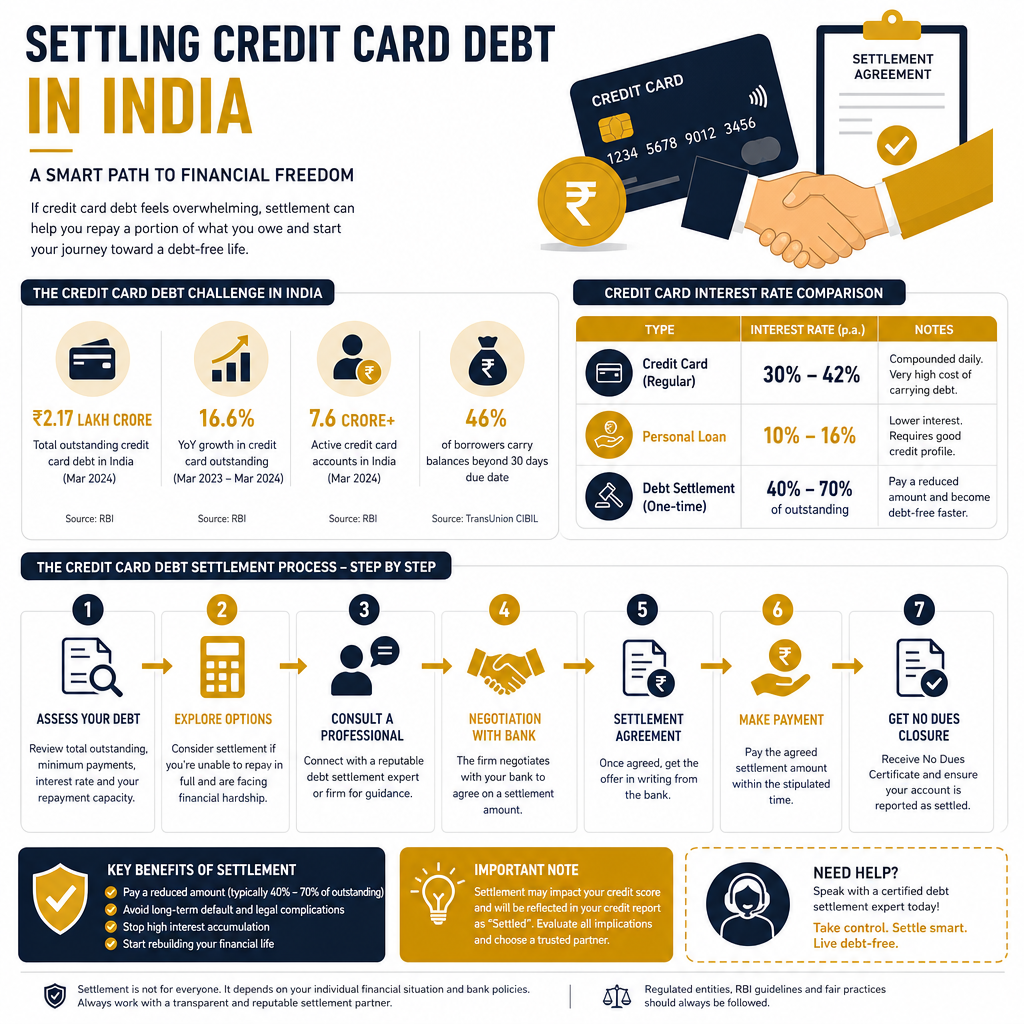
Prepared by AMA Legal Solutions Research & Analytics Team • Data & Compliance Overview
What Recovery Agents Can and Cannot Do Legally
Understanding the legal boundaries of recovery agents is crucial when negotiating your credit card debt settlement. Agents are permitted to contact defaulters to discuss repayment options, but their actions are governed by strict legal protocols to ensure fair treatment.
What Recovery Agents Can Do
- Contact borrowers between 7 AM and 7 PM to discuss repayment.
- Communicate through phone calls, emails, or letters to provide information on the outstanding debt.
- Visit the borrower's residence or workplace to speak directly, provided they maintain respect and privacy.
What Recovery Agents Cannot Do
- Use abusive language, threats, or intimidation tactics to coerce payment.
- Contact borrowers at inconvenient times or locations, including late nights or during work without consent.
- Disclose debt information to third parties without the borrower's explicit permission.
If you encounter harassment or illegal activities from recovery agents, you have the right to report such incidents. Knowing your legal rights against recovery agent harassment can protect you from undue stress and pressure.
When to Opt for Legal Intervention
Legal intervention becomes essential in credit card debt settlements when informal negotiations falter, and creditors remain inflexible. If you face persistent harassment from recovery agents, it's crucial to know your legal rights. Consult a lawyer immediately if recovery methods breach guidelines set by the Reserve Bank of India.
Pursue legal avenues if you receive a legal notice threatening action. At this stage, engaging with a legal expert skilled in loan settlement can provide strategic options. They can negotiate with creditors to avoid prolonged litigation and achieve favorable settlements.
Key Situations for Legal Action
- Receiving court summons or arbitration notices regarding the debt.
- Threats of asset seizure or wage garnishment.
- Unreasonably high settlement offers from creditors.
- Repeated violations of your consumer rights.
Legal intervention is often necessary when the debt amount is substantial, affecting your financial stability. It's prudent to engage a lawyer specializing in banking and finance law early to prevent escalation. Legal guidance can often result in a structured settlement plan, minimizing the impact on your credit score and financial future.
Comparing Settlement Offers: What to Consider
When evaluating credit card debt settlement offers, it's essential to weigh several factors carefully. Settlement offers can vary significantly, not only in the amount of debt forgiven but also in terms of the conditions they impose. Here’s what you should consider to make an informed decision:
Percentage of Debt Reduction
Start by assessing the percentage of debt reduction each offer provides. Generally, a higher reduction means a better offer, but ensure that the percentage aligns with what is practically achievable. Banks may consider your financial situation, payment history, and current income when calculating this figure.
Payment Terms
- Lump-Sum Payment: Some settlements require a one-time payment. Ensure you have the funds available before committing.
- Installment Plan: Monthly payment plans can ease the financial burden but consider if the plan's duration and amounts are realistic for your current budget.
Impact on Credit Score
While settling debt can stop creditor harassment, it may impact your credit score. Understand how each offer will affect your credit report. For further guidance, explore our article on Loan Settlement vs Loan Closure Impact on CIBIL.
Legal and Tax Implications
Legal considerations, such as potential lawsuits, should be evaluated. Additionally, forgiven debt might be considered taxable income. Consulting with a loan settlement expert can help clarify these implications.
Checklist for Preparing a Settlement Proposal
Creating a well-structured settlement proposal is crucial for successfully negotiating your credit card debt. This checklist guides you through the essential steps to ensure your proposal is comprehensive and persuasive.
Gather Financial Information
- Compile all credit card statements and outstanding balances.
- Prepare a detailed overview of your income, expenses, and assets.
- Understand your debt-to-income ratio to assess repayment capacity.
Determine Settlement Amount
- Calculate a realistic lump sum offer, typically ranging from 40% to 60% of the total debt.
- Consider your current financial situation and cash flow constraints.
- Research typical settlement percentages accepted by creditors.
Draft the Proposal Letter
- Clearly state your intention to settle the debt amicably.
- Include a concise explanation of financial hardships.
- Propose the settlement amount and payment timeline.
- Request a written confirmation of the agreement.
Review Legal Implications
- Consult a legal expert to review the proposal's terms.
- Ensure compliance with relevant banking and finance law.
- Be aware of potential tax implications on forgiven debt.
| Parameter / Criterion | Key Details / Legal Provision | Timeline / Practical Impact |
|---|---|---|
| Financial Documentation | Income proof, assets, liabilities, and expenses | Preparation: 1-2 weeks |
| Settlement Offer | 40%-60% of total debt | Negotiation phase: 2-3 weeks |
| Legal Review | Consultation with legal expert | 1 week before submission |
| Approval and Documentation | Written agreement confirmation | Finalization: 1-2 weeks after offer |
By following these steps, you enhance the likelihood of a favorable settlement. To further understand the nuances of debt settlement, explore our Loan Settlement Services.
Practical Tips for Communicating with Banks
Communicating effectively with banks is crucial when settling credit card debt. Every interaction can impact the outcome, so it's vital to approach discussions strategically. First, prepare thoroughly. Understand your financial situation, know the outstanding amount, and have a realistic repayment proposal ready. This preparation builds credibility and demonstrates seriousness about resolving the debt.
Maintain Composure and Clarity
During discussions, maintain a calm and respectful tone. Losing composure can derail negotiations. Clearly articulate your situation, emphasizing any genuine hardships, such as job loss or medical emergencies. For instance, you might say, "Due to a medical emergency, my finances have been strained. I'm committed to settling this debt and would appreciate your guidance on potential repayment options."
- Document Everything: Always request written confirmation of any agreements or terms discussed. This documentation serves as evidence and can prevent future disputes.
- Use Email Communications: Whenever possible, communicate via email. This creates a paper trail, ensuring that all terms and promises are recorded.
- Know Your Rights: Be aware of your legal rights as a borrower. Familiarize yourself with relevant banking laws and banking and finance law to avoid any undue pressure from banks.
If negotiations become overwhelming, consider professional assistance. Engaging a legal expert who specializes in loan settlement services can provide valuable insights and strengthen your negotiating position.
Timeline and Process of Debt Settlement
The debt settlement process generally involves structured steps over a specified timeline. Initially, it begins with negotiating terms with the creditor, often facilitated by a qualified legal advisor. This process typically extends over several weeks to months, depending on the complexity of the debt and the responsiveness of the involved parties. The key phases include assessment, negotiation, agreement, and resolution.
Once you reach out to your creditor and express your intent to settle, a negotiation phase commences. It's crucial to have all financial statements and offers ready. During this period, creditors evaluate your financial condition, which could take weeks. If negotiations are successful, both parties will draft a settlement agreement, which legally binds the agreed terms.
For detailed assistance on managing negotiations, consider exploring our Loan Settlement Services and our Banking and Finance Law services. These resources provide comprehensive support to navigate debt settlements effectively.
| Parameter / Criterion | Key Details / Legal Provision | Timeline / Practical Impact |
|---|---|---|
| Initial Assessment | Review of financial statements and indebtedness | 1-2 weeks |
| Negotiation Phase | Offer negotiation with creditors and legal advisories | 2-4 weeks |
| Settlement Agreement | Drafting and finalizing the terms of settlement | 1 week |
| Resolution and Payment | Execution of the agreement and payment disbursal | 3-4 weeks |
Throughout this timeline, maintaining clear communication and documentation is crucial. Legal experts can offer guidance to ensure all parties adhere to stipulated terms, thus streamlining the settlement and mitigating potential disputes.
Popular Searches
AMA Legal Solutions
Trusted with a 4.7 Google Rating, over 10,000+ Clients Served, 25,000+ Cases Handled, and more than 40+ Years of Experience in providing strategic legal defense and debt resolution across India.
Our media coverages





Frequently Asked Questions
Related Articles

Understanding Debt Clearance Companies in India
Navigate debt settlement with top legal tips and insights
Read Article
Best Debt Solution: Legal Paths to Financial Freedom
Explore effective legal strategies for resolving debt issues in India.
Read Article
Loan for Debt Settlement: Navigating Financial Relief
Expert guidance on securing loans for effective debt settlement
Read ArticleAbout Author
Anuj Anand Malik
View ProfileAnuj Anand Malik, Founder of AMA Legal Solutions, is a trusted advocate, loan settlement expert, legal advisor, and banking lawyer. With over a decade of experience in loan settlement, corporate law, financial disputes, and compliance, he leads a result-driven law firm based in India that helps individuals, startups, and businesses achieve legal and financial stability.
Connect on LinkedInNeed Legal Help?
Get expert advice on loan settlement and debt relief.
Call +91-8700343611Request Callback