Best Debt Solution: Legal Paths to Financial Freedom
Explore effective legal strategies for resolving debt issues in India.

Anuj Anand Malik
Reviewed by AMA Legal Solutions

Key Takeaways: Debt resolution in India involves legal strategies such as loan settlement, debt consolidation, and bankruptcy. Each option serves different financial needs and requires careful consideration of pros and cons. Legal guidance is crucial to navigate complexities and make informed decisions, protecting borrower rights as per RBI and Indian law regulations.
Understanding Debt Solutions: A Legal Perspective
For many Indian borrowers, navigating debt can be daunting. Understanding the legal avenues available for debt resolution is crucial. Debt solutions range from loan settlements to structured debt consolidation. These strategies allow for a systematic approach, reducing financial strain while ensuring legal compliance. An experienced banking lawyer can guide you through these options, considering your unique circumstances.
Loan Settlement
Loan settlement involves negotiating with creditors to pay a reduced amount as a full settlement. This can be an effective strategy but requires expert negotiation skills to avoid further financial repercussions. For more detailed guidance, check our Loan Settlement Services.
Debt Consolidation
Debt consolidation merges multiple debts into a single loan with lower interest rates. This simplifies repayment and can potentially lower monthly obligations, offering borrowers relief from juggling multiple creditors. Interested parties can explore our Debt Consolidation & Restructuring services.
Legal Assistance
It's advisable to consult legal experts when dealing with debt-related issues. They offer insights into the best legal routes, helping avoid costly mistakes. Legal professionals can also provide assistance with arbitration and dispute resolution, ensuring a fair settlement process. Always remember, informed decisions are your best defense against financial distress.
Identifying the Right Debt Solution for Your Situation
Choosing the best debt solution requires a thorough understanding of your unique financial circumstances. Each individual's journey to financial relief is different, and the path you choose should be tailored to your needs and goals. Begin by assessing your total debt, income, and expenses. This will help you understand your current financial position and how much you can afford to pay monthly.
Understand Your Debt
It's crucial to categorize your debts. Consider whether they are secured or unsecured, and prioritize them based on interest rates and urgency. For instance, credit card debts, which often carry high-interest rates, may require immediate attention. Understanding your debt types will guide your choice of solution, such as Loan Settlement Services for significant relief or Debt Consolidation & Restructuring to simplify monthly payments.
Evaluate Available Solutions
- Debt Consolidation: Combine multiple debts into a single, lower-interest payment. This option is beneficial if you have several high-interest debts.
- Loan Settlement: Negotiate with creditors to reduce the total amount owed. Ideal for individuals struggling with large amounts of debt who cannot afford the full amount.
- Bankruptcy: As a last resort, this legal procedure can discharge or restructure debts, though it impacts your credit score significantly.
Each solution has its pros and cons. For personalized assistance, consult a legal expert who can provide guidance tailored to your situation. For comprehensive legal support, consider reaching out to AMA Legal Solutions.
Legal Framework for Debt Settlement in India
The legal framework for debt settlement in India offers borrowers structured avenues to manage and resolve outstanding debts. This framework is governed by various laws and guidelines that safeguard both lenders and borrowers. The Loan Settlement Services provided by legal professionals can help navigate these complexities.
Key Legislation
Several laws underpin debt settlement in India. The primary legislative framework includes the Recovery of Debts Due to Banks and Financial Institutions Act, 1993, and the Securitisation and Reconstruction of Financial Assets and Enforcement of Security Interest (SARFAESI) Act, 2002. These laws empower banks to recover debts efficiently while ensuring borrowers' rights are upheld.
- Insolvency and Bankruptcy Code (IBC) 2016: Provides a time-bound process to resolve insolvency, protecting the interests of all involved parties.
- RBI Guidelines: The Reserve Bank of India issues directives, ensuring fair practices during the settlement process. These guidelines emphasize transparency and borrower protection.
For businesses, the Corporate Law and Compliance can facilitate the restructuring of debts to avoid insolvency. It's essential for borrowers to understand these legal instruments to safeguard their interests and explore viable debt solutions effectively. Professional legal advice is crucial in understanding the nuances of these laws and applying them strategically in debt settlement negotiations.
Role of RBI Guidelines in Debt Resolution
The Reserve Bank of India (RBI) plays a crucial role in shaping the framework for debt resolution in India. The RBI Guidelines provide a structured approach towards managing distressed assets, ensuring that both lenders and borrowers have a fair chance to resolve debts amicably. These guidelines mandate banks to classify assets correctly, which in turn influences the strategy for debt recovery.
One of the core aspects of the RBI's approach is the introduction of rules for restructuring loans. This involves extending the loan tenure, reducing the interest rate, or converting outstanding debt into equity-all aimed at making repayment more manageable for borrowers. Specific regulations, such as the Prudential Framework for Resolution of Stressed Assets, set out steps that banks must follow before declaring accounts as non-performing assets (NPAs).
Key Highlights of RBI Guidelines
- Mandatory asset classification to prevent arbitrary labeling of NPAs.
- Structured loan restructuring options tailored to the borrower's financial health.
- Clear timelines and measures for resolution plans to ensure swift action.
- Regulatory oversight to maintain transparency in the resolution process.
Overall, the RBI’s guidelines ensure that the debt resolution process is transparent, fair, and efficient, thereby serving as a vital tool in achieving the best debt solution for borrowers under financial distress.
Consumer Rights in the Debt Settlement Process
Understanding your rights as a consumer is crucial during the debt settlement process. The Reserve Bank of India (RBI) has laid down specific guidelines to protect borrowers from unfair practices. Knowing these rights not only empowers you but also ensures that the settlement process is conducted fairly and transparently.
Firstly, consumers have the right to be treated with respect. Recovery agents must not use abusive language or engage in harassment. Additionally, consumers are entitled to receive a legal notice before any legal action is taken. This notice should clearly outline the details of the debt and any legal implications.
Another important right is the ability to negotiate the terms of settlement. Consumers can propose a settlement plan that aligns with their financial situation. For those facing harassment, it's essential to understand Legal Rights Against Recovery Agent Harassment to take necessary action.
| Parameter / Criterion | Key Details / Legal Provision | Timeline / Practical Impact |
|---|---|---|
| Right to Information | Receive complete details of debt and settlement terms | Within 30 days from request |
| Right to Fair Treatment | No harassment or abusive practices allowed | Immediate enforcement |
| Right to Legal Notice | Notice before any legal proceedings | 15 days prior to action |
| Right to Negotiate | Propose a repayment plan | Ongoing during settlement discussions |
For borrowers, these rights are not just theoretical. They are essential tools that can be used to ensure that the debt settlement process is conducted fairly. Understanding your rights can also help you in crafting a more favorable settlement agreement, possibly by exploring Loan Settlement Services with experienced legal professionals.
Comparing Legal Remedies for Debt Relief
When faced with debt, understanding the available legal remedies can be crucial to finding the best debt solution. In India, several legal pathways provide relief, each suitable for different financial situations. Here, we compare these remedies to help you identify the most effective strategy.
Key Legal Remedies
- Debt Consolidation: This involves combining multiple debts into a single, manageable payment plan. It often includes a lower interest rate.
- Insolvency Resolution: Under the Insolvency and Bankruptcy Code (IBC), this legal process provides a fresh start by resolving insolvency issues through restructuring.
- Loan Settlement: Negotiating with creditors to pay a reduced amount as a full settlement of outstanding debts.
- Legal Action: Filing a case against unfair practices or negotiating terms in a civil suit.
Each remedy has its own advantages, risks, and timelines. The choice depends on your financial condition and long-term objectives.
| Parameter / Criterion | Key Details / Legal Provision | Timeline / Practical Impact |
|---|---|---|
| Debt Consolidation | Merges multiple debts, potentially lowering interest rates | Immediate relief with long-term payoff plan |
| Insolvency Resolution | Under IBC, allows for debt restructuring | Resolution within 180-270 days |
| Loan Settlement | Negotiate reduced payoff amount | Usually settled within months |
| Legal Action | Filing cases for unfair practices | Varies; can be lengthy |
For those considering Loan Settlement Services, understanding the implications for your credit score is crucial. Additionally, exploring Banking and Finance Law can help in navigating complex legal frameworks associated with debt relief.
Key Insights & Data Infographic
Visual summary, statistical trends & procedural breakdown
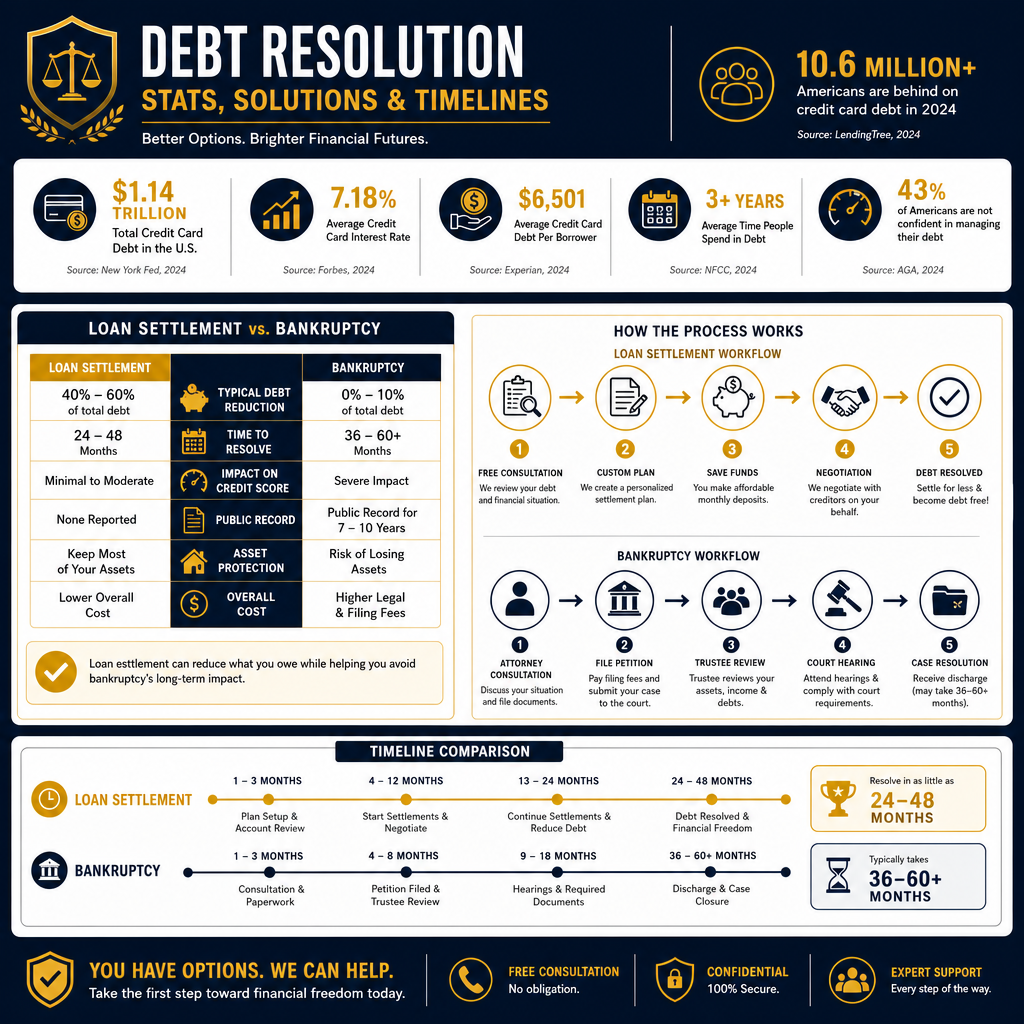
Prepared by AMA Legal Solutions Research & Analytics Team • Data & Compliance Overview
Step-by-Step Guide to Loan Settlement Negotiations
Successfully negotiating a loan settlement is crucial for those seeking the best debt solution. This guide provides a detailed approach to navigating these discussions effectively.
Step 1: Assess Your Financial Situation
Begin by evaluating your current financial status. Gather all relevant documents, such as loan agreements, bank statements, and any correspondence with creditors. This clarity on your finances will help you determine a realistic settlement offer.
Step 2: Understand Your Rights
Familiarize yourself with the banking and finance laws that protect borrowers in India. Knowing your rights can strengthen your negotiation position and prevent potential exploitation by lenders.
Step 3: Contact Your Lender
Initiate contact with your lender to express your willingness to negotiate. Be prepared to explain your financial hardship and outline a preliminary settlement proposal.
Step 4: Prepare Your Offer
Craft a settlement offer based on what you can reasonably afford. Consider proposing a lump sum payment or a structured payment plan. Highlight the benefits to the lender, such as immediate cash flow.
Step 5: Negotiate Terms
Engage in discussions with your lender to find mutually agreeable terms. Be flexible but firm, ensuring the agreement is sustainable for you.
Step 6: Draft a Settlement Agreement
Once terms are agreed upon, ensure they are documented in a legally binding settlement agreement. Consider seeking assistance from a legal professional for proper document drafting.
Step 7: Fulfill Your Obligations
Adhere to the terms of the settlement and maintain clear communication with your lender. This commitment will help restore your financial standing and credit rating over time.
Common Pitfalls in Debt Settlement and How to Avoid Them
Debt settlement can be complex, and navigating it without awareness can lead to unintended consequences. One common pitfall is the assumption that settling a debt is equivalent to clearing it completely. It's vital to understand that while a settlement may alleviate immediate financial stress, it can negatively impact your credit score. Therefore, always obtain a written agreement from your lender specifying the terms clearly.
Ignoring Tax Implications
Many borrowers overlook the tax implications of debt settlement. The forgiven debt may be considered taxable income, leading to unexpected liabilities. Consulting a tax professional before finalizing a settlement can help mitigate this risk.
Settling Without Professional Guidance
Negotiating without expertise can result in unfavorable terms. Engaging a professional service like our Loan Settlement Services ensures you have expert negotiators on your side. They can help you secure the best possible outcome.
Overlooking the Impact on Credit Reports
While settlement can reduce debt, it often leaves a mark on your credit report. It's crucial to understand the impact on your CIBIL score and explore ways to rebuild your credit post-settlement.
- Seek written agreements to avoid misunderstandings.
- Review the tax consequences with a financial advisor.
- Utilize professional services for negotiation assistance.
- Always check how settlements are reported to credit bureaus.
Impact of Debt Settlement on Credit Scores and Financial Future
Debt settlement can offer relief for borrowers struggling with financial burdens. However, it's crucial to understand its impact on your credit score and future financial health. Settling a debt generally means negotiating with creditors to pay a reduced amount. While this can alleviate immediate financial pressure, it typically results in a negative mark on your credit report.
How Debt Settlement Affects Credit Scores
The settlement process is often reported as "settled" or "paid less than full balance," which can significantly lower your credit score. This reduction occurs because it suggests you were unable to meet original credit terms. A lower credit score can affect your ability to secure future loans or credit lines at favorable interest rates.
Long-Term Financial Considerations
While the initial impact might seem daunting, the long-term benefits of reducing debt burdens should not be overlooked. Reducing overall debt can lead to improved financial stability, allowing you to focus on rebuilding your credit. For guidance on improving your score post-settlement, consider our guide on How to Repair Your Credit Score.
- Immediate reduction in outstanding debt, easing financial stress.
- Potential obstacles in obtaining new credit due to lower credit scores.
- Opportunities to rebuild credit over time with disciplined financial practices.
It's advisable to seek professional assistance when considering debt settlement to fully understand its implications and to strategize for financial recovery effectively.
Mistakes to Avoid When Dealing with Recovery Agents
Engaging with recovery agents can be a daunting experience for many borrowers. However, knowing the common pitfalls can help you navigate these interactions effectively. Here are some critical mistakes to avoid:
Engaging in Emotional Responses
It's easy to become emotionally charged when faced with aggressive recovery tactics. However, responding emotionally can complicate matters. Always aim to maintain a calm and composed demeanor. If you feel overwhelmed, politely request the agent to communicate through email, providing you with time to consider your response.
Providing Inconsistent Information
Inconsistencies in the information you share can weaken your position. Be truthful and consistent about your financial situation. If you've lost your job or are facing other hardships, clearly communicate your circumstances. This transparency could encourage the bank to offer you a more favorable loan settlement or restructuring plan.
Not Understanding Your Legal Rights
Failing to understand your legal rights can lead to unnecessary stress and poor decisions. Familiarize yourself with your legal rights against recovery agent harassment. Recovery agents are bound by specific guidelines, and knowing these can protect you from unlawful practices.
Ignoring Written Correspondence
Always respond to written notices or emails from recovery agents. Ignoring these can escalate the situation and lead to legal complications. Ensure that all your communication is documented, which will be beneficial if disputes arise.
Case Studies: Successful Debt Resolution Scenarios
Successful debt resolution requires strategic planning and legal expertise. In this section, we explore real-life case studies that demonstrate effective debt solutions.
Case Study 1: SME Debt Restructuring
An SME facing financial distress from multiple debts engaged our services. By refinancing and strategically consolidating their loans, we reduced their monthly outflows by 40%. Debt Consolidation & Restructuring played a pivotal role in stabilizing their finances, allowing the business to recover and grow.
Case Study 2: Personal Loan Settlement
A salaried individual defaulted on a personal loan due to job loss. Through negotiation, we achieved a settlement with the bank, reducing the payable amount by 50%. This outcome not only provided relief but also preserved the client’s credit rating, showcasing that timely intervention can prevent long-term financial damage. Explore our Loan Settlement Services for similar solutions.
Case Study 3: Corporate Debt Arbitration
A corporation involved in a complex dispute with creditors pursued arbitration. Our strategic legal actions led to a favorable resolution, avoiding prolonged litigation. The successful settlement underscored the efficacy of Arbitration and Dispute Resolution in corporate debt contexts, ensuring minimal disruption to business operations.
Practical Tips for Negotiating Debt Settlements Successfully
Negotiating a debt settlement can be daunting, but with the right approach, it can lead to favorable outcomes. Here are some crucial tips to guide you through the process:
Understand Your Debt
- Gather all relevant information about your debt, including the total amount owed, interest rates, and any applicable penalties. This knowledge strengthens your negotiating position.
Communicate Effectively
- Initiate discussions with your lender, emphasizing your willingness to settle. Use clear and concise language, and document all communications for future reference.
Leverage Professional Assistance
- Consider seeking help from professionals experienced in loan settlements. Their expertise can enhance your negotiation strategy and potentially lead to a more favorable settlement.
Present a Realistic Offer
- Analyze your financial situation to propose a realistic settlement offer. A reasonable offer increases the likelihood of creditor acceptance.
Negotiate Terms
- Don't just focus on reducing the principal amount; negotiate for lower interest rates and extended payment terms to make repayment manageable.
Effective negotiation requires preparation and patience. By understanding your financial situation and communicating strategically, you can achieve a successful debt settlement and work towards financial freedom. For further guidance, explore our services in Civil Litigation and Disputes.
Popular Searches
AMA Legal Solutions
Trusted with a 4.7 Google Rating, over 10,000+ Clients Served, 25,000+ Cases Handled, and more than 40+ Years of Experience in providing strategic legal defense and debt resolution across India.
Our media coverages





Frequently Asked Questions
Related Articles

Understanding Debt Clearance Companies in India
Navigate debt settlement with top legal tips and insights
Read Article
Best Way to Settle Credit Card Debt in India
Practical Legal Strategies for Indian Borrowers
Read Article
Loan for Debt Settlement: Navigating Financial Relief
Expert guidance on securing loans for effective debt settlement
Read ArticleAbout Author
Anuj Anand Malik
View ProfileAnuj Anand Malik, Founder of AMA Legal Solutions, is a trusted advocate, loan settlement expert, legal advisor, and banking lawyer. With over a decade of experience in loan settlement, corporate law, financial disputes, and compliance, he leads a result-driven law firm based in India that helps individuals, startups, and businesses achieve legal and financial stability.
Connect on LinkedInNeed Legal Help?
Get expert advice on loan settlement and debt relief.
Call +91-8700343611Request Callback