Mastering Debt Settlement for Unsecured Loans in India
Expert strategies for handling unsecured loan setbacks effectively

Anuj Anand Malik
Reviewed by AMA Legal Solutions

Key Takeaways: The article provides a comprehensive guide on debt settlement for unsecured loans, emphasizing strategic negotiation with lenders, understanding RBI guidelines, protecting consumer rights, and leveraging professional legal advice to achieve favorable outcomes, while highlighting the potential impact on credit scores.
Understanding Debt Settlement: A Lifeline for Borrowers
Debt settlement for unsecured loans can be a crucial lifeline for borrowers under financial stress. It's a process where the borrower negotiates with the lender to reduce the outstanding debt, allowing for a lump-sum payment that is less than the full amount owed. This approach not only helps in managing overwhelming debt but also prevents the situation from escalating further. Unsecured loans, such as personal loans or credit card debts, often have higher interest rates, making timely repayment challenging.
Why Consider Debt Settlement?
Debt settlement is especially beneficial when you're unable to meet your loan obligations due to unexpected circumstances like job loss or medical emergencies. It serves as a strategic option to prevent legal actions and credit score deterioration. However, it's essential to understand that entering a debt settlement agreement can affect your credit rating and should be considered a last resort.
- Negotiate with lenders to reduce overall debt.
- Potentially avoid legal repercussions and collection harassment.
- Regain financial stability by paying a reduced amount.
For borrowers in India, understanding the nuances of debt settlement for unsecured loans is crucial. Seeking professional guidance can significantly enhance negotiation outcomes. At AMA Legal Solutions, we specialize in Banking and Finance Law to aid in navigating these complex scenarios effectively.
Legal Framework Governing Unsecured Loan Debt Settlement
In India, the settlement of unsecured loans is governed by a blend of contractual obligations and regulatory oversight. Unlike secured loans, unsecured loans do not have collateral backing, making their settlement process more nuanced. Borrowers often rely on Loan Settlement Services to negotiate favorable terms.
The Reserve Bank of India (RBI) provides guidelines that financial institutions must adhere to, ensuring borrower protection. Notably, the RBI mandates banks to engage in fair practices when dealing with defaults, and any harassment by recovery agents is strictly prohibited. Borrowers can utilize their Legal Rights Against Recovery Agent Harassment.
Negotiation and Debt Restructuring
Under the RBI's prudential norms, banks are encouraged to engage in negotiation and restructuring of debts where applicable. This process involves assessing the borrower's financial situation and offering viable repayment terms. It's essential for borrowers to communicate openly with their lenders and seek professional advice for effective negotiation.
- Borrowers should understand the terms of any settlement offer.
- Documentation of all communication with the bank is crucial.
- Seek legal assistance to avoid pitfalls in the settlement process.
For detailed legal assistance, borrowers may consider consulting experts in Debt Consolidation & Restructuring to ensure a comprehensive understanding of the legal implications and benefits.
How RBI Guidelines Impact Unsecured Loan Settlements
The Reserve Bank of India's guidelines play a pivotal role in shaping how unsecured loan settlements are conducted. While RBI does not directly intervene in individual settlements, its overarching policies influence how banks handle delinquent loans. For borrowers, understanding these guidelines can provide leverage during negotiations.
Understanding RBI's Stance
The RBI frequently issues advisories that banks must follow to ensure ethical recovery practices. For instance, the guidelines dictate that recovery agents must adhere to a code of conduct, which includes treating borrowers with respect and privacy. This protects borrowers from harassment.
- RBI mandates banks to classify non-performing assets (NPAs) and encourages them to resolve these issues swiftly, often leading to settlement offers.
- The guidelines also advise banks to explore restructuring options before pursuing aggressive recovery methods, opening a window for loan settlement services.
Practical Implications for Borrowers
Understanding RBI's guidelines can empower borrowers during negotiations. If a recovery agent oversteps legal boundaries, a borrower can reference RBI's directives to demand fair treatment. Additionally, banks are encouraged to offer settlements to recover some dues rather than none, presenting an opportunity for debtors.
To navigate these complex processes, consulting with professionals well-versed in banking and finance law can be advantageous. Such expertise can help borrowers leverage RBI guidelines to facilitate a favorable settlement.
Practical Steps to Initiate Debt Settlement Discussions
Successfully navigating debt settlement for unsecured loans requires tact and strategy. Here's how you can initiate these discussions effectively:
1. Evaluate Your Financial Position
Before approaching the lender, assess your financial status. Understand your outstanding balances, income, and expenditures. This evaluation helps in determining a realistic settlement offer.
2. Gather Relevant Documentation
Compile all necessary documents, including loan agreements, payment history, and any communication with the lender. Being organized can significantly bolster your negotiation position.
3. Contact Your Lender
Initiate contact with your lender to discuss potential settlement options. It's crucial to communicate politely and professionally, emphasizing your genuine desire to settle the debt.
4. Present Your Proposal
Offer a lump sum that you can realistically afford. Ensure your proposal is both practical and reasonable. Highlight any recent changes in your financial circumstances that impact your ability to repay.
5. Negotiate Terms
Be prepared to engage in negotiations. Flexibility can lead to better terms. Consider seeking guidance from Loan Settlement Services to understand viable settlement options.
6. Document the Agreement
Once an agreement is reached, document it in writing. This should include all settlement terms and any waivers of remaining debt. This documentation protects you from future claims.
If you're uncertain about any legal implications, consulting with experts in Banking and Finance Law can provide clarity and direction.
Negotiation Techniques: Securing Favorable Terms
Successful negotiation in debt settlement for unsecured loans is an art that requires preparation and strategic communication. Begin by understanding your financial situation clearly. This means knowing your total debt, income, and essential expenses. With this information, decide on a realistic settlement offer considering your repayment capacity. Typically, lenders expect a lump-sum payment, so plan accordingly.
Building a Persuasive Case
When approaching a lender, it's essential to present your case persuasively. Highlight any genuine financial hardships, such as loss of income or unexpected medical expenses. This not only builds sympathy but also demonstrates your proactive approach to addressing the debt issue. Document everything and be ready to provide evidence if required. The more transparent you are, the more leverage you have in negotiations.
- Initiate contact through formal channels; a written request often garners more attention than a verbal one.
- Request to communicate by email for record-keeping and clarity.
- Propose a debt consolidation option if feasible, showing a structured plan to repay debts.
Be prepared for counteroffers and remain calm during discussions. Listen actively to the lender's stance and ask questions to understand their perspective. This could help identify areas for compromise. Remember, the goal is to find a mutually agreeable solution, ensuring you secure the best possible terms while maintaining a respectful and open dialogue.
Rights and Obligations: Borrowers and Lenders
In the realm of debt settlement for unsecured loans, understanding the rights and obligations of both borrowers and lenders is crucial. Borrowers have the right to receive detailed information about the loan terms and any subsequent changes. Transparency in communication is a fundamental right, ensuring that borrowers are well-informed about interest rates, penalties, and repayment schedules.
Borrowers' Rights
- Right to Information: Borrowers should receive all necessary information regarding loan terms and conditions before finalizing any agreement.
- Fair Treatment: Lenders must adhere to fair practices and cannot employ coercive measures to recover dues.
- Right to Dispute Resolution: Borrowers can seek resolution through formal grievance mechanisms, such as the Banking Ombudsman, if disputes arise.
Lenders' Obligations
- Disclosure Obligation: Lenders must provide clear and concise information about loan terms, any applicable fees, and settlement options.
- Adherence to RBI Guidelines: Lenders must comply with the Reserve Bank of India's regulations, ensuring ethical practice standards.
- Respectful Communication: Recovery practices must be conducted with respect, without harassment or intimidation.
For more comprehensive assistance, understanding your rights against recovery agent harassment is vital. Explore our resource on Legal Rights Against Recovery Agent Harassment for further guidance.
Key Insights & Data Infographic
Visual summary, statistical trends & procedural breakdown
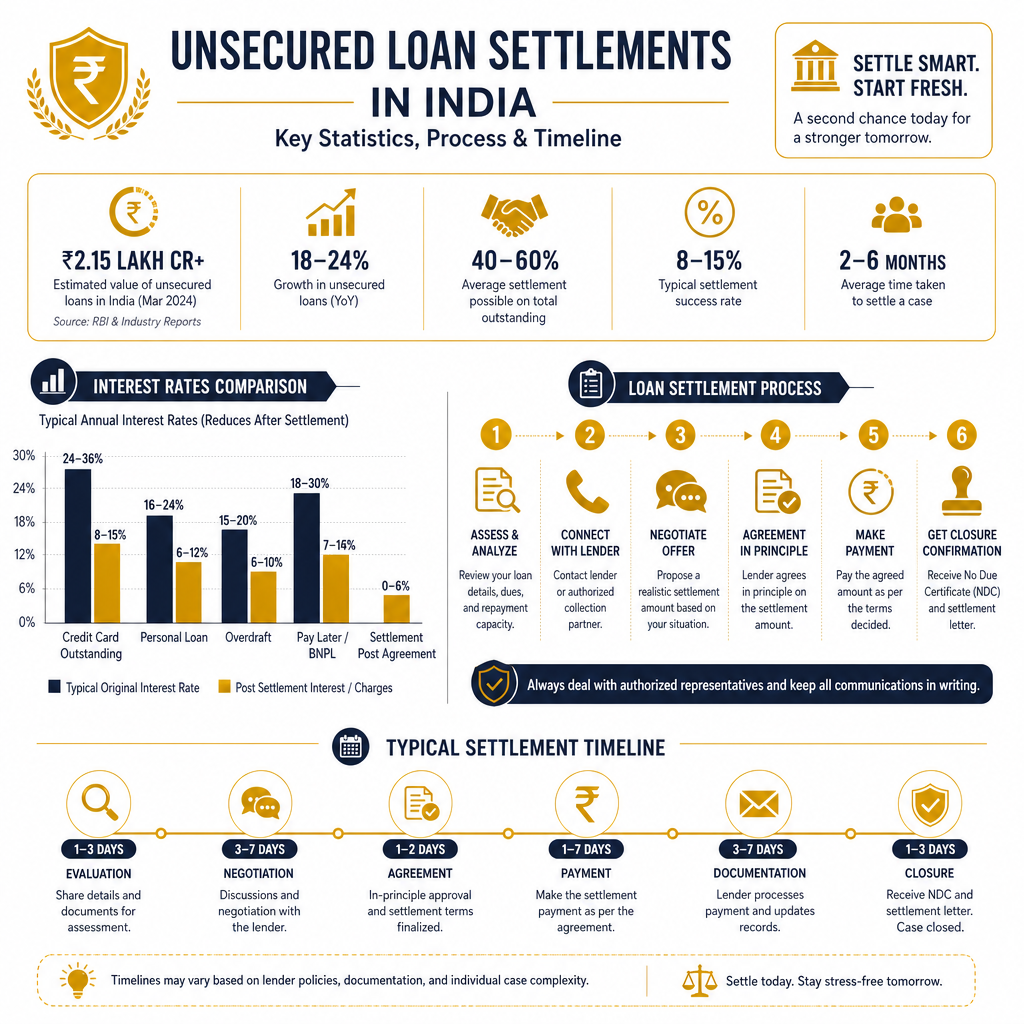
Prepared by AMA Legal Solutions Research & Analytics Team • Data & Compliance Overview
Structured Timelines: From Default to Settlement
When dealing with debt settlement for an unsecured loan, a systematic approach is crucial to navigate from default to resolution effectively. Initially, an unsecured loan default can lead to immediate bank notifications, which escalate the urgency of the situation. Understanding the timeline and acting proactively can significantly influence the outcome of the settlement process.
Typically, the process follows a structured timeline as illustrated in the table below. It helps borrowers to anticipate and prepare for each stage, ensuring a well-informed negotiation strategy.
| Stage | Description | Timeline |
|---|---|---|
| Default Notice | Initial notice from the bank regarding missed payment. | 1-2 months after missed payment |
| Negotiation Period | Timeframe to negotiate terms with the bank. | 3-6 months post-default |
| Settlement Proposal | Formal proposal submitted to the bank for settlement. | Within 6-9 months |
| Settlement Agreement | Mutually agreed terms between borrower and lender. | 9-12 months from default |
Throughout this process, maintaining communication via email can help in documenting all interactions and agreements. Borrowers should be aware that banking and finance laws are frequently updated, potentially affecting timelines and procedures. Consulting a legal expert is advised to ensure compliance and optimize settlement outcomes.
Common Pitfalls in Debt Settlement and How to Avoid Them
Debt settlement for unsecured loans can be fraught with challenges if not approached carefully. Many borrowers make critical errors that can jeopardize their financial recovery. Here are some common pitfalls and how to avoid them:
Ignoring the Importance of Documentation
Failing to maintain proper documentation of communications with lenders can lead to misunderstandings. Always keep records of emails, letters, and any settlements offered. This not only helps in maintaining transparency but also provides a legal safeguard.
Settling Without a Written Agreement
Never proceed with a verbal agreement alone. Ensure all settlement terms are documented in a written contract. This avoids disputes over agreed terms and protects you legally. For more guidance, consider visiting our Loan Settlement Services.
Underestimating the Impact on Credit Score
Settling a loan can impact your credit rating. Understand the differences between settlement and closure. Learn more about this in our article on Loan Settlement vs Loan Closure Impact on CIBIL.
- Ensure all settlements are documented.
- Get all agreements in writing.
- Consider the impact on your credit score.
- Seek professional advice for complex cases.
By being aware of these pitfalls and taking steps to avoid them, you can navigate the debt settlement process more effectively and safeguard your financial future.
Real-Life Case Studies: Successful Debt Settlements
Over the years, we've witnessed numerous instances where debt settlement has been effectively achieved for unsecured loans, providing immense relief to borrowers. Here are two notable cases that highlight strategic resolution and negotiation techniques.
Case Study 1: SME Business Owner
An SME owner faced significant financial hurdles due to fluctuating market conditions, resulting in an inability to service a ₹20 lakh unsecured loan. By engaging in structured negotiations, supported by thorough documentation of financial distress, the lender agreed to a reduced settlement amount of ₹12 lakh, payable over 18 months. This not only alleviated immediate financial pressure but also preserved the business's operations.
Case Study 2: Salaried Individual
A salaried individual burdened with a ₹5 lakh personal loan default sought professional assistance for settlement. After reviewing the borrower's repayment history and current financial standing, the lender accepted a one-time settlement offer of ₹3 lakh. The client's comprehensive understanding of banking and finance law played a crucial role in conveying genuine intent to repay, thus securing a favorable outcome.
These cases illustrate how meticulous planning and adept negotiation can turn a distressing debt situation into a manageable financial reality. For more insights and personalized solutions, explore our Loan Settlement Services.
How Banks Classify and Handle Non-Performing Assets
Banks classify loans as Non-Performing Assets (NPAs) when borrowers fail to make interest or principal payments for over 90 days. This classification triggers several internal processes aimed at recovery or settlement. Understanding these processes is crucial for borrowers seeking loan settlement services for unsecured loans.
Classification Stages
- Standard Assets: These are performing assets with timely repayments.
- Substandard Assets: Loans overdue for 91-365 days fall into this category, and banks begin monitoring closely.
- Doubtful Assets: Loans that are overdue for more than a year are classified here. Banks assess the possibility of loss and strategize recovery actions.
- Loss Assets: Loans deemed uncollectible, even with recovery efforts, often result in write-offs.
Banks handle NPAs through various strategies, including restructuring, legal proceedings, or settlements. Borrowers should be proactive in communicating with banks and seeking professional advice. Consulting experienced lawyers can provide viable solutions like banking and finance law guidance, ensuring a structured approach to debt settlement.
By understanding how banks classify and manage NPAs, borrowers can better navigate their options and pursue favorable settlements for their unsecured loans.
What Recovery Agents Can and Cannot Do: Legal Boundaries
Recovery agents play a pivotal role in the debt settlement for unsecured loans process. Yet, their actions are governed by strict legal boundaries to protect borrowers from harassment. Understanding these boundaries can prevent unnecessary stress and secure your rights.
What Recovery Agents Can Do
- Contact borrowers during reasonable hours, in a professional manner, usually between 7 AM and 7 PM.
- Discuss overdue debts and negotiate repayment plans that align with your financial situation.
- Send written notices or emails regarding outstanding balances and possible consequences of non-payment.
- Involve third-party agencies only with prior written consent from the bank.
What Recovery Agents Cannot Do
- Harass or intimidate borrowers through abusive language, threats, or repeated calls.
- Visit your workplace without prior permission, or disclose your debt situation to colleagues or neighbors.
- Confiscate personal property without a proper court order or involvement of law enforcement.
- Misrepresent themselves as officials from law enforcement agencies or threaten legal action which they cannot initiate.
It's crucial to know your legal rights against recovery agent harassment. If you experience any misconduct, report the incident to the bank and consider legal action. Maintaining communication through email rather than phone calls can provide documentation and a clearer record of discussions.
Checklist: Preparing for a Debt Settlement Meeting
Preparing for a debt settlement meeting is crucial to securing favorable terms. It involves a strategic approach and an understanding of your financial situation. Here's a comprehensive checklist to guide you:
Key Steps to Prepare:
- Know Your Debt: Calculate the total outstanding amount on your unsecured loans, including any accrued interest and penalties.
- Review Your Finances: Assess your current financial health. Know your monthly income, expenses, and any other liabilities you may have.
- Document Everything: Gather all relevant documents, such as loan agreements, repayment history, and any correspondence with the lender.
- Understand Your Rights: Familiarize yourself with your legal rights against recovery agent harassment and RBI guidelines on settlements.
- Plan Your Offer: Decide on a realistic settlement offer based on what you can afford to pay as a lump sum or in installments.
Utility Table for Decision Making:
| Parameter / Criterion | Key Details / Legal Provision | Timeline / Practical Impact |
|---|---|---|
| Debt Amount | As per the last statement; verify with lender | Immediate clarity needed to plan offer |
| Interest Rates & Penalties | Check original terms vs. current demand | Assess impact on total payable |
| Settlement Offer | Based on financial capability and negotiation | Can impact credit score; immediate relief |
| Legal Provisions | Refer to RBI guidelines on debt collection | Understanding can prevent harassment |
Ensure you are well-rehearsed and confident before the meeting. Also, consider consulting with a professional specializing in loan settlement services for expert guidance.
Popular Searches
AMA Legal Solutions
Trusted with a 4.7 Google Rating, over 10,000+ Clients Served, 25,000+ Cases Handled, and more than 40+ Years of Experience in providing strategic legal defense and debt resolution across India.
Our media coverages





Frequently Asked Questions
Related Articles

Understanding Debt Clearance Companies in India
Navigate debt settlement with top legal tips and insights
Read Article
Best Way to Settle Credit Card Debt in India
Practical Legal Strategies for Indian Borrowers
Read Article
Best Debt Solution: Legal Paths to Financial Freedom
Explore effective legal strategies for resolving debt issues in India.
Read ArticleAbout Author
Anuj Anand Malik
View ProfileAnuj Anand Malik, Founder of AMA Legal Solutions, is a trusted advocate, loan settlement expert, legal advisor, and banking lawyer. With over a decade of experience in loan settlement, corporate law, financial disputes, and compliance, he leads a result-driven law firm based in India that helps individuals, startups, and businesses achieve legal and financial stability.
Connect on LinkedInNeed Legal Help?
Get expert advice on loan settlement and debt relief.
Call +91-8700343611Request Callback