Credit Card Settlement: Full Guide & Book Your Settlement
Master the art of credit card settlement with expert insights.

Anuj Anand Malik
Reviewed by AMA Legal Solutions
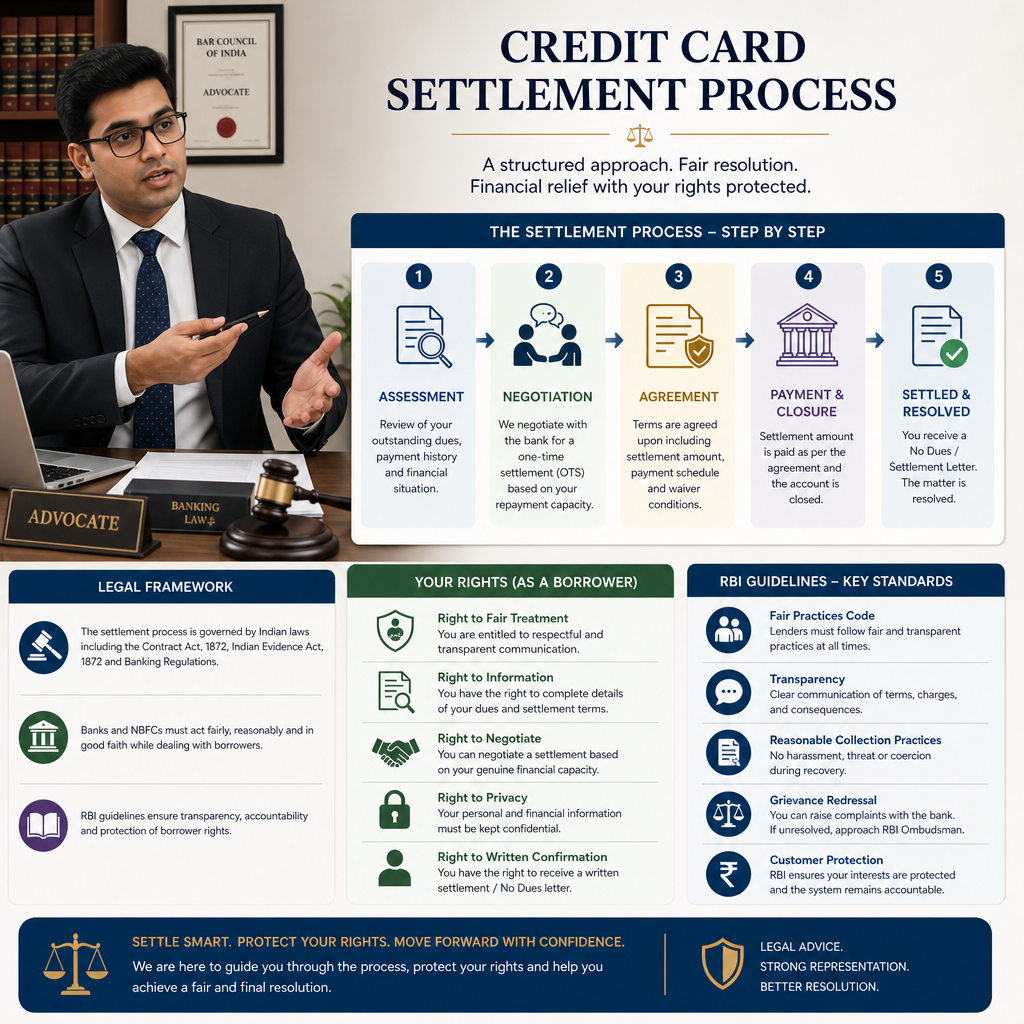
Introduction to Credit Card Settlement
Credit card settlement is the process of negotiating with the credit card company to pay a lump sum that is less than the total outstanding balance. This option becomes viable when borrowers face financial hardship and are unable to meet their monthly payment obligations. Understanding the nuances of credit card settlement can be crucial for individuals in financial distress, as it offers a legal pathway to relieve mounting debt pressures.
When considering settlement, it is imperative to weigh the potential advantages and consequences. Settling a debt can result in a significant reduction in the amount owed, but it can also impact credit scores and future creditworthiness. Moreover, borrowers should be aware of the potential tax implications, as forgiven debt may be considered taxable income by authorities.
Engaging in settlement negotiations requires a strategic approach. Start by assessing your current financial situation and determine what you can realistically offer as a settlement. Communicate openly with the credit card issuer or their collection agency, ideally in writing, to propose your settlement terms.
Throughout this process, it is advisable to be informed about your consumer rights and seek guidance from legal professionals if necessary. Such expertise can be invaluable in navigating the complexities of settlement agreements and ensuring that your interests are safeguarded.
Understanding the Legal Framework in India
The legal framework governing credit card settlements in India is intricate, yet essential for safeguarding consumer rights. The Reserve Bank of India (RBI) plays a pivotal role by setting guidelines for fair debt collection practices. Credit card issuers must adhere to these guidelines, ensuring that recovery agents conduct themselves ethically and legally.
Key RBI Guidelines
Recovery agents must respect borrower privacy and are prohibited from using abusive language or threats.
Calls for debt recovery should only occur between 7 AM and 7 PM.
All communications should be documented, and borrowers have the right to request written communication.
Additionally, the Consumer Protection Act, 2019 provides a legal recourse for borrowers facing harassment. Under this act, consumers can file complaints against unethical collection practices. Moreover, the SARFAESI Act outlines methods for secured creditors, although not directly applicable to unsecured credit card debts, its principles often guide negotiations.
Understanding these legal structures empowers borrowers to negotiate settlements effectively, ensuring that their rights are protected while working towards financial resolution.
For detailed legal assistance, consider connecting with banking law experts at AMA Legal Solutions who specialize in consumer rights and financial settlements.
Key RBI Guidelines on Credit Card Settlement
The Reserve Bank of India (RBI) has established crucial guidelines that govern the settlement processes for credit cards, which are integral for both borrowers and lenders. Understanding these guidelines is essential for anyone looking to settle their credit card debts.
Transparency in Communication
Banks and financial institutions must maintain transparency with borrowers. According to RBI guidelines, any charges, penalties, or changes in terms must be communicated clearly. This ensures that credit cardholders are fully informed about the implications of settlement agreements.
Collection Practices
The RBI mandates that recovery agents adhere to fair practices. They are prohibited from using abusive language or adopting coercive methods during the settlement process. Borrowers should report any violations to the bank and, if unresolved, escalate to the banking ombudsman.
Settlement Negotiations
Borrowers have the right to negotiate settlements based on their financial circumstances. The RBI encourages banks to consider genuine financial distress cases sympathetically and offer feasible settlement options. Borrowers must provide accurate financial disclosures to support their case.
Documentation
All settlement agreements must be documented. Borrowers should ensure they receive a 'no-dues' certificate post-settlement. This document serves as proof that the borrower has fulfilled their obligations, protecting them from future claims.
By adhering to these RBI guidelines, borrowers can ensure a fair and transparent credit card settlement process.
When to Consider Credit Card Settlement
Credit card settlement becomes a viable option when financial distress prevents you from fulfilling your credit card obligations. It's crucial to assess your situation before considering settlement. If you're consistently missing payments, experiencing significant life changes like job loss, or your debt exceeds half of your annual income, negotiating a settlement might be appropriate.
It's advisable to consider settlement when:
Your credit card debt is unmanageable, and repayment through regular means seems impossible.
Other debt relief options, such as debt consolidation or credit counseling, have been ineffective or unsuitable.
You face persistent contact or pressure from creditors or collection agencies.
Your financial situation is unlikely to improve in the foreseeable future, making full debt repayment unlikely.
However, settlement should be approached cautiously. When negotiated correctly, it can reduce your debt by a substantial margin, but it can also impact your credit score negatively. Furthermore, banks may not always agree to a settlement, and any forgiven debt may be taxable. Assess all risks and consult with a financial advisor or legal expert to determine the best course of action tailored to your unique circumstances.
Risks and Benefits of Settling Credit Card Debt
Settling credit card debt can be a viable option for many facing financial stress, yet it comes with both risks and benefits. Understanding these can aid in making informed decisions.
Benefits
Debt Reduction: Settlement often results in paying less than the total amount owed, providing immediate financial relief.
Single Payment: Negotiated settlements usually require a lump sum payment, allowing you to clear debts quickly.
Avoid Bankruptcy: Settlement can be a preferable alternative to bankruptcy, which has more severe long-term impacts.
Reduced Stress: Resolving debts can alleviate the ongoing stress of creditor calls and legal notices.
Risks
Credit Score Impact: Settled debts may negatively affect your credit score, making future borrowing more challenging.
Tax Implications: The forgiven debt amount may be considered taxable income by authorities.
Creditor Reactions: Not all creditors may agree to settlements, and they might pursue legal actions instead.
Potential Scams: The debt settlement industry has its share of fraudulent schemes; choosing a reputable service is essential.
Careful consideration of these factors, alongside professional advice, can maximize benefits while mitigating potential downsides during credit card debt settlement.
How Banks Classify and Handle NPAs
In the realm of credit card settlements, understanding how banks classify and handle Non-Performing Assets (NPAs) is crucial. NPAs are loans or advances for which the principal or interest payment remains overdue for a period of 90 days. Banks categorize these NPAs into three stages: Substandard, Doubtful, and Loss assets.
Classification of NPAs
Substandard Assets: Accounts that have remained NPA for less than or equal to 12 months. Banks recognize these as risky but salvageable with prompt action.
Doubtful Assets: Accounts that have been NPA for more than 12 months. Such assets raise serious doubts about recovery, often leading banks to initiate settlement discussions.
Loss Assets: These are accounts considered uncollectible and have little to no chance of recovery. Banks typically write off these debts.
Handling NPAs
Once classified, banks follow specific procedures to manage NPAs. They often ramp up recovery efforts, which may involve negotiation or legal action. Early classification helps banks to focus on restructuring or settlement strategies, aiming for mutually beneficial outcomes. Borrowers should be proactive in communication to explore feasible settlement options and prevent further escalation.
Understanding these classifications not only helps in negotiating settlements but also prevents the borrower from making common errors during the settlement process.

Halt Recovery Agent Harassment Legally
Effective Negotiation Strategies with Banks
Negotiating with banks for credit card settlement requires strategic planning and clear communication. Start by assessing your financial situation. Determine your monthly income, expenses, and outstanding debt. With this information, approach the bank with a realistic offer that reflects your ability to pay.
Step-by-Step Approach
Initiate Contact: Call the bank and request to speak with the collections department. Clearly state that you’re seeking a settlement.
Document Everything: Keep records of all communications, including dates, names, and content of conversations. If possible, communicate via email for an official record.
Be Honest and Firm: Explain your financial hardship. Be transparent about your circumstances, but remain firm about what you can realistically afford to pay.
Propose a Lump Sum Payment: Banks are often willing to accept a one-time lump sum payment that is less than the total amount owed. This can be more appealing than prolonged negotiations.
Get Agreements in Writing: Once a settlement is reached, ask for written confirmation detailing the terms and conditions. This protects you from future claims.
Utilize these strategies to engage with banks effectively and increase your chances of reaching a favorable settlement for your credit card debt. Remember, patience and persistence are key throughout the negotiation process.
Practical Steps to Initiate a Settlement
Initiating a credit card settlement can be daunting, but with the right approach, it becomes manageable. Here's a step-by-step guide:
Step 1: Assess Your Financial Position
Begin by evaluating your financial status. Calculate your total outstanding dues and determine how much you can realistically offer as a settlement amount. This helps set the foundation for negotiations.
Step 2: Gather Relevant Documents
Prepare all necessary documentation, including your credit card statements, communication records with the bank, and any financial hardship proofs, such as job loss or medical expenses. This evidence strengthens your case.
Step 3: Contact Your Creditor
Reach out to your bank or credit card issuer's settlement department. It's preferable to initiate contact through a formal letter or email, clearly stating your financial difficulties and desire to settle the debt.
Step 4: Negotiate the Terms
During discussions, aim to agree on a lump-sum payment, which is often more appealing to creditors. Be firm yet realistic about what you can afford. You can also request a waiver of late fees and reduced interest rates.
Step 5: Get the Agreement in Writing
Once you reach a settlement, ensure all terms are documented in writing. This protects you from any future claims. Ensure the letter states that the settlement will result in 'debt paid in full' status.
Common Mistakes to Avoid During Settlement
Navigating credit card settlement can be a complex process, and avoiding certain pitfalls is crucial to achieving a favorable outcome. Below are common mistakes borrowers make during settlement negotiations:
Ignoring Communication from Creditors
Many borrowers make the mistake of ignoring calls or letters from creditors, hoping the issue will resolve itself. This can lead to legal actions or reduced settlement options. Always engage with your creditor and communicate openly about your financial situation.
Not Getting Agreements in Writing
Verbal promises are unreliable. Ensure that all agreements, especially payment plans or concessions, are documented in writing to prevent any future disputes. This provides a clear record for both parties.
Failing to Assess the Creditor’s Offer
Accepting the first offer without a thorough assessment can be detrimental. Compare the offer against your financial capabilities and long-term goals. Sometimes, better terms can be negotiated with patience and evidence of financial hardship.
Overlooking Legal Rights
Borrowers often overlook their legal rights under the RBI guidelines and consumer protection laws. Understanding these can empower you during negotiations and prevent unlawful creditor practices.
Settling without Professional Advice
Consulting with an experienced banking lawyer can provide valuable insights and strategies. Legal expertise can often yield better settlement outcomes, ensuring your rights are protected throughout the process.
Sample Conversations and Real Scenarios
Engaging with credit card companies for settlement requires tact and strategy. Below are illustrative conversations and scenarios that may unfold during the negotiation process.
Scenario 1: Initial Contact with the Credit Card Company
Borrower: "Hello, I am facing financial difficulties and am unable to pay my credit card dues in full. Can we discuss a possible settlement option?"
Representative: "I understand. Let's explore your situation and see what options are available. Could you share more about your current financial status?"
Scenario 2: Discussing Settlement Terms
Borrower: "Given my circumstances, I can arrange to pay 50% of my outstanding balance. Would the bank be open to such a settlement?"
Representative: "We can consider that. However, I'll need to discuss this with my manager and will get back to you with any potential offers."
Scenario 3: Confirming the Agreement
Borrower: "Thank you for the offer of settling my debt at 60% of the outstanding amount. Could you please confirm this in writing?"
Representative: "Certainly. We will send a settlement letter with all the terms outlined. Please review it carefully."
These scenarios illustrate the importance of clear communication and documentation throughout the settlement process. Understanding your rights and the bank's procedures is crucial to reaching a favorable agreement. Consider consulting with a legal expert to navigate these discussions effectively.
What Banks Typically Don’t Disclose
Banks are strategic in their communications, particularly when it comes to credit card settlement. Many borrowers are unaware of the internal criteria banks use to evaluate settlement requests. One key aspect is the internal classification of Non-Performing Assets (NPAs). When a credit card debt is overdue, banks categorize it based on risk and potential recovery, which significantly impacts their willingness to negotiate.
Moreover, banks often don’t disclose that settlement offers are influenced by their current fiscal performance. During a financial quarter's close, banks may be more inclined to settle to improve their books. Timing can be crucial.
Negotiation Strategies
Request written communication: Always ask banks to confirm settlement terms in writing. This ensures accountability and clarity.
Leverage your credit history: If you've had a previously good track record, use it as a negotiating tool.
Highlight financial hardships: Clearly present any circumstances like job loss or medical emergencies that impact your repayment capacity.
Additionally, banks seldom inform borrowers about the impact of settlements on credit scores. While settlements close accounts, they also mark the account as 'settled', which can adversely affect credit scores. Understanding these nuances can empower borrowers in their settlement negotiations.
Lawyer’s Advice: Navigating the Settlement Process
Successfully navigating the credit card settlement process requires strategic planning and understanding the legal landscape. Begin by assessing your financial standing. Create an accurate representation of your income, expenses, and outstanding debts. This will enable you to determine a realistic settlement offer.
Steps to Initiate the Settlement
Initial Communication: Reach out to your credit card issuer. Express your intention to settle and request a reduction in the outstanding amount.
Document Everything: Maintain records of all communications, noting dates, times, and the names of representatives you speak with. This documentation can be crucial if disputes arise.
Negotiate Effectively: Present a well-structured offer based on your financial analysis. Be prepared for counteroffers, but aim for a middle ground that is manageable for you.
Legal Considerations
Understand that creditors are bound by RBI guidelines. They cannot harass you, and recovery agents must act within legal boundaries. If you face unlawful practices, consider legal intervention. Consulting with a banking lawyer can provide insights into your rights and help formulate a strong settlement strategy.
Remember, settlements should not negatively impact your credit score more than necessary. Aim for a full settlement rather than a partial one, when possible, to minimize long-term financial repercussions.
Need Strategic Legal Defense for Your Situation?
Our banking & litigation advocates review your notices, debt liability, and recovery issues under complete advocate-client secrecy.

AMA Legal Solutions
Trusted with a 4.7 Google Rating, over 10,000+ Clients Served, 25,000+ Cases Handled, and more than 40+ Years of Experience in providing strategic legal defense and debt resolution across India.
Our media coverages





Client Reviews
"AMA Legal Solutions turned a daunting process into a manageable one. Their strategic approach and deep understanding of the law made all the difference."
Suresh Patel
"Outstanding service from AMA Legal Solutions. They ensured my rights were protected and successfully negotiated a settlement that I could manage. Thankful for their support."
Divya Joshi
"I was impressed by the professionalism and expertise of AMA Legal Solutions. They provided clarity and confidence in handling my debt settlement effectively."
Priya Menon
"AMA Legal Solutions expertly guided me through a complex credit card settlement, securing a favorable outcome. Their knowledge of banking regulations was invaluable."
Anjali Sharma
"The legal team at AMA was thorough and compassionate. They negotiated a settlement that greatly alleviated my financial stress. Highly recommend their services."
Rajesh Khanna
Frequently Asked Questions
Related Articles
RuPay Credit Card on UPI Default & Credit Line on UPI Settlement (2026)
Micro-transactions on RuPay UPI Credit Cards and pre-approved 'Credit Lines on UPI' have triggered a massive wave of 42%+ APR revolving debt traps. Find out if defaulting blocks your personal savings UPI and how to settle RuPay UPI credit dues for 30%–50%.
Read Article
Paytm, PhonePe & BharatPe Daily EDI Merchant Loan Settlement (2026)
Drowning in Equated Daily Installment (EDI) merchant loans where 100% of your daily QR Soundbox collections are auto-swept before you can pay suppliers or rent? Learn how retail shopkeepers and MSMEs legally halt QR sweeps and negotiate a 50%+ OTS.
Read Article
Can Bank or Loan App Remotely Lock Phone for EMI Default? RBI Rules (2026)
An investigative breakdown of RBI's Remote Device Locking Directions—explaining why lenders cannot lock your phone for personal loans, the mandatory 30/60 DPD safeguards on financed devices, the Rs. 250/hour delay penalty, and how to settle device & app loans.
Read ArticleAbout Author
Anuj Anand Malik
View ProfileAnuj Anand Malik, Founder of AMA Legal Solutions, is a trusted advocate, loan settlement expert, legal advisor, and banking lawyer. With over a decade of experience in loan settlement, corporate law, financial disputes, and compliance, he leads a result-driven law firm based in India that helps individuals, startups, and businesses achieve legal and financial stability.
Connect on LinkedInNeed Legal Representation?
Evaluate your defense against recovery agents, notices, or structure your loan settlement directly with Senior Advocates.
Call +91-8700343611