Can a Personal Loan Defaulter Go to Jail in India? (2026)
Understanding legal ramifications & safeguards for personal loan defaulters in India

Anuj Anand Malik
Reviewed by AMA Legal Solutions
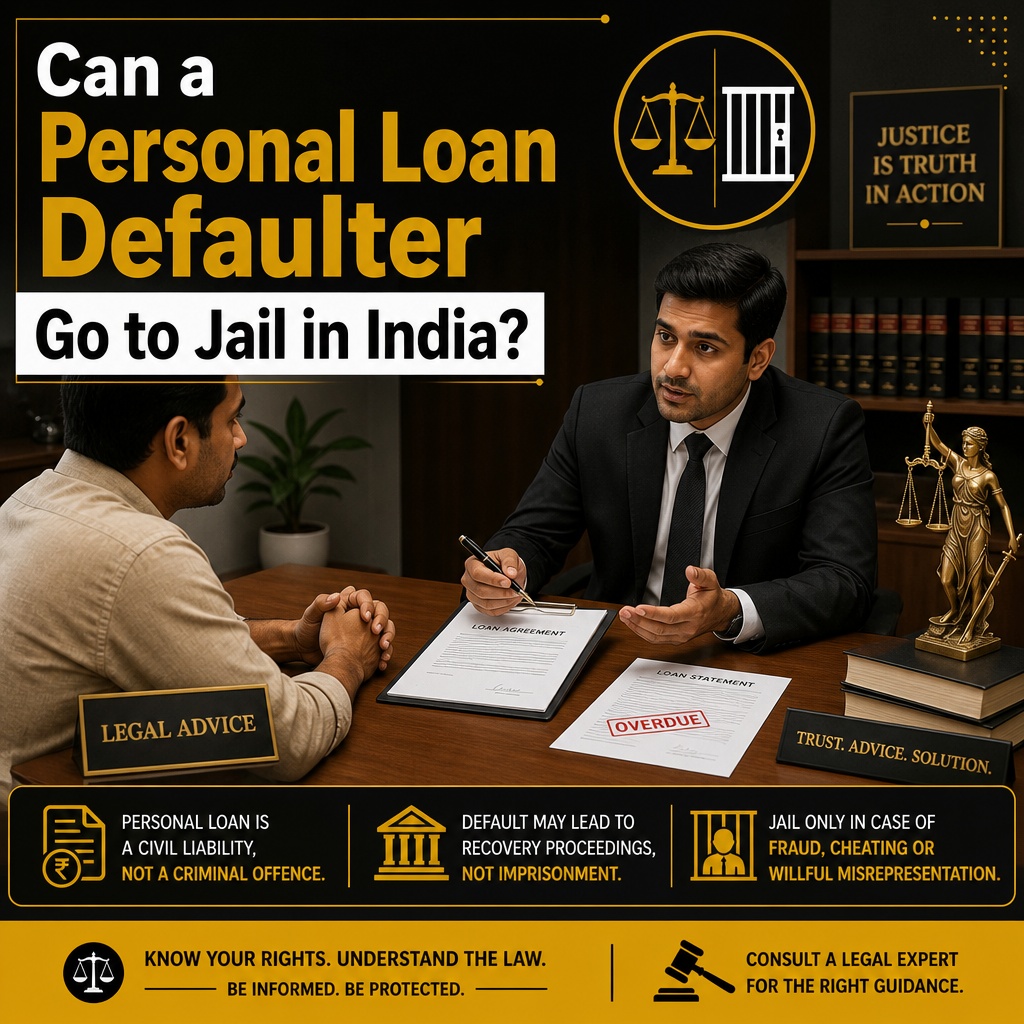
Key Takeaways: In India, a personal loan defaulter cannot be jailed simply for failing to repay a loan as it is regarded as a civil matter. However, actions like issuing a bounced cheque or committing fraud during loan acquisition can lead to criminal charges and potential imprisonment.
Introduction to Personal Loan Defaults in India
When evaluating Can a Personal Loan Defaulter Go to Jail in India? in India, understanding the applicable statutory framework, legal procedures, and strategic rights is essential. In India, the issue of personal loan defaults is a significant concern for both borrowers and lenders. As financial obligations rise, many individuals find themselves unable to meet their loan repayment schedules. A common question that arises in this context is: "Can a personal loan defaulter go to jail in India?" Understanding the legal framework and consequences surrounding loan defaults is crucial for borrowers facing financial difficulties.
Statutory Framework & Governing Legal Provisions
To address whether a personal loan defaulter can go to jail in India, one must first understand the relevant legal provisions. Under Indian law, defaulting on a personal loan is primarily considered a civil matter. The primary legislative framework governing loan defaults includes the Indian Contract Act, 1872 and the Negotiable Instruments Act, 1881.
The Indian Contract Act, 1872 treats loan defaults as a breach of contract. The Indian Constitution and the Supreme Court have historically underscored that failure to repay a debt, in itself, does not attract criminal consequences. Typically, lenders seek recovery through civil remedies. The Negotiable Instruments Act, 1881 (Section 138) criminalizes the dishonoring of cheques issued for loan repayment, which can lead to imprisonment. Further, fraudulent acts during loan procurement may give rise to criminal charges under the Indian Penal Code, 1860, particularly Sections 403 and 415.
Can a Personal Loan Defaulter Go to Jail? Understanding the Law
The fundamental query - "Can a personal loan defaulter go to jail in India?" - is addressed through both civil and criminal proceedings. As civil breaches, loan defaults themselves do not directly lead to jail terms. However, associated actions, such as issuing a cheque that bounces or securing a loan through deception, can result in criminal prosecution and possible imprisonment.
When a cheque issued for repayment bounces, it triggers criminal charges under Section 138 of the Negotiable Instruments Act. Additionally, fraudulent behavior such as submitting false financial statements falls under cheating as per Sections 415 of the Indian Penal Code, thereby raising the risk of incarceration. These legal nuances emphasize that while defaulting per se does not ensure jail, related misconducts might.
Consequences of Defaulting on a Personal Loan
The consequences of personal loan defaults extend beyond purely legal ramifications. These include:
- Impact on Credit Score: Defaults can severely damage a defaulter's credit score, affecting future loan prospects.
- Civil Recovery Proceedings: Lenders may initiate civil suits via the Debt Recovery Tribunal to reclaim outstanding amounts.
- Legal Notices: Continued defaults lead to legal notices, warning of impending civil action.
- Filing Criminal Complaints: In the event of cheque dishonor or fraudulent actions, criminal complaints can be filed.
Judicial Precedents Relevant to Personal Loan Defaults
Indian judiciary has historically treated loan defaults as civil infractions unless compounded by fraudulent actions. The Supreme Court has ruled in several cases that loan defaults alone are not adequate for criminal sanctions. It has been reiterated that jail is not inevitable for mere defaults, reinforcing the civil nature of debt recovery processes.
For instance, in a landmark decision, the Supreme Court reaffirmed that coercive measures are not permissible in civil disputes involving debt defaults. Legal remedies such as engaging legal notices and pursuing recovery suits in civil venues like the Debt Recovery Tribunal are prioritized over criminal proceedings.
Key Insights & Data Infographic
Visual summary, statistical trends & procedural breakdown
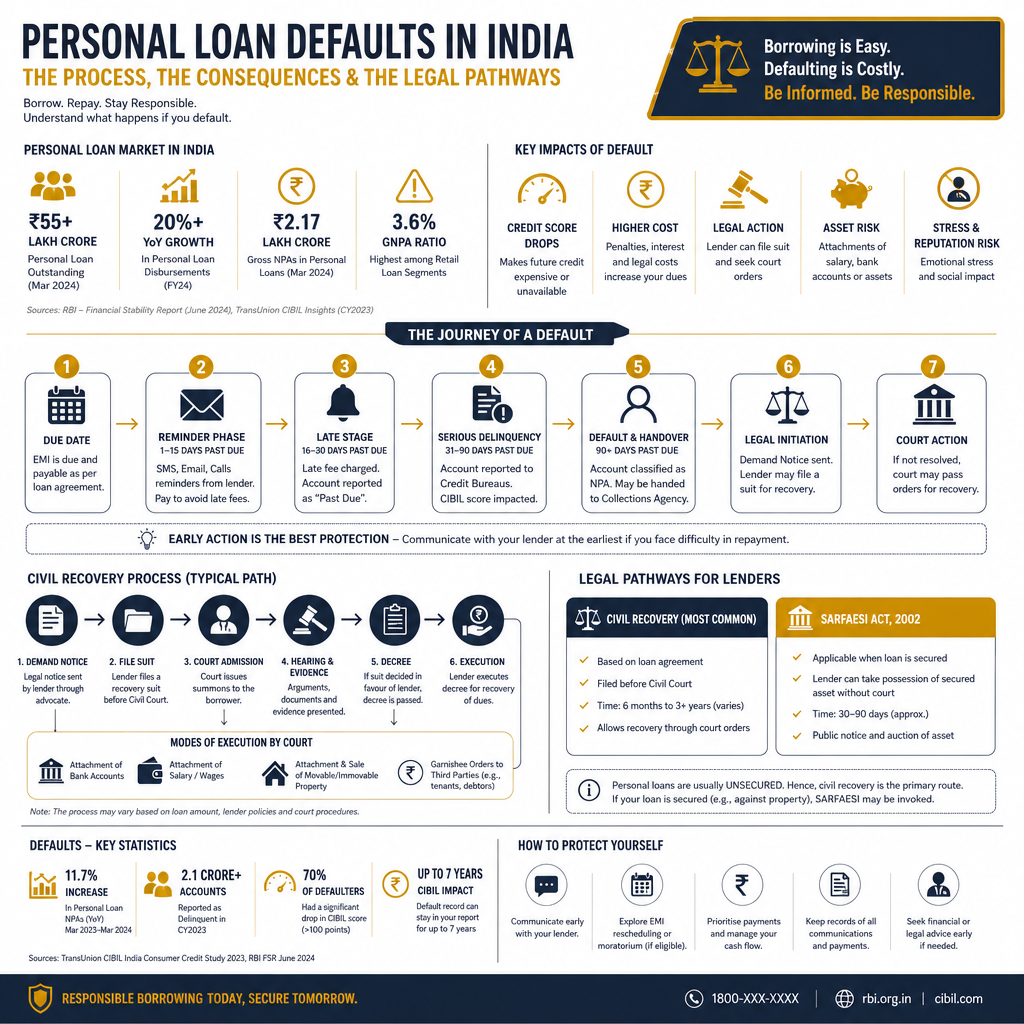
Prepared by AMA Legal Solutions Research & Analytics Team • Data & Compliance Overview

Halt Recovery Agent Harassment Legally
Legal Rights of Borrowers: What You Need to Know
Borrowers facing potential legal actions due to default possess several rights:
- Right Against Harassment: The Reserve Bank of India's regulations prohibit recovery agents from employing coercive tactics.
- Right to Notice: Borrowers must receive legal notification before any adverse legal action is initiated.
- Right to Defend: Borrowers can contest claims in court, presenting evidence of financial distress.
- Right to Settlement Negotiations: Borrowers have the option to negotiate settlements, often seeking loan settlements that may restructure repayable amounts.
Preventive Measures Against Legal Action for Defaulters
For those concerned about whether they can go to jail for personal loan defaults in India, preventive measures are crucial. These include maintaining open communication with lenders, considering debt consolidation, attending credit counseling sessions, and exploring structured debt repayment plans to avoid defaults. Engaging professional legal guidance early can offer effective defenses and negotiation tactics in potential disputes.
Strategies for Negotiating with Lenders to Avoid Jail
Engaging in proactive negotiations with creditors can significantly mitigate the risk of legal proceedings. Borrowers may consider proposing loan restructuring options, including reducing interest rates or extending repayment tenures. Skilled negotiators can assist borrowers in reaching settlements that circumvent legal confrontations. Utilizing platforms like loan settlement services from accredited firms instead of unregulated agencies offers genuine relief by ensuring legal protections.
Critical Risks and Common Pitfalls for Personal Loan Defaulters
Borrowers should be aware of numerous risks when navigating loan defaults. Common pitfalls include ignoring lender communications, underestimating legal notice impacts, and attempting settlements through unverified agencies without professional counsel. To prevent adverse outcomes, borrowers must actively engage legal advisors to furnish informed decisions, navigate complexities, and safeguard against deceptive tactics.
| Action by Borrower | Legal Consequences | Resolution Strategy | Legal Assistance |
|---|---|---|---|
| Default on EMIs | Damage to credit score | Rescheduling repayments | Law firm negotiation |
| Issue Dishonored Cheque | Possible imprisonment | Immediate account settlement | Drafting legal response |
| Fraudulent Documents | Criminal charges | Withdrawal and reapplication | Case handling by attorney |
| Ignore Legal Notices | Court summons | Submission of defense | Professional legal drafting |
Strategic Conclusion: Securing Legal Assurance with AMA Legal Solutions
In conclusion, while defaulting on personal loans in India primarily attracts civil proceedings, specific related actions can lead to criminal liability. It is crucial for those in financial distress to understand their rights, obligations, and available remedies. Partnering with credible entities like AMA Legal Solutions provides unmatched advocacy, ensuring informed counsel and strategic defenses.
The experienced team at AMA Legal Solutions guides borrowers through the intricate legal landscape, from responding to legal notices to achieving comprehensive loan settlements. By proactively leveraging expert legal advice, borrowers can effectively manage defaults, safeguard against potential imprisonment, and secure their financial future with confidence.
Contact AMA Legal Solutions today for support tailored to your unique situation and secure the peace of mind you deserve.
Popular Searches & Topics
Commonly searched legal queries and keywords related to this article
Need Strategic Legal Defense for Your Situation?
Our banking & litigation advocates review your notices, debt liability, and recovery issues under complete advocate-client secrecy.

AMA Legal Solutions
Trusted with a 4.7 Google Rating, over 10,000+ Clients Served, 25,000+ Cases Handled, and more than 40+ Years of Experience in providing strategic legal defense and debt resolution across India.
Our media coverages





Frequently Asked Questions
Related Articles

How Long Does a Settled Account Stay on CIBIL? (2026)
Understand the impact of settled accounts on your credit history and options available.
Read Article
What Happens If You Miss Three Personal Loan EMIs?
Understand the consequences and legal options after missing three EMIs on your personal loan.
Read Article
How to Negotiate Credit Card Write-Off: A Practical Guide (2026)
Unlock effective strategies for negotiating credit card write-offs and reclaim financial control.
Read ArticleAbout Author
Anuj Anand Malik
View ProfileAnuj Anand Malik, Founder of AMA Legal Solutions, is a trusted advocate, loan settlement expert, legal advisor, and banking lawyer. With over a decade of experience in loan settlement, corporate law, financial disputes, and compliance, he leads a result-driven law firm based in India that helps individuals, startups, and businesses achieve legal and financial stability.
Connect on LinkedInNeed Legal Representation?
Evaluate your defense against recovery agents, notices, or structure your loan settlement directly with Senior Advocates.
Call +91-8700343611