Loan Settlement in India to Settling Personal Loans and Credit Card Debt
Understanding your options in times of financial distress through loan settlements.

Anuj Anand Malik
Reviewed by AMA Legal Solutions

Key Takeaways: In India, loan settlement allows borrowers in financial distress to negotiate reduced repayment amounts with lenders for unsecured debts like personal loans and credit card debts. The process involves assessing outstanding debts and financial situations, proposing realistic settlement amounts, negotiating terms, and obtaining written agreements, but requires lender approval and can impact credit scores.
Loan Settlement in India: A Complete Guide to Settling Personal Loans and Credit Card Debt
There are times when a loan that once felt manageable can suddenly become a financial burden.
A job loss, reduced income, business losses, unexpected expenses, medical emergencies, or multiple EMIs can make it difficult to keep up with repayments. What begins with one missed EMI can sometimes turn into increasing outstanding dues, repeated recovery calls, additional charges, and constant financial stress.
For many borrowers in India, the biggest problem is not simply having debt. It is not knowing what to do when they can no longer afford their existing repayments.
This is where loan settlement in India can become an option worth understanding.
AMA Legal Solutions helps borrowers understand their legal and financial options and provides professional assistance in dealing with eligible unsecured debt, lender negotiations, recovery-related concerns, and loan settlement matters.
The objective is simple: help borrowers understand their situation, explore appropriate options, and work toward a structured resolution of their outstanding debt.
What Is Loan Settlement?
Loan settlement is a process where a borrower and lender mutually agree to resolve outstanding dues for an agreed settlement amount instead of repayment of the entire outstanding balance.
For example, if a borrower is facing genuine financial hardship and is unable to repay the full outstanding amount, the lender may consider a settlement proposal.
However, it is important to understand that loan settlement is not automatic and no settlement amount can be guaranteed in advance.
The lender ultimately decides whether to accept, reject, or negotiate a settlement proposal.
Loan settlement can be considered for certain unsecured debts, depending on the borrower's circumstances and the lender's policies.
These may include:
Personal loans
Credit card dues
Business loans
Certain other unsecured credit facilities
Why Are Borrowers Looking for Loan Settlement in India?
Loans and credit cards have become an important part of personal and business finance.
While borrowing can provide financial flexibility, repayment can become difficult when circumstances change.
Borrowers may find themselves dealing with:
Multiple EMIs every month
Reduced income
Job loss or employment changes
Business losses
High credit-card outstanding balances
Increasing interest and charges
Multiple unsecured loans
Missed or delayed payments
Recovery calls and payment reminders
When several obligations accumulate, maintaining every repayment on time can become challenging.
The problem can then extend beyond finances.
Debt-related stress can affect sleep, work, family relationships, and overall peace of mind.
The important thing is not to ignore the situation.
Understanding your options at an early stage can help you approach your financial difficulties more systematically.
How Does Loan Settlement Work?
The loan settlement process can vary depending on the lender, type of loan, outstanding amount, repayment history, and the borrower's financial circumstances.
Generally, the process involves the following steps.
1. Assess Your Outstanding Debt
The first step is to understand exactly how much you owe.
This may include:
Principal outstanding
Interest
Overdue amounts
Applicable charges
Credit-card outstanding
Other amounts reflected in the lender's records
A clear understanding of your outstanding liability is important before starting negotiations.
2. Assess Your Financial Situation
Loan settlement should not be treated as the first solution for every borrower.
Your current income, expenses, assets, existing liabilities, and repayment capacity should be considered.
In some situations, continuing repayment or exploring restructuring may be more appropriate.
In other situations, where repayment has genuinely become difficult, settlement may be worth exploring.
3. Determine a Realistic Settlement Proposal
If settlement is considered appropriate, the next step is to determine an amount that you can realistically arrange.
A settlement proposal should be based on your actual financial capacity.
It is important not to commit to an amount that you cannot ultimately pay.
4. Negotiate With the Lender
The settlement proposal is then communicated to the lender.
The lender may:
Accept the proposal
Reject the proposal
Ask for a higher amount
Offer alternative terms
Continue negotiations
This is one of the most important stages of the process.
Professional assistance can help borrowers communicate their circumstances clearly and approach negotiations in a structured manner.
5. Obtain Written Settlement Terms
If the lender agrees to a settlement, the terms should be properly documented.
Borrowers should carefully review:
Settlement amount
Payment deadline
Payment instructions
Terms and conditions
Treatment of remaining dues
Documentation to be provided after payment
Do not rely solely on verbal assurances.
6. Make the Agreed Payment
Once the settlement terms are formally agreed upon, the borrower should make the payment according to the agreed terms.
All payment records should be preserved.
7. Obtain Settlement Documentation
After completion of the settlement, borrowers should obtain the appropriate documentation from the lender confirming the status of the account.
These documents should be retained carefully for future reference.
What Does AMA Legal Solutions Do in Loan Settlement?
Loan settlement is not simply about asking a lender to reduce an outstanding amount.
It can involve financial assessment, communication, negotiation, documentation, and, in certain cases, legal assistance.
AMA Legal Solutions assists borrowers in navigating these aspects of debt resolution.
Our approach focuses on understanding the borrower's circumstances and helping them take informed steps toward resolving eligible outstanding debt.
Depending on the matter, our assistance may include:
Loan settlement assistance
Credit-card debt settlement
Personal loan settlement
Business loan settlement
Communication and negotiation with lenders
Assistance relating to recovery communications
Legal consultation
Review of legal notices
Assistance with arbitration-related matters
Guidance concerning recovery and collection disputes
Each matter is assessed according to its individual facts and circumstances.
Credit Card Settlement in India
Credit cards can become particularly difficult to manage because outstanding balances can increase when payments are missed or only partially paid.
A borrower may find themselves dealing with:
Increasing outstanding balances
Interest and charges
Multiple credit cards
Minimum-payment cycles
Recovery communications
Difficulty arranging the full outstanding amount
Where a borrower is facing genuine financial hardship, credit card settlement may be one of the options that can be explored with the card issuer.
AMA Legal Solutions can assist eligible borrowers in understanding their position and navigating discussions concerning outstanding credit-card dues.
Personal Loan Settlement in India
Personal loans are generally unsecured loans, meaning they are not backed by a specific asset as collateral.
When repayment becomes difficult, borrowers may explore options such as:
Continued repayment
Restructuring, where available
Negotiation
Settlement
The appropriate option depends on the borrower's financial circumstances and the lender's policies.
If repayment has become genuinely unaffordable, professional guidance can help the borrower understand the available route before taking further action.
Loan Settlement vs Loan Closure
One of the most common misunderstandings is that loan settlement and loan closure are the same thing.
They are not.
Loan Closure
Loan closure generally occurs when the borrower has repaid the dues according to the agreed repayment terms.
Loan Settlement
Settlement occurs when the borrower and lender agree to resolve the outstanding dues for a mutually accepted amount that may be lower than the total outstanding liability.
Because the two situations are different, their treatment in credit records can also differ.
Borrowers should understand this distinction before deciding whether settlement is appropriate for them.
Key Insights & Data Infographic
Visual summary, statistical trends & procedural breakdown
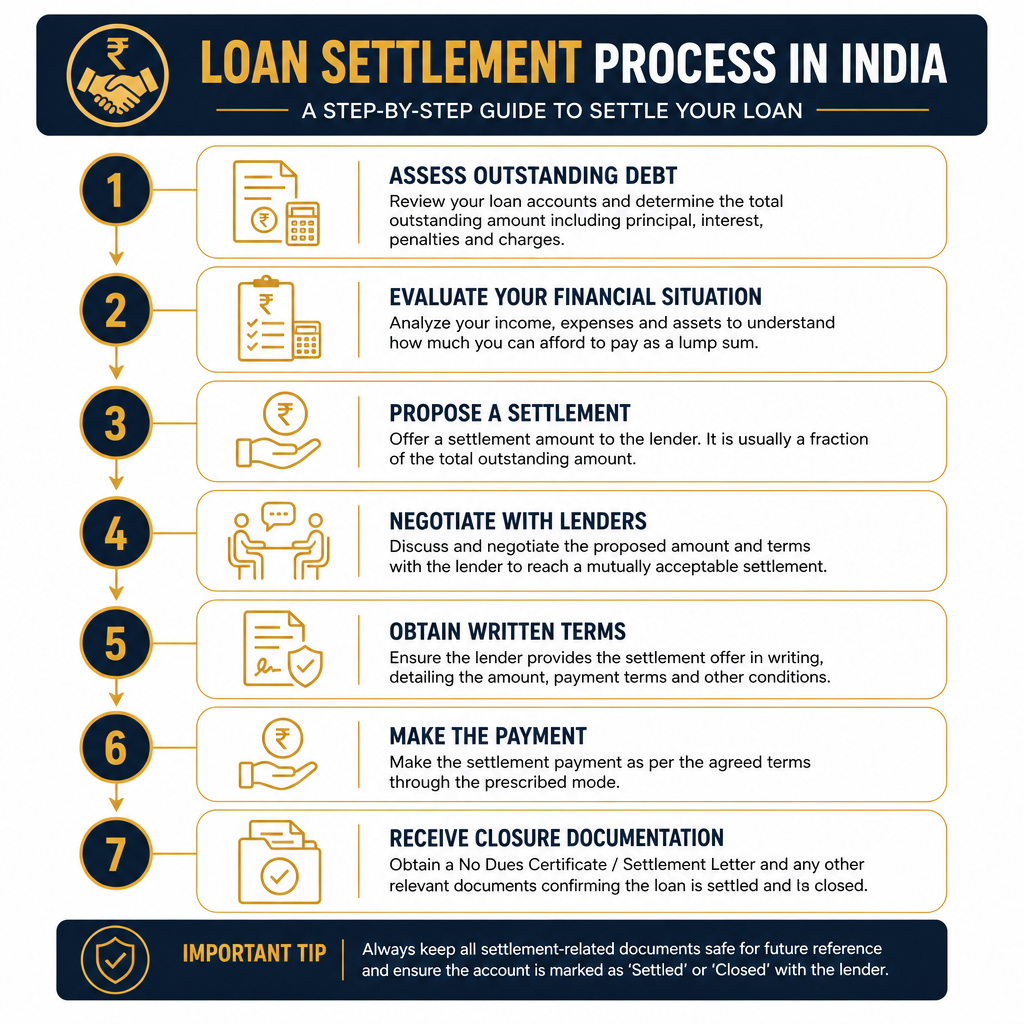
Prepared by AMA Legal Solutions Research & Analytics Team • Data & Compliance Overview

Halt Recovery Agent Harassment Legally
Does Loan Settlement Affect CIBIL Score?
This is one of the most important considerations before choosing settlement.
A settled account is different from an account that has been fully repaid.
Loan settlement may have an impact on your credit profile, depending on how the lender reports the account and the individual's credit history.
Therefore, settlement should not be presented as a way to simply "remove" debt without consequences.
The decision should be based on the borrower's complete financial circumstances and long-term recovery plan.
What About Recovery Calls and Harassment?
Financial difficulty can sometimes result in frequent calls and messages from lenders or their authorized recovery agents.
Borrowers should understand that recovery activity is subject to applicable legal and regulatory requirements.
If a borrower believes that recovery practices are inappropriate or unlawful, they should maintain records of the communications and consider using the lender's grievance mechanism or appropriate legal and regulatory channels.
AMA Legal Solutions can also assist with legal consultation concerning recovery-related matters, depending on the facts of the case.
The objective is not to avoid legitimate repayment obligations.
The objective is to ensure that the borrower understands their rights and obligations while working toward a practical resolution.
Who Should Consider Loan Settlement?
Loan settlement may be worth exploring if you are experiencing genuine financial hardship and are unable to manage your outstanding unsecured debt.
You may want to seek professional guidance if you are:
Struggling with multiple EMIs
Unable to pay your credit-card dues
Facing loss or reduction of income
Dealing with business losses
Managing several unsecured loans
Receiving repeated recovery communications
Unable to arrange the full outstanding amount
Looking for a structured approach to resolving your debt
However, settlement may not be appropriate for everyone.
If you are capable of continuing regular repayments, you should understand the implications of settlement before choosing it.
Why Choose AMA Legal Solutions for Loan Settlement?
Debt resolution can involve more than financial negotiation.
Depending on the situation, borrowers may also need assistance with legal notices, recovery communications, arbitration matters, documentation, and lender negotiations.
This is where a legal-focused approach can be valuable.
AMA Legal Solutions brings together legal understanding and practical experience in banking and finance matters to assist borrowers in navigating debt-related issues.
Our assistance can involve:
Legal Guidance
Understand the legal aspects of your loan and recovery situation.
Lender Negotiation Support
Approach settlement discussions in a structured and professional manner.
Recovery Assistance
Understand your rights and appropriate responses to recovery-related communications.
Documentation Support
Review relevant settlement communications, notices, and documentation.
Debt Resolution Approach
Work toward a practical resolution based on your financial circumstances.
Every borrower has a different financial situation. Therefore, the appropriate approach should be determined after understanding the individual facts of the matter.
Important Things to Know Before Settling a Loan
Loan settlement can provide a possible resolution in situations where repayment has become difficult, but borrowers should make an informed decision.
Before proceeding, understand that:
Settlement requires lender approval.
A settlement amount cannot be guaranteed before negotiations.
Settlement is different from full loan closure.
Settlement may affect your credit profile.
Different lenders may follow different settlement policies.
You should understand the complete terms before making payment.
Always obtain written confirmation of settlement terms.
Preserve payment receipts and settlement documentation.
Professional advice may be appropriate for complex legal or recovery matters.
A responsible settlement process should focus on resolution rather than simply promising a discount.
What Happens After Loan Settlement?
Settlement is not necessarily the end of your financial recovery.
After resolving outstanding debt, borrowers should focus on rebuilding their financial position.
This can include:
Paying active loans and credit cards on time
Avoiding unnecessary borrowing
Creating an emergency fund
Monitoring your credit report
Managing credit utilization responsibly
Reviewing monthly expenses
Building a sustainable financial plan
The objective should be long-term financial stability.
Debt Does Not Define You
Financial difficulty can happen to anyone.
A business can face losses.
An income source can suddenly disappear.
An unexpected expense can change an entire family's financial situation.
Being unable to repay a loan does not mean that the situation cannot be addressed.
What matters is taking informed action.
Ignoring outstanding debt can allow the problem to become more complicated.
Understanding your options, seeking appropriate professional assistance, communicating with lenders, and choosing a realistic strategy can help you move toward resolution.
Final Thoughts: Take the First Step Toward Resolving Your Debt
If you are searching for loan settlement in India, you may already be dealing with financial pressure and uncertainty.
The first step is not to panic.
Start by understanding:
How much you owe
Which loans are outstanding
Your current repayment capacity
Whether restructuring or repayment remains possible
Whether settlement may be an appropriate option
What legal or financial implications you should consider
Loan settlement may be an option for borrowers facing genuine financial hardship, particularly in relation to eligible unsecured debt.
At AMA Legal Solutions, we help borrowers understand their legal and practical options and assist with eligible loan settlement and debt-resolution matters.
If your debt has become difficult to manage, getting the right information at the right time can make the next step clearer.
Frequently Asked Questions About Loan Settlement in India
1. What is loan settlement in India?
Loan settlement is a process where a borrower and lender mutually agree to resolve outstanding dues for an agreed settlement amount instead of repayment of the entire outstanding balance.
2. Can I settle my personal loan?
Personal loans are generally unsecured and may be considered for settlement depending on your financial circumstances and the lender's policies.
3. Can credit-card dues be settled?
Yes, credit-card dues may be considered for settlement depending on the lender, the outstanding amount, repayment history, and the borrower's financial circumstances.
4. Is loan settlement legal in India?
Loan settlement can be legally undertaken when the borrower and lender mutually agree to the settlement terms and the agreed process is followed.
5. Will loan settlement affect my CIBIL score?
A settled account may affect your credit profile because settlement is different from full repayment. Borrowers should understand this implication before proceeding.
6. Can AMA Legal Solutions guarantee a loan settlement?
No. The final settlement decision and amount depend on the lender and the specific circumstances of the borrower. No settlement amount should be treated as guaranteed before formal lender approval.
7. Can AMA Legal Solutions help with recovery-agent issues?
AMA Legal Solutions can provide legal assistance concerning recovery-related communications and disputes, depending on the facts and circumstances of the matter.
8. How long does loan settlement take?
There is no fixed timeline applicable to every case. The duration can depend on the lender, account status, outstanding amount, documentation, and negotiation process.
9. Is loan settlement the same as loan closure?
No. Loan closure generally refers to repayment of the dues according to the agreed terms, while settlement involves a mutually agreed resolution of outstanding dues for a settlement amount.
10. Should I settle my loan or continue paying my EMI?
There is no universal answer. The appropriate approach depends on your financial capacity, outstanding debt, income, lender terms, and long-term financial situation. It is advisable to understand the consequences of each option before making a decision.
Mastering Debt Settlement for Unsecured Loans in India
Popular Searches & Topics
Commonly searched legal queries and keywords related to this article
Need Strategic Legal Defense for Your Situation?
Our banking & litigation advocates review your notices, debt liability, and recovery issues under complete advocate-client secrecy.
AMA Legal Solutions
Trusted with a 4.7 Google Rating, over 10,000+ Clients Served, 25,000+ Cases Handled, and more than 40+ Years of Experience in providing strategic legal defense and debt resolution across India.
Our media coverages





Frequently Asked Questions
Related Articles
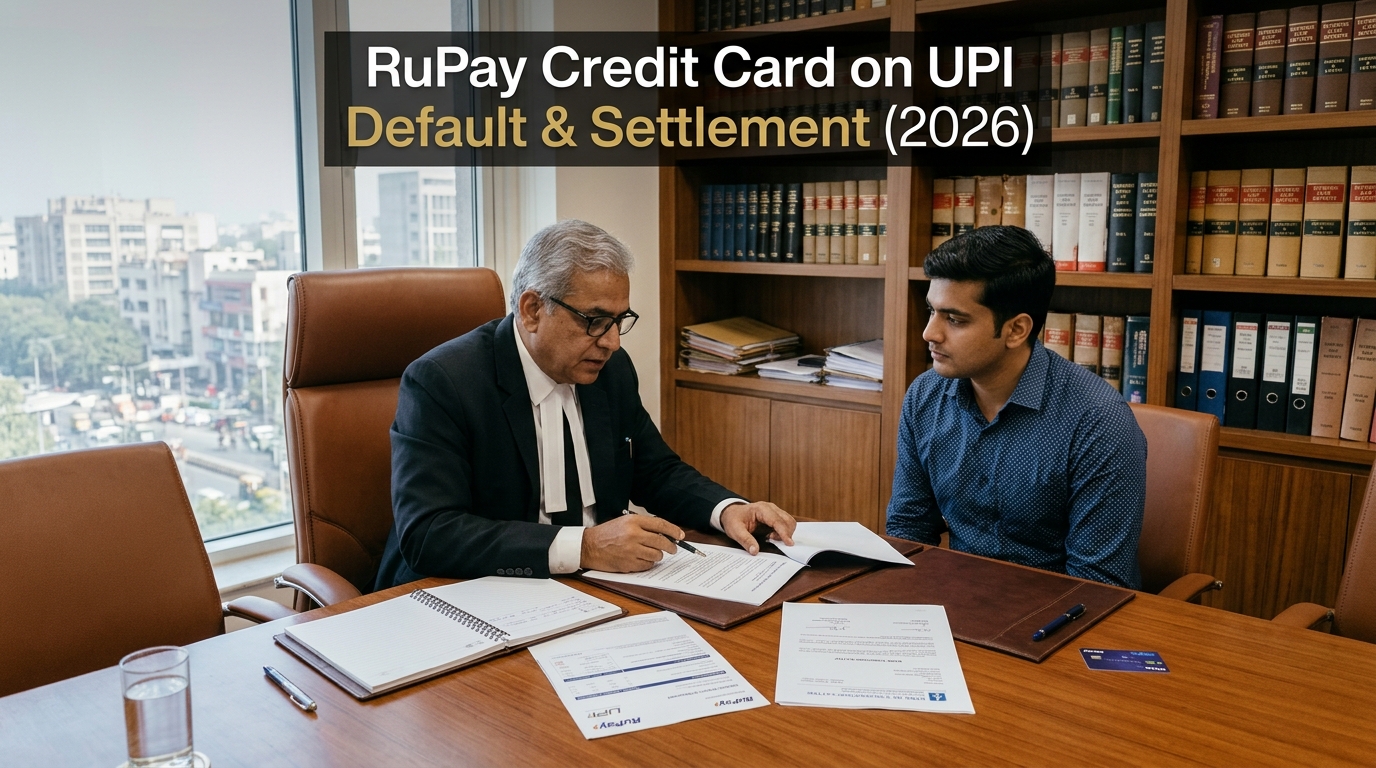
RuPay Credit Card on UPI Default & Credit Line on UPI Settlement (2026)
Micro-transactions on RuPay UPI Credit Cards and pre-approved 'Credit Lines on UPI' have triggered a massive wave of 42%+ APR revolving debt traps. Find out if defaulting blocks your personal savings UPI and how to settle RuPay UPI credit dues for 30%–50%.
Read Article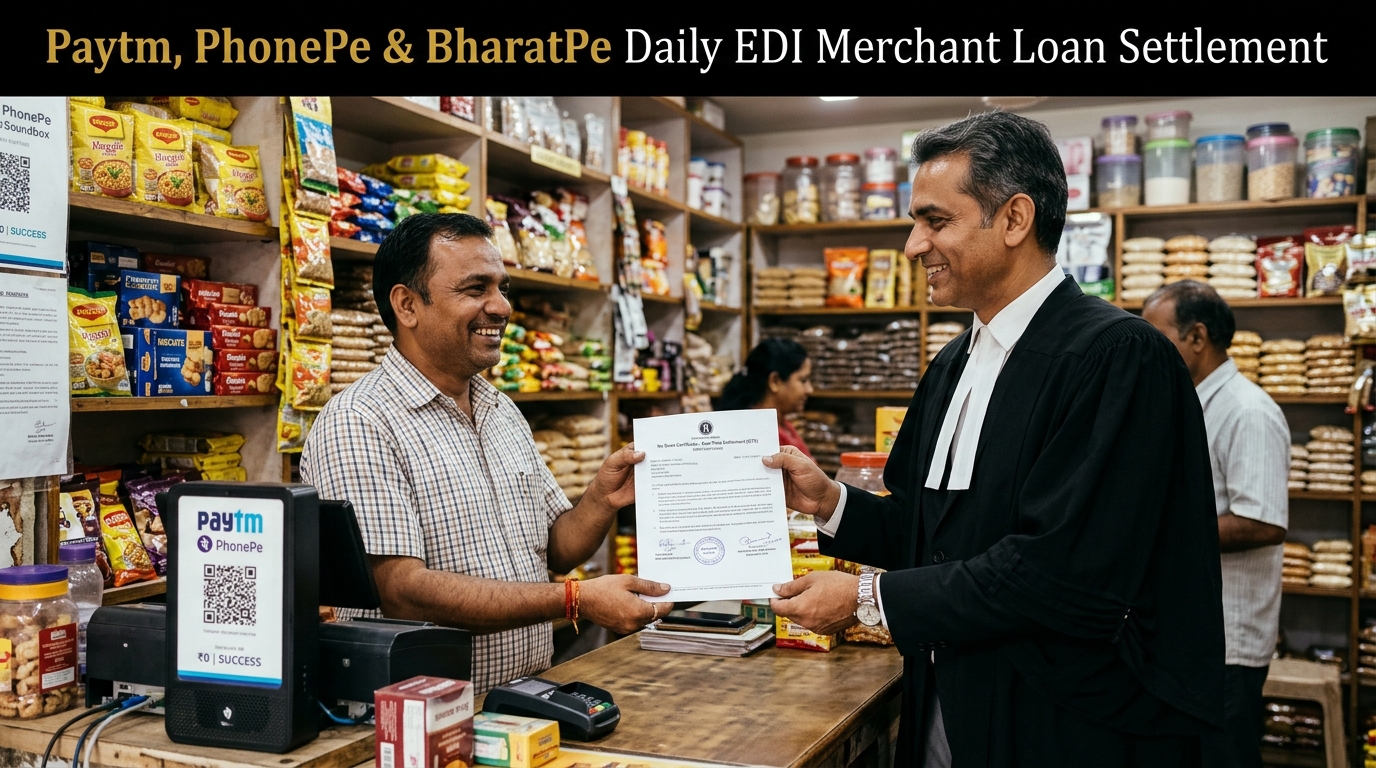
Paytm, PhonePe & BharatPe Daily EDI Merchant Loan Settlement (2026)
Drowning in Equated Daily Installment (EDI) merchant loans where 100% of your daily QR Soundbox collections are auto-swept before you can pay suppliers or rent? Learn how retail shopkeepers and MSMEs legally halt QR sweeps and negotiate a 50%+ OTS.
Read Article
Can Bank or Loan App Remotely Lock Phone for EMI Default? RBI Rules (2026)
An investigative breakdown of RBI's Remote Device Locking Directions—explaining why lenders cannot lock your phone for personal loans, the mandatory 30/60 DPD safeguards on financed devices, the Rs. 250/hour delay penalty, and how to settle device & app loans.
Read ArticleAbout Author
Anuj Anand Malik
View ProfileAnuj Anand Malik, Founder of AMA Legal Solutions, is a trusted advocate, loan settlement expert, legal advisor, and banking lawyer. With over a decade of experience in loan settlement, corporate law, financial disputes, and compliance, he leads a result-driven law firm based in India that helps individuals, startups, and businesses achieve legal and financial stability.
Connect on LinkedInNeed Legal Representation?
Evaluate your defense against recovery agents, notices, or structure your loan settlement directly with Senior Advocates.
Call +91-8700343611