Loan Settlement is Essential in Which Cases? (2026)
Explore critical scenarios where loan settlement is a practical necessity for financial relief in India.

Anuj Anand Malik
Reviewed by AMA Legal Solutions

Key Takeaways: Understanding when loan settlement is essential involves recognizing financial distress scenarios and knowing legal frameworks like the SARFAESI Act. Borrowers facing severe financial hardship or potential legal action should consider settlement as a practical way to reduce liabilities and avoid court proceedings.
Introduction to Loan Settlement in India
When evaluating loan settlement is essential in which cases ? in India, understanding the applicable statutory framework, legal procedures, and strategic rights is essential. The primary question many face today is, "loan settlement is essential in which cases?" This is a vital consideration for Indian borrowers facing financial hardships. In essence, a loan settlement occurs when the borrower pays a lump sum amount, often less than the full outstanding debt, to close the loan. As we explore this topic, we will discover the specific scenarios where this type of financial resolution becomes indispensable.
Statutory Framework & Governing Legal Provisions
Understanding the legal framework is crucial when contemplating "loan settlement is essential in which cases ?" In India, the Reserve Bank of India (RBI) regulates loan settlements under its Master Circular, particularly focusing on Non-Performing Assets (NPAs). Moreover, legal provisions such as the SARFAESI Act, 2002, and the RDDBFI Act, 1993, define the mechanisms for debt recovery and settlement. These statutes provide a legal backdrop, ensuring that settlements are conducted within set norms.
The SARFAESI Act enables lenders to proceed without court intervention, but it is often beneficial for borrowers to aim for an amicable settlement to avoid asset seizures. Banks employ One-Time Settlements (OTS) frequently for resolving complex NPA cases.
Common Cases Requiring Loan Settlement
Considering "loan settlement is essential in which cases ?", it's critical to pinpoint common scenarios. Loan settlements are particularly vital for individuals or businesses undergoing severe financial stress due to unforeseen circumstances like job losses, health emergencies, or sudden depreciation in revenue. Another scenario includes businesses facing downturns, where revenue falls below operational costs, jeopardizing loan repayment capabilities.
Additionally, settlements are often pursued in the wake of prolonged defaults where legal actions like SARFAESI proceedings or DRT notices are forthcoming. Here, amicable settlements can prevent escalated legal costs and credit score damages.
Debt Recovery Processes and Loan Defaults
To comprehend "loan settlement is essential in which cases ?", knowing the stages of debt recovery is crucial. Typically, banks initiate recovery through reminder calls or notices. If unresolved, matters escalate to legal notices under the SARFAESI Act or recovery proceedings via DRT. It is during these adversities that settlement becomes critical, offering a last-resort chance for borrowers to negotiate manageable terms.
Moreover, RBI guidelines encourage settlements rather than prolonged litigations as they can recover part of the dues while offering relief to borrowers. This process not only saves time and resources but also allows for maintaining a better borrower-bank relationship.
Key Insights & Data Infographic
Visual summary, statistical trends & procedural breakdown
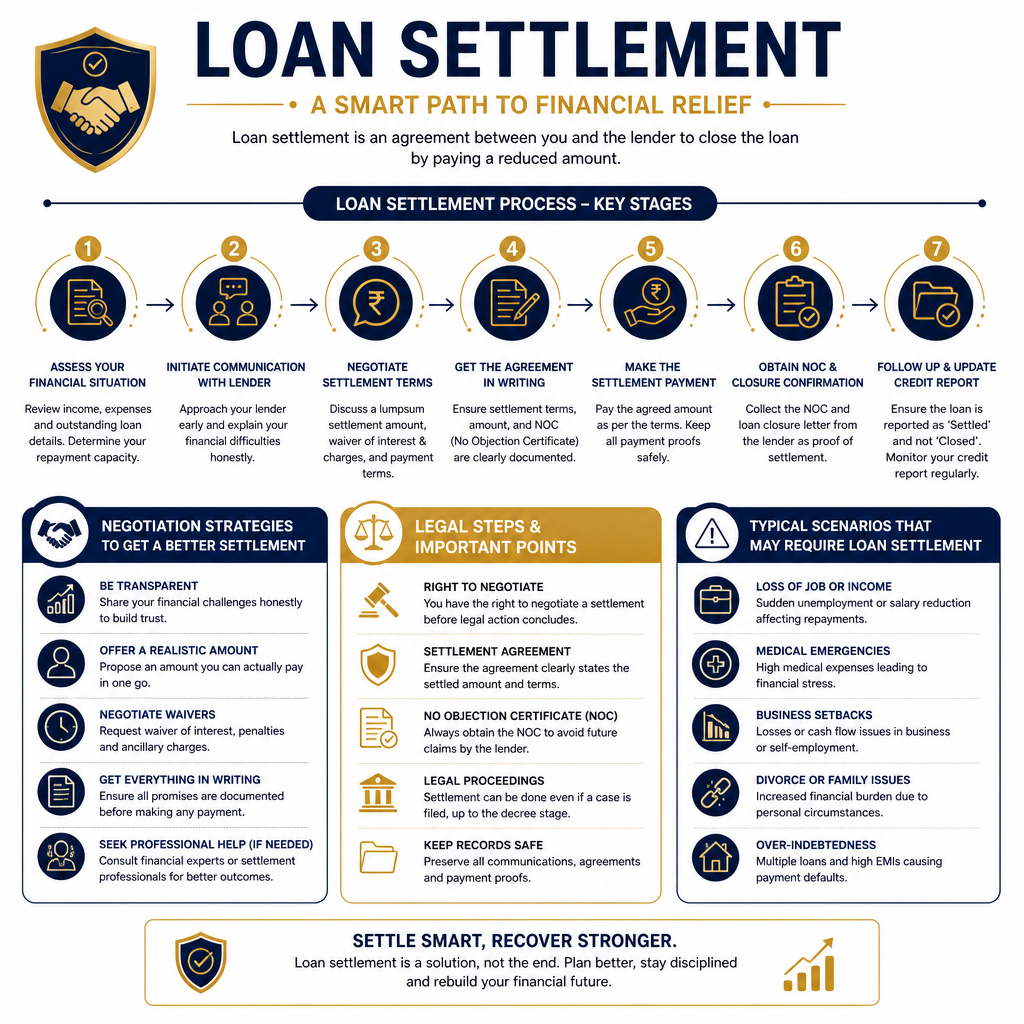
Prepared by AMA Legal Solutions Research & Analytics Team • Data & Compliance Overview

Halt Recovery Agent Harassment Legally
Practical Evaluation of Negotiation Strategies for Loan Settlement
Negotiating a settlement requires strategic planning, emphasizing the importance of understanding "loan settlement is essential in which cases ?". Properly assessing your financial situation and entering the negotiation table armed with a comprehensive proposal can significantly impact outcomes. It's vital to prepare documentation showcasing financial trouble, potential repayment capacities, and reasonable settlement amounts.
Engaging in these negotiations means being aware of each party’s stakes and limitations. An experienced advocate can provide invaluable insights into the process, helping tailor proposals that banks cannot reject. One must also embrace clear communication standards, opting for written agreements to prevent future disputes.
Legal Safeguards, Consumer Rights, and Critical Risks to Avoid
Understanding consumer protection and the rights within loan settlement negotiations is instrumental when asking, "loan settlement is essential in which cases?" Borrowers should be acquainted with their legal rights, including the Fair Practices Code by RBI that mandates transparent and non-harassing borrower treatment.
Risks include potential impacts on credit reports, where settlements show as "Settled" rather than "Closed," affecting future credit availability. Acknowledging the rights to appeal wrongful classifications and maintaining thorough records of all communications and legal documents are prudent practices.
Understanding the Role of Recovery Agents in Loan Settlement
A significant piece in answering "loan settlement is essential in which cases ?" involves acknowledging the role of recovery agents. These agents often serve as intermediaries in the settlement process, adhering to the RBI’s code of conduct which strictly prohibits harassment and abuse.
A borrower can insist on written communication via email to ensure a clear record, thus safeguarding oneself from potential verbal miscommunications and undue pressures. When the recovery process becomes contentious, involving a legal advisor can help navigate proceedings with poise and assurance.
Comparative Parameters: Loan Settlement vs. Bankruptcy
When pondering "loan settlement is essential in which cases ?", comparing settlement to bankruptcy is vital. Bankruptcy often implies a total inability to repay debts, leading to asset liquidation under the IBC framework. Conversely, settlements aim to offer the lender enough recovery to consider the account closed.
While bankruptcy affects personal and professional credibility significantly, a settled loan offers a more discreet and often manageable resolution. Borrowers should evaluate the long-term implications of each option with a legal professional before proceeding.
Strategic Conclusion: Securing Legal Assurance with AMA Legal Solutions
In examining "loan settlement is essential in which cases ?", seeking competent legal counsel from firms such as AMA Legal Solutions proves invaluable. Our expert team provides customized settlement strategies, informed by decades of experience and tailored to your unique situation. Partnering with us ensures adherence to legal standards while enhancing your negotiation position.
A well-planned loan settlement can prevent financial ruin and support future stability. Embrace legal assurance to navigate these complexities with confidence and expertise.
Popular Searches & Topics
Commonly searched legal queries and keywords related to this article
Need Strategic Legal Defense for Your Situation?
Our banking & litigation advocates review your notices, debt liability, and recovery issues under complete advocate-client secrecy.

AMA Legal Solutions
Trusted with a 4.7 Google Rating, over 10,000+ Clients Served, 25,000+ Cases Handled, and more than 40+ Years of Experience in providing strategic legal defense and debt resolution across India.
Our media coverages





Frequently Asked Questions
Related Articles

Loan Settlement Support Lawyer: Navigating Debt Relief Options in 2026
Your guide to finding the right support and legal expertise in loan settlements.
Read Article
Deceased Borrower Loan Insurance Rejection & Legal Heir Settlement (2026)
Know legal heir liability limits, challenge insurance rejections, and settle debt.
Read Article
Section 194R TDS & Income Tax on Loan Settlement Waiver in India (2026)
Understand Section 194R TDS exemptions and income tax rules on OTS loan waivers.
Read ArticleAbout Author
Anuj Anand Malik
View ProfileAnuj Anand Malik, Founder of AMA Legal Solutions, is a trusted advocate, loan settlement expert, legal advisor, and banking lawyer. With over a decade of experience in loan settlement, corporate law, financial disputes, and compliance, he leads a result-driven law firm based in India that helps individuals, startups, and businesses achieve legal and financial stability.
Connect on LinkedInNeed Legal Representation?
Evaluate your defense against recovery agents, notices, or structure your loan settlement directly with Senior Advocates.
Call +91-8700343611