RBI Cancels Certificate of Registration of 135 NBFCs
Exploring the impacts of RBI's decision on NBFCs and the financial sector

Anuj Anand Malik
Reviewed by AMA Legal Solutions
Introduction to Primary Keyword
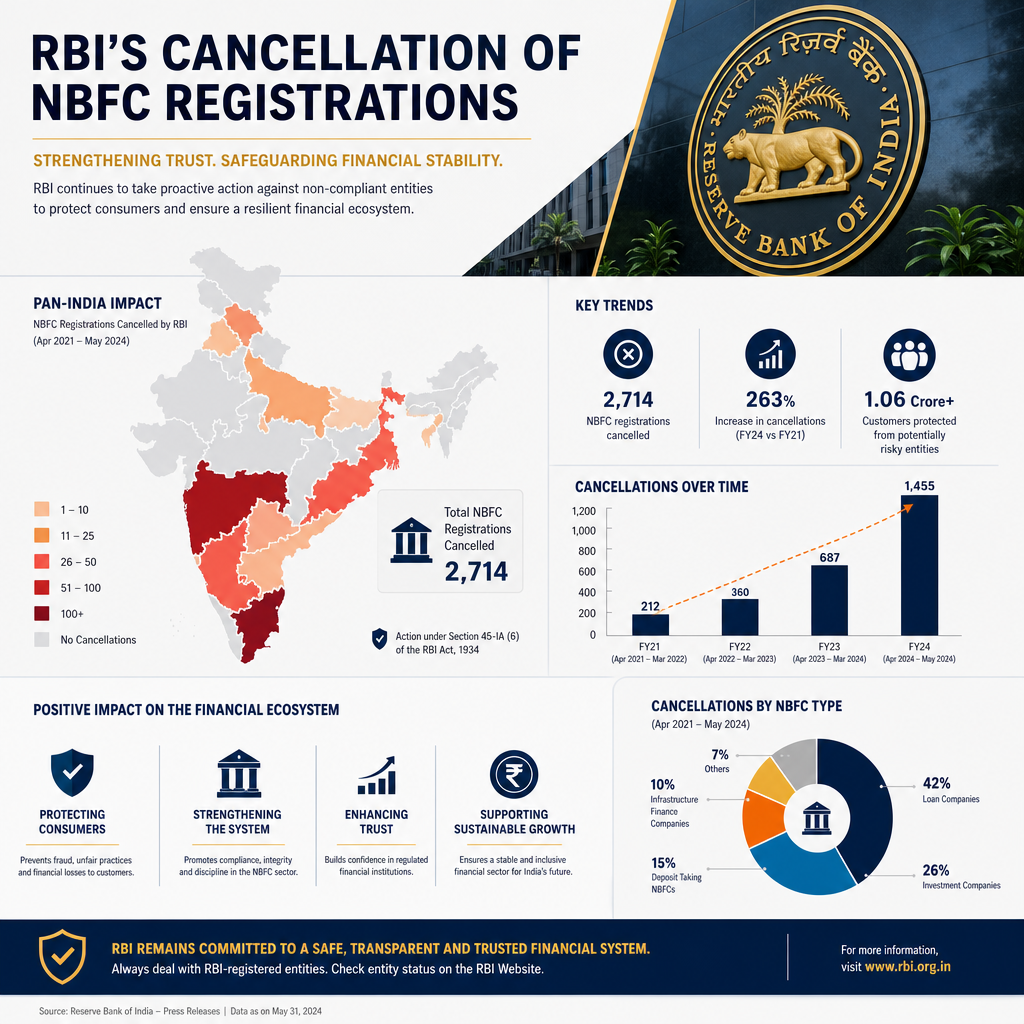
The Reserve Bank of India (RBI) plays a crucial regulatory role in the country's financial sector. Recently, a significant development has captured the attention of financial institutions and stakeholders alike. The RBI has taken a decisive step by cancelling the Certificate of Registration of 135 Non-Banking Financial Companies (NBFCs). This action underscores the RBI's commitment to maintaining a robust and compliant financial ecosystem in India, ensuring that entities operating in the sector adhere to the requisite legal and financial norms.
Non-Banking Financial Companies (NBFCs) are pivotal in providing credit and financial services to various sectors of the economy, supplementing traditional banking institutions. However, their operations are subject to stringent regulations to prevent malpractices and ensure financial stability. The cancellation of registration by the RBI is not merely a regulatory formality; it signifies serious non-compliance or violations by these entities, prompting the apex bank to take action to safeguard the interests of stakeholders and the economy at large.
The reasons for such cancellations can vary. They typically involve the failure of NBFCs to meet specific regulatory requirements, such as maintaining a satisfactory level of net owned funds, failure to comply with statutory reporting norms, or indulging in activities deemed detrimental to the public interest. The RBI's role as a watchdog ensures that only those NBFCs that adhere to these stringent guidelines continue to operate, thus enhancing the integrity and trust in the financial system.
In the broader context, such measures reflect the RBI's proactive approach to fortifying the financial environment against potential risks. This aligns with the services offered by AMA Legal Solutions in Banking and Finance, where comprehensive legal advisory and compliance solutions are provided to entities navigating this complex landscape. Ensuring adherence to regulatory frameworks is crucial, not only for operational legality but also for sustaining business credibility and growth.
Moreover, the implications of the RBI's actions can be far-reaching, affecting various sectors that rely on NBFCs for financial support. As stakeholders and companies reassess their strategies in light of these developments, legal expertise becomes invaluable. The services provided by AMA Legal Solutions in Corporate Law and Litigation are essential for navigating any ensuing legal complexities or disputes. Addressing such challenges with a proactive legal approach can mitigate risks and support business continuity amidst regulatory changes.
Understanding the Legal Framework of NBFCs in India
The legal framework governing Non-Banking Financial Companies (NBFCs) in India is intricate and multifaceted. The Reserve Bank of India (RBI) plays a pivotal role in the regulation and supervision of NBFCs to ensure a stable financial system. The recent decision where RBI cancels the certificate of registration of 135 NBFCs underscores the importance of adherence to legal norms and regulatory compliances. Understanding this framework is essential for stakeholders, including investors, borrowers, and financial institutions.
NBFCs in India are governed primarily under the Reserve Bank of India Act, 1934, and the Companies Act, 2013. The RBI Act empowers the RBI to regulate the functioning of these companies, ensuring they operate within the legal parameters and maintain financial stability. Companies registered as NBFCs must comply with specific guidelines, such as maintaining a minimum net owned fund (NOF) and adhering to prescribed prudential norms.
The cancellation of an NBFC's certificate can occur for several reasons, including but not limited to non-compliance with the RBI's directions, failure to meet financial requirements, or engaging in activities detrimental to the public interest. When RBI cancels the certificate of registration of an NBFC, it ceases to have the authority to conduct business as a financial institution, impacting its operations significantly. This action reflects the RBI's commitment to maintaining a robust financial ecosystem.
Legal compliance for NBFCs involves a thorough understanding of various regulations concerning capital adequacy, customer protection, and anti-money laundering measures. At AMA Legal Solutions, we provide comprehensive legal assistance in navigating the banking and finance sector, ensuring that NBFCs meet all statutory requirements. Our services include guiding the process of obtaining and maintaining an NBFC registration, as well as assistance in corporate compliance matters.
In addition to regulatory compliance, NBFCs must also navigate legal challenges relating to loan settlements and credit recovery. These aspects are crucial to their operations and require expert legal advice. AMA Legal Solutions offers specialized services in loan settlement, helping NBFCs manage their credit portfolios effectively and reduce non-performing assets.
The legal framework for NBFCs is not static and evolves with changes in the economic environment and regulatory landscape. Staying updated with these changes is crucial for continued compliance and operation. As such, engaging with experienced legal professionals, like those at AMA Legal Solutions, can provide the necessary legal support to navigate the complexities of the Indian financial regulatory framework.
The Role of RBI in Regulating NBFCs
The Reserve Bank of India (RBI) plays a crucial role in regulating Non-Banking Financial Companies (NBFCs) to ensure a stable and efficient financial system in the country. The recent action where the RBI cancels certificate of registration of 135 NBFCs underscores the importance of stringent regulatory measures. NBFCs, while not officially banks, have significant influence on the financial landscape, offering a variety of financial services, including loans, asset financing, and investment products. Ensuring these entities operate within a robust regulatory framework is essential for maintaining financial discipline.
The regulatory oversight exercised by the RBI includes setting prudential norms, monitoring financial health, and ensuring adherence to legal compliances. The RBI's guidelines cover critical areas such as capital adequacy, asset classification, income recognition, and corporate governance. By enforcing these norms, the RBI not only safeguards depositor interests but also mitigates systemic risks that could affect the broader economy.
In addition to these regulatory measures, the RBI has the authority to issue or cancel certificates of registration for NBFCs, as seen in the recent incident involving 135 NBFCs. This action reflects the RBI's commitment to weeding out non-compliant entities that fail to meet operational and financial criteria. Such decisive measures are necessary to prevent financial malpractices and uphold the integrity of the financial system. Businesses and individuals seeking dependable financial services can rely on well-regulated NBFCs that adhere to RBI standards.
Furthermore, the RBI's role extends beyond mere regulation. It actively engages in policy formulation to adapt to the evolving economic environment. By analyzing market trends and responding to emerging challenges, the RBI ensures that the regulations remain relevant and effective. Entities like NBFCs must stay informed of these regulatory changes to remain compliant and capitalize on growth opportunities within this dynamic sector. For assistance with regulatory compliance, businesses can seek professional guidance from corporate legal services offered by AMA Legal Solutions.
In conclusion, the RBI's role in regulating NBFCs is multifaceted, encompassing oversight, policy development, and enforcement. This regulatory vigilance is imperative for fostering a stable financial environment that encourages both innovation and security. As NBFCs continue to expand their reach in the Indian economy, the RBI's regulatory framework remains a cornerstone of financial stability, ensuring that they contribute positively to economic growth while safeguarding public interest.
Reasons Behind the Cancellation of Registrations
The Reserve Bank of India (RBI) has undertaken a rigorous exercise that resulted in the cancellation of certificates of registration for 135 Non-Banking Financial Companies (NBFCs). This significant move by the RBI is grounded in several critical reasons that are pivotal to understanding the underlying regulatory framework and compliance standards governing NBFCs in India.
Firstly, non-compliance with regulatory requirements is a primary reason behind the cancellation. The RBI mandates strict adherence to the financial regulations that are essential for maintaining the stability and integrity of the financial system. NBFCs are required to meet certain criteria, including maintaining adequate capital reserves, and failure to comply with these norms can lead to the withdrawal of their registration. Firms that do not uphold these standards pose a risk to the overall financial architecture, prompting decisive regulatory actions by the RBI. For those interested in navigating the complexities of banking regulations and compliance, AMA Legal Solutions offers expert services in Banking and Finance.
Secondly, issues related to governance and ethical practices have also been significant contributors to the cancellations. The RBI's decision reflects a broader initiative to promote transparent and ethical business practices among NBFCs. Instances of fraud, mismanagement, or unethical operations can severely undermine investor confidence and disrupt market stability. The RBI's stringent measures aim to uphold high governance standards to protect the interests of consumers and investors alike. Legal guidance in Corporate compliance can be crucial for NBFCs to align with these governance expectations.
Another reason involves financial misconduct, including the diversion of funds and failure to repay depositors. NBFCs are entrusted with public funds, and misuse of these resources can have dire consequences. The RBI’s proactive stance in identifying and addressing such malpractices ensures that only compliant entities continue to operate within the financial sector. Any entity facing issues with loan repayment or fund management might find resolution with tailored Loan Settlement solutions provided by AMA Legal Solutions.
Lastly, the cancellation often arises from the failure of some NBFCs to submit periodic returns and other necessary documentation. The RBI requires regular reporting to monitor the financial health and activities of these companies. Failure to comply with such reporting requirements indicates operational inefficiencies and lack of accountability, necessitating regulatory intervention. For entities requiring assistance with legal documentation and compliance checks, services in Drafting and Litigation can provide valuable support.
In conclusion, the RBI's action to cancel the registration of these NBFCs is a strategic move to reinforce financial discipline and fortify the regulatory environment. It serves as a reminder of the importance of adherence to regulatory norms and the severe repercussions of non-compliance. NBFCs and financial entities must remain vigilant and proactive in maintaining regulatory compliance to ensure their continued operation and contribution to the financial ecosystem.
Implications for Affected NBFCs
The recent decision by the Reserve Bank of India (RBI) to cancel the certificate of registration of 135 Non-Banking Financial Companies (NBFCs) poses significant implications for the affected entities. This regulatory action underscores the critical need for NBFCs to comply with stringent financial and operational standards set by the RBI. As trusted entities, NBFCs play a pivotal role in the Indian financial ecosystem by providing credit to sectors that are often overlooked by traditional banks. The cancellation of their licenses can severely disrupt their business operations and market credibility.
Firstly, the immediate consequence for these NBFCs is the cessation of their operations related to financial lending and accepting deposits. Without a valid registration, these entities lose their legal capacity to function as financial service providers. This can lead to a loss of business, revenue, and customer trust. For businesses affected by this regulatory move, it is crucial to reassess their operational strategies and explore alternative avenues to sustain their financial services. Engaging services such as banking and finance legal counsel can facilitate the navigation through regulatory compliance and restructuring processes.
Secondly, the cancellation has profound financial implications. The affected NBFCs might face liquidity issues given their inability to extend or restructure existing loans. They may also encounter challenges in settling dues or liabilities owed to creditors and depositors. In such scenarios, seeking professional legal advice on loan settlement and restructuring strategies can be invaluable. Legal experts can offer guidance on managing outstanding debts and negotiating with stakeholders to mitigate financial strain.
Moreover, the reputational damage resulting from the RBI’s regulatory action can be significant. The trust deficit created by the revocation of licenses can impact the NBFCs’ relationships with clients and partners. It is essential for these entities to implement robust communication strategies aimed at restoring stakeholder confidence. Understanding and leveraging corporate law principles can be beneficial in managing these reputational risks effectively.
Lastly, for the employees and management of these NBFCs, the cancellation raises concerns about career stability and future employment prospects. Organizations must address the concerns of their workforce and provide necessary support during the transition period. Legal services specializing in litigation and arbitration can help in resolving potential disputes that may arise between employers and employees.
In conclusion, the RBI's action is a wake-up call for the NBFC sector to adhere strictly to regulatory norms and ensure robust financial governance. Affected NBFCs should proactively engage with corporate law experts and legal firms to navigate the complexities of regulatory compliance and to explore viable recovery options.
Impact on the Financial Market and Economy
The recent decision by the Reserve Bank of India to cancel the certificates of registration of 135 non-banking financial companies (NBFCs) is expected to have significant ramifications on the financial market and the broader economy. As NBFCs play a crucial role in providing financial services to underserved sectors, this regulatory action can impact credit availability, investor confidence, and market dynamics.
Firstly, the immediate impact of the RBI's decision is likely to be seen in the tightening of credit availability. NBFCs have been pivotal in extending loans to small and medium-sized enterprises (SMEs) and individuals who may not have access to traditional banking services. With 135 NBFCs losing their registration, the flow of credit to these crucial economic segments may be constricted, potentially slowing down business expansion and consumer spending. For businesses seeking financial solutions, AMA Legal Solutions offers expert services in loan settlement and banking and finance.
Investor confidence could also be impacted by this regulatory measure. The cancellation of registrations may create a perception of instability within the NBFC sector, prompting investors to reassess their risk exposure. This could lead to increased scrutiny and potentially higher risk premiums for remaining NBFCs. Market dynamics may shift as a result, with investors possibly redirecting their portfolios towards more stable financial institutions or alternative investment opportunities. Businesses can benefit from the corporate services offered by AMA Legal Solutions to navigate these turbulent times.
Furthermore, the broader economic implications cannot be overlooked. NBFCs have historically filled the gap left by traditional banks in rural and semi-urban areas. Their reduced presence might exacerbate the challenges faced by rural economies, affecting agricultural finance and local entrepreneurship. Organizations involved in such sectors may require specialized arbitration and litigation services to deal with resulting financial disputes, provided by AMA Legal Solutions.
Lastly, this move underscores the importance of regulatory compliance and the need for NBFCs to maintain stringent standards. Companies operating in the financial sector must align with regulatory expectations to avoid such drastic measures. Legal assistance in compliance and drafting regulatory documents is critical, and AMA Legal Solutions provides comprehensive support in these areas.
In summary, the cancellation of 135 NBFCs' registrations by the RBI is a significant regulatory action with far-reaching consequences for the financial market and economy. Stakeholders must adapt to these changes, leveraging legal expertise and strategic planning to mitigate risks and explore new opportunities.

Halt Recovery Agent Harassment Legally
Legal Recourse and Options for NBFCs
When the Reserve Bank of India (RBI) cancels the Certificate of Registration (CoR) of Non-Banking Financial Companies (NBFCs), it can have significant implications on their operations. However, these NBFCs have several legal recourses and options to consider in addressing this action. Understanding these options is crucial for affected entities to navigate the complexities of regulatory compliance and to safeguard their financial interests.
Firstly, NBFCs can file an appeal with the Appellate Authority under the provisions of the RBI Act, 1934. This formal process allows NBFCs to contest the RBI's decision and present their case for reconsideration. Engaging experienced legal professionals, such as those at AMA Legal Solutions' Corporate Law Services, can be invaluable during this process to ensure that all necessary documentation and arguments are effectively compiled and presented.
Moreover, NBFCs may consider seeking a stay order from the judiciary to temporarily halt the effects of the RBI's cancellation order. This can provide the necessary time to prepare a comprehensive defense and can be pursued through litigation services. It is critical for NBFCs to act swiftly in filing for such orders to mitigate immediate operational disruptions.
Additionally, NBFCs should conduct a thorough internal audit to address any regulatory non-compliances that may have led to the cancellation. Engaging experts in banking and finance law can assist in identifying areas of concern and implementing corrective measures to strengthen overall compliance. Such proactive steps can significantly bolster an NBFC's position in appealing the RBI's decision.
Furthermore, considering alternative business strategies or restructuring options can be beneficial. This may involve the consideration of mergers, acquisitions, or strategic partnerships. Consulting with legal experts in real estate and arbitration can facilitate informed decision-making regarding potential restructuring or business model adjustments.
Finally, NBFCs should invest in robust compliance training and management systems to prevent future lapses. Leveraging drafting services for comprehensive policy documentation and training modules can be crucial. By adopting a proactive approach towards compliance and risk management, NBFCs can better safeguard against future regulatory challenges.
Case Studies of Affected NBFCs
The recent regulatory action by the Reserve Bank of India (RBI) to cancel the Certificate of Registration of 135 Non-Banking Financial Companies (NBFCs) has had significant implications for the financial sector in India. These cancellations highlight critical compliance issues and shed light on the operational challenges faced by these entities. This section delves into case studies of a few affected NBFCs to provide a comprehensive understanding of the ramifications and the legal nuances involved.
Case Study 1: ABC Finance Limited
ABC Finance Limited was among the NBFCs whose registration was canceled due to non-compliance with the RBI's regulatory requirements. The company reportedly failed to maintain the stipulated Net Owned Fund (NOF) and was found in violation of several operational guidelines. The impact was immediate, leading to a freeze in its operations and a significant loss in investor confidence. Legal experts at AMA Legal Solutions emphasize the importance of adhering to compliance norms to avoid such drastic measures.
Case Study 2: XYZ Financial Services
XYZ Financial Services faced revocation primarily due to its inability to furnish accurate financial statements and maintain transparency in its lending practices. This case underscores the critical nature of financial reporting and regulatory adherence. The cancellation forced the company to re-evaluate its strategies, focusing more on robust financial governance. Our corporate law services provide valuable assistance in restructuring corporate governance to meet regulatory standards.
Case Study 3: PQR Investments
PQR Investments saw its Certificate of Registration revoked due to persistent defaults in loan settlements. The company's inability to manage its loan portfolio effectively led to a series of defaults, affecting its liquidity and market reputation. The loan settlement services offered by our firm can play a crucial role in assisting similar entities to negotiate and settle outstanding debts, thus preventing regulatory action.
Case Study 4: LMN Holdings
LMN Holdings experienced cancellation of its registration for failing to implement adequate cybersecurity measures. In today's digital era, protecting financial data is paramount, and any lapse can lead to serious consequences. The case of LMN Holdings underscores the necessity of investing in cyber law services to ensure compliance with data protection regulations and safeguard customer information.
These case studies illustrate the diverse challenges that NBFCs face in the regulatory landscape. It is vital for these companies to engage legal professionals proficient in litigation and drafting services to navigate the complex legal terrain and ensure compliance with RBI regulations. As the financial sector continues to evolve, staying informed and compliant is the key to sustainable operations.
How NBFCs Can Ensure Compliance with RBI Regulations
In light of the recent action where the Reserve Bank of India (RBI) cancels the certificate of registration of 135 NBFCs, it is imperative for Non-Banking Financial Companies (NBFCs) to ensure that they are in full compliance with RBI regulations. Ensuring compliance is crucial not just for maintaining operations but also for upholding the trust of stakeholders and the public.
The first step towards compliance is a thorough understanding of the regulatory framework set by the RBI. NBFCs must stay updated with the latest notifications and circulars issued by the RBI. This includes adhering to the guidelines on capital adequacy, asset classification, and provisioning norms. Regular training sessions for compliance officers and staff can be beneficial in keeping abreast of these changes.
Implementing robust risk management practices is another critical aspect. NBFCs should regularly assess their risk exposure and adopt measures to mitigate these risks. This includes maintaining adequate reserves and implementing stringent credit evaluation processes. By doing so, NBFCs can not only comply with regulations but also protect themselves from potential financial instability. For expert guidance on risk management and compliance, NBFCs can consult with professionals at AMA Legal Solutions.
Furthermore, having a strong corporate governance framework is essential for compliance. This involves having an independent board of directors, clear policies regarding conflict of interest, and a transparent reporting system. Regular audits and internal checks can help in identifying areas of non-compliance and rectifying them promptly. To strengthen corporate governance, NBFCs can explore services offered by AMA Legal Solutions.
NBFCs should also make use of technology to streamline their compliance processes. Implementing software solutions for compliance management can automate routine tasks, ensure timely reporting, and help in tracking compliance metrics effectively. With the increasing importance of cybersecurity, NBFCs should also ensure their IT systems are secure and comply with the necessary cyber regulations. For assistance, NBFCs can refer to AMA Legal Solutions which offers comprehensive services related to cyber law.
Finally, NBFCs must establish a culture of compliance throughout the organization. This means promoting ethical behavior, ensuring all staff understand the importance of compliance, and encouraging the reporting of non-compliance issues. A well-documented compliance policy that is communicated to all employees can serve as a guiding framework. For NBFCs looking to draft or revise their compliance policies, AMA Legal Solutions offers bespoke legal drafting services.
By focusing on these areas, NBFCs can ensure compliance with RBI regulations and avoid the risk of penal actions such as the cancellation of registration, thereby safeguarding their operations and reputation.
Future Outlook for NBFCs in India
The recent decision by the Reserve Bank of India (RBI) to cancel the certificate of registration of 135 Non-Banking Financial Companies (NBFCs) marks a pivotal moment for the sector. This move is expected to set the stage for a more robust regulatory framework, aiming to streamline operations, manage risks, and foster a more resilient financial landscape in India. With these changes, the future outlook for NBFCs remains nuanced, presenting both challenges and opportunities.
One of the immediate implications of the RBI's action is the heightened focus on compliance and accountability within the NBFC sector. As the regulatory body tightens controls, NBFCs will have to enhance their internal processes and governance mechanisms to align with the revised guidelines. This shift calls for strategic guidance and support, making it imperative for NBFCs to seek professional services such as those offered in banking and finance to ensure full compliance and operational efficiency.
Furthermore, the transition towards a more regulated environment is likely to encourage consolidation within the sector. We anticipate that smaller NBFCs might consider mergers or strategic partnerships to bolster their market position and leverage economies of scale. This trend could stimulate a more robust competitive landscape, driving innovation and customer-centric solutions. NBFCs exploring such strategic moves may benefit from expert assistance in corporate services and arbitration to navigate the complexities of mergers and acquisitions.
Additionally, technological advancements and digital transformation are expected to play a crucial role in shaping the future of NBFCs. The integration of fintech solutions will be critical to enhancing operational efficiency, customer engagement, and risk management. As NBFCs venture into digital ecosystems, they may face challenges related to data protection and cybersecurity. In this context, the expertise in cyber law and intellectual property rights will be invaluable to safeguard their technological innovations and digital assets.
The evolving regulatory and technological landscape will also require NBFCs to adapt their business models to cater to diverse customer needs while maintaining financial stability. This adaptation may involve reevaluating their product offerings, risk assessment frameworks, and lending practices. Legal support in areas such as loan settlement and contract drafting can provide a strategic edge in this dynamic environment.
In conclusion, the cancellation of registration for 135 NBFCs by the RBI underscores the need for a sustainable and compliant financial ecosystem. While the path forward may present challenges, it also offers a unique opportunity for NBFCs to innovate, strengthen their governance, and align with global best practices. By leveraging legal expertise and embracing technological advancements, NBFCs can effectively navigate this transformative phase and achieve long-term growth.
Expert Opinions on RBI's Decision
The Reserve Bank of India's (RBI) decision to cancel the Certificate of Registration of 135 Non-Banking Financial Companies (NBFCs) has elicited a range of expert opinions, reflecting the decision's multifaceted implications for the financial sector. Analysts and legal experts have weighed in on the potential consequences and the strategic rationale behind this regulatory action.
From a regulatory perspective, experts highlight that the RBI's action is a stringent measure aimed at maintaining financial stability and protecting depositors' interests. The cancellation of these NBFC licenses underscores the RBI's commitment to enforcing compliance and mitigating risks within the non-banking financial sector. According to banking and finance experts, the move sends a clear signal to financial entities regarding the importance of adhering to regulatory norms and standards.
Legal professionals, such as those at AMA Legal Solutions, emphasize the necessity for NBFCs to maintain robust governance and risk management frameworks. The cancellation of registrations is viewed as a reminder for financial entities to regularly audit their operations and ensure compliance with the RBI's guidelines. This perspective is particularly relevant for NBFCs that may have been operating on the fringes of the regulatory framework.
On the economic front, some analysts express concern over the potential short-term impact on the lending capacity of the NBFC sector. The cancellation of licenses could lead to a contraction in credit availability, especially for small and medium enterprises (SMEs) that rely heavily on NBFC financing. This view is tempered by the understanding that the RBI's action is aimed at ensuring long-term stability and integrity of the financial system, thereby benefiting the economy in the long run.
Furthermore, the decision highlights the critical need for NBFCs to have effective legal recourse and dispute resolution mechanisms in place. Services like arbitration and litigation provided by firms such as AMA Legal Solutions become indispensable for entities navigating the complexities of regulatory compliance and enforcement actions.
Overall, the cancellation of the Certificate of Registration of 135 NBFCs is perceived as a decisive step towards strengthening the regulatory landscape. By reinforcing the importance of compliance and risk management, the RBI is not only protecting the interests of stakeholders but also enhancing the resilience of the overall financial sector. As the NBFC sector adjusts to these changes, the role of legal and financial advisory services remains crucial in guiding entities through effective governance and compliance strategies.
Conclusion: Navigating the Regulatory Landscape
The recent action by the Reserve Bank of India (RBI) to cancel the Certificates of Registration of 135 Non-Banking Financial Companies (NBFCs) has significant implications for the financial sector in India. This decision underscores the importance of maintaining stringent regulatory compliance and highlights the evolving nature of financial oversight. For stakeholders, navigating this dynamic landscape requires a comprehensive understanding of the regulatory framework and its impact on business operations.
As the financial environment continues to adapt, NBFCs must ensure that they adhere to the highest standards of governance and compliance. This includes staying updated on regulatory changes and aligning business practices with the expectations set forth by the RBI. Companies can leverage specialized legal services, such as banking and finance law expertise from firms like AMA Legal Solutions, to ensure they remain compliant and minimize risk.
Furthermore, the cancellation of registrations may lead to increased scrutiny on remaining NBFCs, prompting them to reassess their operational protocols. Engaging in thorough internal audits and seeking professional guidance on drafting and litigation can be instrumental in navigating potential legal challenges. Access to expert advice can aid these companies in maintaining operational integrity and avoiding the pitfalls that led to the cancellation of their peers' registrations.
For businesses affected by the RBI's actions, exploring avenues such as loan settlement and restructuring financial strategies may prove beneficial. This can help mitigate adverse effects and support a smoother transition to compliance. Additionally, understanding the intricacies of arbitration and civil law can provide alternative dispute resolution mechanisms that are essential in resolving conflicts efficiently.
The broader implications for the financial sector also highlight the need for continuous vigilance in areas such as cybersecurity and intellectual property rights, ensuring that all aspects of business operations are safeguarded against risks. By adopting a proactive approach to compliance and legal strategy, NBFCs can not only avoid regulatory pitfalls but also position themselves as leaders in an increasingly competitive market.
In conclusion, while the RBI's decision to cancel registrations presents challenges, it also offers an opportunity for NBFCs to strengthen their governance and compliance frameworks. With the right legal support, such as the comprehensive services offered by AMA Legal Solutions, companies can adeptly navigate the complexities of the regulatory landscape and emerge more resilient and competitive.
Need Strategic Legal Defense for Your Situation?
Our banking & litigation advocates review your notices, debt liability, and recovery issues under complete advocate-client secrecy.

AMA Legal Solutions
Trusted with a 4.7 Google Rating, over 10,000+ Clients Served, 25,000+ Cases Handled, and more than 40+ Years of Experience in providing strategic legal defense and debt resolution across India.
Our media coverages





Client Reviews
"The legal support provided by AMA Legal Solutions during the RBI's decision-making process was invaluable. Their insights were spot-on!"
Anil Joshi
"AMA Legal Solutions provided us with exceptional guidance on regulatory compliance, which was crucial during the recent RBI updates."
Sanjay Mehta
"The expert team at AMA Legal Solutions helped us navigate the complexities of corporate law, ensuring our business stayed compliant with the latest regulations."
Priya Nair
"Thanks to AMA Legal Solutions, our company was able to seamlessly adjust our strategies in response to the RBI's recent regulatory changes."
Ravi Kumar
"AMA Legal Solutions' in-depth understanding of the banking sector helped us mitigate risks associated with the RBI's new directives."
Neha Sharma
Frequently Asked Questions
Related Articles

RuPay Credit Card on UPI Default & Credit Line on UPI Settlement (2026)
Micro-transactions on RuPay UPI Credit Cards and pre-approved 'Credit Lines on UPI' have triggered a massive wave of 42%+ APR revolving debt traps. Find out if defaulting blocks your personal savings UPI and how to settle RuPay UPI credit dues for 30%–50%.
Read Article
Paytm, PhonePe & BharatPe Daily EDI Merchant Loan Settlement (2026)
Drowning in Equated Daily Installment (EDI) merchant loans where 100% of your daily QR Soundbox collections are auto-swept before you can pay suppliers or rent? Learn how retail shopkeepers and MSMEs legally halt QR sweeps and negotiate a 50%+ OTS.
Read Article
Can Bank or Loan App Remotely Lock Phone for EMI Default? RBI Rules (2026)
An investigative breakdown of RBI's Remote Device Locking Directions—explaining why lenders cannot lock your phone for personal loans, the mandatory 30/60 DPD safeguards on financed devices, the Rs. 250/hour delay penalty, and how to settle device & app loans.
Read ArticleAbout Author
Anuj Anand Malik
View ProfileAnuj Anand Malik, Founder of AMA Legal Solutions, is a trusted advocate, loan settlement expert, legal advisor, and banking lawyer. With over a decade of experience in loan settlement, corporate law, financial disputes, and compliance, he leads a result-driven law firm based in India that helps individuals, startups, and businesses achieve legal and financial stability.
Connect on LinkedInNeed Legal Representation?
Evaluate your defense against recovery agents, notices, or structure your loan settlement directly with Senior Advocates.
Call +91-8700343611