Police Perspective on Loan Defaulters in India
Navigating the Legal Landscape and Rights for Loan Defaulters

Anuj Anand Malik
Reviewed by AMA Legal Solutions
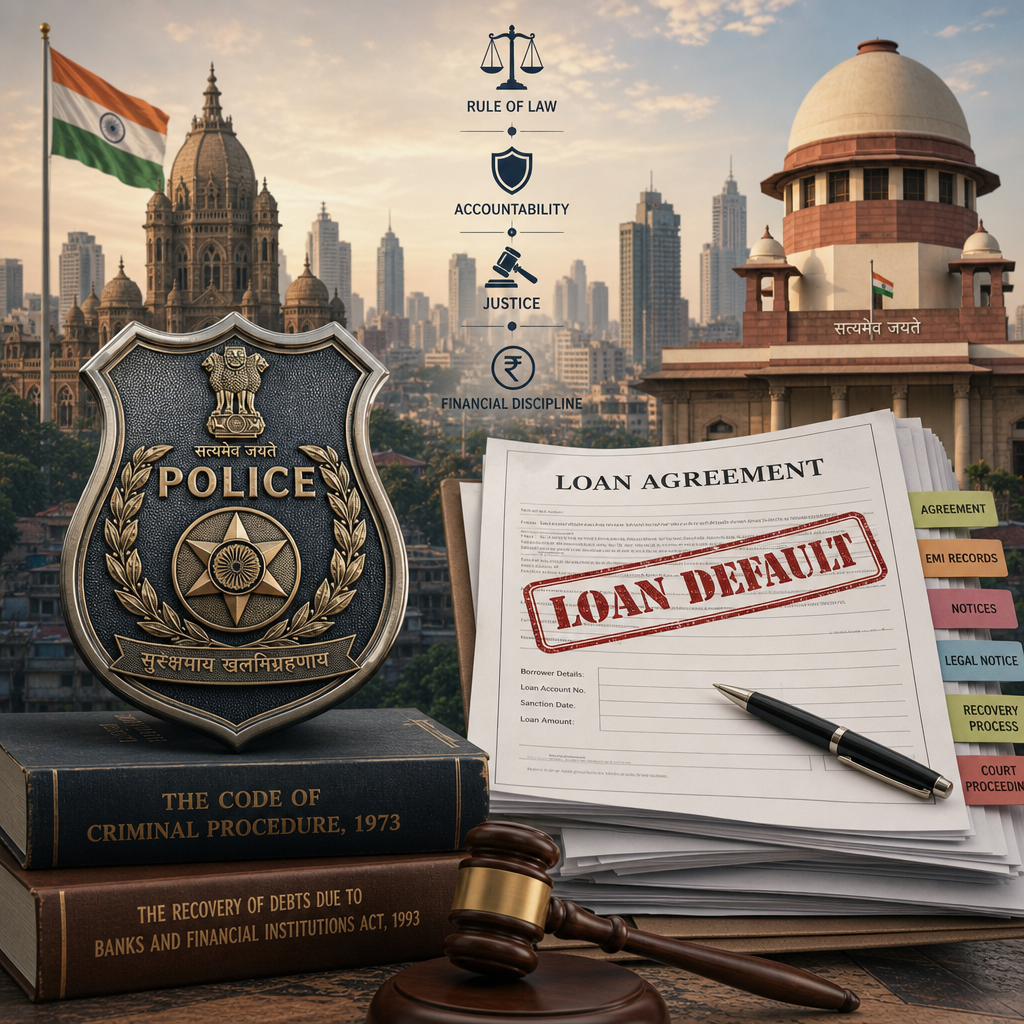
Introduction to Police Perspective on Loan Defaulters
The police perspective on loan defaulters in India is crucial for borrowers to comprehend, especially when they fall behind on financial commitments. Police involvement primarily arises when lenders allege criminal activities such as fraud or misrepresentation. It's essential to differentiate between civil liabilities and criminal conduct. Police generally do not interfere in civil matters unless there's a complaint of deceit or wrongful intent.
Understanding how law enforcement views these cases helps borrowers navigate potential legal pitfalls. Police often scrutinize the nature of the default, examining whether it's a result of genuine financial hardship or deliberate avoidance. In most situations, police action is not warranted for simple non-payment of loans.
However, if a borrower provides false information to secure a loan, the situation may escalate to a criminal investigation. Borrowers should be aware that banks may file a police complaint if they suspect fraudulent intentions. This can lead to legal proceedings, which are distinct from recovery processes initiated by banks under civil laws like the SARFAESI Act.
By being informed about the police's role and perspective, borrowers can better prepare their defense and ensure that they deal with loan defaults legally and ethically. This knowledge contributes to effective communication and negotiation with lenders while safeguarding the borrower's rights.
Understanding the Legal Framework for Loan Defaults
In India, loan defaults are primarily governed by the Reserve Bank of India (RBI) guidelines and various legal statutes such as the Securitisation and Reconstruction of Financial Assets and Enforcement of Security Interest Act (SARFAESI Act), 2002. The framework is designed to protect the interests of both banks and borrowers. It allows banks to recover dues without court intervention but mandates adherence to specific procedures.
From a police perspective, loan defaults are treated as civil disputes, not criminal offences. Police involvement is generally limited unless there is an allegation of fraud or criminal intent, such as misrepresentation of financial documents. In such cases, banks may file a First Information Report (FIR) under Sections 405 and 420 of the Indian Penal Code, addressing criminal breach of trust and cheating.
Furthermore, the Banking Ombudsman Scheme provides an avenue for borrowers to address grievances related to harassment or coercive recovery practices. While the law empowers banks to recover dues, borrowers have rights that protect them from undue harassment, ensuring a balanced legal framework.
Role of Police in Loan Default Cases
In India, the police have a limited but specific role in loan default cases. It's crucial to understand that non-repayment of loans is primarily a civil matter, not a criminal one. Therefore, police intervention is generally limited unless there is an allegation of fraud or criminal misrepresentation involved. However, borrowers often are under the mistaken belief that police can arrest them for defaulting on loans, which is not the case.
Police may become involved in situations where a complaint is made regarding threats or harassment by recovery agents. According to RBI guidelines, recovery agents must follow ethical practices, and any deviation may warrant police action. This underscores the importance of borrowers knowing their rights to avoid unlawful intimidation.
In scenarios where borrowers face coercive tactics, filing a complaint with the local police station can provide a formal record and may lead to police stepping in to ensure that recovery processes remain within legal boundaries. Borrowers should also be aware of their right to seek legal counsel to handle such disputes effectively and prevent escalation. Understanding the nuances of police involvement can empower borrowers to navigate defaults with greater confidence and assurance.
Borrower Rights Against Harassment
Loan defaulters in India have specific rights protecting them from harassment by banks or recovery agents. Understanding these rights is crucial, especially when facing undue pressure or intimidation. As per the RBI guidelines, recovery agents must adhere to a strict code of conduct.
Key Protections for Borrowers
- Right to Privacy: Recovery agents must respect the borrower's privacy and can only contact them between 7 AM and 7 PM.
- No Use of Threats: Borrowers should not face any form of verbal or physical intimidation. Harassment through threats of harm or coercion is illegal.
- Right to Information: Borrowers must receive clear communication regarding loan details and outstanding amounts.
- Prohibition of Misleading Tactics: Recovery agents cannot mislead borrowers about legal consequences.
In case of harassment, borrowers can file a complaint with the bank's grievance cell and escalate the matter to the Banking Ombudsman if unresolved. Filing a police complaint is also a viable option when facing unlawful practices. Knowing these rights empowers borrowers to address harassment effectively and seek appropriate legal remedies.
When and How Police Can Intervene
In India, the role of the police in matters concerning loan defaulters is often misunderstood. The police can intervene in loan default cases primarily when there is a suspicion of fraud or criminal intent. It is crucial to differentiate between civil liabilities, such as failing to repay a loan, and criminal offenses.
Fraudulent Activities
If a borrower has deliberately engaged in fraudulent activities, such as providing false information or using forged documents to secure a loan, the lender can file a police complaint. In such cases, the police will conduct an investigation to determine the presence of criminal intent.
Harassment by Recovery Agents
Borrowers facing harassment from recovery agents can also seek police intervention. As per RBI guidelines, recovery methods must remain within legal and ethical boundaries. If recovery agents resort to intimidation or threats, borrowers can report the matter to the police.
- Police involvement is warranted only in cases of criminal misconduct.
- Borrowers should maintain evidence of any unlawful harassment.
- Civil cases, where no criminal activity is involved, typically do not warrant police involvement.
It's important to consult a legal expert if you are uncertain about the nature of police involvement in your case. Legal advice can help navigate the fine line between civil and criminal aspects of loan defaults.
Legal Processes and Police Involvement
In India, loan defaults, while primarily a civil matter, can occasionally involve police intervention. It's crucial to understand that the police do not have authority to arrest or detain a borrower solely for defaulting on a loan, as it is not classified as a criminal offense under the law. However, police involvement may occur if the default involves elements of fraud or misrepresentation.
When Police Involvement is Justified
- If a borrower has obtained a loan through fraudulent means, such as using forged documents or impersonation, police action can be initiated.
- In cases where post-dated cheques are issued and subsequently dishonored, banks might file a complaint under Section 138 of the Negotiable Instruments Act, potentially involving the police.
Legal Processes in Action
When banks suspect fraudulent activities, they may file a formal complaint with the police, leading to an investigation. The accused borrower can be summoned for questioning, and if evidence of fraud is found, formal charges can be filed. This process can culminate in a court trial, where the borrower's legal rights are upheld, and they have the opportunity to defend themselves.
It's imperative for borrowers to maintain transparency during loan applications to avoid any implication of fraud, which is the primary trigger for police involvement.

Halt Recovery Agent Harassment Legally
Common Misconceptions About Police Action
When facing loan defaults, many borrowers in India harbor misconceptions about police involvement. Understanding these can alleviate undue stress and provide clarity on their rights and obligations.
Police Involvement in Civil Matters
Firstly, it's crucial to recognize that loan defaults are classified as civil matters, not criminal offenses. The police cannot arrest someone solely for failing to repay a loan. Borrowers often mistakenly believe that missing an EMI could lead directly to criminal charges, but this is not the case.
Role of Police in Recoveries
Police officers do not engage in debt recovery processes. Financial institutions may utilize legal channels such as the SARFAESI Act or file civil suits to recover dues. The police will only intervene if there's a breach of peace or if recovery agents use unlawful methods like threats or harassment, which are criminal offenses.
Legal Recourse and Protections
Borrowers should be aware of their legal protections. For instance, if recovery agents make physical threats, borrowers have the right to file a complaint with the police. Knowing these distinctions empowers borrowers to handle default situations more effectively.
Understanding these common misconceptions ensures borrowers can navigate loan defaults with accurate information, reducing undue anxiety and focusing on feasible legal solutions.
Steps Borrowers Should Take If Approached by Police
Being approached by police regarding a loan default can be intimidating. However, understanding your rights and responsibilities can ease your concerns. Here are essential steps borrowers should take:
1. Stay Calm and Composed
It's crucial to remain calm. Panicking can lead to hasty decisions. Take deep breaths and focus on communicating clearly with the officers.
2. Verify the Officer's Identity
- Ask for the officer's identification and badge number.
- Verify their credentials by visiting the nearest police station if needed.
3. Understand the Purpose of the Visit
Inquire about the specific reason for their visit. Ask for any documentation they may have regarding your case.
4. Know Your Rights
- You have the right to remain silent until you have legal representation.
- You cannot be arrested for a civil matter like loan default unless there is a criminal element involved.
5. Seek Legal Counsel
Immediately consult with a banking lawyer. Legal advice can help you navigate the situation effectively. For assistance, consider contacting litigation services at AMA Legal Solutions.
6. Document Everything
Keep a record of all interactions with the police, including dates, times, and the content of discussions. This documentation can be critical in legal proceedings.
Practical Advice for Handling Police Inquiries
Facing police inquiries as a loan defaulter can be daunting, but understanding your rights and responsibilities can help manage the situation effectively. Here’s how to approach it:
Prepare Documentation
- Compile all relevant loan documents, including the loan agreement, repayment schedule, and any correspondence with lenders.
- Ensure you have proof of any communications you've had with the bank about your inability to pay.
Know Your Rights
- Understand that being a loan defaulter is a civil matter, not criminal. The police's role is limited in such cases.
- Refuse to admit to any wrongdoing without legal consultation. You have the right to remain silent and seek legal counsel.
Engage with Legal Support
- Contact a banking lawyer who can provide guidance specific to your case and represent your interests if needed.
- Consider consulting with consumer rights organizations for additional support.
Maintain Composure and Communication
- Respond to police inquiries calmly and respectfully. Do not provide statements that may be used against you.
- Request that all future communications be documented in writing, ensuring a clear and traceable record.
Following these steps can help you manage police inquiries effectively while protecting your rights and interests.
Important RBI Guidelines and Circulars
The Reserve Bank of India (RBI) plays a pivotal role in regulating banking practices related to loan defaults in India. Understanding these guidelines helps borrowers and law enforcement navigate the complexities of loan default scenarios effectively.
Key RBI Guidelines
- Fair Practices Code: RBI mandates banks to follow a Fair Practices Code for lending, ensuring transparent and fair treatment of borrowers. This includes proper communication of loan terms and conditions.
- Resolution Framework: The RBI introduced the "Resolution Framework for COVID-19-related Stress" which provides relief to borrowers facing financial difficulties due to the pandemic, outlining restructuring options and timelines.
- Asset Classification: RBI guidelines classify assets into Standard, Substandard, Doubtful, and Loss categories based on payment defaults, influencing how banks handle recovery procedures.
Notable Circulars
- Circular on Recovery Agents: RBI restrictions state that recovery agents must adhere to ethical practices and refrain from harassment or intimidation, safeguarding borrower dignity.
- Master Directions on Frauds: This circular outlines the procedures for detecting and dealing with frauds in the banking sector, supporting law enforcement in investigating fraudulent loan activities.
- Data Localization Requirements: Circular mandates that all financial data must be stored within India, helping police access information crucial for legal proceedings in loan defaults.
Compliance with these guidelines is crucial for both banks and borrowers, ensuring a fair and lawful process in addressing loan defaults. Understanding and adhering to these regulations can significantly impact how loan default cases are perceived and managed by the police and judiciary.
Case Studies: Police and Loan Default Scenarios
Understanding police involvement in loan default cases can be enlightening for borrowers. Here are some real-world examples illustrating various outcomes:
Case Study 1: Misuse of Police Authority
Mr. Sharma, a business owner in Mumbai, defaulted on a business loan due to financial distress. The bank's recovery agents repeatedly threatened police action. However, the police clarified that loan defaults are civil matters and not criminal offenses. This knowledge empowered Mr. Sharma to negotiate directly with the bank, avoiding unnecessary fear and intimidation.
Case Study 2: Genuine Fraud Investigation
In Delhi, Ms. Kapoor faced police inquiry after defaulting on multiple loans. Investigations revealed she had provided forged documents to secure the loans, leading to genuine criminal charges. This case highlights when police involvement is warranted due to fraudulent practices, emphasizing the distinction between default and deceit.
Case Study 3: Police as Mediators
In Bangalore, Mr. Jain faced harassment from aggressive recovery agents. Upon filing a complaint, the local police mediated between Mr. Jain and the bank, facilitating a repayment plan. The police served as neutral parties, ensuring both the lender and the borrower engaged civilly, demonstrating their role in protecting borrower rights.
These case studies illustrate the varied roles police can play in loan default scenarios, from preventing misuse of authority to investigating fraud and mediating disputes.
Negotiating Settlements: Police Perspective
In loan default situations, the police often play a pivotal role in maintaining public order rather than directly intervening in financial disputes. From a police perspective, the emphasis is on mediation rather than enforcement. Borrowers should be aware that while police can facilitate dialogues between parties, they do not dictate settlement terms. Their primary concern is ensuring that coercive recovery practices are not employed.
When approached by a borrower or lender regarding a loan default, police may suggest negotiating settlements to avoid escalation. This involves both parties engaging in constructive conversations to find a mutually agreeable solution, ideally with legal counsel present. The police may advise borrowers to communicate their financial constraints clearly and propose feasible repayment plans.
Key Considerations
- Police encourage amicable resolutions and discourage harassment tactics by lenders.
- Borrowers should document all interactions and avoid verbal agreements without proper legal oversight.
- Legal guidance is recommended; police can refer parties to appropriate legal resources.
- Police involvement typically occurs only if there is a breach of peace or unlawful actions by recovery agents.
Understanding the police's role can empower borrowers to seek fair settlements while ensuring their rights are protected. Misunderstanding police involvement can lead to unnecessary panic or misconceptions about the legal obligations in settling a loan default.
Need Strategic Legal Defense for Your Situation?
Our banking & litigation advocates review your notices, debt liability, and recovery issues under complete advocate-client secrecy.

AMA Legal Solutions
Trusted with a 4.7 Google Rating, over 10,000+ Clients Served, 25,000+ Cases Handled, and more than 40+ Years of Experience in providing strategic legal defense and debt resolution across India.
Our media coverages





Client Reviews
"Thanks to AMA Legal Solutions, I was able to manage a stressful loan default process smoothly. Their detailed explanation of my rights and options was reassuring and effective."
Anita Patil
"The legal team at AMA Legal Solutions was instrumental in protecting my rights against aggressive recovery agents. Their advice ensured I was well-prepared to handle the situation legally."
Priya Sharma
"AMA Legal Solutions provided invaluable guidance when I faced a complicated loan default issue. Their expertise helped me navigate legal intricacies and reach a favorable settlement with my bank."
Rajesh Kumar
"I highly recommend AMA Legal Solutions for their professional handling of my loan default situation. Their expertise in banking law and negotiations made all the difference in achieving a manageable outcome."
Manoj Desai
"AMA Legal Solutions helped me understand the legal framework around loan defaults. Their comprehensive advice and proactive approach was critical in resolving my case efficiently."
Vikram Agarwal
Frequently Asked Questions
Related Articles
RuPay Credit Card on UPI Default & Credit Line on UPI Settlement (2026)
Micro-transactions on RuPay UPI Credit Cards and pre-approved 'Credit Lines on UPI' have triggered a massive wave of 42%+ APR revolving debt traps. Find out if defaulting blocks your personal savings UPI and how to settle RuPay UPI credit dues for 30%–50%.
Read Article
Paytm, PhonePe & BharatPe Daily EDI Merchant Loan Settlement (2026)
Drowning in Equated Daily Installment (EDI) merchant loans where 100% of your daily QR Soundbox collections are auto-swept before you can pay suppliers or rent? Learn how retail shopkeepers and MSMEs legally halt QR sweeps and negotiate a 50%+ OTS.
Read Article
Can Bank or Loan App Remotely Lock Phone for EMI Default? RBI Rules (2026)
An investigative breakdown of RBI's Remote Device Locking Directions—explaining why lenders cannot lock your phone for personal loans, the mandatory 30/60 DPD safeguards on financed devices, the Rs. 250/hour delay penalty, and how to settle device & app loans.
Read ArticleAbout Author
Anuj Anand Malik
View ProfileAnuj Anand Malik, Founder of AMA Legal Solutions, is a trusted advocate, loan settlement expert, legal advisor, and banking lawyer. With over a decade of experience in loan settlement, corporate law, financial disputes, and compliance, he leads a result-driven law firm based in India that helps individuals, startups, and businesses achieve legal and financial stability.
Connect on LinkedInNeed Legal Representation?
Evaluate your defense against recovery agents, notices, or structure your loan settlement directly with Senior Advocates.
Call +91-8700343611