How to Use a Personal Loan for Credit Card Settlement Effectively
Navigate credit card debt with a strategic personal loan approach.

Anuj Anand Malik
Reviewed by AMA Legal Solutions

Key Takeaways: Using a personal loan for credit card settlement can offer lower interest rates and a structured repayment plan, aiding in debt management. It's vital to understand the legal framework, including RBI guidelines and the SARFAESI Act, which protect borrower rights. Engaging with a loan settlement lawyer can provide strategic leverage in negotiations.
Understanding the Role of Personal Loans in Credit Card Settlement
Personal loans can play a pivotal role in managing overwhelming credit card debt. By consolidating multiple high-interest credit card balances into a single personal loan, borrowers can benefit from a potentially lower interest rate. This makes the debt more manageable and can lead to significant savings over time.
How Personal Loans Work in Settling Credit Card Debt
When opting for a personal loan to settle credit card debts, it's crucial to understand the mechanism. The borrower takes out a loan settlement specifically designed to pay off existing credit card balances. This results in a single monthly payment, often with a lower interest rate compared to credit cards.
- Lower Interest Rates: Personal loans often offer lower interest rates than credit cards, making repayments more affordable.
- Fixed Repayment Schedule: Unlike credit cards, personal loans generally have a fixed repayment schedule, providing certainty in monthly budgeting.
- Improving Credit Score: By converting revolving credit card debt into an installment loan, borrowers can positively impact their credit utilization ratio.
When to Consider a Personal Loan
Borrowers should consider a personal loan when credit card debts become unmanageable due to high interest rates. It's particularly beneficial for those who can secure a loan with a more favorable rate and terms. However, it's essential to ensure that the loan amount covers the entire credit card debt to avoid partial settlements.
For further guidance, professional advice from a loan settlement lawyer can help navigate the complexities of debt consolidation and settlement strategies.
Legal Framework Surrounding Credit Card Debt Settlement in India
In India, handling credit card debt settlement requires navigating a complex legal landscape. The most significant legislation in this regard is the Reserve Bank of India (RBI) guidelines, which outline how banks should manage non-performing assets (NPAs). These guidelines mandate banks to follow fair practices while dealing with loan defaulters, emphasizing transparency and respect for borrower rights.
Key Legal Provisions
- RBI Guidelines: Banks must adhere to ethical recovery practices, ensuring compliance with the Fair Practices Code. This mandates clear communication and prohibits harassment by recovery agents.
- SARFAESI Act: Although primarily focusing on secured loans, aspects of this act may influence settlement proceedings, particularly when credit card dues escalate to legal notices or asset seizure.
Banks often prefer negotiating settlements over lengthy legal battles, especially if the borrower demonstrates genuine hardship or intent to repay. However, borrowers must be aware of their rights, such as the right to receive a written notice before any recovery action is taken. For detailed assistance, borrowers can seek Loan Settlement Services or consult Banking and Finance Law experts to navigate negotiations effectively.
How to Assess Your Financial Situation Before Opting for a Personal Loan
Before considering a personal loan for credit card settlement, it's crucial to evaluate your financial standing. Start by listing all your liabilities, including credit card balances, outstanding loans, and any other debts. This will give you a clear overview of your total financial obligations.
Evaluate Your Income
Next, assess your current income. Include your salary, any freelance or part-time work, and other income streams. Understanding your monthly cash flow is essential to determine if you can comfortably manage an additional loan repayment.
Analyze Your Expenses
Review your monthly expenses, focusing on necessities like rent, utilities, groceries, and transportation. Identify areas where you might reduce costs, which can free up funds for loan repayments.
- Ensure you have sufficient savings to cover at least three months of expenses as an emergency buffer.
- Check your credit score to understand your creditworthiness. A higher score can mean better loan terms.
- Consider whether debt consolidation might be a viable alternative. Learn more about Debt Consolidation & Restructuring.
Finally, weigh the pros and cons of taking on a personal loan. While it can simplify debt payments, it also increases your debt burden. Proper assessment will help you make an informed decision aligned with your financial capacity.
Step-by-Step Process to Apply for a Personal Loan for Debt Settlement
Securing a personal loan for debt settlement can effectively consolidate and manage your debts. Follow these steps to ensure a smooth application process.
1. Assess Your Financial Situation
- Calculate your total outstanding credit card debt.
- Understand your monthly income and expenses to determine repayment feasibility.
2. Research and Compare Loan Offers
- Explore different lenders for competitive interest rates and terms.
- Use online comparison tools to shortlist potential options.
3. Check Eligibility
- Review the lender's eligibility criteria including credit score, age, and income requirements.
- Ensure you meet the minimum criteria before applying to avoid rejections.
4. Gather Required Documentation
- Prepare necessary documents such as identity proof, address proof, and income statements.
- Ensure all documents are current and accurate to expedite processing.
5. Submit Your Application
- Complete the application form accurately.
- Submit your application online or visit the lender's branch.
6. Await Approval and Disbursement
- Once approved, review the loan agreement carefully.
- Upon agreement, the funds will be disbursed directly to your account.
| Parameter / Criterion | Key Details / Legal Provision | Timeline / Practical Impact |
|---|---|---|
| Financial Assessment | Calculate total debts and monthly obligations. | Initial step, immediately after decision to settle debt. |
| Loan Comparison | Compare interest rates and terms from multiple lenders. | 1-2 weeks for research and comparison. |
| Eligibility Check | Ensure compliance with lender's criteria. | Prior to application to avoid rejection delays. |
| Documentation Preparation | Gather necessary proofs and statements. | 1-3 days for document assembly. |
| Application Submission | Apply online or visit a branch. | Variable; typically 3-5 business days for approval. |
For more detailed guidance on managing your debts, consider visiting our Loan Settlement Services page for professional assistance and tailored strategies.
Evaluating the Pros and Cons of Using Personal Loans for Settlement
Using a personal loan for credit card settlement can be a strategic move for those looking to manage their debt more effectively. However, it is critical to weigh both the advantages and disadvantages to make an informed decision.
Pros of Using Personal Loans for Settlement
- Lower Interest Rates: Personal loans generally offer lower interest rates compared to credit cards, which can save you money over time.
- Fixed Repayment Schedule: Personal loans come with a fixed repayment term, helping you plan your finances better and settle debts in an organized manner.
- Improved Credit Score: Successfully using a personal loan for debt settlement may lead to an improved credit score as you replace revolving debt with an installment loan.
- Debt Consolidation: Combining multiple credit card debts into a single personal loan simplifies financial management, reducing the risk of missed payments.
Cons of Using Personal Loans for Settlement
- Potential Additional Costs: Personal loans may have associated fees, such as origination fees, which could increase the overall cost of the loan.
- Risk of Further Debt: Without proper discipline, individuals may accrue new credit card debt after settling existing ones, leading to a cycle of debt.
- Impact on Loan Approval: A high debt-to-income ratio due to existing debts might affect your chance of getting a personal loan approved.
Understanding these factors can aid in making a more informed decision. For further guidance, consider consulting a professional in Loan Settlement Services or seeking advice on replying to bank notices for loan defaults.
RBI Guidelines on Personal Loans and Debt Settlement
The Reserve Bank of India (RBI) has established comprehensive guidelines to regulate personal loans and ensure fair practices in debt settlement. These guidelines help borrowers navigate the complexities of personal loans and facilitate credit card debt settlement effectively.
Personal Loan Guidelines
The RBI mandates that all financial institutions must transparently disclose loan terms, including interest rates and fees. Borrowers have the right to receive a detailed loan agreement, which should clearly outline the repayment schedule and any associated charges.
- Lenders must conduct due diligence before approving a loan, assessing the borrower's creditworthiness and repayment capacity.
- The RBI requires that interest rates charged on personal loans are reasonable and not usurious.
- Borrowers must be informed of any changes to the loan terms in advance, with a minimum notice period.
Debt Settlement Guidelines
For debt settlement, the RBI emphasizes fair negotiation practices. Banks are encouraged to work with borrowers to find amicable solutions. For instance, restructuring the loan or offering settlement options can alleviate financial stress. Importantly, settlement agreements should be documented in writing.
- Recovery agents must adhere to ethical practices and should not resort to harassment.
- Borrowers can seek assistance from Loan Settlement Services to ensure compliance with these guidelines.
- The RBI also supports the use of arbitration and other dispute resolution mechanisms to resolve conflicts amicably.
The RBI's guidelines act as a protective measure, ensuring that both lenders and borrowers engage in transparent and fair transactions, ultimately promoting a healthier financial ecosystem.
Key Insights & Data Infographic
Visual summary, statistical trends & procedural breakdown
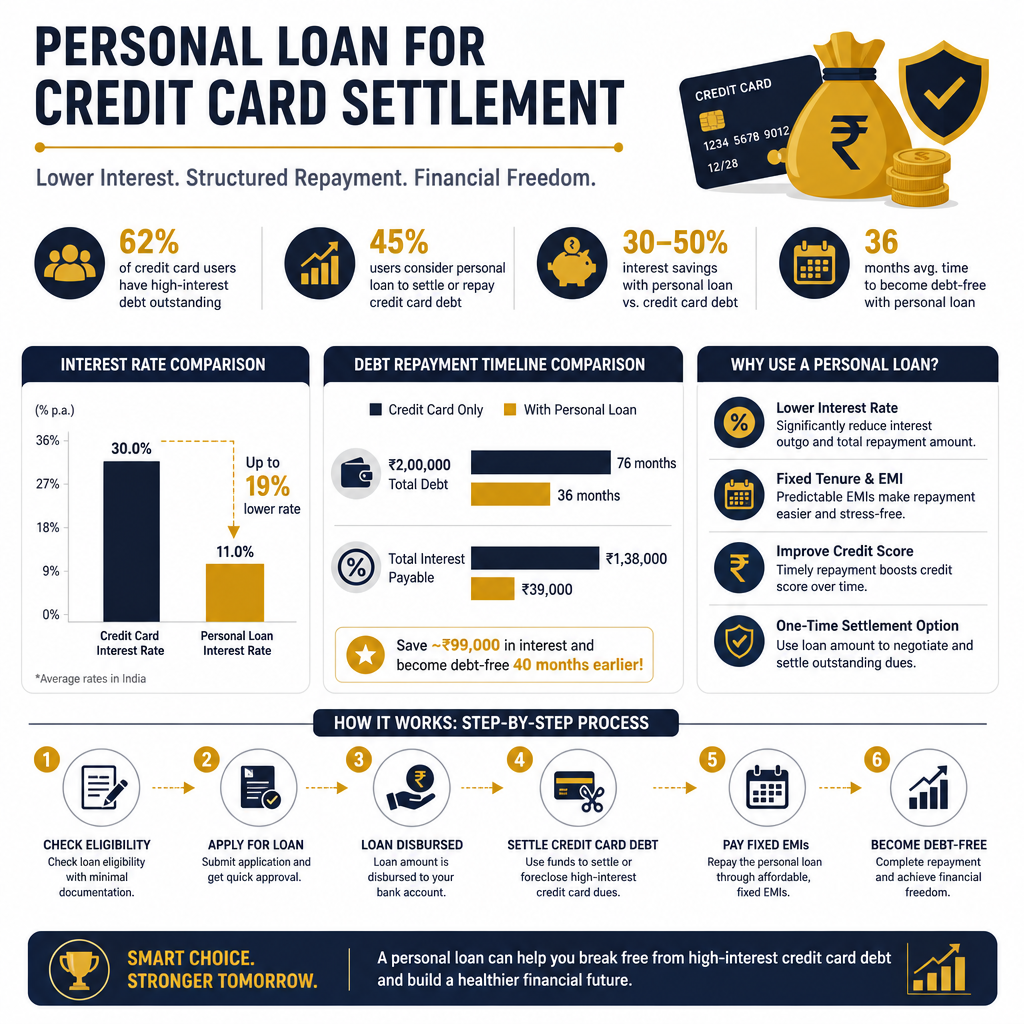
Prepared by AMA Legal Solutions Research & Analytics Team • Data & Compliance Overview
Common Mistakes to Avoid When Settling Credit Card Debt with a Loan
Settling credit card debt using a personal loan can be a viable strategy, but several common mistakes can derail your efforts. Understanding these pitfalls is crucial for effective debt management.
Underestimating Loan Costs
Many borrowers overlook the additional costs associated with personal loans, such as processing fees, prepayment penalties, and higher interest rates. It's essential to calculate the total cost of the loan and compare it with other debt relief options like Loan Settlement Services to make an informed decision.
Ignoring Credit Impact
While consolidating debt, borrowers often ignore the potential impact on their credit score. A personal loan could temporarily affect your credit utilization ratio and credit rating. It's important to be mindful of these aspects and consider consulting with an expert in Banking and Finance Law for guidance.
Lack of a Repayment Plan
Securing a personal loan without a clear repayment plan can lead to further financial stress. It's critical to establish a realistic budget and adhere to it to ensure timely payments, thereby avoiding additional debt accumulation.
Choosing the Wrong Loan
Opting for a personal loan without comparing interest rates and terms from various lenders can be a costly mistake. Always research different loan options and consider the terms carefully.
- Review the lender's terms and conditions thoroughly before accepting the loan.
- Consult with a financial advisor to evaluate all possible debt relief options.
- Consider the implications of loan terms on your financial stability and future.
How to Negotiate with Creditors Using a Personal Loan
Negotiating with creditors can be daunting, but using a personal loan strategically can provide leverage. First, gather all relevant documents, including your loan statements, recent credit reports, and any communication from your creditors. This preparation demonstrates seriousness and helps build trust.
Steps to Begin Negotiation
- Carefully analyze your debt to understand the total amount owed and its terms.
- Contact creditors professionally and propose the personal loan as a means to settle your credit card debt. Emphasize the immediate payment advantage.
- Negotiate the principal amount, aiming for a reduction based on your financial hardship. Highlight how a lump sum payment benefits the creditor.
During negotiations with creditors, remain calm and assertive. Clearly explain your financial situation and how the personal loan will be utilized to settle debts. Seek a written agreement outlining the terms of settlement, including any reduction in the outstanding amount.
Time your communication wisely. Often, creditors are more amenable to negotiations at the end of the fiscal quarter when they aim to close pending accounts. Understanding the timing can significantly impact the negotiation outcome.
Tax Implications of Settling Credit Card Debt with Personal Loans
When you settle credit card debt using a personal loan, understanding the tax implications in India is crucial. The Income Tax Act, 1961, stipulates that any waived amount from debt settlement may be considered as income, potentially attracting tax liability under 'income from other sources'. It is essential to consult tax professionals to ensure compliance and address potential liabilities.
Why Tax Implications Arise
The concept of tax liability on waived debt is based on the notion that any reduction in payment obligation increases your net worth, thus forming a taxable event. This is particularly relevant when the bank writes off a portion of your debt.
How to Manage Tax Implications
- Consult a Chartered Accountant: To evaluate the exact tax impact and available exemptions.
- Review Section 56 of the Income Tax Act: This provides insights into taxation on debt waivers.
- Maintain Proper Documentation: Keep all records of settlement agreements and communications.
For expert guidance, consider our Loan Settlement Services to navigate these complexities. Additionally, you can explore other legal avenues through our Banking and Finance Law resources, ensuring a comprehensive approach to debt management.
Case Studies: Successful Credit Card Debt Settlement Using Personal Loans
Many Indian borrowers have found relief in settling their credit card debts using personal loans. Let’s explore a few real-life examples:
Case 1: Business Owner's Recovery
Ravi, a small business owner, faced mounting credit card debt due to business downturns. He secured a personal loan with a lower interest rate, which allowed him to consolidate his credit card dues. This strategic move reduced his financial burden and improved his cash flow. For more on effective strategies, explore our Loan Settlement Services.
Case 2: Salaried Employee's Path to Stability
Anita, a salaried individual, struggled with multiple credit card payments. By taking a personal loan, she consolidated these into a single manageable monthly installment. The disciplined repayment plan helped her regain financial stability, demonstrating the potential benefits of Credit Card Debt Settlement.
Case 3: Leveraging Personal Loans for Debt Restructuring
Vikram, recently laid off, faced aggressive recovery calls. He opted for a personal loan to settle his credit card dues, substantially reducing his stress. This approach enabled him to negotiate better terms with creditors, illustrating the importance of informed debt restructuring decisions.
These cases highlight the efficacy of using personal loans as a tool for credit card debt settlement, offering a pathway to financial recovery and stability.
Checklist: Preparing for a Personal Loan Application for Debt Settlement
Securing a personal loan for credit card settlement requires careful preparation. This checklist will guide you through the essential steps to ensure a smooth application process and maximize your chances of approval.
1. Evaluate Your Credit Report
- Obtain the latest copy of your credit report.
- Identify and rectify any inaccuracies.
- Ensure that your credit score meets the lender's minimum requirement.
2. Understand Your Debt Obligations
- Compile a list of all outstanding credit card debts.
- Calculate the total amount required for settlement.
- Consider consolidating multiple debts into a single loan to simplify payments.
3. Gather Necessary Documentation
- Collect income proof such as salary slips or bank statements.
- Prepare address and identity proofs.
- Organize past credit card statements and settlement letters.
4. Research Loan Options
- Compare interest rates from different lenders.
- Check eligibility criteria for personal loans suitable for debt consolidation.
- Explore options for secured versus unsecured personal loans.
5. Consult with a Financial Advisor
- Discuss your debt situation and loan options with a professional.
- Understand the pros and cons of using a personal loan for credit card settlement.
- Seek advice on alternative debt management strategies.
- Consider consulting our Loan Settlement Services for comprehensive support.
| Parameter / Criterion | Key Details / Legal Provision | Timeline / Practical Impact |
|---|---|---|
| Credit Score | Minimum score of 700 recommended | Impacts loan approval and interest rate |
| Document Collection | ID, Address, Income Proof | Complete before application |
| Debt Calculation | Total outstanding debt | Determines loan amount needed |
| Lender Research | Compare 3-5 lenders | Important for better terms |
By following this checklist, you will be well-prepared to apply for a personal loan that aids in settling credit card debts effectively. For more specialized assistance, contact AMA Legal Solutions today.
Rights and Obligations of Borrowers in Personal Loan Agreements
When entering into a personal loan agreement, borrowers must be aware of their rights and obligations to effectively manage the loan and avoid potential pitfalls. Understanding these elements is crucial, especially if the loan is intended for credit card debt settlement.
Key Rights of Borrowers
- Transparency in Terms: Borrowers have the right to clear and transparent information regarding interest rates, repayment schedules, and any additional charges.
- Right to Prepayment: You can repay the loan prior to the agreed term, though some banks might levy a prepayment penalty. Carefully read the loan agreement for specifics.
- Access to Loan Documentation: Borrowers should receive a copy of the loan agreement and all related documents, which should be retained for future reference.
Borrower's Obligations
- Timely Repayment: It is essential to adhere to the agreed repayment schedule to avoid penalties and negative impacts on your credit score. Visit our guide on repairing credit scores if needed.
- Keeping Contact Information Updated: Inform the lender of any changes in your contact information to ensure smooth communication.
- Understanding of Contractual Terms: Fully understanding the terms of the loan to avoid breaches which could lead to disputes or legal actions.
For those considering loan settlement options, it is wise to consult with a legal expert. For more details, explore our loan settlement services.
Popular Searches & Topics
Commonly searched legal queries and keywords related to this article
AMA Legal Solutions
Trusted with a 4.7 Google Rating, over 10,000+ Clients Served, 25,000+ Cases Handled, and more than 40+ Years of Experience in providing strategic legal defense and debt resolution across India.
Our media coverages





Frequently Asked Questions
Related Articles
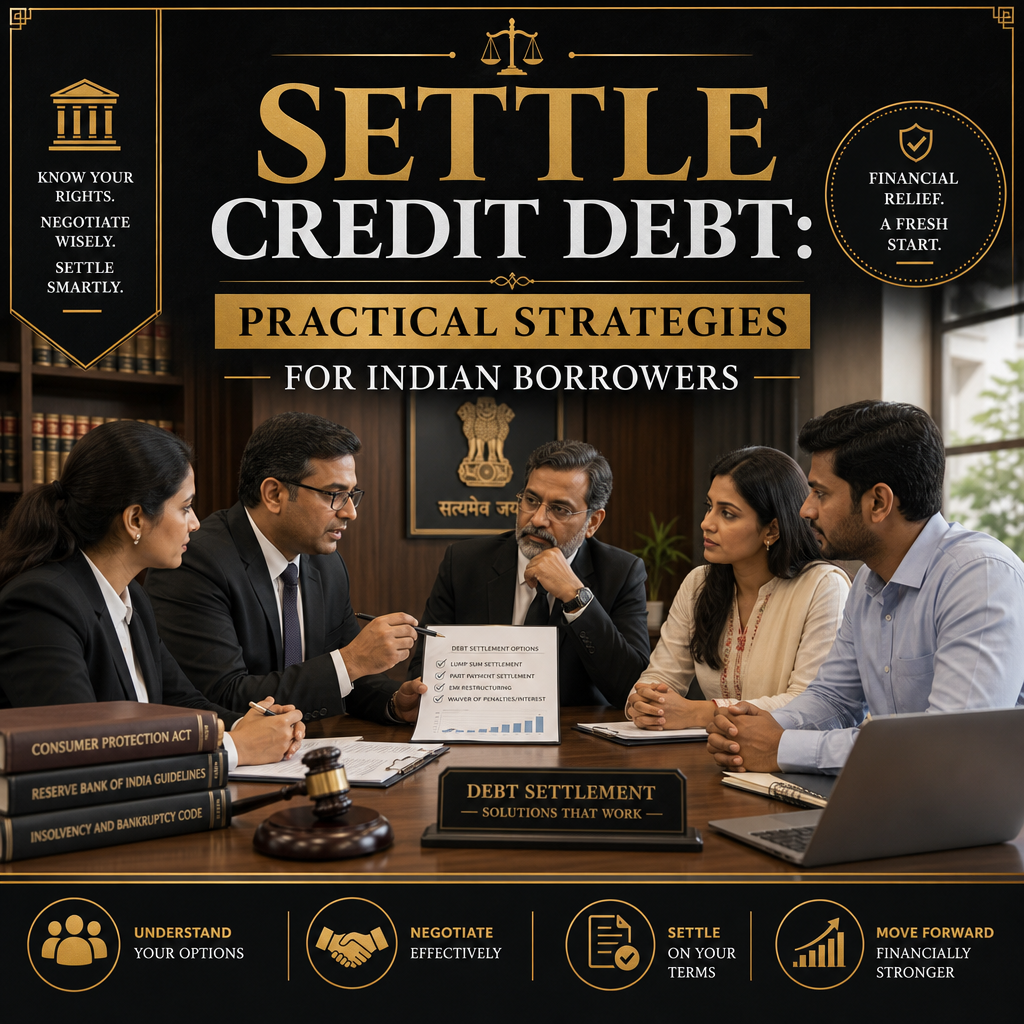
Settle Credit Debt: Practical Strategies for Indian Borrowers (2026)
Explore effective legal strategies and insights to settle your credit debt successfully.
Read Article
Advocate for Bank Loan Settlement: Navigating Your Rights (2026)
Explore effective strategies and legal protections from an advocate for bank loan settlement.
Read Article
Settle Bank Debt: Essential Steps for Indian Borrowers (2026)
Discover practical advice and legal guidance on how to successfully settle bank debt in India.
Read ArticleAbout Author
Anuj Anand Malik
View ProfileAnuj Anand Malik, Founder of AMA Legal Solutions, is a trusted advocate, loan settlement expert, legal advisor, and banking lawyer. With over a decade of experience in loan settlement, corporate law, financial disputes, and compliance, he leads a result-driven law firm based in India that helps individuals, startups, and businesses achieve legal and financial stability.
Connect on LinkedInNeed Legal Help?
Get expert advice on loan settlement and debt relief.
Call +91-8700343611Request Callback