Settle Credit Debt: Practical Strategies for Indian Borrowers (2026)
Explore effective legal strategies and insights to settle your credit debt successfully.

Anuj Anand Malik
Reviewed by AMA Legal Solutions
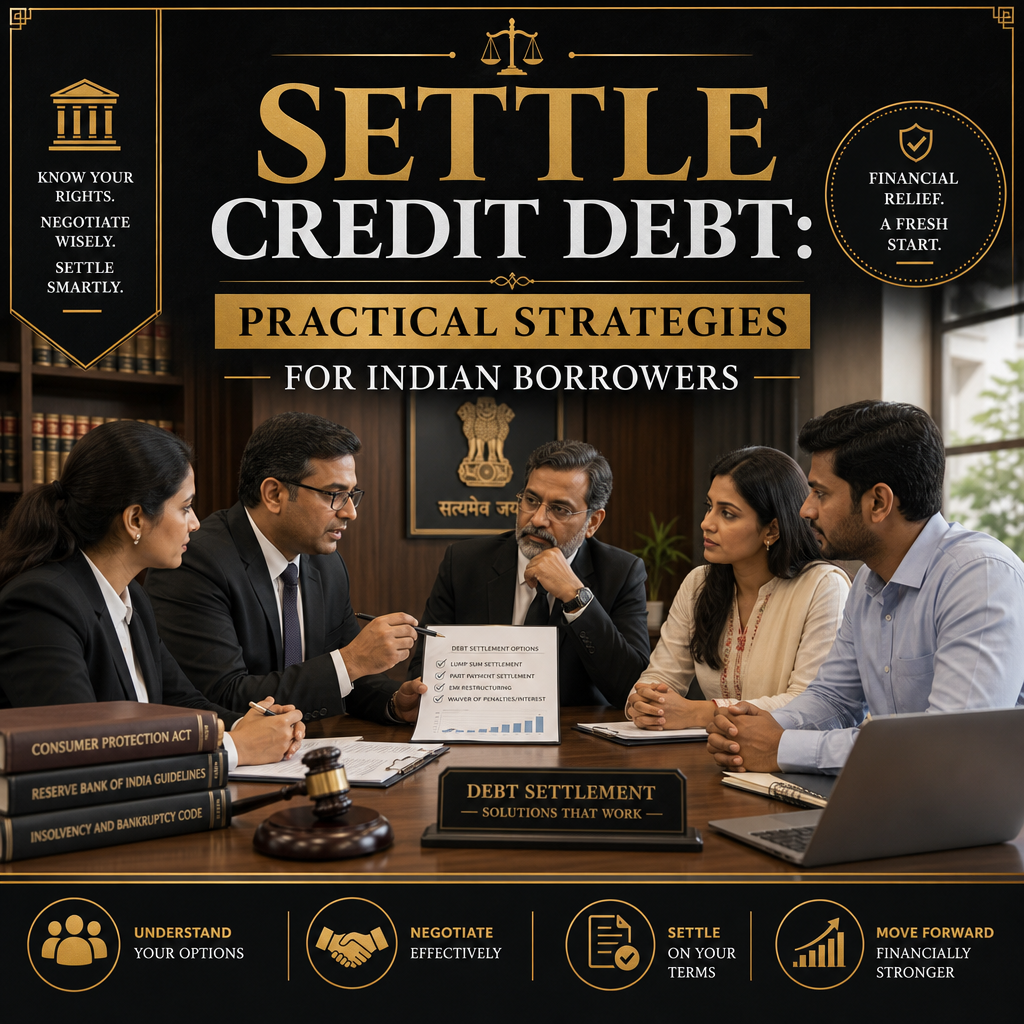
Key Takeaways: Settling credit debt in India involves negotiating with creditors to reduce outstanding balances while adhering to legal guidelines set by the RBI. Understanding your rights and the statutory framework is crucial in navigating this process effectively and regaining financial stability.
Introduction to Settling Credit Debt in India
When evaluating settle credit debt in India, understanding the applicable statutory framework, legal procedures, and strategic rights is essential. Settling credit debt in India is a strategic process that involves negotiating with creditors to pay a reduced amount, relieving borrowers from the full financial burden. This practice is not only supported by current legal frameworks but also offers a pathway to regain financial stability. Understanding this process is crucial for navigating the complexities of debt settlement and ensuring favorable outcomes.
Statutory Framework & Governing Legal Provisions
The Reserve Bank of India's Framework for Compromise Settlements and Technical Write-offs provides the statutory backdrop for settling credit debt. Issued on June 8, 2023, these guidelines require banks and NBFCs (Non-Banking Financial Companies) to set up board-approved policies for compromise settlements. These provisions ensure that the settlement process is structured, equitable, and transparent, safeguarding both borrower and lender interests.
Legal precedents, such as the Supreme Court ruling in Mardia Chemicals Ltd. v. Union of India (2004), also reinforce borrower rights in debt recovery, emphasizing adherence to regulatory guidelines. These rulings underscore the importance of proper procedures and fair treatment in settling credit debt.
Understanding Different Types of Credit Debt
Credit debt primarily manifests as credit card dues and personal loans, both of which are unsecured and thus more amenable to settlement negotiations. Each type of debt requires distinct strategies for negotiation:
- Credit Card Debt: Often compounded by high interest rates and penalties, these dues can quickly escalate. Settling credit card debt typically involves negotiating for a lump sum that is less than the total outstanding balance.
- Personal Loans: As personal loans lack collateral, they offer more flexibility for settlements but necessitate insightful negotiation to reach an agreeable reduction with creditors.
Comprehensive Analysis & Practical Steps to Settle Credit Debt
Settling credit debt requires a strategic approach. Below are practical steps designed to maximize success:
- Financial Assessment: Begin by evaluating your current financial status to determine a realistic settlement offer. Consider income, expenses, and other liabilities.
- Debt Categorization: List all debts, focusing on those eligible for settlement. Prioritize unsecured debts such as credit card dues and personal loans.
- Proposal Preparation: Draft a settlement proposal that outlines the amount you can reasonably offer. Express your intent to settle in writing to creditors.
- Initiating Negotiation: Reach out to creditors with your proposal. This can be done through formal communication channels including emails or registered letters.
- Negotiation Process: Engage in discussions, aiming to highlight any hardships or financial constraints that justify a settlement. Be prepared for counteroffers and keep negotiation cordial and professional.
- Formalizing Settlement: Upon agreement, ensure the terms are documented. Acquire a written agreement, commonly known as a settlement letter or a No Objection Certificate (NOC), which confirms that the agreed amount settles the debt in full.
- Payment Execution: Make the agreed payment promptly and secure all receipts and documentation confirming the completion of the settlement.
Key Insights & Data Infographic
Visual summary, statistical trends & procedural breakdown
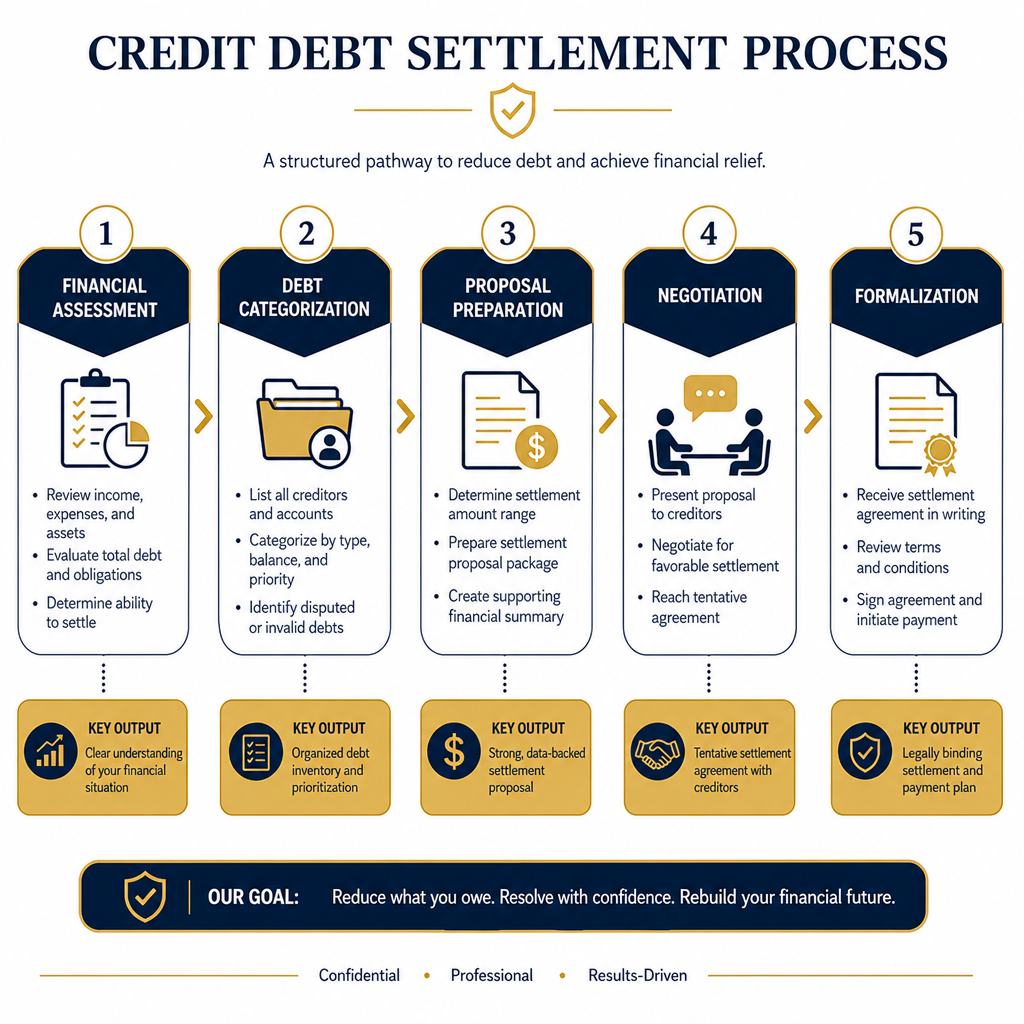
Prepared by AMA Legal Solutions Research & Analytics Team • Data & Compliance Overview
Factors Affecting Creditors' Willingness to Settle
Creditors evaluate several factors before agreeing to settle credit debt:
- Borrower’s Financial Status: Demonstrating inability to pay the full amount due to financial hardships increases the likelihood of a settlement.
- Debt Age: Older debts, especially those reaching statutory limits for litigation, are more likely to be considered for settlement.
- Current Payment History: A history of partial payments may encourage creditors to agree to a settlement to recoup some of their losses.
- Regulatory Pressures: Compliance with RBI guidelines often influences creditors to consider settlements to avoid penalties for poor asset quality management.
Comparative Parameters / Procedural Workflow Matrix
| Parameter / Option | Legal Basis & Requirements | Key Procedures / Considerations | Strategic Advantage with Counsel |
|---|---|---|---|
| Initial Assessment | N/A | Personal financial analysis, list of debts | Legal counsel can prioritize debts and suggest feasible settlement options |
| Debt Proposal | RBI Compromise Guidelines | Formal written proposal to creditors | Advocates ensure proposals are compelling and legally sound |
| Negotiation | Section 126, Indian Evidence Act | Engagement with creditors | Preserves privilege communication and ensures adherence to legal norms |
| Settlement Agreement | Judicial Precedents (e.g., Mardia Chemicals Case) | Formal documentation of agreed terms | Counsel ensures thoroughness of terms and future enforceability |
Legal Safeguards, Consumer Rights, and Critical Risks to Avoid
When settling credit debt, borrowers are accorded several legal rights which must be vigilantly upheld:
- Borrowers have the right to fair treatment and negotiation according to RBI guidelines.
- Always ensure that settlement agreements are documented legally to prevent future disputes.
- Understand that settling a debt may affect your credit score; debts marked as "Settled" rather than "Closed" can impact creditworthiness for up to seven years.
- Borrowers aggrieved by unfair practices can file complaints with the Banking Ombudsman or consumer courts.
To avoid critical risks, ensure all negotiations are documented, avoid fraudulent schemes or unregulated intermediaries, and frame all communication around transparency and due diligence.
Strategic Conclusion: Securing Legal Assurance with AMA Legal Solutions
As a borrower in India, navigating the complexities of settling credit debt requires a combination of strategic negotiation, keen awareness of legal rights, and professional assistance. Engaging with AMA Legal Solutions provides unparalleled access to experienced legal counsel adept at securing your interests while negotiating debt settlements. Leverage our advocate-client privilege, expertise in statutory compliance, and robust negotiation techniques to achieve optimal settlements. Contact us to transform your financial challenges into manageable solutions.
Popular Searches & Topics
Commonly searched legal queries and keywords related to this article
AMA Legal Solutions
Trusted with a 4.7 Google Rating, over 10,000+ Clients Served, 25,000+ Cases Handled, and more than 40+ Years of Experience in providing strategic legal defense and debt resolution across India.
Our media coverages





Frequently Asked Questions
Related Articles

Advocate for Bank Loan Settlement: Navigating Your Rights (2026)
Explore effective strategies and legal protections from an advocate for bank loan settlement.
Read Article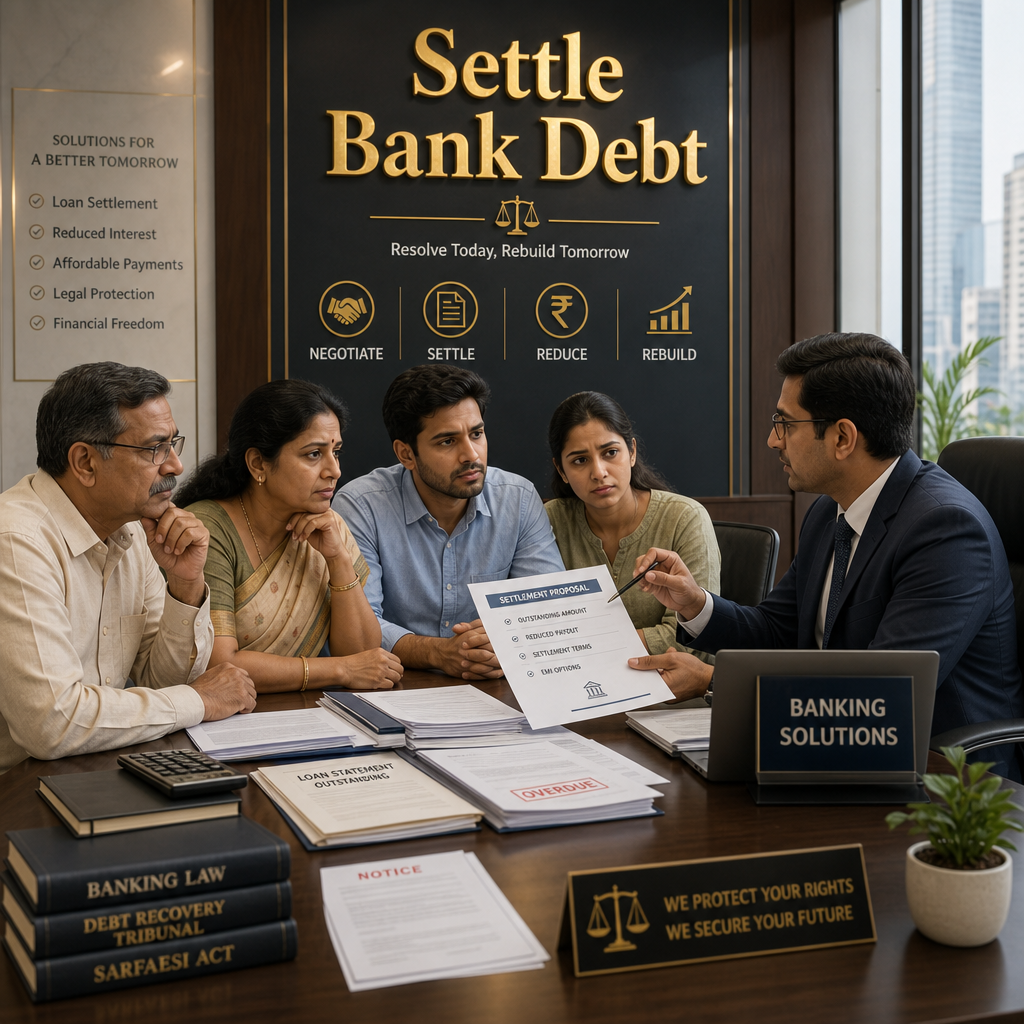
Settle Bank Debt: Essential Steps for Indian Borrowers (2026)
Discover practical advice and legal guidance on how to successfully settle bank debt in India.
Read Article
Credit Card Settlement Ka Tarika Kya Hai (2026)
Explore effective strategies and essential steps for credit card settlement in India in 2026.
Read ArticleAbout Author
Anuj Anand Malik
View ProfileAnuj Anand Malik, Founder of AMA Legal Solutions, is a trusted advocate, loan settlement expert, legal advisor, and banking lawyer. With over a decade of experience in loan settlement, corporate law, financial disputes, and compliance, he leads a result-driven law firm based in India that helps individuals, startups, and businesses achieve legal and financial stability.
Connect on LinkedInNeed Legal Help?
Get expert advice on loan settlement and debt relief.
Call +91-8700343611Request Callback