Expert Loan Settlement Lawyer: Minimize Amount, Maximize Waiver
Unlocking the Secrets to Successful Loan Settlements in India

Anuj Anand Malik
Reviewed by AMA Legal Solutions

Key Takeaways: Loan settlement is a strategic process to reduce outstanding debts, crucial for borrowers facing financial distress. It involves negotiating with lenders using RBI guidelines, understanding borrower rights, and deploying legal expertise to secure maximum waivers. Lawyers play a vital role in shaping favorable outcomes, emphasizing the importance of strategic planning and informed negotiation.
Understanding Loan Settlement: A Strategic Approach
Loan settlement is a negotiation process between a borrower and a lender to reduce the outstanding loan amount. This is particularly beneficial for borrowers facing financial distress, as it offers a chance to pay off the debt at a reduced rate. Understanding this process requires strategic planning and expert guidance to achieve the best outcome.
Why Consider Loan Settlement?
Loan settlement can significantly ease financial burdens by lowering the total payable amount. Borrowers often opt for this when regular repayments become unmanageable, and creditors might agree to a settlement to recover some portion of the debt rather than nothing.
Steps to Maximize Waiver in Loan Settlement
- Analyze your financial position and assess how much you can realistically pay.
- Approach the lender with a well-structured settlement proposal, demonstrating your current financial constraints.
- Engage a lawyer helping in loan settlement to negotiate on your behalf, ensuring all legal aspects are covered.
- Understanding RBI guidelines and using them to justify a settlement offer can be advantageous.
It's crucial to differentiate between loan settlement and other debt relief options. For more on related services, consider exploring our Loan Settlement Services.
Each settlement case is unique, and results can vary based on negotiation skills, the lender's policies, and the borrower's financial situation. A strategic approach, guided by experienced legal professionals, can optimize the settlement outcome, minimizing the amount payable with maximum waiver benefits.
Legal Framework Governing Loan Settlements in India
The legal framework in India for loan settlements primarily revolves around the guidelines set by the Reserve Bank of India (RBI). The RBI provides directives for lenders on how to handle non-performing assets (NPAs), which include the option of settlements. A lawyer helping in loan settlement in minimum amount with maximum waiver needs to navigate these regulations adeptly to secure favorable terms for clients.
Under the Banking and Finance Law, loan settlements are typically governed by the RBI's Prudential Framework for Resolution of Stressed Assets, which encourages a cooperative approach between lenders and borrowers. It allows for restructuring and settlement of loans to avoid lengthy recovery proceedings.
Key legal provisions involved include the SARFAESI Act, which empowers banks to recover loans through asset repossession, and the Debt Recovery Tribunal (DRT) Act, which provides a mechanism for banks to expedite recovery cases. However, these laws also protect borrower rights, ensuring that legal procedures are followed.
In practice, the role of an experienced lawyer is crucial in interpreting these laws to achieve a settlement that minimizes repayment amounts while maximizing waivers. This involves negotiating with banks, understanding borrower rights under existing laws, and ensuring compliance with RBI guidelines, all while considering the client's unique financial situation.
How Lawyers Negotiate the Best Settlement Deals
In loan settlements, skilled lawyers leverage their experience and knowledge to secure the most favorable outcomes for their clients. The process begins with a comprehensive analysis of the borrower's financial situation, obligations, and the bank's settlement policies. Equipped with this information, lawyers craft a negotiation strategy that highlights the borrower's constraints while emphasizing their willingness to resolve the debt.
Understanding Bank Policies and Borrower Needs
Lawyers begin by thoroughly understanding both the lender's policies and the borrower's financial limitations. This dual insight allows them to propose settlements that are realistic yet advantageous. By focusing on precedents and bank practices, lawyers can argue for reductions in principal, interest, and penalties.
- Accurate assessment of the borrower's repayment capacity.
- Analysis of the bank's historical settlement agreements.
- Use of supporting documents to justify the proposed waiver and settlement amount.
Effective Communication and Timing
Lawyers excel in communicating effectively with bank officials, ensuring that all interactions are strategic. They choose optimal times to initiate negotiations when the bank may be more amenable to concessions. This tactical approach often results in settlements with significant waivers.
For more about strategic negotiation tactics, consider exploring our Loan Settlement Services page.
Mitigating Legal Risks and Ensuring Compliance
Experienced lawyers always ensure that settlements comply with regulatory guidelines, such as those mandated by the Reserve Bank of India. This compliance mitigates future legal risks and ensures that borrowers are protected under Banking and Finance Law.
Analyzing RBI Guidelines for Loan Settlements
The Reserve Bank of India (RBI) provides comprehensive guidelines for loan settlements, designed to balance the interests of both borrowers and banks. Understanding these guidelines is crucial for borrowers seeking to minimize the loan amount while maximizing waivers. The RBI mandates that banks should explore all possible avenues for recovery before declaring a loan as a Non-Performing Asset (NPA).
Key RBI Provisions for Loan Settlements
The RBI's guidelines emphasize restructuring and settlement mechanisms, which include compromise settlements and one-time settlement (OTS) schemes. These mechanisms are particularly beneficial for borrowers facing financial distress. Banks are advised to conduct a detailed analysis of the borrower's financial situation and propose a settlement plan accordingly.
- Compromise Settlements: Often used for smaller loans, allowing negotiations on reduced settlement amounts.
- One-Time Settlement (OTS): Facilitates a lump sum settlement at a discounted rate, typically for larger debts.
It's essential for borrowers to be proactive, ensuring they have a clear understanding of the guidelines and seeking legal advice from experienced professionals. An adept lawyer familiar with these nuances can significantly influence the outcome, focusing on securing the best terms possible. For further insights, consider reading Comparing Loan Settlement Options in India: A Legal Perspective.
Strategies for Reducing Loan Settlement Amounts
Reducing loan settlement amounts requires strategic planning and negotiation skills. A seasoned lawyer who specializes in loan settlement can be instrumental in this process. Here's how:
Understand Your Loan Agreement
Before initiating any negotiation, thoroughly review the loan agreement. Identify any clauses that may favor renegotiations, such as hardship provisions. This understanding lays the foundation for informed discussions.
Highlight Financial Hardships
Provide documentation of any financial difficulties like job loss or medical expenses. Clear evidence of hardship can lead to more empathetic considerations from creditors, often resulting in reduced settlement amounts.
Negotiate for Waivers
Request waivers on penalties and interest amounts that have accrued. Many banks have provisions for waiving these fees when presented with valid justification for the delay in payment.
Leverage Professional Support
Engage an expert in Loan Settlement Services to negotiate on your behalf. Their expertise in legal nuances and creditor psychology can significantly impact the outcome.
Consider Debt Consolidation
Incorporate debt consolidation strategies to manage multiple loans more effectively. This approach can streamline payments and offer better negotiation leverage.
- Review the agreement for favorable clauses.
- Document and present financial hardships.
- Negotiate for penalty waivers.
- Hire a skilled lawyer for expert negotiation.
- Explore options like debt consolidation.
Maximizing Waivers: Legal Tactics and Techniques
Achieving the highest possible waiver in loan settlements requires strategic legal maneuvers. As a borrower, understanding these tactics can significantly reduce your financial burden. A proficient lawyer will begin by thoroughly auditing the loan documents, identifying any discrepancies or unfair terms that could be contested. Highlighting such issues can provide leverage for negotiations.
Engaging in a detailed financial analysis is crucial. By presenting an accurate account of your financial status, a lawyer can convincingly argue for a waiver by demonstrating genuine financial distress. The negotiation process is further strengthened by the lawyer's ability to showcase comparable cases where waivers were granted, setting a precedent.
Prioritizing Communication Channels
To ensure clarity and documentation, negotiations should primarily be conducted through written correspondence. This prevents misunderstandings and provides a record of all discussions and offers. It is also advisable to include an offer of a lump sum payment, if feasible, as this often incentivizes lenders to agree to more favorable terms.
- Leveraging Loan Settlement Services to understand lender policies.
- Utilizing legal precedents from Arbitration and Dispute Resolution cases.
Ultimately, a successful waiver negotiation is a blend of legal expertise, financial transparency, and effective communication. Collaborating with a lawyer who is experienced in Banking and Finance Law can significantly enhance the chances of obtaining maximum waivers.
Key Insights & Data Infographic
Visual summary, statistical trends & procedural breakdown
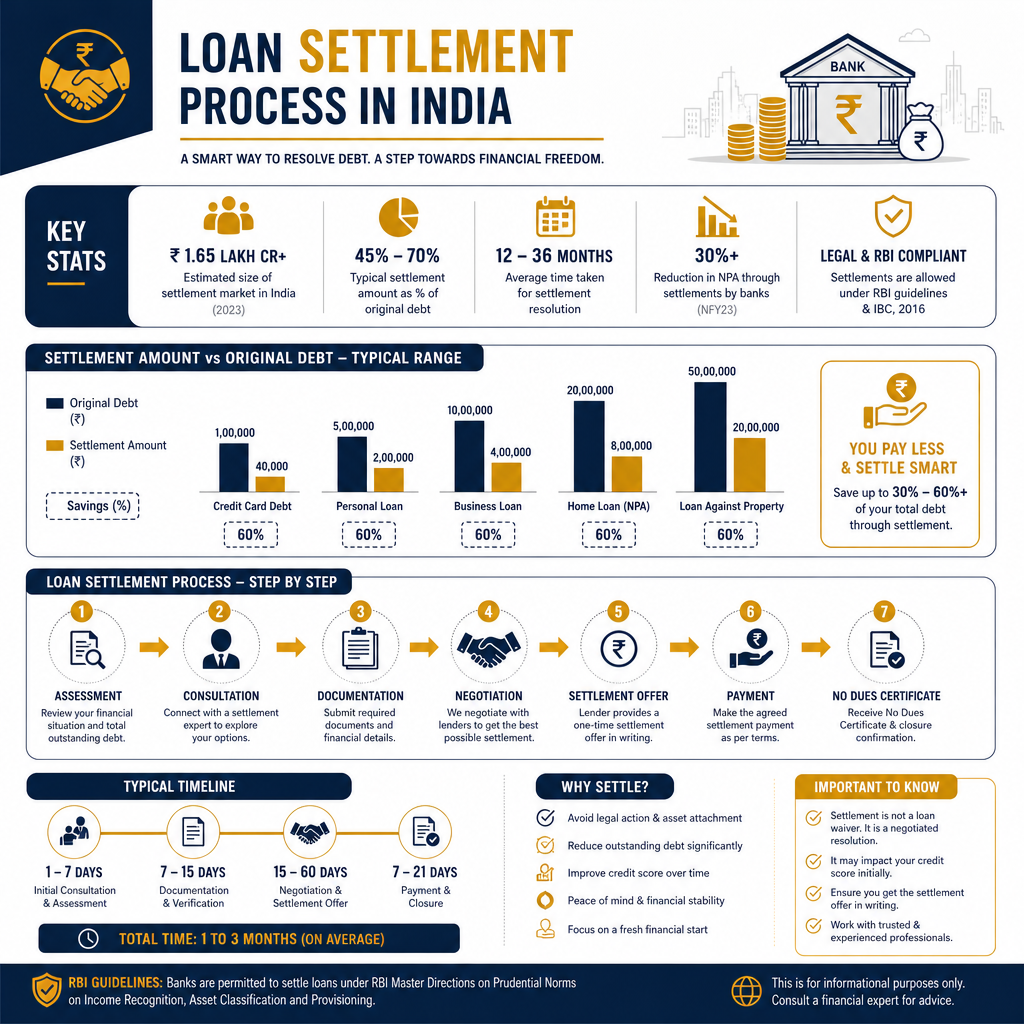
Prepared by AMA Legal Solutions Research & Analytics Team • Data & Compliance Overview
Understanding Your Rights in Loan Settlement Processes
When navigating loan settlement processes, it is crucial to understand your legal rights to effectively negotiate and achieve favorable terms. Indian banking regulations, especially those dictated by the Reserve Bank of India (RBI), provide certain protections and procedural guidelines for borrowers. These rights ensure fair treatment and help secure a settlement with a reduced amount and maximum waiver.
Firstly, borrowers have the right to receive clear and detailed information regarding the outstanding debt and any charges levied. The RBI mandates banks to disclose all charges and the final settlement amount. This transparency is essential for informed decision-making.
Additionally, you have the right to propose a settlement offer, ideally with the assistance of a loan settlement lawyer. A lawyer can negotiate waivers and ensure that the finalized agreement is legally binding, safeguarding you from future claims.
| Parameter / Criterion | Key Details / Legal Provision | Timeline / Practical Impact |
|---|---|---|
| Clear Disclosure | Banks must provide a breakdown of charges and principal. | Immediately upon request; aids in transparent communication. |
| Right to Negotiate | Propose settlements with legal assistance for better terms. | Ongoing; leads to reduced principal and waiver agreements. |
| Written Agreement | Ensure the settlement is documented and legally binding. | Concluded post-negotiation; prevents future disputes. |
| Legal Recourse | Access to civil litigation if terms are violated. | As needed; protects against unfair practices. |
Understanding these rights can significantly impact your settlement process, allowing for a more strategic approach. For comprehensive assistance, consider consulting with a professional knowledgeable in banking and finance law.
Step-by-Step Process: Loan Settlement Negotiations
Negotiating a loan settlement to achieve a minimum amount with maximum waiver requires a strategic approach. Here's a detailed process that borrowers, with the guidance of a seasoned lawyer, can follow to navigate these negotiations effectively.
1. Initial Assessment
Start by conducting a comprehensive review of your financial situation and loan documents. Understand the outstanding amount and terms. This step helps in setting realistic expectations and developing a negotiation strategy.
2. Evaluate Settlement Offers
Gather and compare settlement offers from your lender. Focus on the total amount payable and waiver percentage. Legal expertise can assist in evaluating these offers for fairness and feasibility.
3. Engage in Negotiation
With legal counsel, initiate discussions with the bank. Emphasize your financial constraints and propose a reasonable settlement amount. Legal representation often provides credibility and negotiation leverage.
| Parameter / Criterion | Key Details / Legal Provision | Timeline / Practical Impact |
|---|---|---|
| Initial Assessment | Analyze financials and loan details | 1-2 weeks |
| Settlement Offers | Review all offers for waiver percentages | 1-3 weeks |
| Negotiation | Discuss with lender; propose feasible terms | 2-4 weeks |
| Final Agreement | Formalize terms; legal documentation | 1-2 weeks |
4. Formalize the Agreement
Once an agreement is reached, ensure that all terms are documented legally. This prevents future disputes and ensures both parties adhere to the settlement. Refer to our Loan Settlement Services for further assistance.
For those facing complex banking and financial issues, consider exploring our Banking and Finance Law services for tailored legal solutions.
Common Mistakes Borrowers Make During Settlements
Borrowers often make critical errors during the loan settlement process, impacting their chances of securing a favorable outcome. Understanding these pitfalls can significantly enhance your settlement prospects.
Lack of Preparation
Failing to gather necessary documents and not understanding your financial position can weaken your negotiation stance. It's vital to have a clear picture of your debts and assets before engaging in settlement discussions.
Ineffective Communication
Engaging in phone conversations without a paper trail can lead to misunderstandings. Always follow up verbal agreements with written confirmations. This not only provides clarity but also strengthens your legal position in case of disputes.
Overlooking Legal Advice
Skipping professional guidance can cost you dearly. Consulting a loan settlement lawyer ensures you are aware of your rights and the best strategies for a maximum waiver.
Agreeing to Unfavorable Terms
Borrowers sometimes rush into agreements without scrutinizing the terms. Always analyze the settlement offer thoroughly and compare it with other options. For comprehensive guidance, consider consulting our Banking and Finance Law experts.
Ignoring Credit Implications
Overlooking the impact of settlements on your credit score can be detrimental in the long term. Understand the difference between loan settlement and closure to make informed decisions.
Avoiding these common mistakes can help you achieve a successful and financially favorable loan settlement. For further insights, reach out to a skilled lawyer specializing in loan settlements to assist in minimizing amounts while maximizing waivers.
Case Studies: Successful Loan Settlement Examples
Understanding how a seasoned lawyer can facilitate loan settlements with minimal amounts and maximum waivers is crucial for borrowers. Here, we explore two illustrative case studies that demonstrate the effectiveness of expert legal intervention in loan settlements.
Example 1: MSME Owner's Debt Resolution
An MSME owner faced imminent bankruptcy due to a loan default. Our team at AMA Legal Solutions negotiated with the bank, leveraging Loan Settlement Services expertise, to achieve a 60% waiver on the outstanding debt. The settlement was reached within three months, allowing the client to retain business operations without legal hassles.
Example 2: Personal Loan Reconciliation
A salaried individual defaulted on a personal loan due to medical emergencies. By employing strategic negotiation tactics and understanding of Banking and Finance Law, we secured a 50% reduction in the repayable amount. Our timely intervention prevented further credit score damage and provided the client with manageable repayment terms.
These cases highlight the impact of legal expertise in mitigating financial stress and achieving favorable outcomes. A knowledgeable lawyer can effectively navigate the complexities of debt negotiation, ensuring borrowers are not burdened beyond their means while maintaining compliance with banking regulations.
When to Seek Legal Help for Loan Settlements
Deciding when to engage a lawyer helping in loan settlement in minimum amount with maximum waiver can impact your financial future significantly. Legal assistance is crucial when you're facing persistent recovery calls, legal notices, or if negotiations with the bank have reached a stalemate. Experienced lawyers can identify viable strategies to negotiate favorable terms, thus minimizing your financial burden.
Key Indicators You Need Legal Assistance
- Received Legal Notices: If you have been served with a legal notice for loan default, consulting a lawyer can guide you through effective replies and legal proceedings. Learn more about how to reply to bank legal notice for loan default.
- Harassment by Recovery Agents: When recovery agents become aggressive or bypass legal boundaries, a lawyer can help assert your rights. Understanding your legal rights against recovery agent harassment is essential.
- Complex Loan Structures: For loans with intricate terms or those under dispute, legal expertise can clarify complexities and suggest feasible options.
- Failed Settlement Attempts: If prior attempts at settlement have failed, an experienced lawyer can provide a fresh perspective and innovative solutions.
Remember, timely legal consultation can prevent escalation and provide peace of mind. Explore our Loan Settlement Services for comprehensive assistance.
Practical Tips for Successful Loan Settlements
Effectively settling a loan requires strategic planning and negotiation. As an experienced lawyer for loan settlement, here's how to maximize waivers while minimizing the amount.
Understand Your Financial Position
Before negotiating, assess your financial status thoroughly. This helps in presenting a clear picture to the lender and sets realistic expectations for the settlement offer.
Document Everything
Maintain accurate records of all communications and transactions with the bank. This can serve as evidence if disputes arise during the settlement process.
Negotiate with Knowledge
- Research Your Options: Investigate possible settlement paths. Consider seeking guidance from a loan settlement expert.
- Highlight Hardships: Clearly communicate genuine hardships to negotiate for better terms.
- Counter Offers: Be prepared to make counter offers and justify them with solid reasons.
Leverage Legal Support
Engage a seasoned legal professional to navigate complex banking policies. Legal experts can offer insights into banking and finance law to improve your negotiation outcomes.
Know When to Walk Away
If the terms aren't favorable, be willing to explore other options such as debt consolidation or restructuring. Knowing your alternatives can give you leverage in discussions.
Popular Searches
AMA Legal Solutions
Trusted with a 4.7 Google Rating, over 10,000+ Clients Served, 25,000+ Cases Handled, and more than 40+ Years of Experience in providing strategic legal defense and debt resolution across India.
Our media coverages





Client Reviews
"AMA Legal Solutions provided exceptional service in settling my loan. Their expertise in navigating RBI guidelines significantly reduced my financial burden."
Rajesh Kumar
"I highly recommend AMA Legal Solutions for their in-depth knowledge and strategic approach in handling loan settlements. They truly understand borrower needs."
Vikram Patel
"AMA Legal Solutions exceeded my expectations by securing a substantial waiver on my loan. Their attention to detail and dedication were outstanding."
Neha Gupta
"The expertise and negotiation skills of AMA Legal Solutions made a significant difference in my loan settlement. I'm grateful for their excellent service."
Arjun Mehta
"The legal team at AMA Legal Solutions was instrumental in negotiating a favorable loan settlement. They were professional and supportive throughout the process."
Anita Sharma
Frequently Asked Questions
Related Articles

How to Trust Law Associates for Loan Settlement
Ensure Successful Loan Settlement with Trusted Legal Experts
Read Article
Mastering Loan Settlement of Personal Loan by Bajaj Finance
Navigate Bajaj Finance Loan Settlements with Expert Legal Insights
Read Article
Loan Settlement of Personal Loan by IDFC Bank: A Comprehensive Guide
Navigate IDFC Bank Loan Settlements with Expert Legal Insights
Read ArticleAbout Author
Anuj Anand Malik
View ProfileAnuj Anand Malik, Founder of AMA Legal Solutions, is a trusted advocate, loan settlement expert, legal advisor, and banking lawyer. With over a decade of experience in loan settlement, corporate law, financial disputes, and compliance, he leads a result-driven law firm based in India that helps individuals, startups, and businesses achieve legal and financial stability.
Connect on LinkedInNeed Legal Help?
Get expert advice on loan settlement and debt relief.
Call +91-8700343611Request Callback