Negotiate Loan Installments vs. Settlement: Pros & Cons
Discover if negotiating with banks is better than settling loans.

Anuj Anand Malik
Reviewed by AMA Legal Solutions
Introduction to Primary Keyword
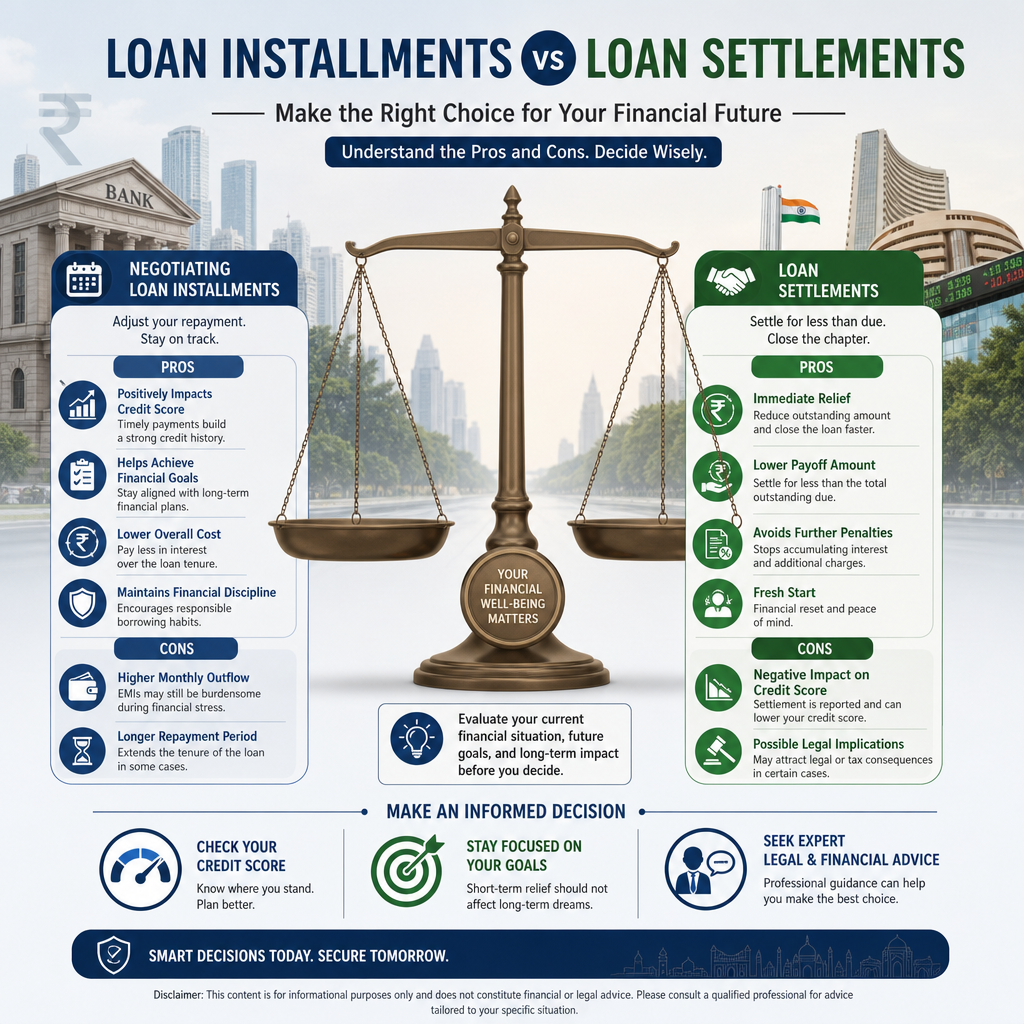
When financial obligations become overwhelming, individuals often face the critical decision of whether to negotiate loan installments with the bank or opt for a loan settlement. Both options have their unique advantages and drawbacks, making it essential to understand the nuances before deciding. In the Indian financial landscape, where the Reserve Bank of India (RBI) regulates lending practices, these choices can significantly impact your financial health and credit score.
Negotiating loan installments with a bank involves revisiting the terms of your existing loan agreement. This often entails adjusting the monthly repayment amounts, extending the loan tenure, or even temporarily reducing interest rates. This approach can be beneficial if you're experiencing a temporary cash flow problem, as it allows you to maintain your creditworthiness. For those seeking professional assistance in such matters, AMA Legal Solutions offers expert guidance in banking and finance-related negotiations.
Conversely, loan settlement is a process where the borrower and lender agree to a reduced payoff amount as a full settlement of the debt. While this might seem appealing due to the immediate financial relief it offers, it can have long-term repercussions on your credit report. Settlements are generally marked as settled for less than the amount owed, which can negatively impact your credit score. For individuals considering this route, consulting with services such as loan settlement at AMA Legal Solutions can provide valuable insights into the potential consequences and alternatives.
The decision to negotiate loan installments or go for a settlement also depends on your future financial goals. If maintaining access to credit is important to you, negotiating installments may be more beneficial, as it shows lenders your commitment to fulfilling obligations. On the other hand, if your primary objective is to clear your obligations quickly, even at the cost of credit score damage, settlement might be the preferable option.
Ultimately, understanding the pros and cons of each option is vital. Negotiation preserves your credit score, often with less immediate financial relief, while settlement offers immediate relief with potential long-term credit implications. A holistic understanding, possibly supported by expert legal advice from services such as drafting and litigation at AMA Legal Solutions, can help you make an informed decision that aligns with your financial well-being.
Understanding the Legal Framework for Loan Negotiation
In India, the process of negotiating loan installments with banks is governed by a comprehensive legal framework designed to protect both the lender and the borrower. This framework is crucial when considering whether to negotiate loan installments instead of opting for a settlement. Key regulations are administered by the Reserve Bank of India (RBI), which ensures that banks adhere to fair practices while dealing with borrowers. Familiarity with these regulations can be instrumental in making informed decisions when engaging in loan negotiations.
One of the primary considerations is the RBI's guidelines on the restructuring of loans, which provide borrowers with options to modify the terms of their loan agreements in times of financial distress. This can include extending the loan tenure, reducing interest rates, or altering installment amounts. Such restructuring measures can be a viable alternative to loan settlements, offering borrowers a way to manage their liabilities without drastic financial consequences. For further insights on banking and finance services, click here.
Legal negotiations with banks are often supported by statutory rights under the Securitisation and Reconstruction of Financial Assets and Enforcement of Security Interest (SARFAESI) Act. This act empowers banks to recover non-performing assets (NPAs) but also provides a structured negotiation process for the borrower to address any grievances. Understanding the nuances of such legal provisions can aid borrowers in formulating strategies that leverage their statutory rights effectively. For specialized assistance in loan settlement strategies, visit our loan settlement services.
Moreover, consumer protection laws serve as another layer of legal safeguard for borrowers, ensuring banks do not resort to unfair practices during loan recovery. The Consumer Protection Act, 2019, encompasses misrepresentation, coercion, and unfair trade practices. Borrowers can seek redressal through consumer courts if they believe their rights have been infringed upon during the negotiation process. This legal avenue ensures that negotiations are conducted transparently and equitably.
Seeking legal counsel can further bolster a borrower's position in negotiations. Legal experts specializing in banking, finance, and civil law can offer strategic advice and representation during such negotiations. For comprehensive legal support, consider exploring drafting, litigation, and arbitration services offered by experienced professionals. Such services can provide a robust framework for negotiating loan installments effectively.
What is Loan Negotiation with Banks?
Loan negotiation with banks refers to the process where a borrower approaches their bank or lending institution to discuss and rearrange the terms of their existing loan. This often involves modifying aspects such as the interest rate, repayment tenure, or the installment amount. The primary objective of loan negotiation is to make the repayment terms more manageable for the borrower, thereby helping to avoid default or the need for a loan settlement.
In India, loan negotiation is a viable option, especially considering the Reserve Bank of India’s regulations which encourage banks to work constructively with borrowers facing financial difficulties. Engaging in negotiations with the bank can potentially result in more favorable terms that suit both parties and ensure the borrower can continue to meet their financial obligations without undue strain. This process requires a clear understanding of one's financial situation and the willingness to communicate openly with the lender about potential challenges.
Loan negotiation can be an advantageous option over settlement for several reasons. Firstly, it preserves the borrower’s credit score since settlements typically reflect negatively on credit reports, whereas successful negotiations do not. Secondly, it allows for the continuation of the loan under adjusted terms, which can prevent the borrower from having to pay a lump sum, as would be required in a settlement. At AMA Legal Solutions Banking and Finance Services, we provide expert advice and representation to help you navigate these negotiations effectively.
However, it is not without its challenges. Borrowers may face resistance from banks, as lenders often have predefined policies that can limit flexibility. It requires a strategic approach and sometimes the assistance of financial advisors or legal experts to successfully negotiate terms. This is where professional services such as loan settlement advisory and corporate legal services can prove invaluable, offering tailored solutions to suit individual circumstances.
In contrast to loan settlements, which involve paying a reduced amount to close the loan, negotiations allow for the possibility of maintaining the existing loan relationship with altered terms. Engaging professional services in such negotiations, such as contract drafting and arbitration services, can significantly enhance the prospects of a successful outcome. By exploring these avenues, borrowers can often find a satisfactory resolution that aligns with their financial goals while maintaining a positive standing with their lender.
Exploring Loan Settlements: Definition and Process
Loan settlement is a financial strategy employed by borrowers who are unable to repay their loans fully as per the original terms. In essence, a loan settlement is an agreement between the borrower and the lender where the borrower pays a lump sum amount, usually less than the total outstanding balance, to close the loan. This option is often considered when the borrower is under significant financial duress, and the bank agrees to accept a lower amount to avoid a complete default and lengthy legal proceedings. Understanding the nuances of loan settlements can be crucial for individuals contemplating this route.
The loan settlement process begins with the borrower expressing their inability to repay the complete loan to the bank. This is followed by negotiations, where the borrower and the bank discuss the possibility of settling the loan for a reduced amount. This negotiation phase is critical, as it determines the settlement amount and the terms. It is advisable for borrowers to engage in these discussions with a clear understanding of their financial situation and a well-prepared settlement proposal.
Once an agreement is reached, the borrower is required to pay the agreed-upon lump sum amount. It is important to note that loan settlements can have a significant impact on the borrower's credit score. The settlement is reported to credit rating agencies and is typically considered a negative mark, as it indicates the borrower could not meet the loan's original terms. This can affect future borrowing opportunities and increase interest rates for new loans.
If you are considering a loan settlement, it may be beneficial to seek professional guidance. At AMA Legal Solutions, we offer comprehensive services to navigate the complexities of loan settlements, helping you achieve the best possible outcome. Our professionals can assist in negotiations, ensuring that the settlement is fair and aligned with your financial capabilities.
Moreover, understanding the broader implications of loan settlements is crucial. Beyond immediate financial relief, borrowers should consider long-term financial planning and the potential need for legal advice. Our Banking and Finance services provide detailed insights into financial restructuring and future risk mitigation. Additionally, our Drafting and Litigation services can help in creating robust agreements and resolving disputes, ensuring that your financial interests are protected throughout the process.
Pros of Negotiating Loan Installments
Negotiating loan installments with a bank can be an advantageous strategy for borrowers facing financial difficulties. This approach often enables individuals to gain control over their financial situation without the long-term implications of a loan settlement. Below, we explore several benefits of opting for negotiations over immediate settlements.
First and foremost, negotiating loan installments helps to safeguard your credit score. When you settle a loan, it is often marked on your credit report as "settled," which can negatively impact your creditworthiness. In contrast, modifying the terms of your loan through installment negotiations allows you to continue making payments without this potentially adverse notation. This can preserve your credit score, which is crucial for future financial transactions and opportunities, such as taking out a mortgage or securing a business loan. For more insights on managing financial agreements, visit our Banking and Finance services.
Another significant advantage is the potential to reduce monthly payment amounts through effective negotiations. By extending the loan term or adjusting the interest rates, borrowers can secure more manageable payment schedules that align better with their current financial situation. This not only alleviates immediate financial pressures but also ensures that the borrower remains in good standing with the bank. Such arrangements may require professional guidance, and legal experts at AMA Legal Solutions are equipped to assist in these negotiations.
In addition, negotiating loan installments can provide a sense of financial stability and predictability. Unlike settlements, which often require a lump sum payment, installment negotiations typically allow for a continued, structured payment plan. This ongoing arrangement can help borrowers budget more efficiently and plan for future expenses, contributing to long-term financial health. Whether dealing with personal or business finances, maintaining regular payments can be crucial, as outlined in our Corporate services.
Furthermore, this negotiation process often fosters a better relationship with your bank. By demonstrating a commitment to repaying your loan, albeit with adjusted terms, you create an ongoing dialogue with the bank, which can be beneficial for future financial interactions. This relationship can be particularly vital for businesses and individuals alike, providing a foundation of trust and reliability. If you're seeking expert assistance, our Drafting services can help in preparing necessary documents for these negotiations.
Overall, negotiating loan installments rather than opting for a settlement can significantly benefit borrowers in terms of credit score preservation, manageable payment plans, financial predictability, and improved bank relationships. These aspects collectively contribute to a more stable and sustainable financial future, underscoring the importance of seeking professional advice in such matters.
Cons of Negotiating Loan Installments
While negotiating loan installments with your bank can seem like a viable alternative to settlements, there are several drawbacks that borrowers should carefully consider. Understanding these cons can help in making a more informed decision applicable to your financial situation.
One significant disadvantage of negotiating loan installments is the extended repayment period. By opting to pay smaller amounts over a longer duration, borrowers may find themselves locked into a financial commitment that could span several years. This can lead to an increased total interest burden over time, making the loan more expensive in the long run. For individuals or businesses involved in sectors like real estate or corporate finance, such long-term commitments can hinder financial flexibility and strategic planning.
Another downside is the impact on credit ratings. While negotiating installments might initially seem like a responsible step to manage debt, consistently making smaller payments over an extended period might not improve credit scores significantly. Some lenders may still view this as a sign of financial distress. For those in fields sensitive to credit assessments, such as banking and finance, maintaining a stellar credit score is crucial.
Negotiating loan installments can also come with stringent terms and conditions set by the bank. These may include penalties for late payments or restrictions on making additional payments. Such terms can be particularly disadvantageous for borrowers who might come across unexpected financial gains and wish to repay their loan faster without incurring penalties. This lack of flexibility can be problematic for individuals dealing with unpredictable income streams, such as those in the entertainment industry.
In some cases, banks may require additional security or guarantees to approve the renegotiation of loan terms. This could mean pledging additional assets or involving guarantors, adding further risk to the borrower's financial situation. This requirement can be particularly burdensome for those who might already be leveraging assets for other purposes, such as intellectual property rights or cyber operations.
Ultimately, while negotiating installments can seem like a less confrontational approach compared to a loan settlement, it is essential to weigh these cons carefully. For a comprehensive evaluation of your options, consulting with legal professionals like those at AMA Legal Solutions can provide valuable insights tailored to your specific circumstances.
Pros of Opting for Loan Settlement
When considering whether to negotiate loan installments with your bank or to opt for a loan settlement, it's crucial to weigh the advantages of each option carefully. Loan settlement, in particular, offers several potential benefits that can make it a worthy consideration for borrowers in India. Here are some of the pros of opting for loan settlement:
Immediate Relief from Debt
One of the most significant advantages of a loan settlement is the immediate relief it provides from debt. By opting for a settlement, you can potentially reduce your outstanding loan amount to a fraction of what you owe. This reduction can significantly ease your financial burden, especially if you're facing financial difficulties. Unlike negotiating installments, which might only extend your repayment period, a settlement can close the debt chapter more swiftly.
Lower Overall Repayment
Loan settlements usually involve negotiating a one-time payment that is lower than the total outstanding amount, offering borrowers a chance to clear their debts at a reduced cost. This can be particularly beneficial if the loan principal and interest have accrued to a point where repayment seems unmanageable. For a more personalized approach to financial solutions, consider consulting experts such as those at AMA Legal Solutions, who can guide you through the nuances of loan settlements in the banking and finance sector.
Avoiding Legal Consequences
Failure to manage loan repayments can lead to legal actions by banks, potentially resulting in lawsuits and other legal complications. Opting for a loan settlement can help preempt such issues by reaching a mutually agreed resolution with the bank. This proactive approach not only saves you from the stress of potential litigation but also helps preserve your relationship with the lender. In cases where legal intervention becomes necessary, services such as litigation support can be invaluable.
Improved Credit Score Over Time
While a loan settlement might initially impact your credit score by marking the account as "settled," it can eventually lead to improvements. Settling the loan reduces your outstanding debt, which can contribute positively to your credit profile in the long term. Moreover, being proactive in addressing your debts can reflect positively if you aim to rebuild your credit. For more insights on managing financial records and intellectual assets, the intellectual property rights services at AMA Legal Solutions can be of assistance.
In conclusion, while opting for loan settlement has its drawbacks, such as a temporary hit to your credit score, the immediate financial relief, reduced repayment burden, and avoidance of legal complications make it a compelling option for many borrowers. It's always prudent to consult with professionals who understand the intricate dynamics of banking and finance to make informed decisions.

Halt Recovery Agent Harassment Legally
Cons of Opting for Loan Settlement
While loan settlement may seem like an attractive option for borrowers facing financial difficulties, it carries several disadvantages that must be carefully considered before making a decision. Settling a loan involves negotiating with the lender to repay a portion of the total debt, upon which the lender forgives the remaining balance. Although this may provide immediate relief, the long-term implications can be significant.
One of the primary drawbacks of loan settlement is the adverse impact on your credit score. When you opt for a settlement, the lender reports it to credit bureaus as a 'settled' account rather than 'paid in full'. This notation can significantly lower your credit score and remain on your credit report for up to seven years, making it difficult to secure new credit or loans in the future. In the Indian context, a reduced credit score can affect your eligibility for home loans, car loans, or even personal loans, thereby limiting your financial options.
Additionally, the settlement process can be lengthy and complex. It often requires extensive negotiation with the lender, which may not always result in favorable terms. Lenders may demand a lump sum payment for the settled amount, which could be challenging for borrowers already facing financial stress. Engaging professional advice from experts in banking and finance can be beneficial, but this also incurs additional costs.
Furthermore, a loan settlement can lead to potential tax liabilities. In India, the forgiven debt is considered income and may be subject to income tax. The Relief on the principal amount can, therefore, result in a sizeable tax bill, diminishing the financial relief obtained from the settlement. Borrowers should assess the tax implications carefully and consider consulting with a corporate legal expert to navigate these complexities.
Another con of settling a loan is the possible deterioration in the relationship with your lender. Once a loan is settled, lenders may be hesitant to engage in future financial dealings, affecting your long-term financial strategy and access to borrowing if needed. This is particularly relevant in business scenarios where liquidity and financing options are crucial. In such cases, expert legal guidance through arbitration or litigation services may be required to protect your interests.
Lastly, the emotional and psychological stress associated with loan settlements cannot be underestimated. The process often involves ongoing negotiations and potential legal hurdles, which can be overwhelming. Seeking professional support from legal experts with experience in drafting settlement agreements or engaging in real estate or criminal law can help mitigate these challenges, but it is crucial to weigh these factors carefully.
Financial Impact: Negotiation vs. Settlement
When faced with mounting debt, the decision to negotiate loan installments with the bank rather than opting for a settlement can significantly influence your financial health. Both paths have distinct consequences, and understanding these can help in making an informed choice. In the Indian financial landscape, where the Reserve Bank of India (RBI) regulations play a pivotal role, evaluating the financial impact becomes even more critical.
Negotiating loan installments typically involves restructuring your existing loan terms. This can mean extending the loan tenure or reducing the interest rate, thereby making monthly payments more manageable. The immediate financial impact is the potential relief on monthly cash flow, allowing individuals to maintain their credit score and avoid the stigma associated with loan default. Prolonging the loan tenure, however, might increase the total interest paid over the life of the loan. Engaging services such as banking and finance advisory can help borrowers approach negotiations with confidence.
On the other hand, opting for a loan settlement typically means negotiating with the bank to pay a lump sum amount that is less than the total outstanding. While this might seem advantageous in clearing the debt quickly, it often comes at a cost to one's credit score. In India, the credit scoring system takes settled loans into account, which may affect future borrowing capabilities. For those who choose settlement, leveraging expert guidance from services like AMA Legal Solutions’ loan settlement can ensure a fair deal and minimize future financial repercussions.
Additionally, in terms of long-term financial planning, maintaining good credit health through installment negotiations could be more beneficial. A favorable credit score opens doors to better loan terms in the future, whether in personal finance, real estate investments, or corporate ventures. By keeping up with regular payments, borrowers can leverage opportunities like refinancing at lower rates in the future, potentially saving more money in the long run.
In conclusion, both negotiation and settlement have their respective pros and cons. The decision should be guided by one's immediate financial situation, long-term goals, and the potential impact on creditworthiness. Consulting with experts in arbitration and litigation can provide tailored solutions that align with personal financial objectives and ensure compliance with relevant regulations. Balancing immediate relief with future financial stability is key to choosing the best path forward.
Legal Implications: What Borrowers Should Know
When considering whether to negotiate loan installments with the bank or opt for a loan settlement, borrowers must be acutely aware of the legal implications that accompany each choice. Understanding these can help in making a more informed decision that aligns with your financial and legal interests. The nuances of these options can significantly impact your financial standing and creditworthiness in the long run.
Negotiating loan installments typically involves restructuring the loan terms to make repayments more manageable. This approach often leads to a formal agreement with the bank, which may include extensions of the loan tenure or alterations of the interest rate. Legally, once a new repayment plan is formalized, it becomes binding. This means that borrowers must adhere to the amended terms to avoid potential legal actions by the bank. On the bright side, this strategy often preserves the borrower’s credit score better than a settlement would.
In contrast, opting for a loan settlement involves negotiating with the bank to repay a portion of the outstanding debt, which is usually less than what was originally owed. Although this might seem like a financially beneficial option, it carries significant legal repercussions. A settlement is usually recorded as a negative entry on your credit report, affecting your credit score adversely. Additionally, after the settlement is agreed upon and paid, banks might still pursue legal action if any part of the agreement is breached. For further insight into how loan settlements can impact your credit and legal status, consult our Loan Settlement Services.
It is crucial for borrowers to understand the legal documentation involved in these processes. Every negotiation or settlement should be documented thoroughly to ensure clarity and legal compliance. Proper documentation can safeguard against future disputes and is a valuable reference for legal proceedings if the need arises. At AMA Legal Solutions Drafting Services, we offer comprehensive legal support to ensure all documentation is precise and reflects the agreed terms accurately.
Borrowers should also consider the potential for legal disputes arising from either option. Whether negotiating installments or settling, being prepared for possible litigation is important. Engaging with legal experts who specialize in litigation can provide the necessary guidance and representation should disputes occur. It is advisable to consult legal professionals who have a deep understanding of banking and finance law to ensure your rights are protected and your interests are prioritized.
Case Studies: Successful Loan Negotiations
In the realm of financial management, negotiating loan installments with banks has emerged as a pragmatic approach for many borrowers, particularly in India. While opting for a settlement might seem like a quick resolution, the long-term benefits of installment negotiations often outweigh the immediate relief of settlements. Here, we examine a few case studies that highlight the successes of negotiating loan installments over settlements.
Consider the case of Mr. Sharma, a small business owner in Mumbai who faced a severe cash flow crisis due to unexpected market downturns. With a loan of ₹25 lakhs from a national bank, Mr. Sharma found himself struggling to meet the monthly installments. Instead of succumbing to the pressure of a settlement, which would have adversely impacted his credit score, he chose to negotiate the terms of his repayment. By consulting with banking and finance experts at AMA Legal Solutions, he was able to secure a restructured payment plan. This plan reduced his monthly installment by 30%, allowing him to stabilize his business operations without compromising future borrowing potential.
Another example is Mrs. Rao, a salaried professional in Hyderabad, who incurred a significant personal loan for home renovations. When unexpected medical expenses arose, she was unable to keep up with her EMI commitments. Instead of opting for a settlement that might have offered short-term relief but long-term credit damage, Mrs. Rao reached out to her bank with a proposal for installment negotiation. Supported by the corporate advisory services at AMA Legal Solutions, she successfully negotiated a six-month moratorium, followed by a phased increment in her EMI payments. This negotiation not only safeguarded her creditworthiness but also provided her the flexibility to manage her finances effectively.
A third case involves Mr. Iyer, a tech entrepreneur in Bangalore, who took out a substantial loan to fund his startup. When his venture faced initial hurdles, the pressure of settling the loan could have forced him to sacrifice equity to cover debts. Instead, his strategic decision to negotiate installments helped his company maintain liquidity. By leveraging the arbitration services at AMA Legal Solutions, Mr. Iyer was able to extend his repayment tenure with lower monthly installments, thereby ensuring his startup's survival through challenging times.
These case studies underscore the efficacy of negotiating loan installments. They illustrate that with expert guidance and strategic planning, borrowers can achieve favorable outcomes. Choosing installment negotiation allows for maintaining a good credit score and provides financial leeway. For individuals facing similar dilemmas, consulting with professional legal advisors like those at AMA Legal Solutions can be instrumental in navigating the complexities of financial negotiations.
Case Studies: Successful Loan Settlements
Loan settlements can provide a viable solution for borrowers who are struggling to meet their financial obligations. In the context of Indian banking and finance, effective settlements can reduce the burden of debt, allowing individuals to regain financial stability. Here, we explore case studies of successful loan settlements, which may provide insights into the advantages of choosing settlements over negotiating loan installments.
Consider the case of Mr. Rajesh Kumar, a small business owner in Mumbai, who faced significant financial distress due to declining sales. Faced with a mounting debt of ₹10 lakhs, Mr. Kumar initially tried to negotiate lower loan installments with his bank. However, the monthly payments remained unaffordable due to fluctuating cash flows. With the assistance of AMA Legal Solutions' Loan Settlement services, Mr. Kumar successfully negotiated a one-time settlement of ₹6 lakhs. This not only reduced his debt but also allowed him to focus on reviving his business without the constant stress of monthly payments.
Another illustrative case involves Mrs. Anjali Desai, a salaried professional from Bengaluru, who faced unexpected medical expenses, leading to difficulties in managing her personal loans. Initially, Mrs. Desai attempted to restructure her loan into smaller installments. However, the interest accrued over the period made this option less favorable. By opting for a settlement with the guidance of AMA Legal Solutions' Banking and Finance services, she was able to reduce her outstanding debt by 30%, freeing her from financial strain and allowing her to manage her medical expenses effectively.
In the real estate sector, Mr. and Mrs. Mehta from Delhi encountered challenges with their home loan due to a downturn in the property market. With counsel from AMA Legal Solutions' Real Estate services, they pursued a settlement that reduced their principal amount significantly. This strategic move not only lowered their financial commitments but also protected their credit score from further deterioration.
These case studies highlight that while negotiating loan installments may seem like a practical approach, settlements can often provide more immediate financial relief. The decision between the two should consider factors such as current financial stability, future income potential, and the impact on credit ratings. For personalized legal assistance in navigating such complex financial situations, consult with AMA Legal Solutions to explore the best course of action tailored to your needs.
Expert Tips on Negotiating with Banks
When facing the challenge of negotiating loan installments with a bank, it is crucial to approach the situation with a well-prepared strategy and a clear understanding of your financial status. Successfully navigating these discussions can lead to more manageable payment terms and potentially prevent the adverse effects of a loan settlement. Here are some expert tips to consider when negotiating with banks.
1. Understand Your Financial Situation
Before initiating discussions with your bank, conduct a thorough assessment of your current financial circumstances. Calculate your monthly income and expenses to determine how much you can realistically afford to pay towards your loan. Having a detailed understanding of your finances will empower you to propose a feasible repayment plan, making it more likely for the bank to consider your negotiation positively.
2. Do Your Research
It's important to understand the bank's perspective and policies regarding loan restructuring. Familiarize yourself with the Reserve Bank of India's (RBI) guidelines on loan modifications and restructurings. This knowledge can help you craft a proposal that aligns with the bank's policies and regulations, increasing your chances of success. At AMA Legal Solutions, our banking and finance experts can provide invaluable insights and guidance throughout this process.
3. Communicate Clearly and Professionally
When negotiating with the bank, ensure that all communications are clear, concise, and professional. Present your case logically, backed by documentation such as bank statements, tax returns, and any other relevant financial records. This approach demonstrates your commitment to resolving the issue responsibly and can contribute to a more favorable outcome.
4. Explore Alternative Solutions
While the primary goal is to negotiate better loan installments, consider discussing alternative solutions such as temporarily lowering interest rates or extending the loan term. These options can alleviate immediate financial pressure while keeping your credit score intact. For expert assistance in exploring various legal avenues, consult with our loan settlement professionals who can advise on the best course of action tailored to your situation.
5. Seek Professional Assistance
If the negotiation process becomes overwhelming, seeking professional assistance can be beneficial. Legal experts with experience in banking negotiations can provide strategic advice and support. At AMA Legal Solutions, we offer services in drafting and litigation to ensure your interests are well-represented. Whether you need help drafting proposals or require representation, our team is equipped to assist you in achieving a favorable outcome.
Conclusion: Choosing the Right Path for Your Financial Health
Deciding whether to negotiate loan installments with your bank or opt for a settlement can be pivotal to your financial health. The right choice largely depends on your unique financial situation, long-term goals, and current capabilities. Each approach has its advantages and drawbacks, and making an informed decision is crucial for maintaining financial stability.
When you choose to negotiate loan installments, it often reflects a commitment to fulfilling your financial obligations, which can be beneficial in maintaining a positive credit score. Banks are generally amenable to adjusting payment terms, especially if you provide a solid repayment plan supported by concrete financial evidence. Lowered monthly payments can offer immediate financial relief, allowing you to manage other expenses efficiently. For detailed guidance on banking and finance, consider exploring AMA Legal Solutions' Banking and Finance services.
On the other hand, a loan settlement can be advantageous if you are in dire financial straits and unable to meet the original loan terms. Settlements might offer a reduced lump sum payment, relieving you from prolonged financial burdens. However, it is vital to understand that settlements can significantly impact your credit score, making future borrowing more challenging. To navigate the nuances of loan settlements, AMA Legal Solutions offers expert Loan Settlement services that can provide valuable insights and support.
In India, where financial and legal systems can be intricate, professional guidance can be invaluable. Consulting with legal experts can help you weigh the pros and cons of each option, ensuring that you make a decision that aligns with both your immediate needs and long-term financial health. The intricate regulations, such as those set by the Reserve Bank of India (RBI), can complicate matters, making professional advice indispensable.
Ultimately, whether you opt to negotiate installments or pursue a settlement, the decision should align with your overall financial strategy. Consider seeking comprehensive legal advice to explore all possible avenues and ensure compliance with applicable laws. For holistic legal support, AMA Legal Solutions' Corporate services and Civil services offer robust solutions tailored to your needs.
Need Strategic Legal Defense for Your Situation?
Our banking & litigation advocates review your notices, debt liability, and recovery issues under complete advocate-client secrecy.
AMA Legal Solutions
Trusted with a 4.7 Google Rating, over 10,000+ Clients Served, 25,000+ Cases Handled, and more than 40+ Years of Experience in providing strategic legal defense and debt resolution across India.
Our media coverages





Client Reviews
"Thanks to AMA Legal Solutions, I was able to understand the intricacies of loan negotiations. Their guidance was invaluable in restructuring my loan without harming my credit score."
Suresh Patel
"I was worried about settling my loan, but the professional advice from AMA Legal Solutions made the process so transparent and easy. Highly recommended for financial negotiations!"
Anjali Deshmukh
"The team at AMA Legal Solutions provided excellent support in navigating my loan settlement. Their insights into the process were crucial in making an informed decision."
Priya Nair
"AMA Legal Solutions helped me negotiate my loan terms effectively. Their expertise ensured I maintained my credit score while managing financial stress."
Rohit Mehta
"Negotiating loan installments seemed overwhelming, but AMA Legal Solutions made it straightforward. Their knowledge ensured a favorable outcome for my financial situation."
Vikram Singh
Frequently Asked Questions
Related Articles
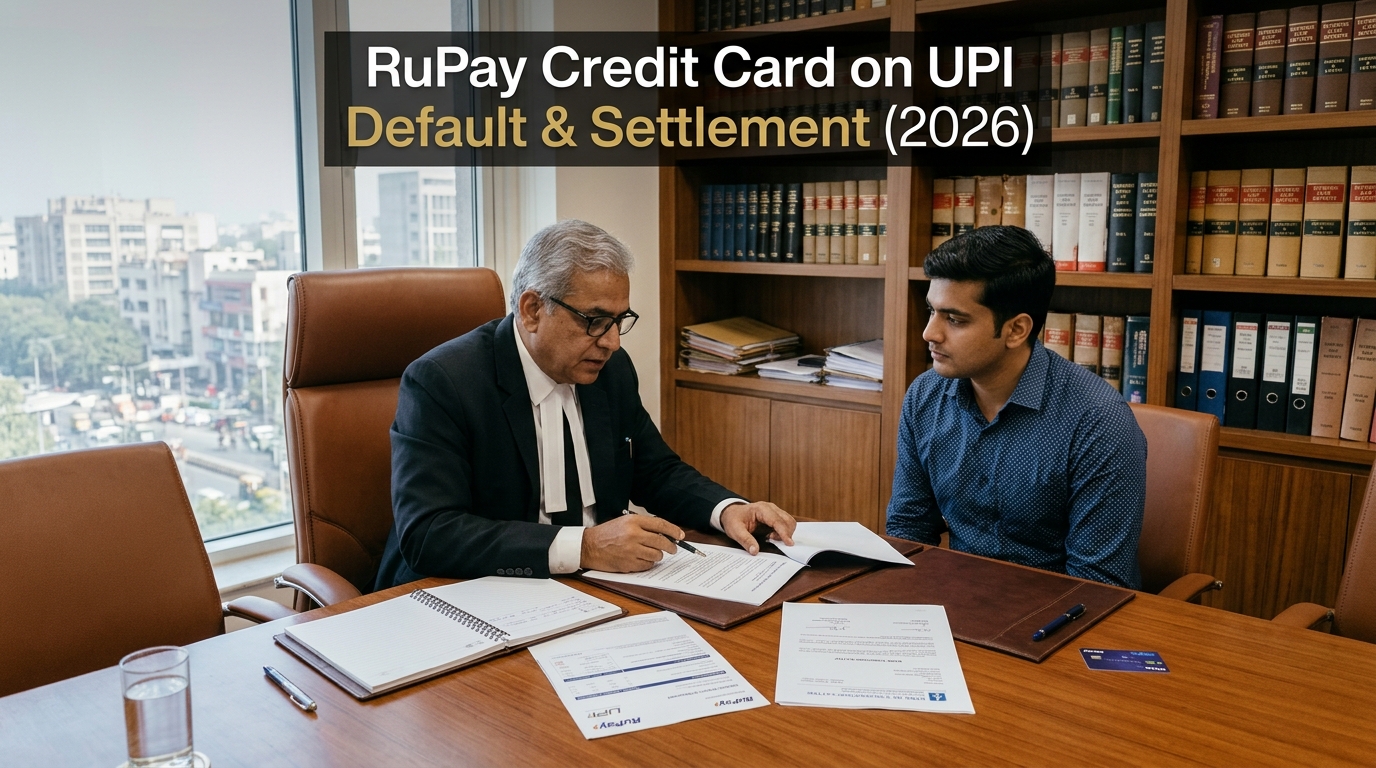
RuPay Credit Card on UPI Default & Credit Line on UPI Settlement (2026)
Micro-transactions on RuPay UPI Credit Cards and pre-approved 'Credit Lines on UPI' have triggered a massive wave of 42%+ APR revolving debt traps. Find out if defaulting blocks your personal savings UPI and how to settle RuPay UPI credit dues for 30%–50%.
Read Article
Paytm, PhonePe & BharatPe Daily EDI Merchant Loan Settlement (2026)
Drowning in Equated Daily Installment (EDI) merchant loans where 100% of your daily QR Soundbox collections are auto-swept before you can pay suppliers or rent? Learn how retail shopkeepers and MSMEs legally halt QR sweeps and negotiate a 50%+ OTS.
Read Article
Can Bank or Loan App Remotely Lock Phone for EMI Default? RBI Rules (2026)
An investigative breakdown of RBI's Remote Device Locking Directions—explaining why lenders cannot lock your phone for personal loans, the mandatory 30/60 DPD safeguards on financed devices, the Rs. 250/hour delay penalty, and how to settle device & app loans.
Read ArticleAbout Author
Anuj Anand Malik
View ProfileAnuj Anand Malik, Founder of AMA Legal Solutions, is a trusted advocate, loan settlement expert, legal advisor, and banking lawyer. With over a decade of experience in loan settlement, corporate law, financial disputes, and compliance, he leads a result-driven law firm based in India that helps individuals, startups, and businesses achieve legal and financial stability.
Connect on LinkedInNeed Legal Representation?
Evaluate your defense against recovery agents, notices, or structure your loan settlement directly with Senior Advocates.
Call +91-8700343611