Master Loan Settlement Without Damaging Your CIBIL Score
Navigate debt resolutions while safeguarding your creditworthiness

Anuj Anand Malik
Reviewed by AMA Legal Solutions

Key Takeaways: A loan settlement can impact your CIBIL score negatively if marked as 'settled'. Understand the legal frameworks like SARFAESI and IBC. Explore alternatives such as debt consolidation. Follow RBI guidelines for a transparent process, and consider professional advice to mitigate adverse effects on credit health.
Understanding the Impact of Loan Settlements on Credit Scores
Loan settlement can significantly affect your credit score, which is crucial for future credit access. When you opt for a settlement, the bank reports the account as “settled” rather than “closed,” indicating that the full debt wasn't repaid. This status can lower your CIBIL score, complicating future loan applications.
Risk Factors
The primary risk is the negative impression it leaves on your credit report, usually lasting for seven years. This can affect your ability to get loans or credit cards at favorable terms. Even if a loan settlement seems like a quick fix, it's not without long-term repercussions.
Mitigating Negative Impact
- Negotiate with your bank for a “full payment” status, if possible.
- Attempt to pay off the settled amount quickly to reflect as positively as possible on your report.
- Seek professional advice from experts in loan settlement services to potentially explore more favorable resolutions.
Alternatives to Consider
Before settling, consider debt consolidation and restructuring options that might be less damaging. These alternatives could allow you to clear outstanding debts without the “settled” mark on your credit report, thus preserving your CIBIL score.
Understanding the full implications of a loan settlement on your credit score is vital. Always weigh the short-term relief against long-term impacts on your creditworthiness and explore all available options before deciding.
Legal Framework Governing Loan Settlement in India
In India, loan settlement is governed by a well-defined legal framework aimed at protecting both lenders and borrowers. The primary legislation includes the Securitisation and Reconstruction of Financial Assets and Enforcement of Security Interest (SARFAESI) Act, 2002, which allows banks to enforce security interests without court intervention. Additionally, the Insolvency and Bankruptcy Code (IBC), 2016 provides mechanisms for the resolution of stressed assets.
Consumer Protection and RBI Guidelines
The Reserve Bank of India (RBI) plays a crucial role by issuing directives that govern loan settlements. According to RBI guidelines, banks must provide fair and transparent settlement options. Borrowers can also appeal to the Banking Ombudsman in case of disputes. Importantly, settlements must be reported as "settled" or "written off," which can impact the borrower's CIBIL score.
- Debt Recovery Tribunal (DRT): This tribunal aids in the speedy recovery of debts without the lengthy procedures of civil courts.
- National Company Law Tribunal (NCLT): Handles insolvency and bankruptcy cases under the IBC.
To explore further details about loan settlements and their impact on credit scores, you can consult our comprehensive Loan Settlement Services to gain insights into maintaining a healthy credit profile while resolving financial obligations.
RBI Guidelines: What Borrowers Must Know
The Reserve Bank of India (RBI) has set forth several guidelines to safeguard borrowers' interests during loan settlement processes. Understanding these can help you navigate settlements without affecting your CIBIL score negatively. First and foremost, RBI insists on fair practices by banks and financial institutions, ensuring transparency and preventing harassment by recovery agents.
Borrowers should be aware that the RBI mandates lenders to communicate all terms and conditions clearly. This includes disclosing implications on credit scores when opting for settlement. In some cases, restructuring the loan might be a viable alternative, which could prevent a hit on your credit rating. For more insights, explore our Loan Settlement Services page.
Key RBI Directives for Borrowers:
- Full disclosure of the settlement impact on credit scores.
- Option for loan restructuring as a potential alternative.
- Protection from unfair practices and harassment by collection agents.
It’s crucial to negotiate skillfully with your lender, aiming for terms that protect your financial health. Always document all communications and remain vigilant about the details in your settlement agreement. For expert legal guidance, consider the services offered by our Banking and Finance Law team to achieve a resolution that aligns with your financial goals.
Steps to Effectively Negotiate a Loan Settlement
Negotiating a loan settlement without damaging your CIBIL score requires strategic planning and informed communication. Here's how to effectively negotiate while preserving your credit standing:
Understand Your Financial Position
Begin by analyzing your financial health. Determine your monthly cash flow, outstanding debts, and potential disposable income for settlement. A clear understanding of your financial situation empowers you to make realistic offers.
Open Transparent Communication
Reach out to your bank or financial institution proactively. Clearly explain your financial difficulties and express your commitment to resolve the debt amicably. Request a meeting with a senior officer to discuss potential settlement options.
Propose a Reasonable Settlement Offer
Based on your financial analysis, propose a payment plan that is feasible for you. Be honest about what you can afford and negotiate terms that ensure you do not fall back into default. Document all communications for future reference.
- Loan Settlement Services can provide professional guidance and improve your negotiation outcomes.
Understand RBI Guidelines
Familiarize yourself with RBI guidelines regarding settlements. Being aware of your rights and responsibilities can be advantageous during negotiations. This knowledge can also help you identify when a bank's offer is not in compliance with regulatory standards.
Seek Professional Assistance
Consider hiring a legal expert or a financial advisor who specializes in loan settlements. They can offer insights on negotiation tactics and ensure that your settlement is structured in a way that minimizes impact on your credit score. Visit our Banking and Finance Law page for more information on professional services.
Get Everything in Writing
Once a settlement is agreed upon, ensure all terms are documented. Obtain a written agreement from the bank that specifies the settlement amount and terms, and how it will be reported to credit bureaus to safeguard your CIBIL score.
How Banks Classify Non-Performing Assets (NPAs)
Banks categorize loans as Non-Performing Assets (NPAs) when borrowers fail to make scheduled payments for 90 days. This classification affects a borrower's CIBIL score and makes loan settlement crucial. Understanding how banks manage NPAs can help borrowers navigate loan settlement without damaging their credit score.
Stages of NPA Classification
- Substandard Assets: Loans overdue for three months but not more than 12 months. At this stage, banks expect repayment but monitor closely.
- Doubtful Assets: Loans remain overdue for over 12 months. Banks begin to doubt full recovery and prepare for possible losses.
- Loss Assets: Loans identified as uncollectible by auditors or the bank itself. They are written off but may still be pursued.
Understanding these stages is crucial for borrowers planning a loan settlement without impacting their CIBIL score. It is also important to note how banking and finance law govern these processes.
By acting early, borrowers can engage in settlement negotiations before reaching the "Doubtful" or "Loss" stages, thereby protecting their creditworthiness. Additionally, being aware of these classifications enables borrowers to communicate effectively with banks and explore options such as restructuring or refinancing.
Rights of Borrowers: Protecting Your Financial Interests
Understanding your rights as a borrower is crucial when navigating loan settlement processes without damaging your CIBIL score. The Reserve Bank of India (RBI) provides clear guidelines to protect borrowers from unfair practices. Here’s how you can safeguard your financial interests:
Know Your Rights
- Request a clear explanation of all terms and conditions from the bank or financial institution.
- Demand transparency in all communications regarding payment plans and settlement offers.
- Exercise your right to be treated fairly and respectfully by recovery agents.
Legal Protections
Borrowers are entitled to protection against harassment by recovery agents. If you feel threatened or harassed, you can seek legal recourse under the Consumer Protection Act and other relevant laws. To know more about your Legal Rights Against Recovery Agent Harassment, it's vital to be informed and proactive.
Credit Impact
Ensure any settlement agreement clearly outlines its effect on your credit score. Banks often fail to disclose that settled accounts may still be viewed negatively by future lenders. Regularly monitoring your CIBIL score is essential, especially after a settlement. For expert guidance on how settlements impact your credit, visit our section on Loan Settlement vs Loan Closure Impact on CIBIL.
By understanding these rights and taking assertive steps, you can achieve a loan settlement without hampering your CIBIL or credit score significantly, maintaining control over your financial well-being.
Key Insights & Data Infographic
Visual summary, statistical trends & procedural breakdown
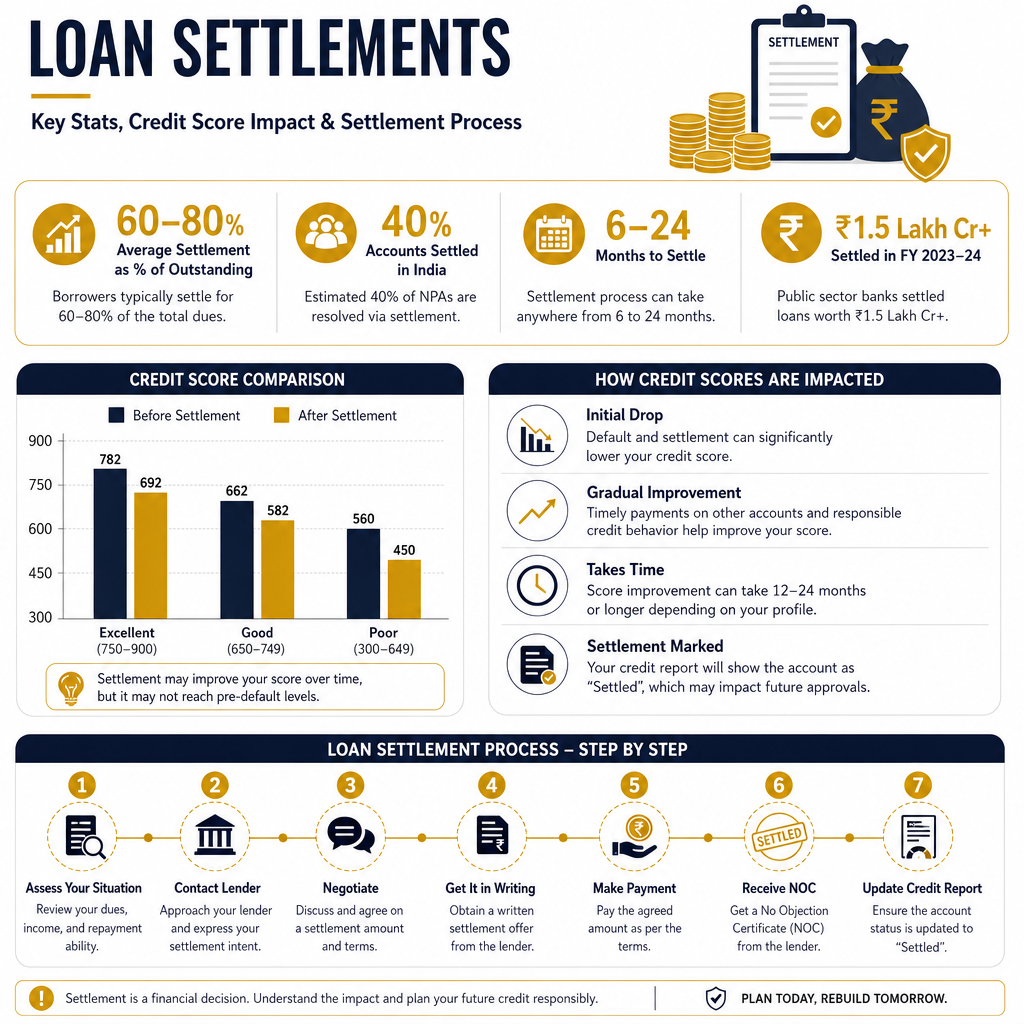
Prepared by AMA Legal Solutions Research & Analytics Team • Data & Compliance Overview
Recovery Agent Conduct: What They Can and Cannot Do
Recovery agents play a crucial role in the loan recovery process, yet there are clear guidelines governing their conduct to protect borrowers' rights. Understanding these can help you navigate interactions without harming your CIBIL score.
What Recovery Agents Can Do
- Communicate professionally regarding the outstanding amount, repayment options, and possible settlements.
- Visit your residence or workplace to discuss repayment, provided it is done respectfully and during reasonable hours.
- Request documentation that substantiates your financial circumstances to tailor repayment plans effectively.
What Recovery Agents Cannot Do
- Use abusive language, intimidate, or threaten borrowers under any circumstances.
- Visit your premises at odd hours or contact you excessively, infringing on your privacy.
- Confiscate any property or assets without a due legal process or court order.
If you experience harassment or misconduct, it's imperative to document the incidents meticulously. Take immediate action by notifying the bank and considering legal remedies. For detailed guidance, explore our resource on Legal Rights Against Recovery Agent Harassment and consider consulting our Loan Settlement Services to ensure your rights are safeguarded.
Practical Tips for Communicating with Lenders
Effective communication with your lender is crucial when seeking a loan settlement without affecting your CIBIL score. Begin by maintaining a polite and professional tone. Clearly explain your financial situation and your genuine intent to repay. It's important to address any misunderstandings promptly to prevent escalation.
Document Everything
Always document your communications. Keep a record of emails, letters, and call logs. This documentation can be useful if disputes arise. Communicating through formal channels like written correspondence can also ensure accuracy.
- Request written confirmation of any agreements or changes in terms.
- Use email as a primary mode of communication whenever possible for transparency and record-keeping.
Negotiate Wisely
Approach negotiations with a clear understanding of your financial limits. Politely propose a settlement amount that you can realistically afford. Demonstrating financial responsibility can positively influence your lender's decision. For detailed assistance, consider exploring Debt Consolidation & Restructuring services.
- Highlight your commitment to clearing dues without harming your credit score.
- Be open to discussing alternative repayment plans or terms.
Remember, maintaining a respectful and cooperative stance throughout the process can foster a more favorable outcome. Engage with your lender actively to find a mutual resolution that safeguards your financial health and credit standing.
Structured Timeline: Loan Settlement Process and Expectations
Navigating the loan settlement process without adversely affecting your CIBIL score requires a strategic approach. The timeline of events and expectations can vary depending on the lender's policies, the borrower's circumstances, and legal considerations. Here’s a structured overview to help guide you through this complex process:
| Parameter / Criterion | Key Details / Legal Provision | Timeline / Practical Impact |
|---|---|---|
| Initial Assessment | Lender evaluates borrower's financial situation and repayment history. | Typically 1-2 weeks |
| Negotiation Phase | Borrower and lender discuss potential settlement terms. | 2-4 weeks |
| Agreement Drafting | Legal documentation of the settlement terms is prepared. | 1-2 weeks after successful negotiation |
| Final Settlement | Execution of agreement and settlement amount payment. | Immediate upon agreement finalization |
| CIBIL Score Update | CIBIL is notified by the lender about the settlement. | 1-2 months to reflect changes |
Throughout the loan settlement process, maintaining open and honest communication with your lender is crucial. Be sure to document all correspondences and agreements. Consider leveraging professional help, such as Loan Settlement Services, to ensure that all legal and procedural nuances are handled effectively. For more detailed insights into banking and finance laws related to this process, explore our Banking and Finance Law section.
Common Pitfalls in Loan Settlements and How to Avoid Them
Loan settlements can be tricky, and certain missteps can adversely affect your CIBIL score. To navigate this process successfully, it's crucial to be aware of common pitfalls and learn how to avoid them.
1. Ignoring Legal Notices
Ignoring bank notices or recovery calls can lead to severe consequences, including negative impacts on your credit score. Always address these communications promptly. If you receive a legal notice, consider seeking professional help. For more details, explore our guide on Reply to Bank Legal Notice for Loan Default.
2. Settling Without Written Agreements
A verbal settlement agreement is not enough. Insist on receiving a written agreement before making any payments. This protects you from future claims and ensures the settlement is reflected accurately in your credit report, preventing score damage.
3. Accepting Unfavorable Terms
Negotiate terms that are manageable and fair. Avoid accepting settlements that are beyond your financial capacity, as this can lead to default, further damaging your credit score. Consulting a professional might provide insights akin to our Loan Settlement Services.
4. Unawareness of RBI Guidelines
Being unaware of RBI guidelines can put you at a disadvantage. These guidelines protect borrowers during settlements, ensuring fair treatment. Familiarize yourself with them to negotiate from a stronger position. This can also be a good time to understand your Legal Rights Against Recovery Agent Harassment.
5. Failing to Correct CIBIL Reports
After settling a loan, ensure your CIBIL report is updated to reflect the settlement accurately. Inaccuracies can continue to affect your score negatively, so follow up diligently with both the bank and CIBIL.
Avoiding these pitfalls requires vigilance and informed decision-making. Collaborate with experts to guide you through the complexities of loan settlements without harming your credit score.
Case Studies: Successful Loan Settlements Without Credit Damage
In the realm of loan settlements without impacting one's CIBIL score, real-life examples demonstrate how strategic negotiation can lead to favorable outcomes. Let’s explore two noteworthy cases.
Case Study 1: MSME Owner's Debt Restructuring
An MSME owner, overwhelmed by multiple loan defaults, approached us with a deteriorating financial condition. Our team meticulously crafted a debt consolidation plan. By engaging with the banks early and presenting a feasible repayment proposal, the client successfully reduced debt burdens without negative repercussions on their credit score.
Case Study 2: Salaried Individual's Loan Default
A salaried professional faced impending default on a personal loan due to unexpected medical expenses. With our intervention, a pragmatic settlement was negotiated, wherein the bank agreed to revise the payment terms. The individual's proactive communication and adherence to the revised schedule ensured that their creditworthiness remained intact.
These case studies underscore the importance of timely legal assistance and strategic planning. They also highlight how a well-negotiated settlement can maintain one's financial integrity. Explore more about how you can manage such scenarios in our detailed guide to achieving loan settlement in minimum time.
Checklist: Navigating Loan Settlements While Preserving Credit
Successfully managing a loan settlement without damaging your credit score involves strategic planning and timely execution. Here’s a checklist to guide you:
Steps to Take
- Assess Your Financial Situation: Understand your current financial status and determine how much you can realistically offer for a settlement.
- Negotiate with Lenders: Initiate discussions with your lender. Be transparent about your financial challenges and propose feasible repayment terms.
- Request "Settled" Status Update: Ensure that your lender marks your account status as "settled" post-negotiation, which may have less impact on your CIBIL score.
- Monitor Credit Report: Regularly check your credit report to confirm that the settlement is reflected accurately.
Important Considerations
- Document Everything: Keep a record of all correspondence with the lender for future reference.
- Seek Legal Guidance: Consider consulting Loan Settlement Services for expert advice on preserving your credit.
| Parameter / Criterion | Key Details / Legal Provision | Timeline / Practical Impact |
|---|---|---|
| Initial Assessment | Evaluate financial capacity and debt amount | 1-2 weeks |
| Negotiation Phase | Engage with lender for settlement terms | 2-4 weeks |
| Settlement Agreement | Formalize settlement in writing with lender | 1 week |
| Credit Score Monitoring | Verify credit report updates post-settlement | 1-3 months |
For comprehensive support, consult experts in Banking and Finance Law to ensure a smooth settlement process.
Popular Searches

AMA Legal Solutions
Trusted with a 4.7 Google Rating, over 10,000+ Clients Served, 25,000+ Cases Handled, and more than 40+ Years of Experience in providing strategic legal defense and debt resolution across India.
Our media coverages





Client Reviews
"The legal advice from AMA Legal Solutions was invaluable. They explained every step, which helped me make informed decisions."
Rohan Patel
"Their understanding of banking law made a huge difference. The team negotiated favorable terms with my bank, making the process smooth."
Priya Sharma
"Thanks to AMA Legal Solutions, I successfully navigated my loan settlement without damaging my creditworthiness. Highly recommend them!"
Vikram Singh
"AMA Legal Solutions provided expert guidance throughout my loan settlement process. Their strategic approach helped preserve my CIBIL score."
Amit Desai
"I was impressed by the professionalism at AMA Legal Solutions. They handled my case with diligence, ensuring minimal impact on my credit score."
Neha Mehta
Frequently Asked Questions
Related Articles

How to Trust Law Associates for Loan Settlement
Ensure Successful Loan Settlement with Trusted Legal Experts
Read Article
Expert Loan Settlement Lawyer: Minimize Amount, Maximize Waiver
Unlocking the Secrets to Successful Loan Settlements in India
Read Article
Mastering Loan Settlement of Personal Loan by Bajaj Finance
Navigate Bajaj Finance Loan Settlements with Expert Legal Insights
Read ArticleAbout Author
Anuj Anand Malik
View ProfileAnuj Anand Malik, Founder of AMA Legal Solutions, is a trusted advocate, loan settlement expert, legal advisor, and banking lawyer. With over a decade of experience in loan settlement, corporate law, financial disputes, and compliance, he leads a result-driven law firm based in India that helps individuals, startups, and businesses achieve legal and financial stability.
Connect on LinkedInNeed Legal Help?
Get expert advice on loan settlement and debt relief.
Call +91-8700343611Request Callback