Effective Loan Settlement Before 90 Days NPA
Navigate loan settlements effectively before reaching NPA status

Anuj Anand Malik
Reviewed by AMA Legal Solutions

Key Takeaways: Understanding the 90 days NPA rule is crucial for borrowers to prevent loans from being classified as NPAs. Acting within this timeframe allows negotiation for settlements, avoiding credit score damage and legal actions. Familiarity with RBI guidelines and seeking legal advice can greatly aid in successfully managing loan obligations before reaching NPA status.
Understanding the 90 Days NPA Rule: What Borrowers Need to Know
The "90 Days NPA Rule" is a critical threshold for borrowers. An asset becomes a Non-Performing Asset (NPA) when the loan account remains overdue for more than 90 days. This period is crucial as it provides borrowers a window to settle their dues before their account is classified as an NPA.
Why 90 Days Matter
During these 90 days, borrowers can negotiate with banks to restructure or settle their loans. Proactively taking steps within this timeframe can prevent negative impacts on one's credit score and reduce engagement from recovery agents. Settling loans at this stage can also save borrowers from legal actions.
Steps to Take
- Review your loan agreement to understand the terms and obligations.
- Communicate with your lender to explore possibilities for restructuring or settlement.
- Seek professional advice or services like Loan Settlement Services to negotiate favorable terms.
Risks and Considerations
Failing to address dues within 90 days can lead to your account being classified as an NPA, attracting higher penalties and legal actions. It's vital to act decisively to protect your financial standing.
For more detailed guidance, consider consulting a specialist in Banking and Finance Law, who can offer tailored solutions to manage your loan obligations effectively.
The Legal Framework Surrounding Loan Settlements in India
In India, loan settlements are primarily governed by the Reserve Bank of India (RBI) guidelines and relevant banking laws. The framework allows borrowers facing financial distress to negotiate a settlement with their lenders, particularly before a loan is classified as a Non-Performing Asset (NPA), which typically occurs after 90 days of default. This window provides a crucial opportunity to reach an equitable arrangement.
Understanding RBI Guidelines
The RBI guidelines outline the procedures financial institutions must follow in handling distressed loans. These guidelines emphasize transparency and fairness in negotiations, ensuring that borrowers are treated equitably. Banks are encouraged to explore settlement options, especially during the pre-NPA period, to avoid escalating the situation.
- Borrowers should be aware that settlements can significantly impact their credit scores. It is crucial to discuss the potential consequences with a legal expert.
- For legal assistance, consider consulting services like Loan Settlement Services to navigate the complexities of the process.
The Banking and Finance Law also plays a pivotal role in shaping the terms and conditions of settlements, outlining both borrower rights and lender obligations. Understanding these legal nuances is vital for borrowers aiming for a successful settlement outcome before the 90-day NPA threshold.
Key RBI Guidelines on Loan Settlements Before NPA Status
The Reserve Bank of India (RBI) provides crucial guidelines for loan settlements to help borrowers address financial distress before loans are classified as Non-Performing Assets (NPAs). Understanding these guidelines can significantly enhance the chances of a successful settlement.
Understanding the Norms
RBI mandates that banks implement a proactive approach in assisting borrowers in stress. This involves early identification of financial difficulties and constructive engagement with borrowers. Engaging with banks before the 90-day NPA window allows borrowers to negotiate settlements without the adverse classification impacting their credit score.
The One-Time Settlement (OTS) Scheme
The RBI encourages banks to offer a One-Time Settlement scheme for accounts nearing NPA status. This scheme allows borrowers to repay the outstanding amount at a negotiated discount, thus reducing their financial burden. Initiating discussions early can result in more favorable terms under the OTS scheme.
- Contact your bank and express interest in discussing settlement options.
- Provide evidence of financial hardship to support your case for a settlement.
- Utilize resources like Loan Settlement Services for professional guidance.
For further insights into the RBI's role in loan settlements, explore Banking and Finance Law to understand how these guidelines can be effectively applied.
How Banks Internally Classify NPAs: Insights for Borrowers
Understanding how banks internally classify Non-Performing Assets (NPAs) is crucial for borrowers seeking loan settlement before the 90-day mark. NPAs are loans where borrowers have failed to meet agreed repayment schedules. Banks categorize these loans based on the duration of default, which directly affects their strategy for recovery.
Initially, a default is marked as a Special Mention Account (SMA). Here’s how the classification unfolds:
Stages of NPA Classification
- SMA-0: Payment overdue between 1-30 days.
- SMA-1: Payment overdue between 31-60 days.
- SMA-2: Payment overdue between 61-90 days.
Once a loan crosses the 90-day threshold without payment, it is classified as an NPA. This classification can severely impact the borrower’s credit profile and prompt the bank to initiate recovery actions. To prevent such outcomes, borrowers should consider debt consolidation & restructuring or other proactive settlement strategies.
Furthermore, banks are obligated to follow Reserve Bank of India (RBI) guidelines during this classification process, ensuring transparency and fairness. By understanding these classifications, borrowers can better negotiate and plan their financial strategies to avoid severe repercussions.
Practical Steps to Initiate Loan Settlement Before 90 Days NPA
Starting the loan settlement process before your account is classified as a Non-Performing Asset (NPA) can save you from further financial stress and legal complications. Here’s how:
1. Analyze Your Financial Situation
Assess your current financial position to understand your capacity for repayment. This analysis will provide a realistic basis for negotiations and help prevent future defaults.
2. Contact Your Bank
Initiate a discussion with your bank's loan officer. Express your intent to settle the loan and request a formal meeting to negotiate terms. Be sure to document all communications in writing for proof and future reference.
3. Prepare a Settlement Proposal
Create a comprehensive proposal outlining the amount you can pay as a settlement. Include any supporting documentation, such as proof of income or hardship, that can substantiate your offer. Our Loan Settlement Services can assist in drafting a compelling proposal.
4. Understand Legal and RBI Guidelines
Familiarize yourself with the Banking and Finance Law and RBI guidelines regarding loan settlements. This knowledge will empower you to negotiate more effectively and ensure compliance with legal standards.
5. Negotiate Terms
During the meeting, negotiate the settlement terms assertively but reasonably. Focus on achieving a mutually beneficial agreement that avoids your account being classified as an NPA.
6. Finalize the Settlement Agreement
Once terms are agreed upon, ensure that they are documented in a formal agreement signed by both parties. This contract should clearly outline the settlement amount, payment terms, and any consequences of defaulting on this new agreement.
Mistakes to Avoid When Negotiating Loan Settlements Pre-NPA
Negotiating a loan settlement before the 90-day Non-Performing Asset (NPA) classification is a sensitive process that requires strategic handling. Avoiding certain mistakes can significantly influence the outcome in your favor. Below are critical missteps to steer clear of during the negotiation process:
1. Ignoring Timely Communication
Timely and clear communication with your lender is crucial. Delays can lead to misunderstandings and potentially worsen your financial situation. Ensure you respond promptly to any notices or calls from the bank.
2. Underestimating Your Financial Situation
Be honest about your financial status. Underestimating your financial challenges can lead to unrealistic settlement offers. Evaluate all your liabilities and assets to present a credible case to your lender.
3. Overlooking Professional Assistance
Many borrowers attempt to negotiate settlements on their own without professional guidance. Engaging a knowledgeable attorney, such as those from Loan Settlement Services, can provide a strategic advantage and help avoid common pitfalls.
4. Accepting First Offers
Banks may initially offer settlements that are not in your best interest. Patience and negotiation can lead to better terms. Thoroughly assess the offer and consider countering if it's not feasible.
5. Neglecting the Impact on Credit Score
While settling a loan can relieve immediate financial pressure, it's important to consider the impact on your credit score. Discuss with your financial advisor or a Banking and Finance Law expert to understand the long-term implications.
Avoiding these mistakes can streamline the loan settlement process and potentially secure a more favorable outcome.
Key Insights & Data Infographic
Visual summary, statistical trends & procedural breakdown
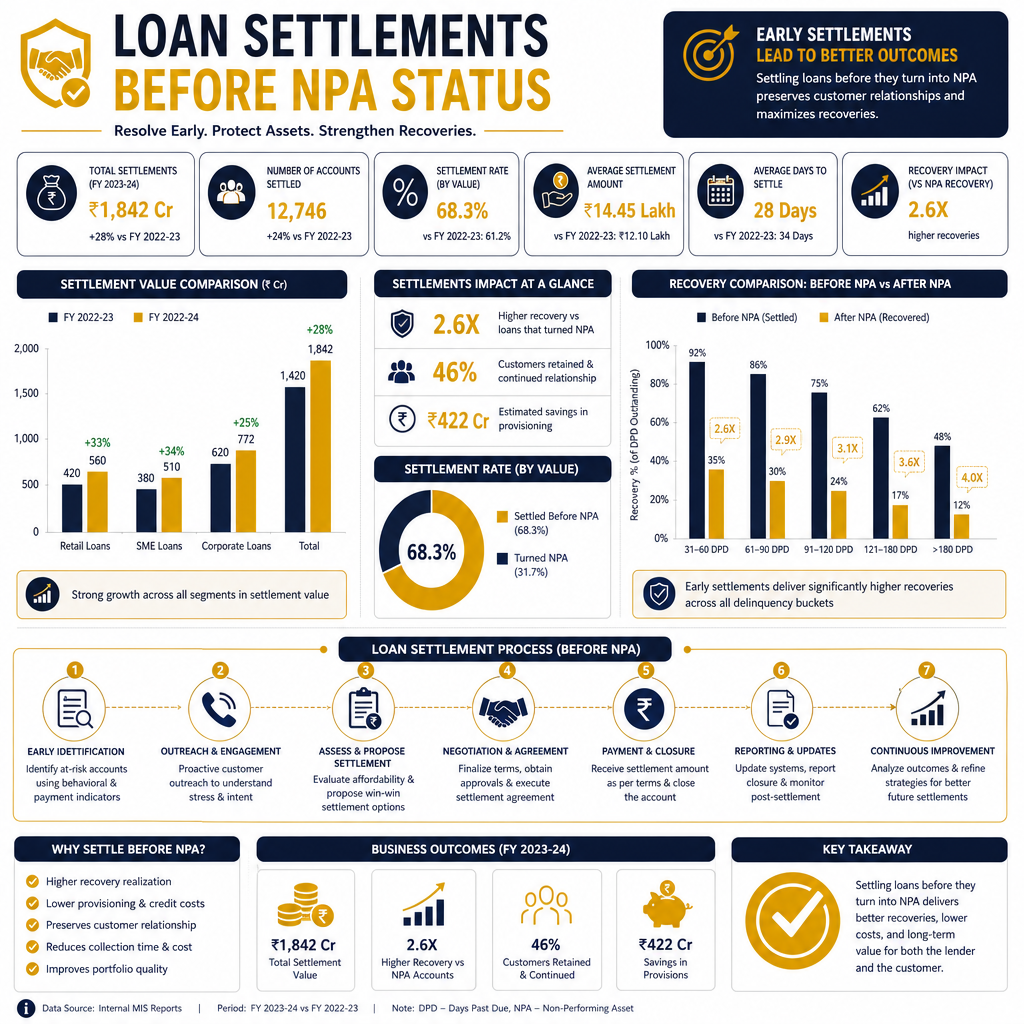
Prepared by AMA Legal Solutions Research & Analytics Team • Data & Compliance Overview

Halt Recovery Agent Harassment Legally
Sample Conversations: Communicating Effectively with Banks
When approaching a loan settlement before a 90-day NPA status, it is crucial to communicate effectively with your bank. Here are some sample conversations to guide you:
Initiating the Discussion
Borrower: "Good morning. I'm reaching out to discuss my loan account ending in 1234. Due to unforeseen circumstances, I'm facing financial difficulties and would like to explore settlement options before it becomes an NPA."
Bank: "Thank you for reaching out. We appreciate your proactive approach. Please provide us with an outline of your current financial situation so we can assist you better."
Explaining Financial Hardships
Borrower: "I've recently faced a medical emergency which has impacted my finances significantly. While I intend to pay my dues, I need some time and a possible restructuring of my loan."
Bank: "We understand the situation. Could you offer a proposal for a feasible repayment plan that reflects your current financial capacity?"
Negotiating Terms
Borrower: "Given my temporary financial strain, I'm proposing a reduced monthly payment plan for the next six months, after which I expect to return to my regular payment schedule."
Bank: "That sounds reasonable. We will review your request and get back to you with the possible options."
Effective communication with banks can significantly influence the success of your negotiations. For more detailed guidance, you may consider consulting banking and finance law experts or refer to our article on understanding loan settlement risks.
Legal Remedies Available for Borrowers Facing Imminent NPA
Borrowers facing the risk of their loans turning into Non-Performing Assets (NPA) within the 90-day window have several legal remedies at their disposal. It's crucial to act swiftly to mitigate the consequences and explore all options available. Initially, borrowers should engage in negotiations with their bank to explore restructuring options or alternative repayment plans.
One effective step is seeking loan settlement services. This involves negotiating with the bank to mutually agree on a reduced payment plan, which helps in avoiding the loan being classified as an NPA. Additionally, borrowers should consider legal remedies under the Banking Ombudsman Scheme if they believe the bank has acted unfairly.
Another avenue is filing a complaint with the Reserve Bank of India (RBI) if there are discrepancies in the bank's actions regarding the loan account. Moreover, if recovery agents are involved, borrowers should be aware of their rights and can file complaints against harassment.
| Parameter / Criterion | Key Details / Legal Provision | Timeline / Practical Impact |
|---|---|---|
| Loan Restructuring | Mutually alter repayment terms | 2-4 weeks to finalize terms |
| Loan Settlement | Agreement on reduced payment | 1-2 months for negotiations |
| Banking Ombudsman | File a grievance with Ombudsman | Up to 90 days for resolution |
| RBI Complaint | Formal complaint on bank practices | Varies based on case complexity |
It's essential to understand these remedies thoroughly and consult a legal expert if necessary. For borrowers overwhelmed with the process, considering professional banking and finance law services can be beneficial in navigating these complex procedures efficiently.
Structured Data Table: Comparison of Legal Remedies vs Settlement Options
When faced with a potential NPA within the 90-day period, Indian borrowers have several pathways to explore. Understanding the nuances between pursuing legal remedies and opting for settlement can significantly impact the outcome. Below is a comprehensive comparison chart illustrating key parameters, legal provisions, timelines, and practical impacts of both options.
| Parameter / Criterion | Key Details / Legal Provision | Timeline / Practical Impact |
|---|---|---|
| Legal Remedies Available | Filing a legal suit under civil law, challenging recovery actions. | Can prolong the resolution process but may provide a legal shield against harassment. Refer to Civil Litigation and Disputes for detailed services. |
| Settlement Options | Negotiating with the bank for a one-time settlement that may include waiving penalties or interest. | Quicker resolution, typically within weeks, allowing for a fresh financial start. More on this can be found under Loan Settlement Services. |
| Financial Impact | Legal fees can accumulate; potential to recover costs if the case is won. | Immediate financial relief but may impact credit score adversely if not reported as "paid in full." |
| Bank's Response | Banks may delay action due to ongoing litigation. | More receptive to settlement negotiations if documentation supports borrower’s financial distress. |
Understanding these options is crucial for borrowers considering loan settlement before the 90-day NPA mark. Each path has its own set of advantages and potential drawbacks that must be weighed carefully.
Timelines and Procedures: Navigating the Loan Settlement Process
Effectively navigating the loan settlement process before a loan becomes a Non-Performing Asset (NPA) within 90 days is crucial. The process begins with understanding your loan agreement and reviewing the terms regarding settlement options. It's essential to initiate communication with the bank as soon as you anticipate financial difficulties.
Step 1: Early Communication
Contact your bank immediately to discuss potential settlement options. Banks often appreciate borrowers who proactively address issues, as this can facilitate a more favorable settlement. A timely communication ensures that you are negotiating from a position of good faith. For more on this, consider our loan settlement services.
Step 2: Proposal Submission
Prepare a comprehensive proposal outlining your financial situation and your offer for settlement. Include supporting documents such as income proof, bank statements, and any other relevant information. This package should clearly demonstrate your capacity to fulfill the proposed settlement.
Step 3: Negotiation and Agreement
The bank will review your proposal and may counter with their terms. Be prepared to negotiate. Understanding the bank's perspective can be beneficial; they seek to minimize losses and may agree to a reduced settlement amount. Familiarize yourself with banking and finance law to strengthen your negotiation position.
Step 4: Formalizing the Settlement
Once terms are agreed upon, ensure that all agreements are documented in writing. A settlement agreement should be clear and legally binding, detailing payment timelines and any potential penalties for non-compliance.
- Initiate contact with your bank preemptively.
- Prepare and submit a detailed settlement proposal.
- Engage in negotiations with a thorough understanding of your rights and obligations.
- Formalize the agreement with precise documentation.
Completing these steps within the initial 90-day period can significantly enhance your chances of achieving a favorable settlement, potentially avoiding the consequences of a loan becoming a full NPA.
Common Misconceptions About Loan Settlements and NPAs
Many borrowers face confusion when dealing with loan settlements before their account is classified as a Non-Performing Asset (NPA). This confusion often stems from misconceptions that can hinder effective settlement negotiations. Let's explore and debunk these myths for a clearer understanding.
Misconception 1: Early Settlement Prevents All Legal Action
While settling a loan before it becomes an NPA might reduce certain risks, it does not guarantee that a bank will halt all legal measures. Banks may still proceed with legal notices or actions if they deem it necessary. Understanding loan settlement services can help navigate potential legal challenges effectively.
Misconception 2: Settlements Don’t Affect Credit Scores
Another prevalent myth is that settling a loan has no impact on credit scores. In reality, settlements can influence your credit rating, often less favorably than a loan closure. For more on this, check out our insights on loan settlement vs loan closure impact on CIBIL.
Misconception 3: Banks Are Obligated to Settle
Borrowers sometimes believe banks must settle if approached before the 90-day NPA period. However, banks evaluate each case based on internal policies and the borrower’s financial history. Understanding how banks assess settlements can aid in formulating a realistic settlement proposal.
- Settlements are often a discretionary decision by the bank, not an obligation.
- Proactive communication and negotiation play crucial roles in the settlement process.
For detailed guidance, consider consulting banking and finance law experts who can navigate these complexities and maximize your chances of a favorable settlement.
Lawyer's Tips for Successful Loan Settlements Before NPA
Settling a loan before it becomes a Non-Performing Asset (NPA) can significantly ease financial stress. Here are some expert tips to ensure a smooth and favorable settlement process.
1. Initiate Early Communication
Contact your bank as soon as you realize you might miss payments. Early communication shows your willingness to resolve the issue and can lead to better terms. Make sure to document all interactions for future reference.
2. Understand Your Legal Position
Familiarize yourself with the legal ramifications of defaulting. It's wise to consult resources like our Loan Settlement Services to understand your rights and obligations fully.
3. Prepare a Genuine Hardship Letter
Draft a detailed hardship letter explaining your financial circumstances. Be honest and provide supporting documents, such as employment termination letters or medical bills, to strengthen your case.
4. Negotiate Wisely
During negotiations, aim for a mutually beneficial solution. Be prepared to offer a lump sum payment or revised payment plan if possible. Consider seeking advice from professionals experienced in Banking and Finance Law to guide the negotiation process.
5. Review Settlement Offers Carefully
Always read the fine print of any settlement offer. Ensure it doesn’t adversely affect your credit score more than necessary. If in doubt, consult a legal expert to review the terms and protect your interests.
Popular Searches & Topics
Commonly searched legal queries and keywords related to this article
Need Strategic Legal Defense for Your Situation?
Our banking & litigation advocates review your notices, debt liability, and recovery issues under complete advocate-client secrecy.

AMA Legal Solutions
Trusted with a 4.7 Google Rating, over 10,000+ Clients Served, 25,000+ Cases Handled, and more than 40+ Years of Experience in providing strategic legal defense and debt resolution across India.
Our media coverages





Client Reviews
"AMA Legal Solutions offered outstanding service in navigating my loan settlement. Their attention to detail and client-focused approach was truly impressive."
Vikram Malhotra
"Their expertise in banking law made a significant difference in my financial situation. AMA Legal Solutions is highly recommended for anyone facing loan defaults."
Arjun Patel
"Thanks to AMA Legal Solutions, I managed to settle my loan efficiently. Their strategic approach and understanding of the legalities saved me from severe penalties."
Priya Desai
"The team at AMA Legal Solutions was incredibly professional and knowledgeable. They simplified the legal processes, helping me secure a successful loan settlement."
Neha Singh
"AMA Legal Solutions provided exceptional guidance during my loan settlement. Their expert advice was pivotal in negotiating favorable terms before my account was classified as NPA."
Rahul Sharma
Frequently Asked Questions
Related Articles
RuPay Credit Card on UPI Default & Credit Line on UPI Settlement (2026)
Micro-transactions on RuPay UPI Credit Cards and pre-approved 'Credit Lines on UPI' have triggered a massive wave of 42%+ APR revolving debt traps. Find out if defaulting blocks your personal savings UPI and how to settle RuPay UPI credit dues for 30%–50%.
Read Article
Paytm, PhonePe & BharatPe Daily EDI Merchant Loan Settlement (2026)
Drowning in Equated Daily Installment (EDI) merchant loans where 100% of your daily QR Soundbox collections are auto-swept before you can pay suppliers or rent? Learn how retail shopkeepers and MSMEs legally halt QR sweeps and negotiate a 50%+ OTS.
Read Article
Can Bank or Loan App Remotely Lock Phone for EMI Default? RBI Rules (2026)
An investigative breakdown of RBI's Remote Device Locking Directions—explaining why lenders cannot lock your phone for personal loans, the mandatory 30/60 DPD safeguards on financed devices, the Rs. 250/hour delay penalty, and how to settle device & app loans.
Read ArticleAbout Author
Anuj Anand Malik
View ProfileAnuj Anand Malik, Founder of AMA Legal Solutions, is a trusted advocate, loan settlement expert, legal advisor, and banking lawyer. With over a decade of experience in loan settlement, corporate law, financial disputes, and compliance, he leads a result-driven law firm based in India that helps individuals, startups, and businesses achieve legal and financial stability.
Connect on LinkedInNeed Legal Representation?
Evaluate your defense against recovery agents, notices, or structure your loan settlement directly with Senior Advocates.
Call +91-8700343611