Cyberleek: GTA 6 Leaker Caught? Legal Implications Explained
Understanding the legal consequences of intellectual property breaches

Anuj Anand Malik
Reviewed by AMA Legal Solutions

Key Takeaways: The GTA 6 leak incident underscores the severe legal challenges of intellectual property breaches. Violations of cyber and IP laws can lead to significant civil and criminal liabilities. Understanding the legal frameworks, like the Copyright Act and IT Act, is crucial for businesses to safeguard their assets and navigate the complexities of digital security. Proactive legal measures and compliance can prevent and mitigate the risks associated with such cyber leaks.
Understanding the GTA 6 Leak and Its Cyberleek Perpetrator
The recent leak involving GTA 6, allegedly executed by the individual known as Cyberleek, has stirred significant legal and digital security conversations. This breach involved unauthorized access to confidential data, which was subsequently disseminated online, potentially affecting the intellectual property rights of the developers. Such actions highlight the complexities of cybersecurity and intellectual property law, especially in the gaming industry.
The Nature of the Leak
The leak allegedly orchestrated by Cyberleek included sensitive information about the much-anticipated GTA 6 game. This breach not only violated intellectual property rights but also posed a threat to the company's commercial interests and strategic plans. Unauthorized distribution of proprietary content disrupts the market and represents a serious violation under intellectual property law.
Legal Implications
Legal repercussions for Cyberleek could be severe. Engaging in unauthorized access and distribution of protected content constitutes a violation of both cyber laws and intellectual property rights. Potential charges could include hacking, theft of trade secrets, and damage to business interests. Such actions may result in criminal prosecution and civil liabilities.
- Legal action could involve substantial fines and imprisonment.
- Companies may pursue damages for financial losses and reputational harm.
- Defendants could face both domestic and international legal proceedings.
Understanding these legal dynamics is essential for companies to protect their assets. For businesses facing similar challenges, seeking legal advice on corporate law and compliance is advisable to fortify their defenses against such breaches.
Legal Framework Governing Intellectual Property Breaches
The legal ramifications of intellectual property breaches, such as those allegedly committed by Cyberleek in the GTA 6 incident, are governed primarily by the Copyright Act, 1957 in India. This legislation offers protection to original works and imposes penalties on unauthorized use or distribution. Copyright infringement occurs when someone exploits a work without permission, which can lead to civil and criminal liabilities.
In cases like Cyberleek's alleged breach, where sensitive game content is leaked, the infringer may face substantial penalties, including fines and imprisonment. The Information Technology Act, 2000, also plays a significant role by addressing the misuse of computers and digital data, adding another layer of legal accountability for breaches conducted online.
Legal Consequences
- Civil Remedies: These may include injunctions, damages, and accounts of profits. Victims can seek compensation for financial losses due to the breach.
- Criminal Liabilities: Consequences could include imprisonment, fines, or both. This is particularly relevant when the infringement is willful and for commercial purposes.
Individuals or businesses affected by such breaches can seek resolution through Arbitration and Dispute Resolution services. Additionally, understanding the nuances of Corporate Law and Compliance can aid entities in fortifying their intellectual property protections.
How Cyber Leaks Violate Copyright and Trademark Laws
Cyber leaks, such as those purportedly involving the GTA 6, significantly infringe upon copyright and trademark laws. Copyright law protects the original expressions of ideas, ensuring that creators have control over how their work is used. When a leak occurs, it disrupts this control, depriving creators of their rights to first publication and economic benefits. Trademark laws, on the other hand, protect brands and logos, ensuring that the public is not misled about the origins of a product or service.
Specifically, when confidential information about a game like GTA 6 is leaked, it can cause substantial harm to the company’s brand and economic interests. The unauthorized release of proprietary game data can lead to significant financial losses, diluting the market impact of the official release and potentially leading to consumer confusion. Leaks can also tarnish a brand's reputation by disseminating unfinished or inaccurate versions of a product.
Legal repercussions for such leaks can be severe. Violators may face civil lawsuits for damages and potentially criminal charges under intellectual property laws. Gaming companies often seek injunctions to prevent further dissemination of leaked materials and recover damages. Individuals facing such allegations may benefit from consulting with experts in civil litigation and disputes or criminal law to navigate the complex legal landscape.
The Role of Digital Forensics in Identifying Cyberleaks
Digital forensics plays a crucial role in addressing cyberleaks by meticulously analyzing electronic data to track and identify unauthorized breaches. When a high-profile case such as the alleged leak of Grand Theft Auto 6 surfaces, digital forensic experts employ various methodologies to uncover the perpetrator while ensuring the integrity of the evidence gathered.
The process begins with data acquisition, where forensic specialists secure and extract potential evidence from digital devices without altering any of it. This is critical as it maintains the admissibility of evidence in legal proceedings. Following acquisition, experts engage in data analysis, where they sift through vast datasets to find patterns or anomalies that point toward unauthorized access or leaks.
For a cyberleak involving intellectual property, experts closely examine logs, metadata, and digital footprints to reconstruct the sequence of events. They may also use advanced tools to recover deleted files or uncover hidden information, thereby illuminating the path of the leaker.
Once the evidence is analyzed, forensic experts collaborate with legal teams to present findings in court. This collaboration is essential for substantiating claims and ensuring justice. In cases involving intellectual property, legal teams may also seek guidance from professionals specializing in intellectual property rights to further reinforce their case.
What Happens When a Leaker is Caught: Legal Proceedings
When individuals like Cyberleek are caught leaking confidential information, especially concerning high-profile projects like GTA 6, the legal consequences can be severe. The first step in legal proceedings is often the arrest of the perpetrator, followed by an investigation. Authorities gather evidence that can include digital footprints, communication records, and testimonies from involved parties.
Legal Charges and Penalties
Once sufficient evidence is collected, the accused may face several charges, such as breach of contract, theft of trade secrets, copyright infringement, and cybercrimes. The specific charges depend on the nature of the leaked information and the jurisdiction. Penalties could range from hefty fines to imprisonment, and in some cases, both.
- Individuals may face civil lawsuits from the affected company, seeking compensation for damages caused by the leak.
- Criminal charges could be pursued if the leak involved hacking or unauthorized access to computer systems.
Defense and Mitigation
The accused can defend themselves by challenging the evidence or negotiating settlements. Legal defenses might involve proving a lack of intent to harm or unauthorized access. Expert legal advice is crucial here, similar to cases involving Criminal Law & Cheque Bounce Defense to ensure a fair trial and proper representation.
Beyond litigation, companies may opt for Arbitration and Dispute Resolution to settle disputes more amicably. This approach can be beneficial in maintaining confidentiality and reducing legal costs. Understanding the legal intricacies of intellectual property law is crucial for both the prosecution and defense in these cases.
International Implications of Cyber Leaks on Global Platforms
The international implications of cyber leaks such as the Cyberleek incident involve complex legal and jurisdictional challenges. When sensitive information is leaked across borders, it can trigger a cascade of legal repercussions in multiple countries, each with its own set of laws and enforcement mechanisms.
Globally, most countries have stringent laws against unauthorized access and distribution of intellectual property. However, enforcing these laws becomes challenging when leaks occur on international platforms. Countries may need to collaborate through treaties and agreements to effectively address such breaches.
Legal Challenges in Cross-Border Cyber Leaks
One significant challenge is the lack of uniformity in cybercrime laws. Nations have different definitions and penalties for cyber offenses, making it difficult to prosecute offenders who operate in multiple jurisdictions. Additionally, extradition treaties might not cover all cybercriminal activities, complicating the legal process.
- International cooperation is crucial for tracking and apprehending cybercriminals. Agencies such as Interpol play a vital role in facilitating information exchange and coordination among countries.
- Intellectual property treaties, like the TRIPS Agreement, offer a framework for protecting rights, but enforcement still depends on national laws.
For businesses operating internationally, it's essential to understand local laws and have robust cybersecurity measures to prevent such breaches. Consulting with legal experts in Corporate Law and Compliance can ensure that companies are adequately prepared for potential cyber threats.
Key Insights & Data Infographic
Visual summary, statistical trends & procedural breakdown
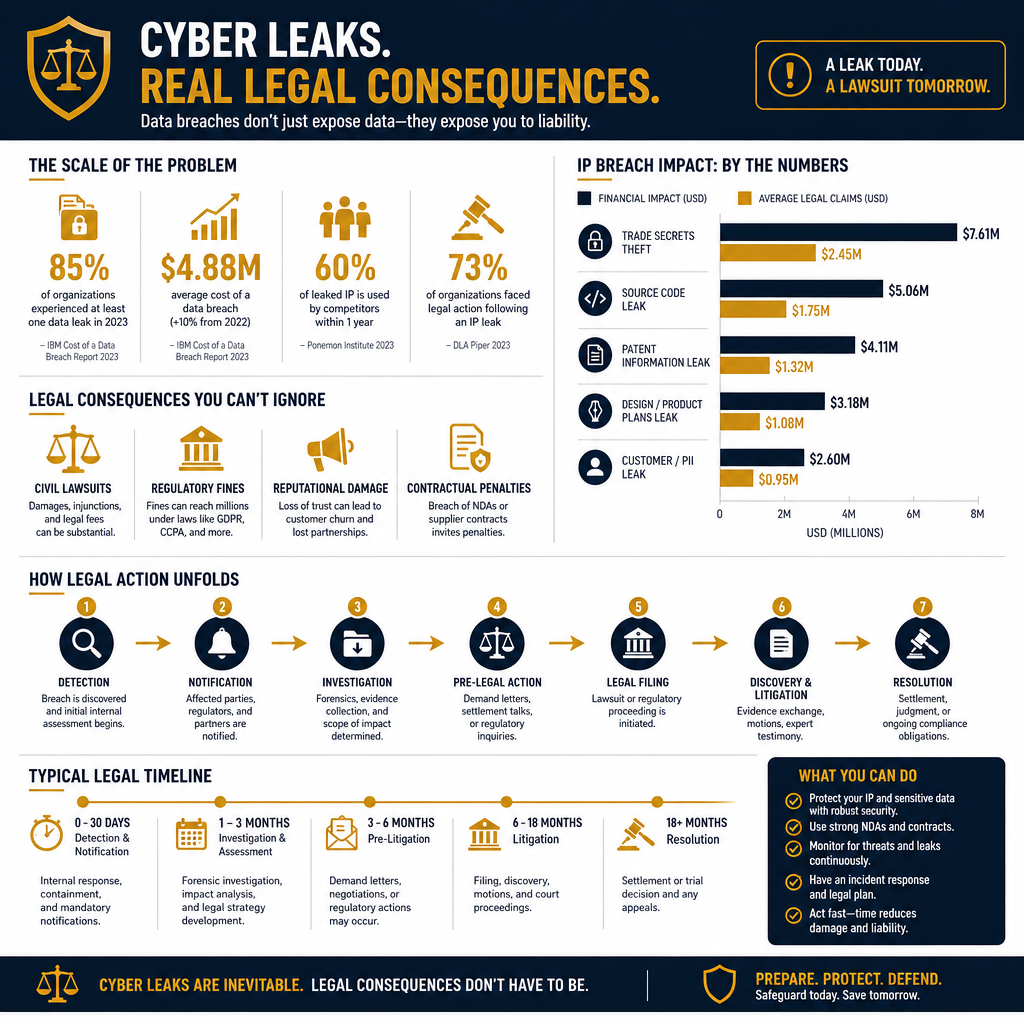
Prepared by AMA Legal Solutions Research & Analytics Team • Data & Compliance Overview

Halt Recovery Agent Harassment Legally
Comparative Analysis of Legal Remedies Across Jurisdictions
The case of Cyberleek, suspected of compromising the intellectual property related to GTA 6, highlights the complexities of legal remedies across different jurisdictions. Intellectual property laws vary significantly, affecting both the rights of the aggrieved and the obligations of the accused. The following table provides a concise overview of key legal provisions and their potential impact in various jurisdictions.
| Parameter / Criterion | Key Details / Legal Provision | Timeline / Practical Impact |
|---|---|---|
| United States | Violations may invoke the DMCA and criminal charges under the CFAA. | Immediate cease and desist, followed by potential civil suits and criminal prosecution within months. |
| European Union | Enforced under the EU Copyright Directive and GDPR for data breaches. | Injunctions may be issued swiftly, with fines and penalties processed within a year. |
| India | Infringement cases are governed by the Copyright Act and IT Act provisions. | Legal proceedings initiated rapidly, with resolution typically extending beyond a year. |
| Australia | Copyright infringement addressed through the Copyright Act and additional local statutes. | Preliminary actions executed quickly, with complete settlements varying between one to two years. |
Given the international nature of the infringement, choosing the jurisdiction for pursuing arbitration and dispute resolution becomes crucial. Cross-border enforcement remains a challenge, necessitating expertise in civil litigation and disputes. The accused, if caught, may face not only legal repercussions but also financial and reputational damages. Therefore, understanding jurisdictional nuances is vital for both parties involved.
Rights and Obligations of the Accused in Cyberleak Cases
When an individual is accused in a cyberleak case, such as the alleged Cyberleek incident involving the GTA 6 leak, they are entitled to certain legal rights and bear specific obligations. Understanding these rights and obligations is crucial for anyone facing such allegations.
Legal Rights of the Accused
- Right to Legal Representation: The accused has the right to hire a competent legal professional to defend their case. It's recommended to seek expertise from firms specializing in Civil Litigation and Disputes.
- Presumption of Innocence: Under Indian law, the accused is innocent until proven guilty in a court of law.
- Right to a Fair Trial: The accused must be given a fair and impartial trial. This includes the right to cross-examine witnesses and present evidence in defense.
- Right to Remain Silent: The accused cannot be compelled to testify against themselves, ensuring protection against self-incrimination.
Obligations of the Accused
- Compliance with Summons: The accused is obligated to appear in court as per legal summons. Failure to do so may result in further legal action.
- Cooperation with Investigations: The accused must comply with lawful investigations and provide necessary information when required.
- Adherence to Bail Conditions: If released on bail, the accused is required to adhere to all specified conditions, such as travel restrictions.
- Respect for Confidentiality: The accused must not engage in tampering with evidence or influencing witnesses, as these actions can lead to further charges.
For a deeper understanding and assistance in such legal matters, contacting a legal expert in Loan Settlement Services or other related fields can provide invaluable support.
Procedural Steps and Timelines in Intellectual Property Lawsuits
When dealing with intellectual property (IP) lawsuits, understanding the procedural steps and timelines can be crucial. From identifying the infringement to the final verdict, each step has its own significance. In the context of a case like Cyberleek compromising someone else's IP, the legal journey involves meticulous planning and strategic execution.
Key Steps in IP Lawsuits
- Notice of Infringement: The process begins with sending a formal notice to the infringer, detailing the nature of the alleged IP violation and demanding cessation.
- Filing the Lawsuit: If the infringer fails to comply, the next step is to file a lawsuit in the appropriate court.
- Discovery Phase: Both parties gather evidence, document exchanges occur, and depositions are taken to build their respective cases.
- Trial and Judgment: The case proceeds to trial where arguments are presented, and a judgment is rendered based on the merits of the case.
For insights into related legal processes, consider exploring our services on Civil Litigation and Disputes.
| Parameter / Criterion | Key Details / Legal Provision | Timeline / Practical Impact |
|---|---|---|
| Notice of Infringement | Sent to infringer with detailed claims | Immediate, but response may take weeks |
| Filing the Lawsuit | Initiated in the jurisdiction of the infringement | Typically within a few months of notice |
| Discovery Phase | Exchange of pertinent documents and depositions | Can last several months depending on complexity |
| Trial and Judgment | Presentation of arguments, evidence, and verdict | Usually 1-2 years from filing, subject to appeals |
Understanding these timelines is critical for strategizing effectively and ensuring compliance with legal standards. Consider consulting our Arbitration and Dispute Resolution services for alternative solutions that may expedite the process.
Case Study: Previous High-Profile Cyberleak Incidents
High-profile cyberleak incidents have reshaped the landscape of digital security and intellectual property rights. One notable instance is the 2014 Sony Pictures Entertainment hack, where sensitive data, including unreleased films and confidential emails, was leaked. This breach highlighted vulnerabilities in corporate networks and resulted in significant legal action and financial losses.
Another example is the 2017 Equifax data breach, affecting over 147 million people. This cyberattack exposed personal information, leading to widespread legal ramifications and regulatory scrutiny. Equifax faced numerous lawsuits and was mandated to pay substantial settlements, emphasizing the importance of stringent data protection measures.
In the realm of video games, the 2020 incident involving the leak of "The Last of Us Part II" by Naughty Dog stands prominent. The leaked content included pivotal plot details and game clips, potentially affecting the game's sales and marketing strategies. Legal actions were swiftly pursued against those responsible, underscoring the critical nature of safeguarding intellectual property in the gaming industry.
These incidents illustrate the severe consequences of cyberleaks and the imperative for organizations to implement robust cybersecurity protocols. Understanding the legal implications in such scenarios is crucial, especially in industries driven by intellectual property. For more insights on handling legal complexities, explore our services on Corporate Law and Compliance and Arbitration and Dispute Resolution.
Challenges in Enforcing Legal Action Against Cyber Criminals
Enforcing legal action against cyber criminals, such as those involved in cases like the GTA 6 leak, presents numerous challenges. Firstly, jurisdictional issues arise since cyber crimes often cross international borders, complicating the task of determining which country's laws apply. Additionally, the anonymity afforded by the internet makes it difficult to accurately identify perpetrators.
Jurisdictional Complexities
- Crimes that traverse borders require international cooperation, which can be slow and bureaucratic.
- Differing legal standards across countries can lead to conflicts in enforcing laws.
Moreover, the evidence collection process is fraught with challenges. Digital evidence can be easily tampered with or deleted, requiring sophisticated forensic techniques to recover and authenticate data. Courts often require evidence to be beyond reasonable doubt, which is a high bar to meet with digital information.
Finally, legal ambiguities concerning intellectual property rights on a digital platform can complicate proceedings. As laws evolve, keeping up with the latest legal standards is crucial but difficult. Organizations are advised to seek expert counsel in Arbitration and Dispute Resolution for effective handling of such cases.
For those facing legal challenges in similar situations, our Cyber Law Services provide comprehensive solutions tailored to address these complexities.
Preventive Measures and Best Practices for Protecting IP
Protecting intellectual property (IP) is crucial in safeguarding creative works, inventions, and business ideas. To ensure robust IP protection, consider implementing the following measures:
1. Regular IP Audits
Conduct routine audits to identify and categorize your business's IP assets. This helps in assessing their value and security needs, ensuring they are adequately protected.
2. Employee Training
Educate employees about the importance of IP and the role they play in its protection. Regular training sessions can help prevent accidental leaks and misuse of sensitive information.
3. Implement Strong Contracts
Use comprehensive non-disclosure agreements (NDAs) and other legal contracts to secure confidentiality with employees, partners, and third parties. Consider consulting a Legal Notice and Agreement Drafting expert for tailored agreements.
4. Secure Digital Infrastructure
Invest in advanced digital security measures, such as encryption and secure access controls, to protect digital IP assets from unauthorized access and cyber threats.
5. Engage in Vigilant Monitoring
Regularly monitor the market and online platforms for unauthorized use of your IP. Quick detection allows for prompt legal action to prevent further infringement.
6. Legal Support and Compliance
Engage with legal professionals for ongoing support and ensure compliance with IP laws. For businesses, aligning with Corporate Law and Compliance standards can enhance IP protection strategies.
Popular Searches & Topics
Commonly searched legal queries and keywords related to this article
Need Strategic Legal Defense for Your Situation?
Our banking & litigation advocates review your notices, debt liability, and recovery issues under complete advocate-client secrecy.

AMA Legal Solutions
Trusted with a 4.7 Google Rating, over 10,000+ Clients Served, 25,000+ Cases Handled, and more than 40+ Years of Experience in providing strategic legal defense and debt resolution across India.
Our media coverages





Client Reviews
"AMA Legal Solutions provided expert guidance on complex IP issues, helping us secure our rights effectively."
Arjun Patel
"With their strategic advice, we mitigated risks associated with potential cyber breaches seamlessly."
Rajesh Kulkarni
"Impressed by their thorough knowledge of cyber laws, which ensured our business was well-protected."
Neha Verma
"The team at AMA Legal Solutions was proactive in addressing our IP concerns, delivering outstanding results."
Vikram Desai
"Their deep understanding of digital security laws was invaluable in navigating our recent IP challenges."
Priya Mehta
Frequently Asked Questions
Related Articles

RuPay Credit Card on UPI Default & Credit Line on UPI Settlement (2026)
Micro-transactions on RuPay UPI Credit Cards and pre-approved 'Credit Lines on UPI' have triggered a massive wave of 42%+ APR revolving debt traps. Find out if defaulting blocks your personal savings UPI and how to settle RuPay UPI credit dues for 30%–50%.
Read Article
Paytm, PhonePe & BharatPe Daily EDI Merchant Loan Settlement (2026)
Drowning in Equated Daily Installment (EDI) merchant loans where 100% of your daily QR Soundbox collections are auto-swept before you can pay suppliers or rent? Learn how retail shopkeepers and MSMEs legally halt QR sweeps and negotiate a 50%+ OTS.
Read Article
Can Bank or Loan App Remotely Lock Phone for EMI Default? RBI Rules (2026)
An investigative breakdown of RBI's Remote Device Locking Directions—explaining why lenders cannot lock your phone for personal loans, the mandatory 30/60 DPD safeguards on financed devices, the Rs. 250/hour delay penalty, and how to settle device & app loans.
Read ArticleAbout Author
Anuj Anand Malik
View ProfileAnuj Anand Malik, Founder of AMA Legal Solutions, is a trusted advocate, loan settlement expert, legal advisor, and banking lawyer. With over a decade of experience in loan settlement, corporate law, financial disputes, and compliance, he leads a result-driven law firm based in India that helps individuals, startups, and businesses achieve legal and financial stability.
Connect on LinkedInNeed Legal Representation?
Evaluate your defense against recovery agents, notices, or structure your loan settlement directly with Senior Advocates.
Call +91-8700343611