Loan Settlement: Alternative Resolutions for Non-Payment
Explore practical solutions for loan defaults and financial recovery.

Anuj Anand Malik
Reviewed by AMA Legal Solutions

Key Takeaways: Loan settlements offer an alternative resolution for borrowers facing defaults, providing a structured way to clear debts and reduce financial stress. Understanding the types of settlements, their impact on credit scores, and relevant legal frameworks, such as the SARFAESI Act, is crucial. Engaging with legal professionals ensures a strategic approach to negotiations and protects borrowers' rights.
Understanding Loan Settlements: A Borrower's Lifeline
Loan settlements serve as a crucial alternative resolution for borrowers facing defaults. Essentially, it is a mutual agreement between the borrower and the lender to settle the outstanding loan for an amount less than originally owed. This can significantly ease the financial burden, offering a viable lifeline to borrowers under stress.
Loan settlements are particularly beneficial when borrowers are unable to meet their regular payment obligations due to unforeseen circumstances such as job loss or medical emergencies. They offer a structured way to clear debts while minimizing the impact on credit scores compared to defaults.
Process of a Loan Settlement
- Initiation: Borrower contacts the lender to express the inability to continue with standard repayments.
- Negotiation: Both parties negotiate terms, often involving a reduced lump-sum payment.
- Agreement: A formal agreement is reached, outlining the settlement terms and conditions.
It's vital to understand that not all loans are eligible for settlement, and lenders may prefer restructuring instead. For instance, secured loans are less likely to be settled due to asset backing. Borrowers should explore professional advice on Loan Settlement Services to navigate the complexities involved.
Understanding these nuances helps borrowers approach settlements strategically, ensuring they opt for solutions like Banking and Finance Law services to protect their rights and financial future.
Legal Framework Governing Loan Settlements in India
In India, the legal framework for loan settlements is primarily governed by the Banking and Finance Law and various regulations issued by the Reserve Bank of India (RBI). The RBI provides guidelines for banks and financial institutions on how to handle non-performing assets (NPAs) through settlements, restructuring, and other alternative resolutions.
Key Regulations and Acts
- Securitisation and Reconstruction of Financial Assets and Enforcement of Security Interest (SARFAESI) Act, 2002: This act allows banks and financial institutions to auction properties to recover loans, offering a structured approach to deal with defaults.
- RBI’s Prudential Framework for Resolution of Stressed Assets: This framework provides a comprehensive policy for the resolution of stressed assets, including guidelines for one-time settlements and restructuring initiatives.
- Insolvency and Bankruptcy Code (IBC), 2016: Facilitates a time-bound resolution of insolvency, offering a fresh start for defaulters while ensuring fair recovery for creditors.
Borrowers should understand these frameworks to effectively negotiate loan settlements. Engaging with a knowledgeable legal advisor can be beneficial. For more detailed assistance, consider exploring our Loan Settlement Services.
Types of Loan Settlements: Which Suits Your Situation?
When facing non-payment of loans, understanding the types of loan settlements can provide a clearer path forward. Each option caters to different circumstances and can significantly impact your financial future.
1. Lump-Sum Settlement
A lump-sum settlement involves negotiating with the lender to pay a portion of the outstanding debt in one payment. This option is typically suited for those who have access to funds through savings or the support of family and friends. It can be a quick resolution but requires careful negotiation to ensure the discount offered by the bank is substantial.
2. Installment Settlement
In situations where a lump sum is not feasible, an installment settlement can be pursued. Here, the borrower agrees to pay back the debt in manageable installments over a specified period. This option is ideal for salaried individuals or business owners with predictable cash flows. Ensure that the terms are realistic to avoid future defaults.
3. Debt Restructuring
Debt restructuring involves modifying the loan terms to make repayment more manageable. This could mean extending the tenure, reducing interest rates, or both. Debt Consolidation & Restructuring is often appropriate for MSMEs or businesses experiencing temporary financial setbacks. Consult with a legal expert to navigate the restructuring process efficiently.
4. One-Time Settlement (OTS)
The One-Time Settlement is offered by banks to clear non-performing assets from their books. Borrowers pay a reduced amount within a specific timeframe. This is particularly advantageous for those looking to clear their dues with a significant reduction. However, the effect on your credit score and future borrowing capacity should be considered.
Choosing the right settlement type requires a thorough understanding of your financial situation and future goals. For personalized advice on navigating loan settlements, explore our Loan Settlement Services.
Step-by-Step Process of Negotiating a Loan Settlement
Negotiating a loan settlement can be a viable alternative resolution for non-payment of loans. Here’s a detailed step-by-step process to help you navigate through it:
1. Assess Your Financial Situation
Begin by thoroughly assessing your financial standing to understand what you can realistically offer as a settlement amount. This step is crucial as it forms the basis of your negotiation strategy.
2. Contact Your Lender
Initiate contact with your lender, preferably through written communication, to propose discussing a settlement. Clearly outline your current financial constraints and propose a meeting to explore possible solutions.
3. Prepare for Negotiations
Gather all necessary documentation related to your loan, including payment history and income statements. This data supports your case and can influence the lender’s decision.
4. Negotiate Terms
During the meeting, negotiate the settlement terms keeping in mind both your financial capacity and the lender’s policies. Be open to compromise but ensure the terms are feasible for you. For further guidance, consider consulting experts in loan settlement services.
5. Finalize the Agreement
Once both parties reach a consensus, ensure all terms are documented and legally binding. A written agreement safeguards against future disputes.
| Parameter / Criterion | Key Details / Legal Provision | Timeline / Practical Impact |
|---|---|---|
| Initial Assessment | Evaluate debts and financial capacity | 1-2 Weeks |
| Contact Lender | Written proposal for settlement discussion | Immediate |
| Document Preparation | Gather financial statements and loan documents | 2-3 Weeks |
| Negotiation | Discuss terms and reach agreement | 2-4 Weeks |
| Agreement Finalization | Legal documentation of settlement terms | 1 Week |
Remember, seeking professional advice from experts in banking and finance law can provide additional insights and strengthen your negotiation position.
How Banks Classify NPAs and Its Impact on Settlements
In the realm of loan settlement, understanding how banks classify Non-Performing Assets (NPAs) is crucial for borrowers. An NPA is a loan or advance where the principal or interest payment remains overdue for a period of 90 days or more. This classification affects a borrower's ability to negotiate settlements. Banks categorize NPAs into substandard, doubtful, and loss assets, each having distinct implications on the bank's balance sheet.
Substandard Assets
These are assets that have remained NPA for less than or equal to 12 months. Banks often aim to recover these swiftly, sometimes with flexible settlement terms to avoid further aging into higher-risk categories. Borrowers may leverage this urgency during loan settlement discussions.
Doubtful Assets
When an asset remains in the substandard category for over 12 months, it becomes doubtful. Negotiating settlements here can be challenging as banks require substantial provisioning, compelling them to adhere to stricter recovery measures. Borrowers might need expert legal advice from services like Banking and Finance Law for effective negotiation strategies.
Loss Assets
These are considered irrecoverable by banks, although they may still pursue recovery efforts. The impact on settlements is significant as banks often prefer legal actions over negotiations. Borrowers facing such situations must prepare for intensified recovery measures and explore alternative resolutions for non-payment of loans.
RBI Guidelines on Loan Settlements: What You Need to Know
The Reserve Bank of India (RBI) has established specific guidelines for loan settlements, an essential aspect for borrowers seeking alternative resolutions for non-payment of loans. Understanding these guidelines can aid borrowers in navigating the complex landscape of debt resolution while safeguarding their financial rights.
Framework for Restructuring
The RBI provides a framework for the restructuring of stressed assets, allowing financial institutions to devise specific plans tailored to the borrower's financial situation. This aims to balance the interests of both lender and borrower, offering a structured approach to manage outstanding debts through viable repayment plans.
Fair Practices Code
The RBI mandates banks to adhere to a Fair Practices Code, ensuring transparency and fairness in dealings with borrowers. This includes clearly communicating the terms of settlement, including any potential impacts on credit scores, thereby allowing borrowers to make informed decisions.
- Banks must offer a one-time settlement option where feasible.
- Communication should be clear and devoid of any coercive practices.
- Borrowers have the right to detailed information about the settlement process.
Borrowers can explore more about how these guidelines are implemented in practice through our Banking and Finance Law services, ensuring each step complies with regulatory standards while seeking an equitable settlement.
Key Insights & Data Infographic
Visual summary, statistical trends & procedural breakdown
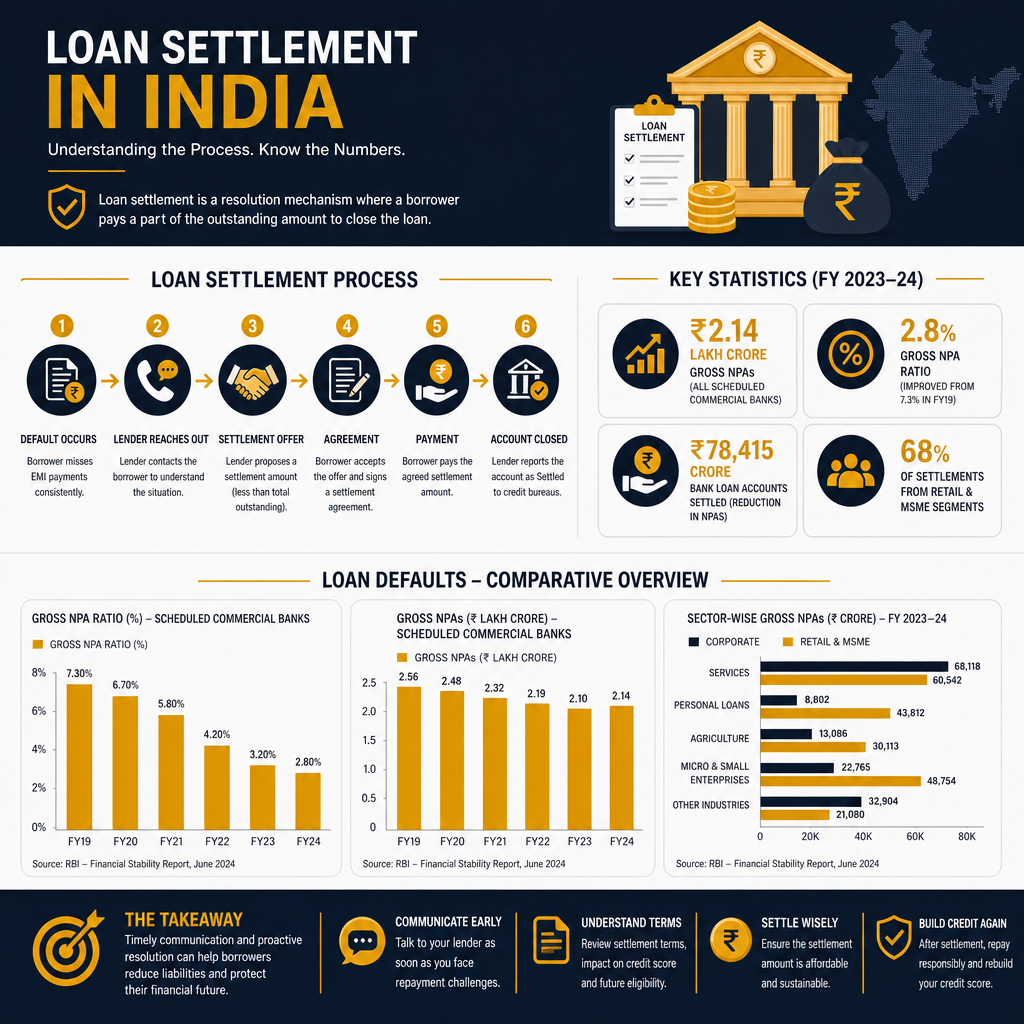
Prepared by AMA Legal Solutions Research & Analytics Team • Data & Compliance Overview
Consumer Rights During Loan Settlement Negotiations
Understanding your consumer rights during loan settlement negotiations is crucial. In India, borrowers hold certain entitlements that protect them from unfair practices. Firstly, recovery agents must adhere to ethical guidelines. They cannot intimidate or harass you, and if they do, you have the right to lodge a complaint with the police.
Key Rights to Be Aware Of
- Right to Transparent Information: You are entitled to clear and full disclosure of all loan terms and settlement offers. This ensures you make informed decisions.
- Right to Privacy: Recovery agents must respect your privacy. They cannot contact your employer or acquaintances without your consent.
- Right to Dispute: If you disagree with any aspect of the settlement proposal, you can contest it. This may involve discussing alternative terms or seeking arbitration.
- Right to Legal Representation: You have the right to hire a professional to represent your interests. An experienced lawyer can guide you through the process and ensure your rights are upheld.
During these negotiations, it's advantageous to explore arbitration and dispute resolution as a method to settle disagreements amicably. Always document all communications and keep copies of any agreements signed, as this can serve as evidence if disputes arise later.
Risks and Benefits of Opting for Loan Settlements
Opting for a loan settlement as an alternative resolution for non-payment of loans can be a strategic decision, but it comes with its own set of risks and benefits. Understanding these aspects is crucial for borrowers facing financial distress.
Benefits of Loan Settlements
- Debt Relief: Loan settlements can significantly reduce the overall debt burden, allowing borrowers a feasible way out.
- Avoiding Legal Action: By reaching a settlement, borrowers can often avoid lengthy legal battles, preserving both time and resources.
- Financial Recovery: Settlements can pave the way for financial recovery by freeing up cash flow and providing a fresh start.
Risks of Loan Settlements
- Impact on Credit Score: Settlements can adversely affect your credit score, impacting future creditworthiness.
- Potential Tax Implications: Forgiven debt may be considered taxable income, leading to possible tax liabilities.
- Incomplete Debt Resolution: Settlements might not clear all debts, leaving some obligations unmet.
| Parameter / Criterion | Key Details / Legal Provision | Timeline / Practical Impact |
|---|---|---|
| Debt Reduction | Negotiated reduction in total payable amount. | Immediate financial relief upon settlement. |
| Credit Score Impact | Potential negative impact on CIBIL score. | Long-term effect; may take years to recover. |
| Tax Implications | Forgiven debt may be taxable. | Tax assessment in the following fiscal year. |
| Legal Protection | Avoidance of court proceedings. | Immediate relief from impending legal actions. |
For borrowers considering loan settlements, it's vital to weigh these risks and benefits. Consulting with a professional specializing in Loan Settlement Services or Banking and Finance Law can provide tailored advice, ensuring an informed decision.
Practical Examples of Successful Loan Settlements
Understanding how loan settlements can effectively resolve non-payment issues requires a look into real-world examples. Consider the case of a small business owner in Mumbai who faced a severe cash flow crisis due to market fluctuations. With outstanding dues on a business loan, the entrepreneur negotiated a loan settlement by presenting a detailed financial forecast and a restructuring plan. This approach satisfied the bank's requirements for a viable repayment strategy.
Another scenario involves an individual borrower who lost their job during the pandemic, leading to loan default. The borrower contacted their bank with a request for settlement, highlighting their current financial status and potential future employment prospects. By leveraging RBI guidelines on loan moratoriums, they secured a settlement that reduced the principal amount due.
In both examples, timely communication, understanding of banking and finance law, and honest financial disclosure were key to achieving favorable outcomes. Borrowers should note that banks are more inclined to offer settlements when they perceive the borrower as proactive and transparent. Additionally, employing the services of a seasoned banking lawyer can significantly enhance negotiation outcomes, ensuring that borrowers present their cases in a compelling manner.
Mistakes to Avoid When Discussing Loan Settlements
Negotiating a loan settlement requires strategic planning and informed decision-making. One common mistake is disclosing too much personal information to the bank or recovery agents, which can be used against you. Always stick to facts and avoid emotional narratives. Another error is accepting the first settlement offer without negotiating. Initial offers often leave room for improvement, so consider discussing better terms.
It's also crucial to avoid missing deadlines set by the bank for settlement discussions. Missing these can result in harsher recovery actions. Ensure all communications are documented and follow up regularly. Furthermore, not consulting a legal expert can lead to uninformed decisions. A professional can provide insights that protect your interests and improve your negotiation position. For comprehensive assistance, consider exploring Loan Settlement Services at AMA Legal Solutions.
Finally, ignoring the impact on your credit score is a significant oversight. Understand how settlements affect your financial standing and explore ways to mitigate negative impacts. For instance, review our guide on Master Loan Settlement Without Damaging Your CIBIL Score.
Avoid these pitfalls to effectively navigate your loan settlement discussions, ensuring a fair and beneficial resolution.
Lawyer's Tips: Winning Strategies for Loan Settlements
Securing a favorable loan settlement involves strategic planning and negotiation. Here are key strategies to enhance your chances of success:
1. Understand Your Financial Position
Start by evaluating your finances accurately. Knowing your income and expenses helps in making a realistic settlement offer. Prepare documentation to support your financial situation, as this is crucial in negotiating with lenders.
2. Open Transparent Communication
Engage with your lender early. Clearly outline the reasons for your financial distress, and propose a solution. Open communication can foster goodwill and lead to more favorable terms. Refer to our Loan Settlement Services for expert guidance.
3. Leverage Legal Rights
Be aware of your legal rights against undue harassment by recovery agents. Familiarize yourself with laws such as the SARFAESI Act and RBI guidelines. For detailed advice, explore our page on Legal Rights Against Recovery Agent Harassment.
4. Negotiate Thoughtfully
During negotiations, aim for a solution that lenders find acceptable yet aligns with your capacity to pay. Crafting a well-thought-out repayment plan can reflect your commitment and improve the likelihood of a successful settlement.
These strategies, combined with professional legal advice, can significantly improve your position when pursuing a loan settlement.
What Banks Don't Tell You About Loan Settlement Offers
When facing potential loan defaults, banks may not openly disclose all facets of the settlement process. Understanding these nuances can significantly impact your negotiation strategy. Firstly, banks often categorize non-performing assets (NPAs) internally, which influences their settlement flexibility. Knowing your loan's classification can offer leverage during discussions.
Banks are motivated by their need to clean up balance sheets, particularly towards the end of a financial year. This timing can enhance your negotiating power. However, they might not tell you that excessively delayed settlements could lead to an escalation in recovery actions, which may include legal proceedings or asset seizure under the SARFAESI Act.
It's crucial to understand that settlement amounts could be impacted by your loan history and relationship with the bank. Clients with previously good repayment records might receive more favorable offers. Additionally, banks seldom disclose that engaging a professional, like a loan settlement lawyer, can yield better outcomes.
Another aspect often left unmentioned is that settlements can affect your credit score. To mitigate this impact, you may wish to explore options like credit score repair post-settlement. Being aware of these hidden elements empowers borrowers to make informed decisions regarding their financial futures.
Popular Searches
AMA Legal Solutions
Trusted with a 4.7 Google Rating, over 10,000+ Clients Served, 25,000+ Cases Handled, and more than 40+ Years of Experience in providing strategic legal defense and debt resolution across India.
Our media coverages





Client Reviews
"Thanks to AMA Legal Solutions, I successfully navigated a complex financial situation with clarity and confidence."
Sonal Verma
"AMA Legal Solutions expertly guided me through a complicated loan settlement, ensuring a fair outcome and peace of mind."
Rahul Sharma
"The insights and professional guidance from AMA Legal Solutions made a challenging loan settlement process much easier."
Nisha Patil
"AMA's legal expertise in banking law was instrumental in resolving my loan settlement efficiently, exceeding my expectations."
Arjun Kapoor
"The team at AMA Legal Solutions provided invaluable assistance with my loan default, helping me negotiate better terms with the bank."
Priya Desai
Frequently Asked Questions
Related Articles

How to Trust Law Associates for Loan Settlement
Ensure Successful Loan Settlement with Trusted Legal Experts
Read Article
Expert Loan Settlement Lawyer: Minimize Amount, Maximize Waiver
Unlocking the Secrets to Successful Loan Settlements in India
Read Article
Mastering Loan Settlement of Personal Loan by Bajaj Finance
Navigate Bajaj Finance Loan Settlements with Expert Legal Insights
Read ArticleAbout Author
Anuj Anand Malik
View ProfileAnuj Anand Malik, Founder of AMA Legal Solutions, is a trusted advocate, loan settlement expert, legal advisor, and banking lawyer. With over a decade of experience in loan settlement, corporate law, financial disputes, and compliance, he leads a result-driven law firm based in India that helps individuals, startups, and businesses achieve legal and financial stability.
Connect on LinkedInNeed Legal Help?
Get expert advice on loan settlement and debt relief.
Call +91-8700343611Request Callback