Affordable Legal Notices at ₹999 to Recover Your Money
Streamline the process of recovering debts with cost-effective legal notices.

Anuj Anand Malik
Reviewed by AMA Legal Solutions

Key Takeaways: Legal notices play a pivotal role in debt recovery by serving as formal communication that prompts debtors to negotiate or settle outstanding dues, often preventing litigation. They must be precise, include all relevant details, and demonstrate a willingness to resolve the matter amicably. Responding promptly to a legal notice and seeking professional advice can expedite resolution.
Understanding the Role of Legal Notices in Debt Recovery
Legal notices serve as a formal method of communication and play a pivotal role in the debt recovery process. They are essentially a formal warning that alerts the debtor about the creditor's intention to initiate legal proceedings if the debt is not settled. This can often prompt the debtor to negotiate or settle the outstanding amount to avoid costly litigation.
When a borrower fails to respond to repeated reminders and informal requests for payment, issuing a legal notice becomes a crucial step. It signifies that the lender is serious about recovering dues and is prepared to take legal action. The notice typically includes details such as the amount owed, the due date, and a stipulated timeframe within which the debtor must respond or pay.
For borrowers, receiving a legal notice can be an opportunity to renegotiate the terms of repayment or explore options like debt restructuring. It's advisable to respond promptly and seek professional advice to understand the implications fully. In many cases, the involvement of a legal notice can expedite the resolution process without the need for court intervention, which can be lengthy and expensive. For a more in-depth understanding, you can explore Civil Litigation and Disputes.
Why Legal Notices Are Effective in Debt Resolution
Legal notices serve as a crucial tool in debt resolution, providing a formal and documented way to assert your rights and initiate a resolution process. Sending a legal notice signifies your seriousness in recovering dues, often prompting a quick response from the debtor. This is especially effective given the structured format and clear communication outlined in the notice.
Legal notices are governed by specific legal frameworks, ensuring that they carry weight in any subsequent legal proceedings. For businesses and individuals, this can mean the difference between prolonged financial distress and swift resolution. By drafting a precise legal notice, you set the stage for potential negotiations or settlements without initially involving the courts.
Moreover, a well-crafted legal notice can help avoid misunderstandings, as it clearly states the due amount, the timeline for payment, and the consequences of non-compliance, thereby reducing the chances of disputes. In cases where amicable settlement isn't achieved, the notice can serve as foundational evidence in civil litigation and disputes, bolstering your position.
Overall, utilizing legal notices in debt recovery ensures that both the creditor and debtor are on a clear path towards resolving outstanding debts, backed by legal assurance and documentation.
How to Draft a Legal Notice for Debt Recovery
Drafting a legal notice for debt recovery requires precision and adherence to legal standards. Begin by identifying all relevant details: the creditor's and debtor's full names, addresses, and any pertinent account numbers. Clearly state the amount owed and the due date. Ensure you mention any prior communication attempts. This establishes a timeline of attempts to recover the debt, strengthening the validity of your notice.
Proceed to outline the consequences of non-payment. Clearly articulate the legal actions you intend to pursue if the debt remains unpaid. This often involves mentioning potential legal proceedings, which could include arbitration or civil litigation. Use a formal tone throughout and avoid any language that could be interpreted as threatening or coercive.
It is crucial to include a section offering the debtor an opportunity to respond or settle the matter amicably before pursuing formal action. This demonstrates goodwill and may result in a quicker resolution. Finally, close the notice with a clear deadline for response and ensure it is signed by the creditor or their authorized representative. For guidance on specific language or legal requirements, consider consulting with professionals specializing in Legal Notice and Agreement Drafting.
Key Elements of a Successful Legal Notice
A well-drafted legal notice is crucial for effectively recovering your money. It serves as a formal communication to the debtor, articulating your demands and legal position. Here are the key components that ensure the success of a legal notice:
1. Clear Identification of Parties
Begin by clearly identifying the parties involved. Include full names, addresses, and any relevant identification numbers to avoid ambiguity.
2. Precise Statement of the Issue
Explicitly state the issue at hand. Mention the amount owed, along with pertinent dates and agreements. This specificity aids in preventing misunderstandings.
3. Legal Basis
Reference the specific laws or agreements that support your claim. For instance, citing Banking and Finance Law provisions adds legal weight to your notice.
4. Demands and Deadlines
Clearly outline your demands, whether it's payment or another form of resolution. Specify a reasonable deadline for compliance to maintain urgency.
5. Potential Consequences
Warn of potential legal actions should the demands not be met. This could involve Civil Litigation and Disputes, enhancing the notice's seriousness.
6. Professional Tone
Maintain a formal and respectful tone throughout the notice. A professional demeanor not only reflects credibility but also facilitates constructive dialogue.
7. Enclosures and Documentation
Include any supporting documents or evidence that strengthen your claim. This might encompass contracts, invoices, or previous correspondence.
Incorporating these elements into your legal notice ensures clarity and effectiveness, increasing the likelihood of a favorable resolution at the earliest stage.
Common Mistakes to Avoid When Sending Legal Notices
Sending a legal notice with errors can weaken your position. Here's how to avoid common pitfalls:
1. Lack of Specificity
Ensure your legal notice is detailed, specifying the exact claim and the desired remedy. Vague notices often lead to misunderstandings and can be dismissed easily. For a thorough understanding, consider consulting Legal Notice and Agreement Drafting services.
2. Ignoring Legal Formalities
Each legal notice must comply with specific legal norms, including proper salutation, and factual representation. Non-compliance can render a notice invalid. Refer to our Banking and Finance Law experts to ensure adherence.
3. Emotional Language
Keep the tone professional and factual. Emotional or aggressive language can harm your case and escalate conflicts unnecessarily.
4. Incorrect Addressing
Always verify the recipient's details. A notice sent to an incorrect address might never reach the intended party, delaying the legal process.
5. Inadequate Time for Response
Providing a reasonable response time is crucial. The lack of adequate time can be seen as oppressive and might be challenged in court.
By avoiding these mistakes, you can significantly enhance the effectiveness of your legal notice and strengthen your case from the outset.
Real-Life Examples of Effective Legal Notices
Legal notices can be a powerful tool in the recovery of debts. Here are a few real-life examples demonstrating their effectiveness:
Case 1: Recovery of Business Dues
An MSME owner was struggling to recover outstanding dues from a client. By sending a detailed legal notice outlining the breach of contract terms and the intention to pursue legal action, the client promptly cleared the dues, avoiding a potentially lengthy civil litigation process.
Case 2: Loan Default Resolution
A salaried individual defaulted on a personal loan due to unforeseen financial constraints. Upon receiving a legal notice, the borrower negotiated a settlement with the bank, resulting in a substantial reduction in interest and penalties. This proactive approach prevented further escalation and legal costs.
Case 3: Consumer Rights Enforcement
An aggrieved customer sent a legal notice to a retailer for a defective product under warranty. The retailer, keen to avoid arbitration proceedings, promptly replaced the product, showcasing the notice's effectiveness in enforcing consumer rights and resolving disputes amicably.
In each of these cases, the legal notice served as a catalyst for resolution, exemplifying its role in effective dispute resolution and debt recovery. Clients contemplating such actions may consider exploring legal notice and agreement drafting services to ensure accuracy and impact.
Key Insights & Data Infographic
Visual summary, statistical trends & procedural breakdown
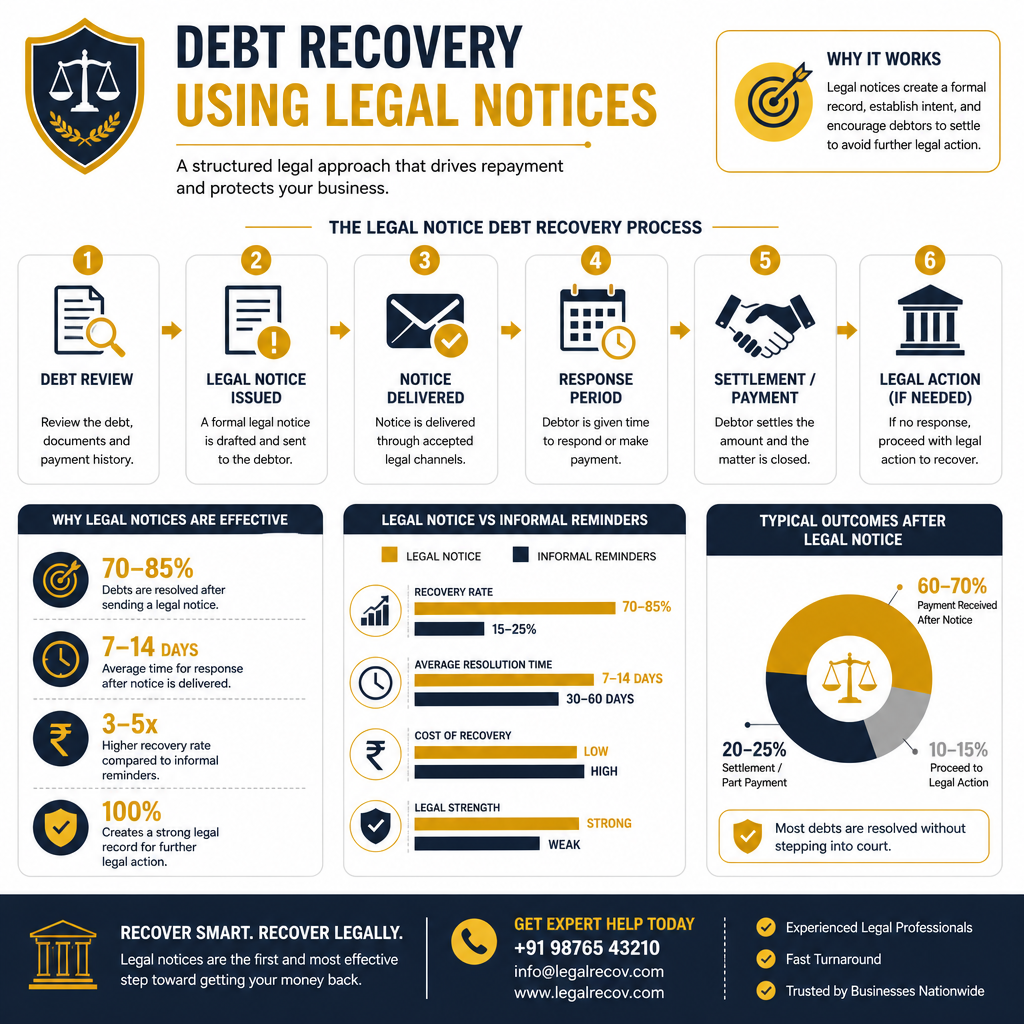
Prepared by AMA Legal Solutions Research & Analytics Team • Data & Compliance Overview

Halt Recovery Agent Harassment Legally
Legal Framework Governing Debt Recovery in India
The debt recovery process in India is regulated by several key legislative frameworks, ensuring creditors can recover debts while protecting borrower rights. The Banking and Finance Law outlines the procedures financial institutions must follow. Notably, the Securitisation and Reconstruction of Financial Assets and Enforcement of Security Interest (SARFAESI) Act, 2002, empowers banks to recover non-performing assets (NPAs) without court intervention, provided the loan is secured.
The Recovery of Debts Due to Banks and Financial Institutions Act, 1993, established Debt Recovery Tribunals (DRTs), which exclusively handle debt-related cases exceeding ₹20 lakhs. For smaller debts, civil courts remain the venue for recovery actions. Additionally, the Insolvency and Bankruptcy Code (IBC) 2016 provides a resolution mechanism for stressed assets, benefiting both creditors and debtors.
Legal notices play a pivotal role in these processes, serving as formal communication to borrowers about impending actions. They are essential for initiating legal proceedings or negotiations. For borrowers facing legal notices, understanding the reply process is crucial to safeguarding their rights. Engaging professional services for drafting notices ensures compliance with legal standards and helps negotiate favorable terms.
Therefore, understanding these frameworks and utilizing loan settlement services can be instrumental in navigating the complexities of debt recovery in India.
RBI Guidelines on Debt Recovery Procedures
The Reserve Bank of India (RBI) has established comprehensive guidelines to ensure fair and transparent debt recovery procedures. These guidelines are designed to protect borrowers from undue harassment and to ensure that financial institutions adhere to ethical recovery practices. It's crucial for borrowers to understand these guidelines as they navigate the complexities of debt recovery.
Key Aspects of RBI Guidelines
- Fair Practices Code: Banks must adhere to a Fair Practices Code, ensuring that recovery efforts are conducted with dignity and respect.
- Notice Period: Before initiating recovery proceedings, financial institutions are required to issue a proper notice to the borrower, giving them an opportunity to repay.
- Reasonable Hours: Recovery agents must contact borrowers only at reasonable hours, avoiding inconvenient times.
- Legal Recourse: Borrowers have the right to seek legal recourse if they feel harassed by recovery agents. For such situations, exploring Loan Settlement Services can be beneficial.
- Dispute Resolution: The RBI mandates a robust dispute resolution mechanism to address grievances related to recovery actions.
Understanding these guidelines helps borrowers protect their rights and can aid in navigating through financial challenges effectively. For personalized advice and assistance, consider exploring our Legal Services offered at affordable rates.
Communicating with Debtors: Strategies and Tips
Effectively communicating with debtors is crucial to recovering your money without escalating conflicts. Establishing a clear line of communication is the first step. Here's how you can approach it strategically.
1. Be Professional and Courteous
Always approach debtors with professionalism. Using courteous language can open up constructive dialogues. Avoid aggressive tones which might lead to resistance or avoidance.
2. Document Every Interaction
Keeping a record of all communications, whether verbal or written, is essential. This documentation can provide evidence if legal action becomes necessary. Consider utilizing our Legal Notice and Agreement Drafting services for precise records.
3. Understand the Debtor's Perspective
Inquire about their financial situation and listen actively. Understanding their circumstances can lead to a more favorable outcome. It might also reveal whether a structured repayment plan is feasible.
4. Provide Clear Options
Presenting clear and feasible repayment options can motivate debtors to settle their dues. Highlight the benefits of timely resolution and the consequences of non-payment.
5. Use Legal Tools When Necessary
If initial attempts to communicate fail, leveraging legal tools may be required. Consider our Loan Settlement Services for structured negotiations and settlements.
Effectively communicating with debtors involves a mix of empathy, strategic planning, and the right legal resources to streamline the recovery process.
What to Do if Your Legal Notice is Ignored
If your legal notice is ignored, it is crucial to take timely and strategic actions to safeguard your interests. Initially, verify that the notice was properly delivered and documented. In the absence of a response, consider escalating the matter legally. Consulting with a lawyer specializing in Civil Litigation and Disputes can help you chart out the next steps.
Steps to Follow
- Documentation: Keep a record of all communication related to the notice, including proof of delivery.
- Legal Consultation: Seek advice from a qualified attorney to understand potential legal remedies. For instance, you might need to explore filing a lawsuit to recover your dues.
- Consider Arbitration: If litigation seems prolonged or expensive, consider Arbitration and Dispute Resolution as an alternative method to resolve disputes.
Ignoring a legal notice doesn't absolve the recipient from liability. Legal action such as filing a case can be a powerful tool to compel response and compliance. Understanding your situation's specifics and opting for an informed and calculated approach often yields the best results. It's essential to act promptly to ensure that your legal rights are preserved and enforced efficiently.
Leveraging Legal Notices for Business Debt Recovery
Legal notices serve as a powerful tool for businesses aiming to recover outstanding debts. Cost-effective and efficient, they are often the first step in the debt recovery process, offering a formal request for payment before taking legal action. When issued correctly, a legal notice can compel the debtor to settle the debt promptly to avoid further legal complications.
For businesses, particularly MSMEs, leveraging Legal Notice and Agreement Drafting services can ensure that the notices are crafted in compliance with legal standards, thus strengthening the creditor's position. These notices should clearly outline the amount owed, the deadline for payment, and the consequences of non-compliance.
Moreover, using legal notices for debt recovery allows businesses to maintain a professional relationship with debtors by providing them a chance to respond or settle the outstanding dues before escalating the matter to litigation. This approach not only helps in debt recovery but also minimizes potential disputes.
For more comprehensive solutions, businesses may consider Loan Settlement Services for negotiated settlements. Utilizing these methods ensures that your business employs a strategic approach to debt recovery, effectively balancing firmness and diplomacy.
Case Studies: Successful Debt Recovery Through Legal Notices
Legal notices can be a powerful tool for debt recovery, as illustrated by numerous successful cases handled by AMA Legal Solutions. One notable instance involved a small business owner in Mumbai who was struggling to recover a ₹5 lakh debt from a supplier. Despite multiple attempts at negotiation, the supplier remained unresponsive. Our team drafted a precise legal notice, citing relevant laws and the ramifications of continued non-compliance.
The supplier, realizing the potential legal consequences, promptly reached out to settle the outstanding amount. This case underscores the effectiveness of Legal Notice and Agreement Drafting in compelling debtors to fulfill their financial obligations.
In another case, a salaried individual faced challenges in reclaiming ₹2 lakh from a personal loan given to a friend. After months of evasion, the friend received a legal notice, explicitly detailing the timeline for repayment and legal actions that could follow. Within two weeks, the issue was amicably resolved, highlighting how legal notices serve as a catalyst for action.
These examples demonstrate how our affordable legal notices at ₹999 can facilitate debt recovery efficiently. For more insights on handling debt disputes, explore our Loan Settlement Services.
Popular Searches & Topics
Commonly searched legal queries and keywords related to this article
Need Strategic Legal Defense for Your Situation?
Our banking & litigation advocates review your notices, debt liability, and recovery issues under complete advocate-client secrecy.
AMA Legal Solutions
Trusted with a 4.7 Google Rating, over 10,000+ Clients Served, 25,000+ Cases Handled, and more than 40+ Years of Experience in providing strategic legal defense and debt resolution across India.
Our media coverages





Client Reviews
"Thanks to AMA Legal Solutions, I managed to negotiate a favorable repayment plan after receiving a legal notice. Their advice was invaluable."
Alok Kumar
"AMA Legal Solutions was instrumental in guiding me through the complexities of debt recovery. Their service was efficient and highly effective."
Rajesh Sharma
"The professionalism and attention to detail in handling my debt recovery case were impressive. Highly recommend their services for anyone facing similar issues."
Sneha Verma
"AMA Legal Solutions provided exceptional guidance in drafting a legal notice. Their expertise ensured a quick resolution, saving us from a potential legal battle."
Ramesh Patel
"Their strategic approach in drafting a precise legal notice helped resolve my debt issue swiftly. I appreciate their thoroughness and professionalism."
Priya Menon
Frequently Asked Questions
Related Articles
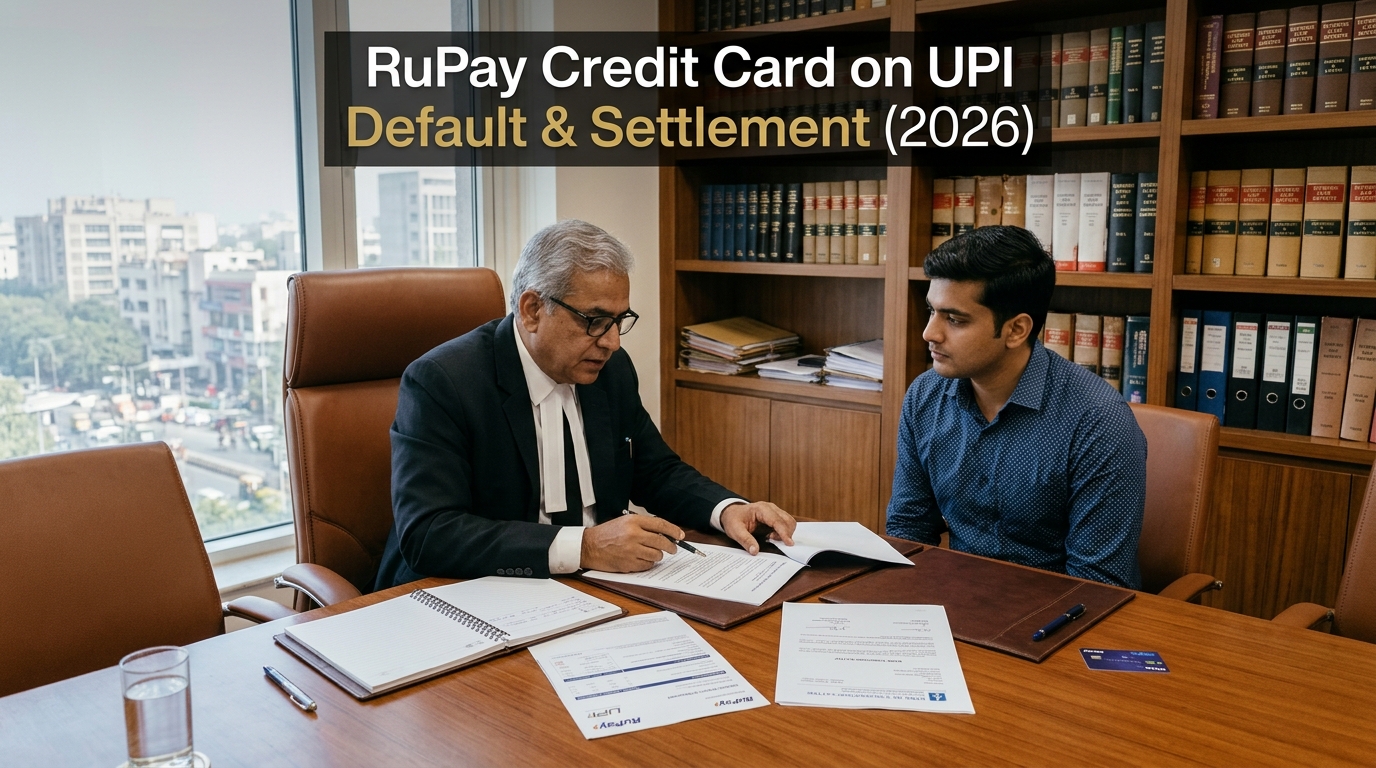
RuPay Credit Card on UPI Default & Credit Line on UPI Settlement (2026)
Micro-transactions on RuPay UPI Credit Cards and pre-approved 'Credit Lines on UPI' have triggered a massive wave of 42%+ APR revolving debt traps. Find out if defaulting blocks your personal savings UPI and how to settle RuPay UPI credit dues for 30%–50%.
Read Article
Paytm, PhonePe & BharatPe Daily EDI Merchant Loan Settlement (2026)
Drowning in Equated Daily Installment (EDI) merchant loans where 100% of your daily QR Soundbox collections are auto-swept before you can pay suppliers or rent? Learn how retail shopkeepers and MSMEs legally halt QR sweeps and negotiate a 50%+ OTS.
Read Article
Can Bank or Loan App Remotely Lock Phone for EMI Default? RBI Rules (2026)
An investigative breakdown of RBI's Remote Device Locking Directions—explaining why lenders cannot lock your phone for personal loans, the mandatory 30/60 DPD safeguards on financed devices, the Rs. 250/hour delay penalty, and how to settle device & app loans.
Read ArticleAbout Author
Anuj Anand Malik
View ProfileAnuj Anand Malik, Founder of AMA Legal Solutions, is a trusted advocate, loan settlement expert, legal advisor, and banking lawyer. With over a decade of experience in loan settlement, corporate law, financial disputes, and compliance, he leads a result-driven law firm based in India that helps individuals, startups, and businesses achieve legal and financial stability.
Connect on LinkedInNeed Legal Representation?
Evaluate your defense against recovery agents, notices, or structure your loan settlement directly with Senior Advocates.
Call +91-8700343611