Extremely Severe’ Alert Buzzes Phones in Nationwide Test
Understanding National Disaster Alerts and What to Do

Anuj Anand Malik
Reviewed by AMA Legal Solutions
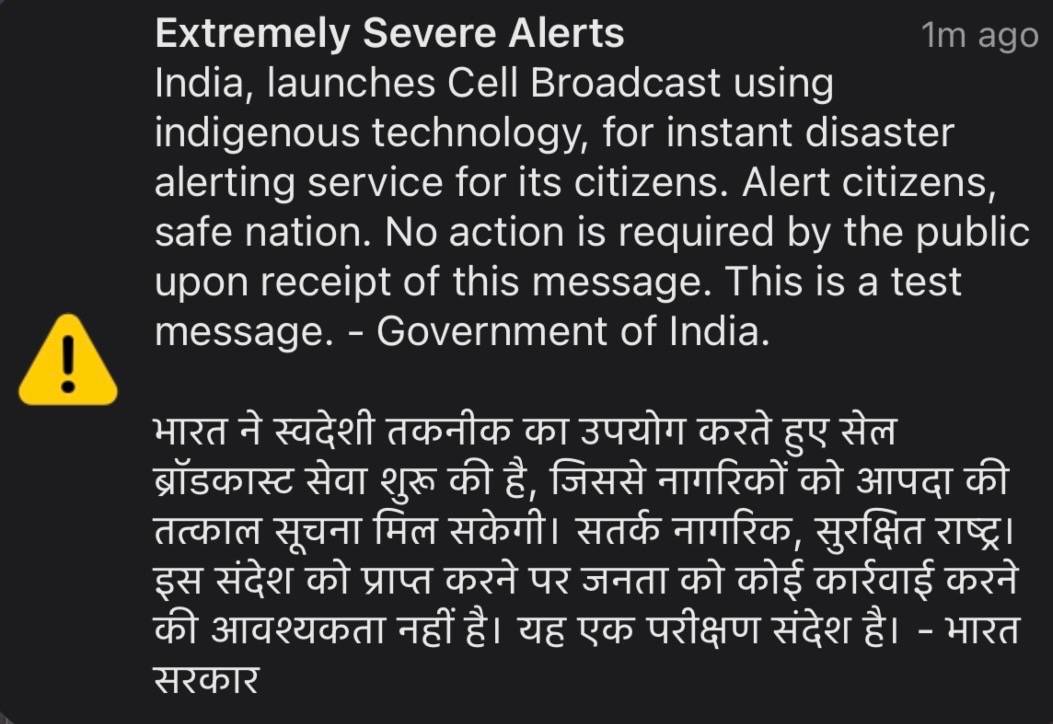
'Extremely Severe’ Alert Buzzes Phones: Govt Tests Nation-Wide Disaster Alerting Service
Recently, a unique and vital nationwide test alert was sent out, buzzing millions of phones across India to deliver an 'Extremely Severe’ alert as a precaution. This initiative by the government is part of a broader strategy to test and ensure the preparedness of our national disaster alerting service, crucial for managing potential calamities. As citizens, understanding the implications of such alerts and having a plan for 'what to do' is paramount.
The primary aim of the alert testing service is to prepare and protect individuals against life-threatening events. When these alarms go off, it's essential to comprehend their significance, preparedness tips, and what actions should immediately follow. Such systems are instrumental, especially in a country like India, where natural disasters are not uncommon.
Understanding the ‘Extremely Severe’ Alert
The ‘Extremely Severe’ alert is part of the standard procedure adopted globally for disaster preparedness. It provides instant information about an imminent danger, allowing citizens to take necessary measures for safety.
Legal and Regulatory Framework
The disaster alert system falls under the regulatory framework of the National Disaster Management Authority (NDMA). The legal obligations and the operational flow of such alerts are entrenched in public policy to ensure timely and structured response activities.
In line with the Reserve Bank of India's directives, integrating banking and finance stability can be critical during disasters. For more details on financial solutions during emergencies, explore Banking and Finance Services.
What to Do: Immediate Actions on Receiving Alerts
Upon receiving such an alert, immediate actions can significantly impact safety and security.
Stay Informed: Keep a reliable source of news updated.
Emergency Kit: Have a readily accessible emergency kit.
Family Action Plan: Ensure every family member is aware of the emergency plan.
For further detailed legal advice on handling emergencies, explore our Civil Law Services.
Real-Life Implications and Case Studies
Exploring past disaster scenarios offers insights into effectively handling future crises. Examining case studies such as the Uttarakhand floods shows how timely alerts can minimize damage and loss.
Case Study Analysis: Uttarakhand Floods
The flash floods in Uttarakhand in 2013 serve as a stark reminder of the potential severity of natural disasters. Early alerts facilitated quick evacuations, proving the effectiveness of predictive alert systems. More specialized assistance, such as Real Estate Services, can aid rehabilitation efforts post-disaster.

Halt Recovery Agent Harassment Legally
Government Initiatives and Preparedness Measures
The Indian government’s commitment to disaster management involves several initiatives tailored to minimize loss of life and property during crises. The National Cyclone Risk Mitigation Project (NCRMP) is a significant step toward enhancing disaster resilience.
Role of Technology in Disaster Management
Technology plays a pivotal role in forecasting and alert systems. The integration of advanced GIS mapping and real-time data analytics ensures timely dissemination of alerts.
For businesses, safeguarding intellectual property during natural disasters is equally vital. See how Intellectual Property Rights Services can help protect commercial interests.
Legal Assistance During Disasters
Legal aid plays a crucial role in managing the aftermath of a disaster. Various civil and criminal law measures are implemented to address grievances. For legal guidance in such critical times, consult our Criminal Law Services.
Understanding Arbitration and Settlements
Conflicts may arise concerning insurance claims and settlements post-disaster. Arbitration provides a streamlined process to resolve such disputes efficiently. Access our Arbitration Services for more information.
Preparedness is crucial in mitigating disaster impacts, and proactive legal counsel can make substantial differences in recovery and compensation processes.
Conclusion: Prepare Now, Act Wisely
Preparedness and understanding are key to mitigating the effects of disasters. The test alerts underscore the need for every citizen to be alert and prepared. Having a legal plan is as crucial as having an emergency kit.
Don't wait for the next alarm to take action. Contact AMA Legal Solutions for tailored advice on safeguarding your family, property, and business. Legal readiness is a crucial component of disaster preparedness. Contact us today for an in-depth consultation.
Need Strategic Legal Defense for Your Situation?
Our banking & litigation advocates review your notices, debt liability, and recovery issues under complete advocate-client secrecy.

AMA Legal Solutions
Trusted with a 4.7 Google Rating, over 10,000+ Clients Served, 25,000+ Cases Handled, and more than 40+ Years of Experience in providing strategic legal defense and debt resolution across India.
Our media coverages





Client Reviews
"Expert advice and exceptional service in handling legal complexities related to disaster alerts."
Suresh Kumar
"AMA's team helped with both pre and post-disaster legal solutions, offering critical advice when needed."
Arun Jain
"Prompt and clear guidance during a crisis. Truly a trusted partner in disaster management."
Geeta Nair
"Top-notch legal advice and thorough support in navigating emergency preparedness laws. Outstanding service."
Shweta Bhattacharya
"AMA Legal Solutions were instrumental in guiding us through the legalities during a disaster alert. Highly recommended for their professionalism and expertise."
Raj Malhotra
Frequently Asked Questions
Related Articles
RuPay Credit Card on UPI Default & Credit Line on UPI Settlement (2026)
Micro-transactions on RuPay UPI Credit Cards and pre-approved 'Credit Lines on UPI' have triggered a massive wave of 42%+ APR revolving debt traps. Find out if defaulting blocks your personal savings UPI and how to settle RuPay UPI credit dues for 30%–50%.
Read Article
Paytm, PhonePe & BharatPe Daily EDI Merchant Loan Settlement (2026)
Drowning in Equated Daily Installment (EDI) merchant loans where 100% of your daily QR Soundbox collections are auto-swept before you can pay suppliers or rent? Learn how retail shopkeepers and MSMEs legally halt QR sweeps and negotiate a 50%+ OTS.
Read Article
Can Bank or Loan App Remotely Lock Phone for EMI Default? RBI Rules (2026)
An investigative breakdown of RBI's Remote Device Locking Directions—explaining why lenders cannot lock your phone for personal loans, the mandatory 30/60 DPD safeguards on financed devices, the Rs. 250/hour delay penalty, and how to settle device & app loans.
Read ArticleAbout Author
Anuj Anand Malik
View ProfileAnuj Anand Malik, Founder of AMA Legal Solutions, is a trusted advocate, loan settlement expert, legal advisor, and banking lawyer. With over a decade of experience in loan settlement, corporate law, financial disputes, and compliance, he leads a result-driven law firm based in India that helps individuals, startups, and businesses achieve legal and financial stability.
Connect on LinkedInNeed Legal Representation?
Evaluate your defense against recovery agents, notices, or structure your loan settlement directly with Senior Advocates.
Call +91-8700343611