Criminal Case Against Loan Defaulter Post-DRT Settlement: Supreme Court
Supreme Court Ruling: No Criminal Cases After DRT Settlement

Anuj Anand Malik
Reviewed by AMA Legal Solutions
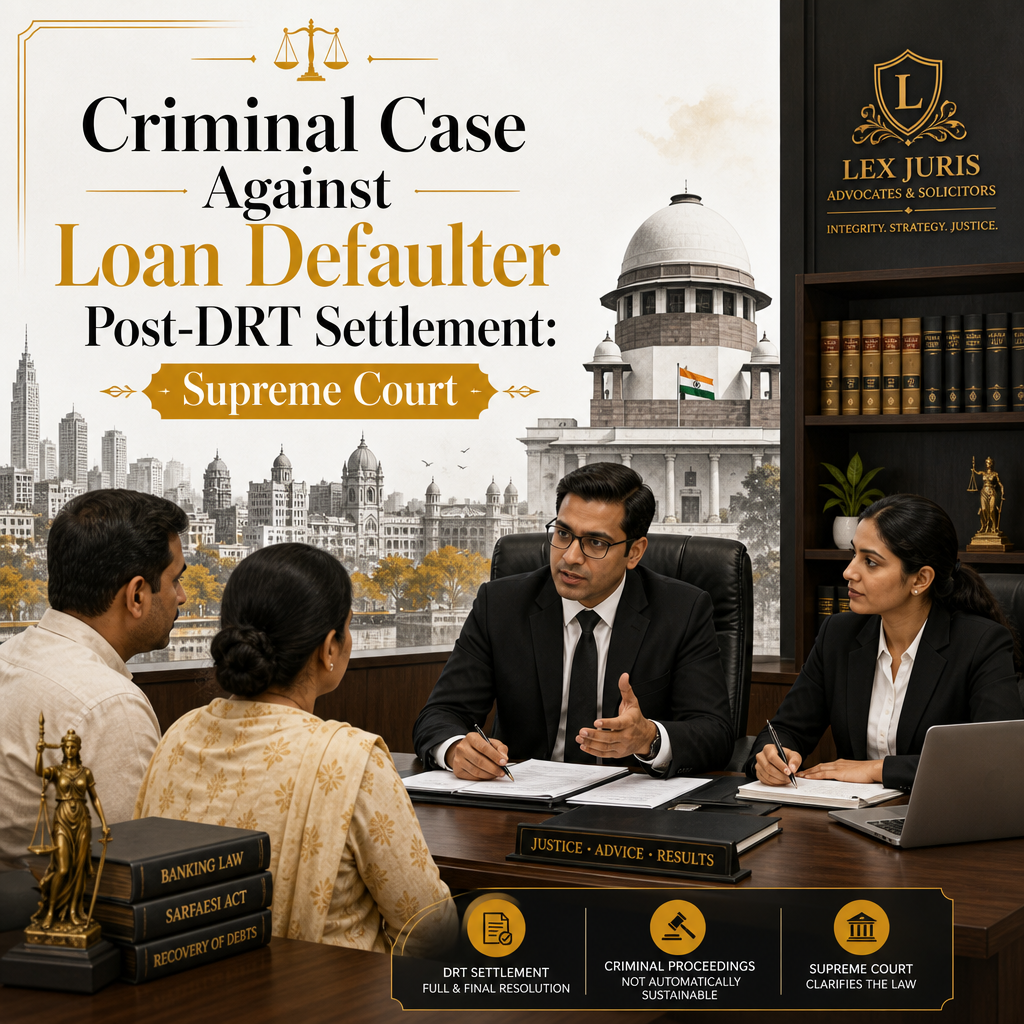
Key Takeaways: The Supreme Court ruling affirms that criminal cases cannot proceed post-DRT settlement, streamlining debt resolution and protecting borrowers. It encourages lenders to engage in meaningful negotiations, ensuring fair recovery and reduced litigation. Borrowers gain legal protections, facilitating manageable repayments and financial stability.
Understanding the Supreme Court's Landmark Ruling
The Supreme Court's landmark ruling has brought significant clarity to the legal landscape surrounding loan defaults and settlements approved by the Debt Recovery Tribunal (DRT). In essence, the Court declared that a criminal case against a loan defaulter cannot continue once a settlement has been approved by the DRT. This ruling underscores the principle that civil remedies must be prioritized over criminal proceedings in scenarios where financial disputes have been amicably resolved.
The judgment aligns with the broader legal framework that aims to encourage financial resolutions outside the courtroom, reducing the burden on the judiciary and providing relief to borrowers. This decision is particularly relevant for those facing the dual threat of civil recovery and criminal prosecution. It recognizes the finality of a DRT-approved settlement as a comprehensive solution that should not be undermined by ongoing criminal litigation.
Practically, this means borrowers now have a stronger position when negotiating settlements, knowing that such agreements will protect them from further criminal action. The ruling also incentivizes lenders to engage in meaningful settlement discussions, ultimately benefiting both parties. For more insights on the implications of this ruling, explore our Loan Settlement Services and its impact on borrowers and lenders alike.
Legal Implications of the Supreme Court's Decision
The Supreme Court's ruling signifies a pivotal moment for loan defaulters in India. By concluding that criminal proceedings cannot continue post a Debt Recovery Tribunal (DRT)-approved settlement, it affirms the preference for resolution over litigation. This decision underscores the importance of utilizing loan settlement services as a viable method for resolving outstanding debts.
Prior to this ruling, borrowers often faced dual challenges: civil recovery processes and criminal actions, leading to undue stress and financial burden. The Supreme Court's decision alleviates these pressures by preventing simultaneous legal battles, thus allowing borrowers to focus on fulfilling the settlement terms agreed upon with lenders.
Impact on Borrowers and Lenders
- Borrowers: Gain relief from ongoing criminal proceedings, fostering a more conducive environment for repayment and financial recovery.
- Lenders: Are encouraged to pursue settlements through DRT, streamlining recovery processes and reducing prolonged litigation.
This judgment promotes the use of structured systems like the DRT for dispute resolution, aligning with the principles of banking and finance law. It highlights the judiciary’s intent to support fair and expedient debt resolutions, ultimately benefitting both parties in the financial ecosystem.
What is a DRT-Approved Settlement?
A DRT-Approved Settlement refers to a resolution framework sanctioned by the Debt Recovery Tribunal (DRT) under India's legal system, targeting non-performing assets and loan defaults. In essence, it is a legally binding agreement between a borrower and a lender that has been scrutinized and sanctioned by the DRT, ensuring that both parties adhere to the terms agreed upon.
When a borrower defaults on their loan, the lender often approaches the DRT to initiate recovery proceedings. However, both parties can choose to settle the matter before the DRT, leading to a DRT-approved settlement. This procedure not only helps in resolving disputes amicably but also prevents prolonged litigation. DRT’s involvement ensures legal adherence and fair treatment of both parties, which can be critical for individuals facing financial distress.
Why Opt for a DRT-Approved Settlement?
- It provides a structured resolution, reducing the burden of litigation costs.
- Ensures transparency and fairness in the terms agreed upon.
- Offers protection to borrowers from aggressive recovery actions once a settlement is reached.
Given the complexities involved in the settlement process, consulting a legal expert can be beneficial. For more information on navigating such settlements, consider exploring our Loan Settlement Services or Banking and Finance Law resources.
Difference Between Civil and Criminal Proceedings in Debt Cases
Debt cases in India can proceed through either civil or criminal channels, each with distinct processes and legal implications. Understanding these differences is crucial for borrowers and lenders alike when navigating the complexities of debt recovery and related legal proceedings.
Civil Proceedings
Civil proceedings typically involve the recovery of the principal amount and interest through a legal suit. The main intent is to enforce financial obligations, often leading to judgments for repayment or asset recovery. Borrowers might face civil action if loan defaults occur, which can be managed through loan settlement services.
Criminal Proceedings
Criminal proceedings, on the other hand, stem from fraudulent activities or deliberate defaults with intent to deceive. Such cases can result in penalties, fines, or imprisonment. For instance, cheque bounce cases fall under criminal jurisdiction under Section 138 of the Negotiable Instruments Act, where intent to defraud is established.
| Parameter / Criterion | Key Details / Legal Provision | Timeline / Practical Impact |
|---|---|---|
| Nature of Action | Enforcement of financial claims | Generally slower; depends on court schedules |
| Intent Required | No malicious intent; breach of contract | Focuses on monetary recovery |
| Outcome | Repayment, asset attachment | May lead to asset liquidation |
| Criminal Element | Fraud or intent to deceive | Faster resolution; potential imprisonment |
| Handling by Court | Handled by civil courts | Involves detailed financial scrutiny |
While civil proceedings aim to secure financial restitution, criminal proceedings focus on penalizing fraudulent behavior. Understanding the implications of both can guide borrowers in addressing their civil litigation and disputes effectively, and seeking proper legal advice is imperative for navigating these legal waters.
How the Supreme Court Ruling Impacts Loan Defaulters
The Supreme Court's ruling has significant implications for loan defaulters in India. It effectively means that once a Debt Recovery Tribunal (DRT)-approved settlement is reached, any pending criminal cases against the loan defaulter related to the debt cannot continue. This provides a level of protection and relief to borrowers, ensuring they are not subjected to dual proceedings for the same default.
Legal Assurance
This ruling offers legal assurance to borrowers who have negotiated settlements, safeguarding them from further criminal liabilities. The judgement underscores the supremacy of DRT settlements, granting them finality and conclusiveness in resolving debt disputes.
Encouragement for Settlements
By reinforcing the finality of DRT-approved settlements, the Supreme Court encourages borrowers to actively pursue settlement options. This is crucial for individuals facing financial distress, as it provides a clear path to resolve outstanding loans without the threat of ongoing criminal proceedings.
- Borrowers gain confidence to approach loan settlement services knowing they have a protective legal framework.
- The ruling simplifies legal proceedings, reducing the burden on both borrowers and the judicial system.
For more insights into how these settlements can be effectively managed, consider exploring our banking and finance law services.
Step-by-Step Guide to DRT Proceedings
The Debt Recovery Tribunal (DRT) is a vital institution for resolving disputes related to loan defaults in India. If you're facing a loan recovery challenge, understanding the DRT process is crucial. Here’s a detailed guide to help you navigate through it:
Filing an Application
The process begins with the financial institution filing an application against the borrower. This application includes details of the debt and default. It is essential for borrowers to respond promptly, perhaps seeking assistance from legal experts specialized in banking and finance law.
Notice and Response
Once the application is filed, the DRT issues a notice to the borrower. It's crucial to respond to this notice within the stipulated time frame to avoid further complications. Preparing an effective defense can be critical, especially if you aim to negotiate a debt consolidation or restructuring.
Preliminary Hearing
The preliminary hearing allows both parties to present their cases and any evidence. This stage is crucial for setting the tone of the proceedings and understanding the stance of the tribunal.
Evidence and Arguments
Both parties submit evidence to support their claims. Legal representation can help ensure that the evidence is presented effectively. The DRT then evaluates the evidence and hears arguments.
Final Order
After reviewing all evidence and arguments, the tribunal issues its final order. This order is binding and can include the approval of settlements as in cases where criminal proceedings against a loan defaulter can't continue post a DRT-approved settlement.
Key Insights & Data Infographic
Visual summary, statistical trends & procedural breakdown
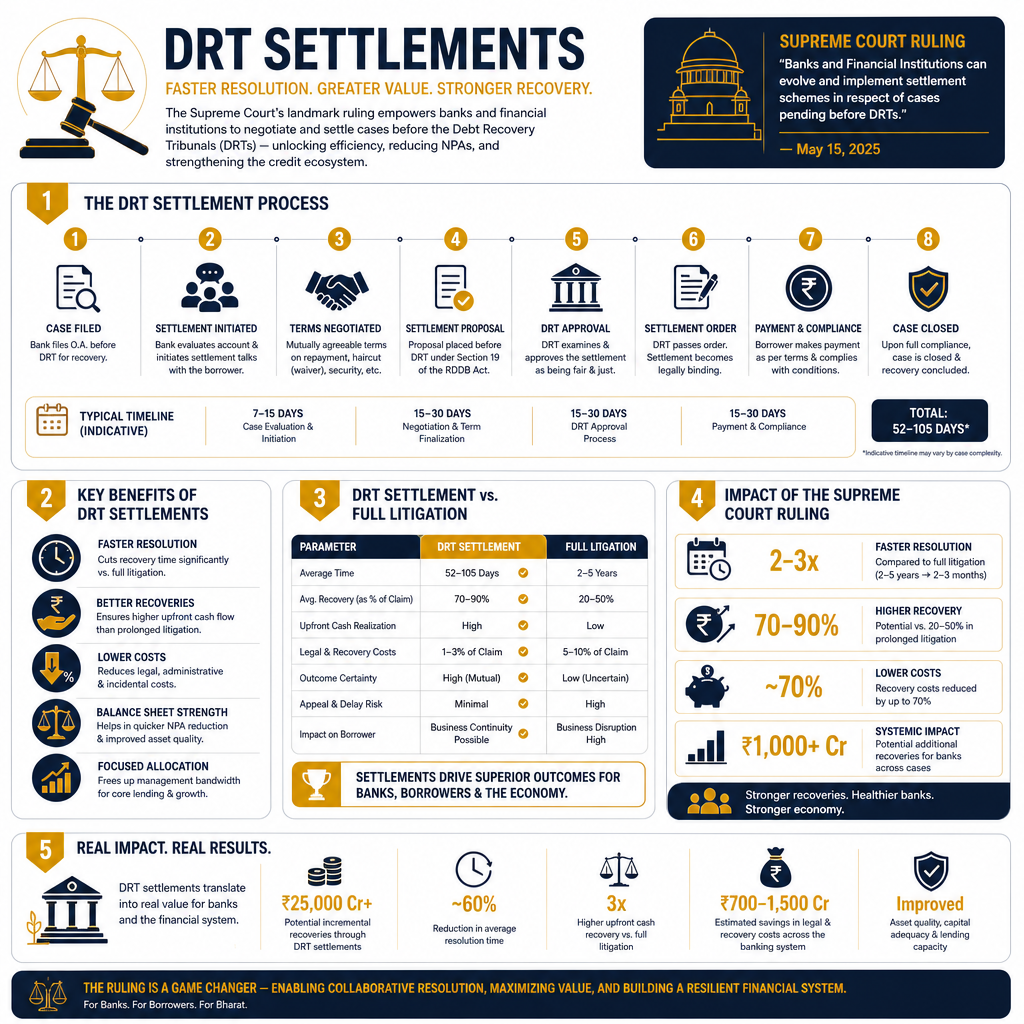
Prepared by AMA Legal Solutions Research & Analytics Team • Data & Compliance Overview
Table: Comparison of Legal Remedies Pre and Post-DRT Settlement
Understanding the legal remedies available before and after a Debt Recovery Tribunal (DRT) settlement is crucial for borrowers. Below is a detailed comparison table that highlights the changes in legal recourse and implications once a DRT-approved settlement is reached.
| Parameter / Criterion | Key Details / Legal Provision | Timeline / Practical Impact |
|---|---|---|
| Pre-DRT Settlement Legal Actions | Banks can pursue criminal cases and civil suits against defaulters. Loan recovery actions may include filing cases under SARFAESI Act. | Continuous pressure on borrowers, potential asset seizure, and legal cost implications. |
| Post-DRT Settlement Legal Actions | Once a DRT-approved settlement is concluded, criminal cases related to loan defaults are typically not pursued. | Reduction in legal pressure, cessation of criminal proceedings as per Supreme Court guidelines. |
| Recovery Agent Involvement | Active involvement pre-settlement, with possible harassment claims. | Reduced or halted recovery efforts post-settlement, enhancing borrower relief. |
| Borrower's Financial Obligations | Obligations remain until settlement terms are fulfilled. | Settlement completion leads to closure of legal actions and potential CIBIL score improvement. |
| Legal Precedents | Referencing Supreme Court judgment ensures that settlements nullify further criminal pursuit. | Legal clarity and protection for borrowers post-settlement. |
For more insights into loan settlements and legal implications, read our Comparing Loan Settlement Options in India: A Legal Perspective.
Rights of Borrowers Under DRT-Approved Settlements
When a settlement is approved by the Debt Recovery Tribunal (DRT), borrowers gain several important rights. Firstly, the settlement prevents banks from pursuing criminal cases related to the defaulted loan, as affirmed by the Supreme Court. This protection ensures that borrowers aren't subjected to punitive actions post-settlement.
Legal Protections
Borrowers are shielded from harassment by lenders, aligning with Legal Rights Against Recovery Agent Harassment. The approved terms of settlement must be respected by all parties, preventing unauthorized recovery actions.
Financial Implications
- The settlement amount and terms are final and legally binding.
- Post-DRT settlement, financial institutions must update credit records to reflect the settlement, aiding in credit score recovery.
Continued Obligations
Even though criminal proceedings are negated, borrowers must adhere to the terms agreed upon within the settlement. Non-compliance can result in legal repercussions, affecting the borrower's financial standing.
For businesses, understanding these rights can foster informed financial strategies, as detailed in our Banking and Finance Law services. Seeking legal guidance is advisable to ensure compliance and protection under these settlements.
Obligations of Borrowers Post-DRT Settlement
Once a borrower enters into a Debt Recovery Tribunal (DRT)-approved settlement, certain obligations must be adhered to for the settlement to remain in effect. Understanding these responsibilities is crucial to avoid potential legal pitfalls. The borrower must comply with the settlement terms, which are legally binding and involve clear financial commitments.
Key Responsibilities
- Timely Payments: Borrowers must make payments as per the agreed schedule. Missing payments could lead to the nullification of the settlement agreement and may result in renewed legal actions.
- Communication with Creditors: Continuous communication with creditors or legal representatives is essential. This ensures transparency and allows for quick resolution of any issues that arise.
- Document Retention: Keep all documents related to the settlement, including payment receipts and correspondence with the creditors. This documentation can be crucial if disputes occur later.
Failing to adhere to these obligations could result in serious consequences. The settlement agreement might be voided, and the borrower could face renewed litigation. Additionally, the borrower's credit score could be adversely impacted. To ensure proper compliance and expert guidance, borrowers may consider consulting professionals in Loan Settlement Services or Banking and Finance Law to help navigate these obligations effectively.
Role of RBI Guidelines in Loan Settlement Processes
The Reserve Bank of India (RBI) plays a critical role in the loan settlement processes by setting forth guidelines that ensure fair and transparent dealings between lenders and borrowers. These guidelines are mandatory for all banks and financial institutions operating in India, providing a structured approach to handle loan defaults and settlements.
One of the key aspects of the RBI guidelines is the prioritization of amicable settlements over lengthy litigation. This includes recommending processes like restructuring and one-time settlements, where banks may offer concessions to borrowers facing genuine financial difficulties. These measures are designed to aid borrowers in distress and prevent the escalation of defaults into legal conflicts.
Furthermore, the RBI mandates that any settlement or restructuring should not adversely impact the borrower’s credit score, provided the settlement is completed as agreed. This encourages borrowers to actively engage in settlement negotiations without fearing credit repercussions. For more detailed information on how these processes work, you can explore our Loan Settlement Services.
Additionally, the guidelines ensure that recovery agents operate within legal confines, safeguarding borrowers from harassment and undue pressure. Borrowers can refer to our comprehensive guide on Legal Rights Against Recovery Agent Harassment to understand their rights better.
Case Studies: Successful DRT-Approved Settlements
Understanding the nuances of Debt Recovery Tribunal (DRT)-approved settlements can be invaluable for borrowers navigating loan disputes. These settlements often resolve financial distress without further legal complications, including criminal cases. Here are detailed case studies reflecting successful outcomes:
Case Study 1: MSME Resolution through Negotiation
An MSME client faced overwhelming debt, risking business closure. By engaging with the DRT, a structured settlement was negotiated to restructure the loan. This agreement allowed the business to maintain operations while adhering to a viable repayment schedule. Consequently, potential criminal proceedings were averted, safeguarding both the business and its proprietors. For more insights on such resolutions, explore our Loan Settlement Services.
Case Study 2: Individual Borrower's Path to Debt Relief
A salaried individual struggled with multiple loans, leading to default and recovery notices. Through DRT mediation, a settlement was structured to consolidate the debt over a manageable term. This proactive approach precluded any criminal charges, providing peace of mind and financial recovery. Learn about similar strategies in our Debt Consolidation & Restructuring section.
These case studies highlight the importance of DRT-approved settlements in protecting borrowers from criminal proceedings, illustrating how legal intervention can effectively resolve financial disputes.
Lawyer Tips: Navigating DRT Procedures Effectively
Handling Debt Recovery Tribunal (DRT) procedures can be daunting, yet understanding the nuances can significantly enhance outcomes. Here are some strategic tips to navigate these procedures effectively:
Understand the DRT Process
Familiarity with the DRT process is crucial. Begin by comprehending the DRT's jurisdiction, the types of cases it handles, and the timelines involved. This knowledge forms the foundation for a robust defense strategy.
Document Everything
Maintain meticulous records of all communications and transactions. This includes loan agreements, payment records, and any correspondence with the bank. Accurate documentation can support your case and provide clarity during hearings.
Seek Professional Legal Help
Engaging a seasoned lawyer specializing in loan settlement services can provide invaluable guidance. Legal experts can navigate complex legal terms, represent you effectively, and optimize settlement terms.
- Timely Filing: Ensure that all responses and applications are filed within stipulated timelines to avoid unnecessary delays.
- Negotiation Tactics: Employ effective negotiation tactics, such as proposing feasible repayment plans, to persuade creditors for favorable terms.
- Utilize Settlements: Consider banking and finance law to explore settlements that align with your financial capabilities and ensure compliance with DRT rulings.
By employing these tactics, borrowers can better manage DRT proceedings and potentially secure more favorable outcomes.
Popular Searches
AMA Legal Solutions
Trusted with a 4.7 Google Rating, over 10,000+ Clients Served, 25,000+ Cases Handled, and more than 40+ Years of Experience in providing strategic legal defense and debt resolution across India.
Our media coverages





Client Reviews
"AMA Legal Solutions provided comprehensive support during my financial distress, ensuring the best outcome with their expertise."
Vikram Patel
"The professional insights from AMA Legal were invaluable in resolving my debt issues through the DRT efficiently."
Anjali Mehta
"Exceptional service by AMA Legal in managing my settlement with DRT, freeing me from potential criminal proceedings."
Suresh Rao
"AMA Legal Solutions expertly guided me through the DRT process, ensuring a fair settlement and relieving my financial stress."
Rajesh Kumar
"Thanks to the dedicated team at AMA Legal, I navigated my loan default case with ease and reached a favorable DRT settlement."
Priya Sharma
Frequently Asked Questions
Related Articles

How to Trust Law Associates for Loan Settlement
Ensure Successful Loan Settlement with Trusted Legal Experts
Read Article
Expert Loan Settlement Lawyer: Minimize Amount, Maximize Waiver
Unlocking the Secrets to Successful Loan Settlements in India
Read Article
Mastering Loan Settlement of Personal Loan by Bajaj Finance
Navigate Bajaj Finance Loan Settlements with Expert Legal Insights
Read ArticleAbout Author
Anuj Anand Malik
View ProfileAnuj Anand Malik, Founder of AMA Legal Solutions, is a trusted advocate, loan settlement expert, legal advisor, and banking lawyer. With over a decade of experience in loan settlement, corporate law, financial disputes, and compliance, he leads a result-driven law firm based in India that helps individuals, startups, and businesses achieve legal and financial stability.
Connect on LinkedInNeed Legal Help?
Get expert advice on loan settlement and debt relief.
Call +91-8700343611Request Callback