Bank Loan Settlement Rules as per RBI 2026
Navigating RBI's 2026 Guidelines for Effective Loan Settlement

Anuj Anand Malik
Reviewed by AMA Legal Solutions
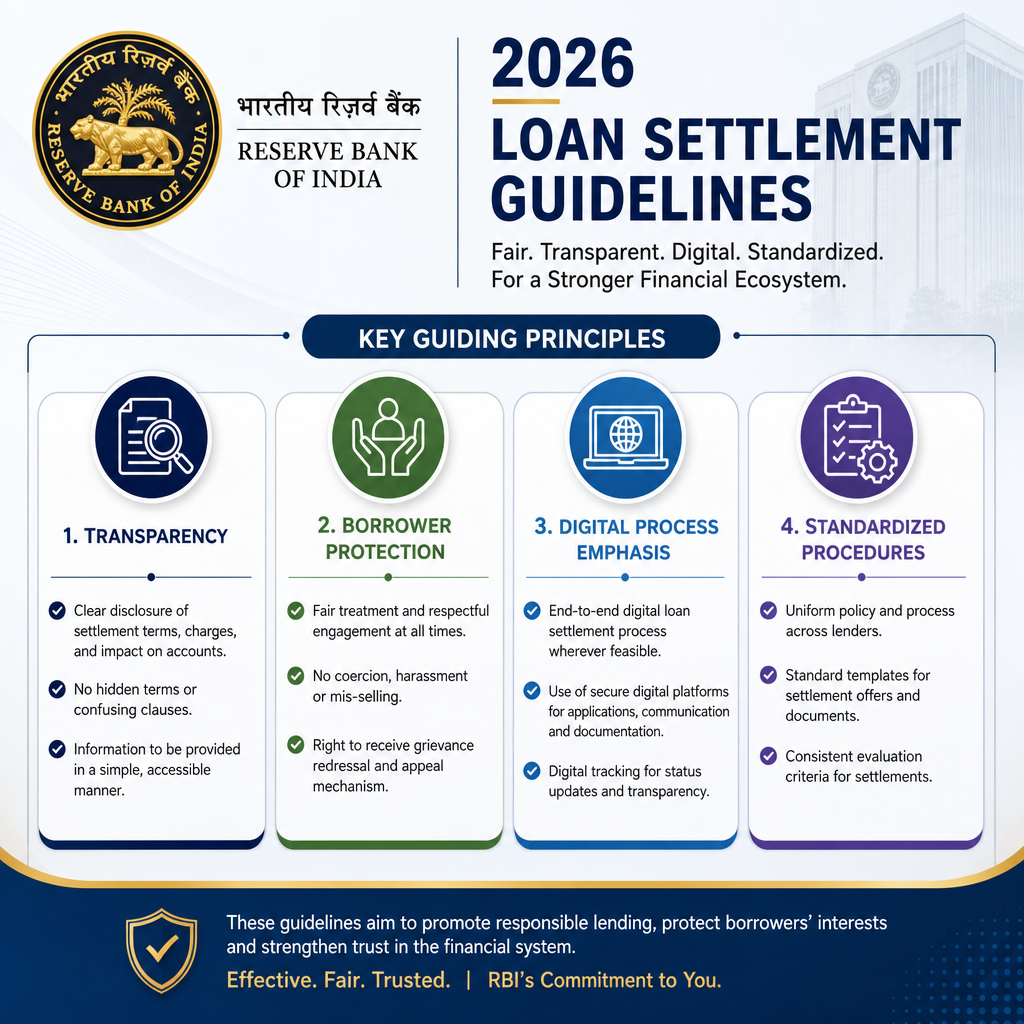
Introduction to Bank Loan Settlement Rules as per RBI 2026
In the ever-evolving financial landscape, the Reserve Bank of India (RBI) sets out comprehensive guidelines and rules aimed at streamlining the loan settlement process. As we look towards 2026, the RBI’s updated bank loan settlement rules are designed to enhance transparency, protect borrower interests, and promote financial stability. These rules are pivotal for both financial institutions and borrowers, ensuring equitable treatment and structured resolution of outstanding loans.
The 2026 guidelines introduce a more structured framework for debt resolution, emphasizing early recognition of stress in bank accounts and promoting timely intervention to prevent non-performing assets (NPAs) from ballooning. The RBI mandates banks to adopt a proactive approach, outlining specific timelines for different stages of the settlement process, thereby minimizing prolonged financial distress for borrowers.
Additionally, the updated rules focus on simplifying the documentation process, making it more accessible for borrowers to negotiate settlements with their lenders. The RBI’s emphasis on digital processes further aims to expedite resolution timelines, ensuring that both borrowers and banks can reach satisfactory settlements without undue delay. By understanding the intricacies of the new RBI guidelines, stakeholders can better navigate the complexities of loan settlements while ensuring compliance with regulatory standards.
Understanding the Legal Framework: RBI's Role in Loan Settlement
The Reserve Bank of India (RBI) plays a pivotal role in establishing the legal framework governing bank loan settlements in India. As the central monetary authority, the RBI sets out comprehensive guidelines to ensure the equitable treatment of borrowers and lenders alike. The regulatory framework aims to balance the interests of financial institutions with the need for borrower protection, thereby maintaining financial stability.
Key Guidelines Issued by the RBI
- Resolution of Stressed Assets: The RBI has mandated banks to follow specific processes for identifying stressed assets and implementing timely resolution plans. This includes allowing restructuring or settlement of loans to prevent further deterioration of asset quality.
- One-Time Settlement (OTS) Schemes: The RBI permits banks to offer OTS schemes to borrowers as a measure to recover non-performing assets. These schemes are subject to stringent guidelines to ensure transparency and fairness.
- Classification and Provisioning: The RBI has established rules for classifying loans based on their performance and mandates appropriate provisioning to cover potential losses.
These guidelines are periodically reviewed and updated to address evolving market conditions and economic challenges. The RBI's regulatory oversight ensures that loan settlements are conducted fairly, reducing the risk of disputes and promoting a healthier financial ecosystem.
Key Provisions of the 2026 RBI Loan Settlement Guidelines
The Reserve Bank of India (RBI) has outlined comprehensive guidelines in 2026 to streamline the process of bank loan settlements. These provisions aim to create a transparent and structured framework for both lenders and borrowers to resolve outstanding debts efficiently.
Enhanced Creditor-Borrower Communication
- The guidelines emphasize improved communication protocols between creditors and borrowers to facilitate timely and effective resolutions.
- Mandatory pre-settlement discussions to evaluate the borrower's financial situation and repayment capacity.
Standardized Settlement Process
- Introduction of uniform procedures that all financial institutions must follow when negotiating loan settlements.
- Defined timelines for each stage of the settlement process to ensure prompt resolution.
Incentives for Early Settlement
- Incentive structures for borrowers who settle their loans ahead of schedule, including reductions in interest rates and fees.
- Encouragement of voluntary settlements through financial benefits.
Risk Mitigation Strategies
- Implementation of risk assessment tools to evaluate the likelihood of default and to tailor settlement options accordingly.
- Guidelines for restructuring loan terms to alleviate financial distress and minimize default risks.
Legal Safeguards
- Provisions for legal recourse in cases of non-compliance with the settlement agreement terms.
- Frameworks for arbitration and dispute resolution to address conflicts that may arise during the settlement process.
Overall, the 2026 guidelines prioritize a balanced approach, protecting the interests of both banks and borrowers while promoting financial stability in the banking sector.
Eligibility Criteria for Loan Settlement under RBI Rules
The Reserve Bank of India (RBI) has set forth specific eligibility criteria that borrowers must meet to qualify for loan settlement. As per the latest guidelines, these criteria are crucial for ensuring that the settlement process is fair and transparent. Here is a detailed overview of the requirements:
- Type of Borrower: Both individual and corporate borrowers can apply for loan settlement, provided they are classified as non-performing assets (NPAs) by the lending institution.
- Loan Classification: The loan must be categorized under the 'doubtful' or 'loss' category by the bank, as per the asset classification norms.
- Repayment History: The borrower's repayment history is crucial. An inconsistent repayment record or significant arrears may necessitate settlement.
- Financial Condition: The borrower's current financial status must demonstrate an inability to repay the loan under the original terms, necessitating renegotiation.
- Documentation: Proper documentation proving financial distress, such as income statements, tax returns, and other financial records, must be provided.
- Bank's Assessment: The lending bank must perform a comprehensive assessment of the borrower's financial situation and agree that a settlement is the best course of action.
These criteria are designed to ensure that settlements are granted to borrowers genuinely in need of assistance, maintaining the integrity of the banking system.
Types of Loans Covered by RBI Settlement Guidelines
The Reserve Bank of India (RBI) has devised comprehensive settlement guidelines that address a variety of loan types, ensuring a structured approach to resolving outstanding debts by 2026. Understanding these categories can empower borrowers to navigate the settlement process more effectively.
1. Secured Loans
Secured loans, such as home loans and auto loans, are backed by collateral. The RBI's settlement guidelines focus on mitigating risks for both lenders and borrowers, ensuring that the collateral's value is fairly evaluated during the settlement process.
2. Unsecured Loans
Unsecured loans, including personal loans and credit card debts, lack collateral backing. The guidelines emphasize transparency and fairness, encouraging lenders to adopt balanced strategies for settling unsecured debts without disproportionately affecting borrowers.
3. Business Loans
Business loans are essential for entrepreneurial growth but can become burdensome when repayments falter. The RBI's policies facilitate settlements that consider a business's unique financial realities, fostering a mutually beneficial resolution between creditors and entrepreneurs.
4. Education Loans
Education loans play a critical role in shaping futures. The RBI encourages empathetic settlement terms that reflect the borrower's potential income trajectory, allowing for realistic repayment plans without compromising future financial stability.
By covering a diverse range of loan types, the RBI's settlement guidelines aim to establish a fair and efficient framework for resolving debt challenges, benefiting both lenders and borrowers.
The Loan Settlement Process: Step-by-Step Guide
The loan settlement process, as per RBI 2026 guidelines, involves a systematic approach to ensure compliance and effectiveness. Here's a detailed step-by-step guide:
1. Assess Financial Situation
Begin by evaluating your financial condition. Gather details of all outstanding loans, income sources, and expenses to understand your repayment capacity.
2. Contact Your Bank
Initiate communication with your bank to express your intent to settle the loan. This step is crucial as it sets the tone for negotiations and establishes goodwill.
3. Negotiate Terms
Engage in discussions to negotiate terms of settlement. Be transparent about your financial difficulties and propose a reasonable amount that you can pay, considering both parties' interests.
4. Draft a Settlement Agreement
Once terms are agreed upon, the bank will draft a settlement agreement. Review the document thoroughly to ensure clarity on the terms and compliance with RBI guidelines.
5. Legal Verification
It's advisable to have a legal expert review the settlement agreement to verify its alignment with the RBI regulations and to protect your interests.
6. Final Payment
Make the agreed settlement payment within the stipulated timeframe. Ensure you receive a "No Dues" certificate from the bank after payment completion.
By following these steps, borrowers can effectively navigate the loan settlement process while adhering to RBI 2026 rules.

Halt Recovery Agent Harassment Legally
Rights and Obligations of Borrowers and Lenders
Understanding the rights and obligations of borrowers and lenders is crucial under the bank loan settlement rules as per RBI 2026. These guidelines are designed to ensure fair treatment and transparency during the loan settlement process.
Borrowers' Rights
- Right to Information: Borrowers are entitled to receive comprehensive information about loan terms, settlement options, and any applicable fees.
- Fair Negotiation: Borrowers have the right to negotiate terms and request a clear rationale for any settlement offer made by the bank.
- Protection from Harassment: RBI regulations mandate that borrowers should not face undue harassment or coercion during the settlement process. Banks must adhere to ethical collection practices.
Lenders' Obligations
- Transparency: Lenders must provide transparent and clear communication regarding the settlement process, ensuring borrowers are fully informed.
- Fair Assessment: Banks are obliged to assess each borrower's financial situation individually and offer settlements that are fair and reasonable.
- Documentation: Lenders must maintain accurate documentation of all communications and terms agreed upon during the settlement process.
Both borrowers and lenders must comply with these rules to facilitate a fair and efficient loan settlement process, as stipulated by the RBI's 2026 guidelines. These regulations aim to protect both parties' interests and uphold the integrity of the banking system.
Common Mistakes in Loan Settlement and How to Avoid Them
Settling a bank loan might seem straightforward, but several pitfalls can complicate the process if not carefully navigated. Understanding these common mistakes is crucial to ensuring a smooth settlement in accordance with the bank loan settlement rules as per RBI 2026.
1. Overlooking Detailed Documentation
Many borrowers fail to maintain comprehensive records of their loan details and settlement discussions. This oversight can lead to discrepancies and disputes. Always keep a meticulous record of all communications and transactions with your bank.
2. Ignoring the Settlement Offer Validity
Settlement offers are often time-bound. Failing to adhere to these timelines can nullify the offer, forcing borrowers to renegotiate terms or miss out on favorable conditions. Mark deadlines clearly and ensure timely responses.
3. Neglecting to Verify Credit Reports
Post-settlement, borrowers frequently forget to check if their credit reports reflect the new status. An uncorrected report can adversely affect credit scores. Always confirm with credit agencies that the loan status is updated.
4. Misunderstanding the Financial Implications
Settlements can have tax implications or affect future borrowing potential. Consult a financial advisor to understand how the settlement will impact your financial standing.
- Tip: Seek professional legal advice to comprehend all terms and implications.
- Tip: Communicate regularly with your bank to clarify any uncertainties.
By avoiding these common mistakes, borrowers can effectively manage their settlements under the RBI guidelines to achieve favorable outcomes.
Impact of RBI Rules on Lenders: A Financial Perspective
The 2026 RBI guidelines on bank loan settlements have significant implications for lenders within the financial sector. These rules are designed to bring uniformity and transparency to the loan settlement process, thereby influencing the financial strategies of lending institutions. By setting a clear framework, the RBI aims to mitigate risks associated with non-performing assets (NPAs) while ensuring that settlements are conducted in a fair and equitable manner.
One of the key impacts is the requirement for lenders to adopt stringent due diligence processes before entering into any settlement agreements. This mandates a comprehensive assessment of the borrower's financial health, which can increase the administrative burden on banks. However, these measures also reduce the probability of settling with borrowers who might default again, thereby safeguarding the lender's financial interests.
Moreover, the new rules necessitate the maintenance of detailed documentation and adherence to timelines in the settlement process. This could lead to higher compliance costs, yet it also promotes accountability, reducing arbitrary settlements that could undermine the financial stability of lending institutions.
In essence, while the RBI's 2026 rules may initially increase operational costs for lenders, they ultimately foster a more robust financial environment that protects both lenders and borrowers, enhancing the overall integrity of the banking system.
Legal Recourse for Disputes in Loan Settlement
Disputes in loan settlements can arise over various issues such as the terms of settlement, interest calculations, or alleged breaches of agreement. Understanding the legal recourse available can empower borrowers and ensure fair treatment under the Banking & Finance regulations. As per the RBI guidelines, it is critical to first attempt resolution through the bank’s internal grievance redressal mechanism. This approach is often the most efficient and cost-effective.
Approaching the Banking Ombudsman
If the internal resolution process does not yield satisfactory results, borrowers can escalate their grievances to the Banking Ombudsman, a quasi-judicial authority established by the Reserve Bank of India. The ombudsman is empowered to address complaints relating to loan settlements and can provide binding resolutions.
Arbitration and Litigation
When disputes remain unresolved, borrowers have the option of pursuing arbitration or litigation. Arbitration offers a quicker, private resolution mechanism and is governed by the Arbitration and Conciliation Act, 1996. Alternatively, borrowers can file a suit in the civil courts, although this route may be more time-consuming and costly.
It's advisable to seek expert legal guidance to navigate these processes effectively. AMA Legal Solutions offers comprehensive support in managing loan settlement disputes, ensuring adherence to the latest RBI guidelines.
Case Studies: Successful Loan Settlements under RBI Guidelines
Understanding the practical application of RBI guidelines on loan settlement can be crucial for borrowers and financial institutions alike. Let's delve into some real-world examples where effective negotiation and adherence to the RBI's frameworks resulted in favorable outcomes for all parties involved.
Case Study 1: Small Business Owner's Debt Resolution
A small business owner in Mumbai struggled with outstanding loans due to declining market conditions. By leveraging the RBI's loan restructuring guidelines, the borrower negotiated a reduced interest rate and extended repayment period. With the assistance of legal experts, the business owner successfully settled the loan, ensuring business continuity while maintaining a positive credit score.
Case Study 2: Personal Loan Settlement for Medical Expenses
An individual faced financial hardship due to unexpected medical expenses. The borrower, in collaboration with a legal advisor, approached the bank citing the RBI's one-time settlement scheme. The bank agreed to write off a portion of the outstanding loan, allowing the borrower to clear the debt with a lump sum payment. This settlement provided significant relief while protecting the borrower's financial future.
Case Study 3: Corporate Loan Settlement Amidst Economic Downturn
A mid-sized corporation faced liquidity issues during an economic downturn. By engaging with legal consultants and the bank, the company invoked RBI's prudential norms. They negotiated a viable restructuring plan that included a moratorium on interest payments. This strategic approach allowed the corporation to stabilize operations and gradually improve financial health, exemplifying the efficacy of RBI guidelines in challenging times.
Future Implications of RBI's 2026 Loan Settlement Rules
The Reserve Bank of India's 2026 loan settlement rules are poised to transform the landscape of banking and finance. By introducing more transparent and borrower-friendly provisions, these rules aim to enhance trust between financial institutions and their clients. One significant implication is the potential reduction in non-performing assets (NPAs) as banks are encouraged to adopt more proactive settlement approaches.
Furthermore, the 2026 regulations emphasize digital solutions, thereby streamlining the loan settlement process. This digital shift is likely to increase efficiency and reduce costs for both banks and borrowers. As banks integrate advanced technologies like artificial intelligence and machine learning, stakeholders can expect data-driven decision-making, leading to more personalized settlement solutions.
Additionally, the rules are expected to boost economic stability by fostering a healthier credit environment. With clearer guidelines and enforcement mechanisms, the rules will likely deter malpractices and ensure compliance, benefiting both lenders and borrowers.
These changes may also attract foreign investments as international investors gain confidence in the robust regulatory framework. While the full impact of these rules will unfold over time, stakeholders in India's banking sector should prepare for a more dynamic and equitable loan settlement ecosystem.
Need Strategic Legal Defense for Your Situation?
Our banking & litigation advocates review your notices, debt liability, and recovery issues under complete advocate-client secrecy.

AMA Legal Solutions
Trusted with a 4.7 Google Rating, over 10,000+ Clients Served, 25,000+ Cases Handled, and more than 40+ Years of Experience in providing strategic legal defense and debt resolution across India.
Our media coverages





Client Reviews
"AMA Legal Solutions guided me through the complexities of the RBI's 2026 loan settlement guidelines, ensuring a smooth and fair resolution of my loan. Their expertise was invaluable."
Rahul Mehta
"Thanks to AMA Legal Solutions, I navigated the RBI's updated settlement rules with ease. Their professional approach and clear communication made all the difference."
Anita Kumar
"The team at AMA Legal Solutions was incredibly knowledgeable about the new RBI guidelines. They helped me negotiate a favorable loan settlement efficiently and transparently."
Priya Sharma
"I am grateful to AMA Legal Solutions for their support in understanding and applying the RBI's 2026 loan settlement rules. Their guidance was thorough and effective, leading to a successful outcome."
Neha Gupta
"AMA Legal Solutions provided excellent legal advice under the new RBI guidelines, helping me settle my loan with minimal stress. Highly recommended for their expertise and customer service."
Vikram Singh
Frequently Asked Questions
Related Articles
RuPay Credit Card on UPI Default & Credit Line on UPI Settlement (2026)
Micro-transactions on RuPay UPI Credit Cards and pre-approved 'Credit Lines on UPI' have triggered a massive wave of 42%+ APR revolving debt traps. Find out if defaulting blocks your personal savings UPI and how to settle RuPay UPI credit dues for 30%–50%.
Read Article
Paytm, PhonePe & BharatPe Daily EDI Merchant Loan Settlement (2026)
Drowning in Equated Daily Installment (EDI) merchant loans where 100% of your daily QR Soundbox collections are auto-swept before you can pay suppliers or rent? Learn how retail shopkeepers and MSMEs legally halt QR sweeps and negotiate a 50%+ OTS.
Read Article
Can Bank or Loan App Remotely Lock Phone for EMI Default? RBI Rules (2026)
An investigative breakdown of RBI's Remote Device Locking Directions—explaining why lenders cannot lock your phone for personal loans, the mandatory 30/60 DPD safeguards on financed devices, the Rs. 250/hour delay penalty, and how to settle device & app loans.
Read ArticleAbout Author
Anuj Anand Malik
View ProfileAnuj Anand Malik, Founder of AMA Legal Solutions, is a trusted advocate, loan settlement expert, legal advisor, and banking lawyer. With over a decade of experience in loan settlement, corporate law, financial disputes, and compliance, he leads a result-driven law firm based in India that helps individuals, startups, and businesses achieve legal and financial stability.
Connect on LinkedInNeed Legal Representation?
Evaluate your defense against recovery agents, notices, or structure your loan settlement directly with Senior Advocates.
Call +91-8700343611