How to Send a Legal Notice for Recovery of Money in India
Step-by-step guide for Indian borrowers to recover unpaid dues

Anuj Anand Malik
Reviewed by AMA Legal Solutions
Introduction to Sending a Legal Notice for Money Recovery
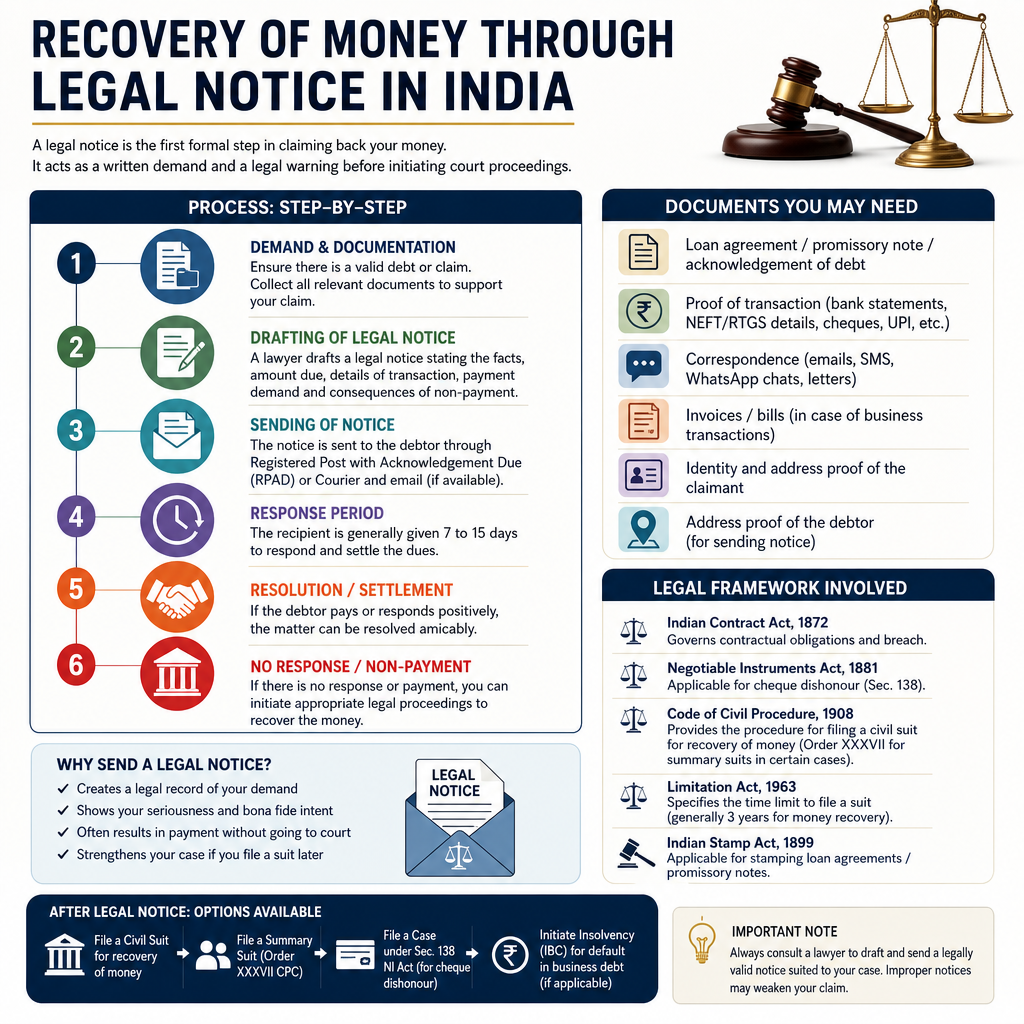
Sending a legal notice for the recovery of money in India is a crucial first step in the formal debt recovery process. It serves as an official communication to the debtor, clearly stating the amount owed and demanding payment within a specified time frame. This notice is not just a procedural formality; it can significantly influence the debtor to settle the debt to avoid legal proceedings. Understanding the nuances of drafting and delivering a legal notice can enhance its efficacy and increase the likelihood of a favorable outcome.
Before drafting a legal notice, it is essential to gather all relevant documentation, such as loan agreements, invoices, and any prior communications related to the debt. This documentation substantiates the claim and provides a solid foundation for the notice. Additionally, the notice should be meticulously crafted, outlining the exact amount due, the basis of the claim, and a clear deadline for repayment.
Using precise and formal language in the notice while maintaining a professional tone is crucial. Engaging a legal expert to draft or review the notice can prevent potential pitfalls, ensuring compliance with legal standards and maximizing its impact. If the debtor fails to respond or settle within the stipulated period, the sender may then consider initiating further legal proceedings.
Understanding the Legal Framework for Debt Recovery in India
The legal framework for debt recovery in India is designed to assist creditors in reclaiming outstanding dues while safeguarding the rights of borrowers. At the core of this framework are the Indian Contract Act, 1872 and the Negotiable Instruments Act, 1881, which provide the statutory basis for claiming debts through legal notices, particularly in the case of dishonored cheques.
The Securitisation and Reconstruction of Financial Assets and Enforcement of Security Interest (SARFAESI) Act, 2002 is pivotal for banks and financial institutions, enabling them to recover non-performing assets without court intervention. This act empowers creditors to take possession of secured assets and manage them to recover dues.
Additionally, the Insolvency and Bankruptcy Code (IBC), 2016 provides a time-bound process for resolving insolvency and recovering debts, facilitating negotiations and settlements under judicial supervision. For smaller debts, Debt Recovery Tribunals (DRTs) and Debt Recovery Appellate Tribunals (DRATs) offer a more streamlined, faster process than conventional courts.
Understanding these legal channels and the procedural intricacies involved, including necessary documentation and timelines, is crucial for effectively navigating debt recovery. A well-drafted legal notice often serves as the preliminary step in this process, clearly outlining the debtor's obligations and potential legal consequences of non-compliance.
When to Consider Sending a Legal Notice
Timing is crucial when contemplating sending a legal notice for money recovery in India. You should consider this step when informal negotiations have failed, or if the debtor habitually delays payments without valid reasons. It's advisable to send a notice if there is a significant amount outstanding or if the debt has been overdue for an extended period, typically 30 days or more.
Another critical factor is the debtor's attitude and response. If the debtor is unresponsive to calls and emails or shows no intention to settle the dues amicably, a legal notice may prompt them to take the matter seriously. Additionally, if the debtor has breached a formal agreement or contract terms, legal action is justified.
Before sending a notice, ensure you have all supporting documents, such as invoices, agreements, and previous correspondence. This documentation strengthens your case and provides clarity and evidence of the debt owed. Consult a legal expert to draft a precise notice, clearly outlining the amount due, the breach of terms, and a reasonable deadline for repayment, typically 15 to 30 days. This formal approach often serves as a final warning and can expedite the recovery process.
Key Components of a Legal Notice for Recovery
When crafting a legal notice for the recovery of money in India, it's crucial to ensure clarity and precision. Below are the key components that should be included in the notice to effectively communicate the demand and set the stage for potential legal action:
1. Sender's Information
- Name and Address: Clearly state the full name and address of the sender, typically the creditor or their legal representative.
- Contact Details: Include phone numbers and email addresses to facilitate communication.
2. Recipient's Information
- Name and Address: Provide the complete name and address of the debtor to whom the notice is addressed.
3. Subject and Reference
- Subject Line: Clearly mention that the notice pertains to the recovery of money.
- Reference Number: If applicable, include any reference numbers associated with the transaction or agreement.
4. Transaction Details
- Nature of the Debt: Describe the basis of the debt, such as a loan or unpaid invoice.
- Amount Due: Specify the exact amount owed, along with any interest or penalties accrued.
5. Demand for Payment
- Time Frame: Provide a specific time frame within which the payment should be made, typically 15 to 30 days.
6. Consequence of Non-Payment
- Legal Action: Clearly state the intention to initiate legal proceedings if the payment is not received within the stipulated time.
7. Signature
- Authorized Signatory: The notice should be signed by the authorized person, either the creditor or their lawyer.
Including these components in your legal notice ensures it is comprehensive, legally sound, and serves as a formal step towards resolving the financial dispute.
Drafting an Effective Legal Notice: Step-by-Step
Drafting a legal notice for the recovery of money requires precision and adherence to legal standards. Here is a step-by-step guide to ensure your notice is effective:
1. Identify the Parties Involved
Clearly state the names and addresses of both the sender (creditor) and the receiver (debtor). Ensure all details are accurate to avoid future disputes.
2. Reference the Agreement
Mention the original agreement or transaction that led to the debt. Include details like the date, amount, and terms to establish the basis of the claim.
3. Outline the Outstanding Amount
Specify the exact amount due, including any applicable interest or penalties. Clarity in this section prevents misunderstandings.
4. Provide a Timeline for Payment
Inform the debtor of the deadline to settle the dues, typically 15 to 30 days from the receipt of the notice. This creates a sense of urgency.
5. Consequences of Non-Payment
Clearly state the legal actions that will be initiated in case of non-compliance. This could include filing a suit in the appropriate court.
6. Seek Legal Assistance
It is advisable to have a lawyer draft or review the notice to ensure all legal requirements are met. This adds credibility and might expedite resolution.
Common Mistakes to Avoid in Legal Notices
Sending a legal notice for recovery of money involves precision and adherence to legal protocols. Avoiding common mistakes can increase the effectiveness of your notice and improve your chances of recovering the dues. Here are some pitfalls to steer clear of:
Vague or Incomplete Information
One major mistake is providing vague or incomplete details about the debt. Ensure that the notice explicitly mentions the amount owed, the due date, and any prior communication. Include all relevant documents as annexures.
Emotional or Aggressive Tone
A legal notice should maintain a formal and professional tone. Avoid language that is emotional or appears threatening. The objective is to inform the debtor of the legal consequences, not to intimidate them.
Ignoring Legal Provisions
Legal notices must comply with the applicable laws and regulations. Ignoring statutory provisions, such as limitations periods or procedural requirements, can render the notice invalid. Consulting legal expertise is advisable to ensure compliance.
Omitting a Clear Deadline
A common oversight is failing to specify a clear deadline for the debtor to respond or settle the dues. Clearly state the timeframe within which the debtor should act to avoid further legal action.
Not Consulting a Lawyer
Drafting a legal notice without legal advice can lead to errors that may undermine your case. A seasoned legal professional can ensure that the notice is both comprehensive and compliant with legal standards.

Halt Recovery Agent Harassment Legally
Role of Lawyers in Crafting a Legal Notice
The involvement of a skilled lawyer in crafting a legal notice for the recovery of money is invaluable. Lawyers bring their expertise in legal nuances, ensuring that the notice is comprehensive and adheres to the legal framework.
Why Engage a Lawyer?
- Accuracy and Clarity: Lawyers craft precise language that clearly outlines the debtor's obligations and the breach committed. This precision minimizes ambiguities that could be exploited in defense.
- Legal Compliance: A lawyer ensures the notice complies with Indian law, enhancing its credibility and effectiveness. Adhering to the legal standards is critical for the notice to hold weight in court.
- Strategic Advice: Lawyers provide strategic guidance on the timing and delivery method of the notice, which can significantly influence the debtor's response and the notice's success.
Steps Involved
When drafting a notice, a lawyer will typically:
- Review all relevant documentation related to the debt.
- Identify pertinent legal provisions and precedents.
- Draft the notice in a manner that reflects both the facts and legal arguments succinctly.
- Advise on the appropriate delivery method to ensure receipt and acknowledgement.
By employing a lawyer, clients can leverage their experience to craft a notice that maximizes the likelihood of a favorable outcome, potentially avoiding prolonged litigation.
What Happens After Sending a Legal Notice
Once a legal notice for recovery of money is sent, several actions can follow. Initially, the recipient has a stipulated time, usually 15 to 30 days, to respond. This period allows them to either settle the matter amicably or contest the claims.
Possible Outcomes
- Payment or Settlement: The recipient may agree to pay the amount or negotiate a settlement. This resolution is often preferred as it avoids lengthy legal proceedings.
- Dispute the Claim: If the recipient disputes the claim, they might respond with a counter-notice or initiate communication to contest the demand. This can open up discussions or lead to mediation.
- Ignore the Notice: In some cases, the recipient might ignore the notice. This inaction can strengthen the sender's case if the matter proceeds to court, demonstrating the recipient's lack of cooperation.
Next Legal Steps
If no resolution is achieved, the sender can escalate the matter by filing a lawsuit in the appropriate court. This step involves preparing a plaint and submitting it along with the requisite court fees. Legal proceedings can be time-consuming and costly, so it's vital to evaluate the merits of your case and explore all possible resolutions before proceeding.
Legal Recourse if No Response to the Notice
If your legal notice for recovery of money goes unanswered, it is crucial to understand what steps you can take next. Ignoring a legal notice is not advisable, but if you find yourself in this situation, here's what you can do:
Filing a Civil Suit
When a debtor does not respond, the next logical step is to file a civil suit for recovery. This can be done under Order 37 of the Code of Civil Procedure, 1908, which deals with summary suits. This procedure is quicker than ordinary suits as it limits the defenses available to the debtor.
- When to File: Ideally, file within one month after the notice period ends.
- How to File: Draft a plaint detailing the amount due, attach evidence like invoices or agreements, and file it in the appropriate jurisdictional court.
- Risks: There is a court fee involved, and the debtor may still contest the suit, leading to a potentially lengthy process.
Consider Arbitration
If your contract has an arbitration clause, consider initiating arbitration proceedings. This can be a faster alternative to court litigation and often results in binding decisions.
Ignoring a legal notice does not absolve the debtor of liability. By pursuing legal recourse, you demonstrate seriousness in recovering dues and increase your chances of a favorable outcome.
RBI Guidelines and Consumer Rights in Debt Recovery
The Reserve Bank of India (RBI) has established comprehensive guidelines to safeguard borrowers during the debt recovery process. These guidelines emphasize transparency, fairness, and respect for consumer rights. Key among them is the directive that banks and financial institutions must notify borrowers in writing before initiating recovery actions. This ensures that borrowers are aware of their situation and can respond appropriately.
RBI Mandates for Debt Recovery
- Notice Period: Banks must provide a 60-day notice before taking possession of collateral under the SARFAESI Act. This period allows borrowers to settle dues or contest the notice.
- Use of Recovery Agents: Recovery agents must adhere to a code of conduct. They cannot use abusive language or threats. Engagement with them should strictly adhere to RBI’s guidelines.
- Grievance Redressal: Borrowers have the right to lodge complaints against unfair practices. Banks are required to address these within a stipulated timeframe.
Consumer Rights Under RBI Guidelines
Borrowers are entitled to several rights, including the right to receive detailed loan statements and be informed of any charges applied. They can also negotiate repayment terms or settlement offers if financial distress is temporary. Understanding these rights empowers borrowers to engage in informed discussions with banks, helping to ensure a fair and lawful recovery process.
Practical Tips for Successful Recovery
Sending a legal notice for recovery of money in India can be an effective strategy if done correctly. To maximize your chances of success, consider these practical tips:
1. Documentation is Key
Ensure all transactions and communications are well-documented. This includes invoices, contracts, emails, and any other relevant communications. Proper documentation will strengthen your legal notice and support your claims.
2. Precise and Clear Language
Your notice should be clear, concise, and free from ambiguities. Clearly mention the amount due, the transaction details, and the legal basis for your claim. This reduces the chance of misinterpretation and sets a professional tone.
3. Set a Realistic Deadline
Specify a reasonable timeframe for the payment in your notice. Typically, a 15 to 30-day period is standard. It demonstrates your willingness to resolve the matter amicably before pursuing legal action.
4. Use Registered Post
Send the notice via registered post with acknowledgment due. This provides proof of delivery, which is crucial if the matter proceeds to court. Retain the receipt and acknowledgment card as evidence.
5. Seek Legal Assistance
Engage a qualified lawyer to draft or review your legal notice. A well-prepared notice by a professional adds credibility and ensures all legal nuances are adequately addressed.
Case Studies: Successful Money Recovery Through Legal Notices
Legal notices can be a potent tool for debt recovery, as evidenced by real-world scenarios where borrowers effectively claimed their dues. Consider the case of a small business owner in Mumbai who faced a default from a large client. By sending a meticulously drafted legal notice, the business owner highlighted the payment terms, attaching proof of service delivery. Ultimately, the client settled the dues within 30 days to avoid court proceedings.
Another case involved a salaried individual in Delhi who extended a personal loan to a friend. When repeated requests failed, a formal legal notice was dispatched, citing the friend's acknowledgment and repayment promise. The friend, understanding the legal implications, arranged the repayment within two months.
In a third scenario, an MSME from Bangalore faced delayed payments from a distributor. They issued a legal notice, which underscored the breach of contractual terms and threatened legal action. The distributor promptly responded with a payment schedule, averting further legal complexities.
These case studies underscore that a well-crafted legal notice can expedite debt recovery by prompting debtors to honor their obligations, often without the need for court intervention.
Need Strategic Legal Defense for Your Situation?
Our banking & litigation advocates review your notices, debt liability, and recovery issues under complete advocate-client secrecy.

AMA Legal Solutions
Trusted with a 4.7 Google Rating, over 10,000+ Clients Served, 25,000+ Cases Handled, and more than 40+ Years of Experience in providing strategic legal defense and debt resolution across India.
Our media coverages





Frequently Asked Questions
Related Articles
RuPay Credit Card on UPI Default & Credit Line on UPI Settlement (2026)
Micro-transactions on RuPay UPI Credit Cards and pre-approved 'Credit Lines on UPI' have triggered a massive wave of 42%+ APR revolving debt traps. Find out if defaulting blocks your personal savings UPI and how to settle RuPay UPI credit dues for 30%–50%.
Read Article
Paytm, PhonePe & BharatPe Daily EDI Merchant Loan Settlement (2026)
Drowning in Equated Daily Installment (EDI) merchant loans where 100% of your daily QR Soundbox collections are auto-swept before you can pay suppliers or rent? Learn how retail shopkeepers and MSMEs legally halt QR sweeps and negotiate a 50%+ OTS.
Read Article
Can Bank or Loan App Remotely Lock Phone for EMI Default? RBI Rules (2026)
An investigative breakdown of RBI's Remote Device Locking Directions—explaining why lenders cannot lock your phone for personal loans, the mandatory 30/60 DPD safeguards on financed devices, the Rs. 250/hour delay penalty, and how to settle device & app loans.
Read ArticleAbout Author
Anuj Anand Malik
View ProfileAnuj Anand Malik, Founder of AMA Legal Solutions, is a trusted advocate, loan settlement expert, legal advisor, and banking lawyer. With over a decade of experience in loan settlement, corporate law, financial disputes, and compliance, he leads a result-driven law firm based in India that helps individuals, startups, and businesses achieve legal and financial stability.
Connect on LinkedInNeed Legal Representation?
Evaluate your defense against recovery agents, notices, or structure your loan settlement directly with Senior Advocates.
Call +91-8700343611