Repeated recovery calls and messages: Legal Implications and Consumer Rights in 2026
Understand your rights against constant recovery calls and messages.

Anuj Anand Malik
Reviewed by AMA Legal Solutions
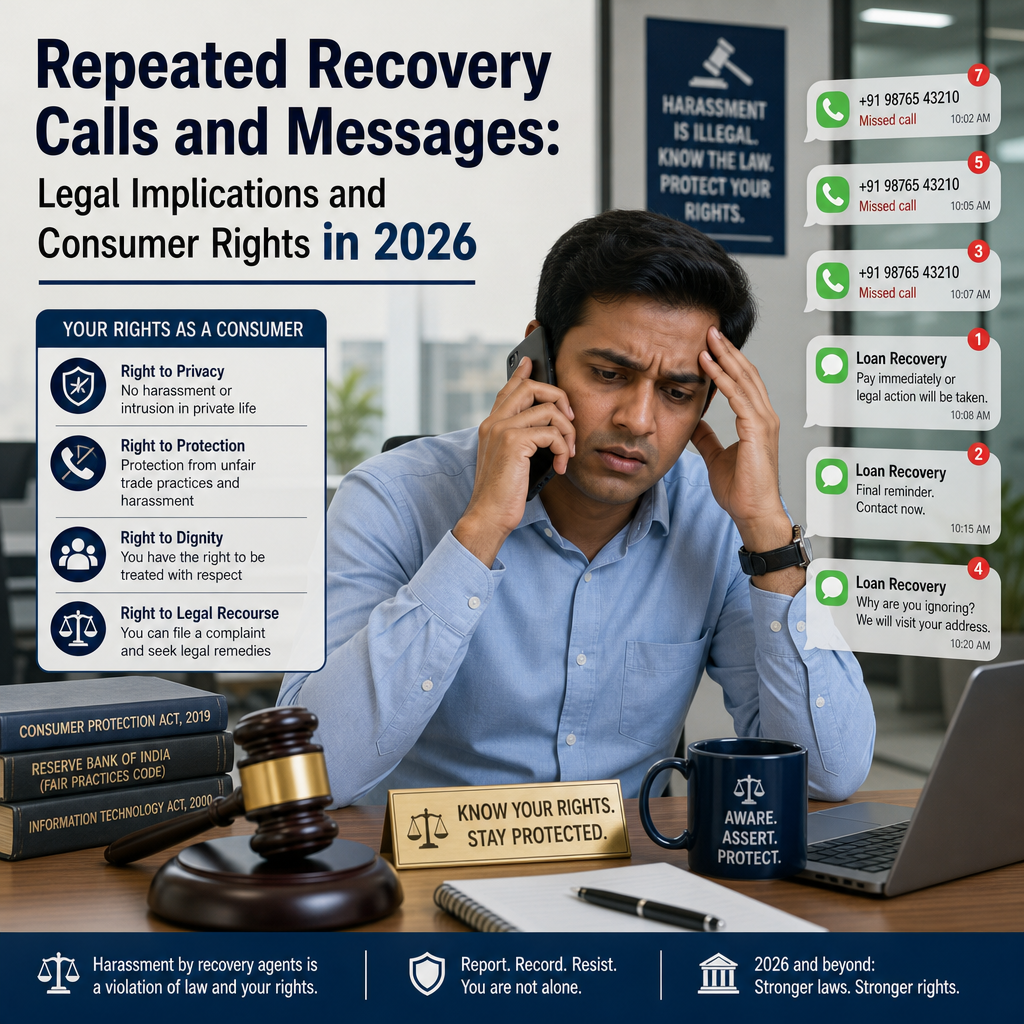
Key Takeaways: Consumers facing repeated recovery calls and messages in India have robust legal protections under the RBI guidelines and the Bharatiya Nyaya Sanhita, 2023. Violations can lead to penalties and legal action against creditors. Individuals can safeguard their rights by gaining awareness of harassment definitions and appropriate legal actions.
Introduction to Repeated Recovery Calls and Messages in India
Repeated recovery calls and messages have become a significant issue for many borrowers in India, leading to concerns about harassment, privacy violations, and consumer protection. In 2026, the legal framework governing these practices is more robust than ever, thanks to comprehensive statutory provisions and judicial interpretations aimed at balancing creditors' rights with borrower protections.
This article delves into the legal implications and consumer rights surrounding repeated recovery calls and messages, offering guidance on how individuals can safeguard their rights and take action against harassment.
Statutory Framework & Governing Legal Provisions
The legal landscape regarding repeated recovery calls and messages is underpinned by several critical regulatory and statutory measures. The Reserve Bank of India (RBI) guidelines form the cornerstone of these regulations, explicitly prohibiting recovery agents from engaging in harassment or employing undue pressure tactics.
Under these guidelines, recovery agents are restricted from contacting borrowers before 8:00 AM or after 7:00 PM. Furthermore, persistent or excessive calls intended to harass are forbidden. Violations of these mandates expose the violating entities to penalties and potentially legal action.
Additionally, the Bharatiya Nyaya Sanhita (BNS), 2023, introduces several provisions directly applicable to harassment through communication:
- Section 78 BNS: Addresses stalking by means of repeated unwanted communication.
- Section 79 BNS: Covers criminal trespass through intrusive communications, such as persistent phone calls intended to annoy or distress.
- Section 351(2) BNS: Pertains to criminal intimidation involving threats aimed at a debtor's person, reputation, or property.
Comprehensive Analysis & Practical Evaluation of Repeated Recovery Calls
As the incidence of repeated recovery calls and messages escalates, consumers must understand both their rights and the practical steps they can take to defend these rights. While creditors are entitled to recover debts, they must operate within a framework of respectful conduct, ensuring that their methods do not amount to harassment or violate privacy norms.
A pivotal Supreme Court ruling in 2026 reaffirmed that creditors' rights do not extend to harassment or intimidation, setting a precedent for how courts may address disputes involving recovery practices.
The following table compares various aspects of legal provisions, procedures, and their strategic implications when facing repeated recovery calls and messages.
| Parameter / Option | Legal Basis & Requirements | Key Procedures / Considerations | Strategic Advantage with Counsel |
|---|---|---|---|
| Contact Timing | RBI Guidelines | Calls restricted to 8:00 AM - 7:00 PM | Advise on non-compliance implications |
| Harassment Definition | BNS Sections 78 & 79 | Prohibit unwanted continuous communication | File complaints effectively |
| Legal Recourse | Consumer Protection Act, BNS | File suit in consumer court | Maximize legal protection |
| Documentation | Indian Evidence Act, Section 65B | Record calls/messages | Utilize as credible evidence |
Comparative Parameters: Legal Framework vs. Consumer Experiences
Despite stringent legal frameworks intended to curb harassment through repeated recovery calls and messages, consumer experiences often diverge from the prescribed norms. This section evaluates the discrepancies between legal expectations and the reality faced by consumers.
Some consumers report that recovery agents disclose their debt information to third parties, contravening the Right to Privacy protections enshrined in Indian law. Such practices are not only unethical but may also result in legal consequences for the offending parties, as borrowers may seek to file complaints through the RBI or Banking Ombudsman.
Key Insights & Data Infographic
Visual summary, statistical trends & procedural breakdown
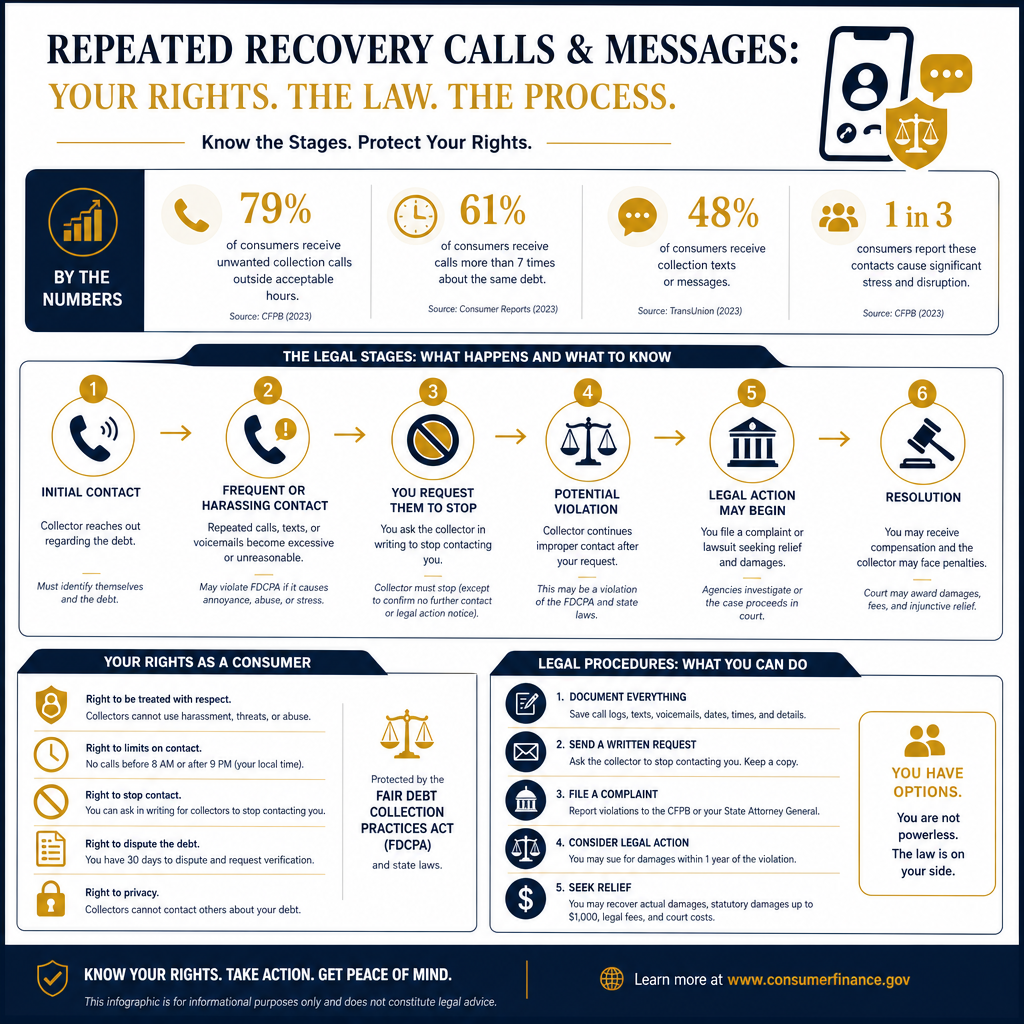
Prepared by AMA Legal Solutions Research & Analytics Team • Data & Compliance Overview

Halt Recovery Agent Harassment Legally
Legal Safeguards, Consumer Rights, and Critical Risks to Avoid
Consumers confronted with repeated recovery calls and messages should be aware of their legal rights, including the right to lodge complaints and pursue legal remedies against violators. Understanding the regulatory guidelines and statutory protections can empower borrowers to take informed steps in defense of their rights.
Key consumer rights include:
- Protection Against Harassment: Borrowers may file complaints with the RBI or Banking Ombudsman when faced with harassment.
- Secrecy of Personal Information: Lenders must refrain from disclosing a borrower's information to unauthorized parties.
- Right to Sue: Borrowers can initiate legal proceedings in civil courts to seek injunctions or damages if they suffer mental distress due to harassment.
- Use of Electronic Evidence: Consumers should document instances of harassment using recordings, which may be admissible as evidence in court under Section 65B of the Indian Evidence Act.
Steps to Take Against Harassment: Filing Complaints & Seeking Remedies
Borrowers facing harassment from repeated recovery calls and messages can undertake several proactive steps to safeguard their rights and pursue corrective measures:
- Document Incidents: Record all communication attempts by recovery agents, including date, time, and content.
- Contact the Lender: Directly reach out to the lender to report the harassment and seek resolution.
- File a Complaint with the RBI: Submit a formal complaint if the lender fails to address the grievance adequately.
- Approach the Banking Ombudsman: Escalate unresolved complaints to the Banking Ombudsman for comprehensive redressal.
- Consider Legal Action: If informal resolutions are ineffective, initiate legal proceedings in consumer forums or civil courts.
Understanding the Role of Regulatory Authorities in Regulating Recovery Practices
The role of regulatory authorities is crucial in overseeing and regulating the practices associated with repeated recovery calls and messages. The RBI and Banking Ombudsman are tasked with ensuring that lenders and their agents adhere to fair recovery practices.
Authorities possess the power to investigate complaints, impose penalties, and compel financial institutions to comply with established guidelines. Their intervention in cases of non-compliance ensures that both creditors' rights and borrowers' rights are balanced appropriately.
Strategic Conclusion: Securing Legal Assurance with AMA Legal Solutions
As the complexities surrounding repeated recovery calls and messages continue to evolve, it is imperative for borrowers to remain informed about their rights and available legal protections. Securing legal assurance through competent counsel can significantly enhance the defense against harassment.
AMA Legal Solutions offers specialized legal services, providing expert guidance and representation to safeguard consumer rights. With a deep understanding of the legal intricacies associated with recovery practices, our advocates are well-equipped to offer tailored advice and robust defense strategies.
If you are facing challenges related to debt recovery harassment, contact AMA Legal Solutions for a consultation to explore your options and enforce your rights effectively. Let us provide you with the assurance and experienced advocacy you need to navigate the legal landscape confidently.
Popular Searches & Topics
Commonly searched legal queries and keywords related to this article
Need Strategic Legal Defense for Your Situation?
Our banking & litigation advocates review your notices, debt liability, and recovery issues under complete advocate-client secrecy.
AMA Legal Solutions
Trusted with a 4.7 Google Rating, over 10,000+ Clients Served, 25,000+ Cases Handled, and more than 40+ Years of Experience in providing strategic legal defense and debt resolution across India.
Our media coverages





Frequently Asked Questions
Related Articles

How to Not Trust Loan Settlement Agencies for Loan Settlement but a Law Firm
Discover reliable alternatives to loan settlement agencies with legal expertise for effective resolutions.
Read Article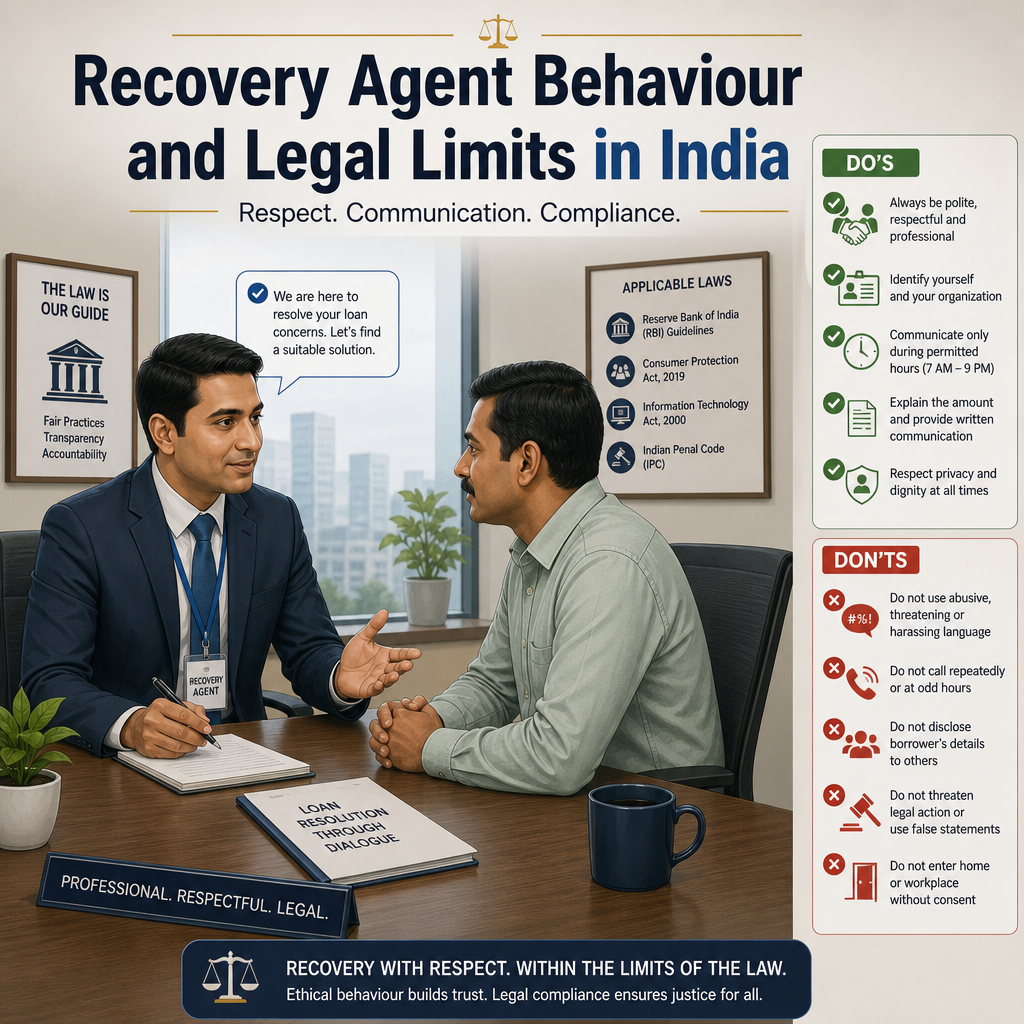
Recovery agent behaviour and legal limits in India (2026)
Understanding the legal framework for recovery agents and their conduct
Read Article
Complaints against abusive recovery practices in India (2026)
Explore your rights and options for addressing abusive recovery practices effectively.
Read ArticleAbout Author
Anuj Anand Malik
View ProfileAnuj Anand Malik, Founder of AMA Legal Solutions, is a trusted advocate, loan settlement expert, legal advisor, and banking lawyer. With over a decade of experience in loan settlement, corporate law, financial disputes, and compliance, he leads a result-driven law firm based in India that helps individuals, startups, and businesses achieve legal and financial stability.
Connect on LinkedInNeed Legal Representation?
Evaluate your defense against recovery agents, notices, or structure your loan settlement directly with Senior Advocates.
Call +91-8700343611