Complaints against abusive recovery practices in India (2026)
Explore your rights and options for addressing abusive recovery practices effectively.

Anuj Anand Malik
Reviewed by AMA Legal Solutions
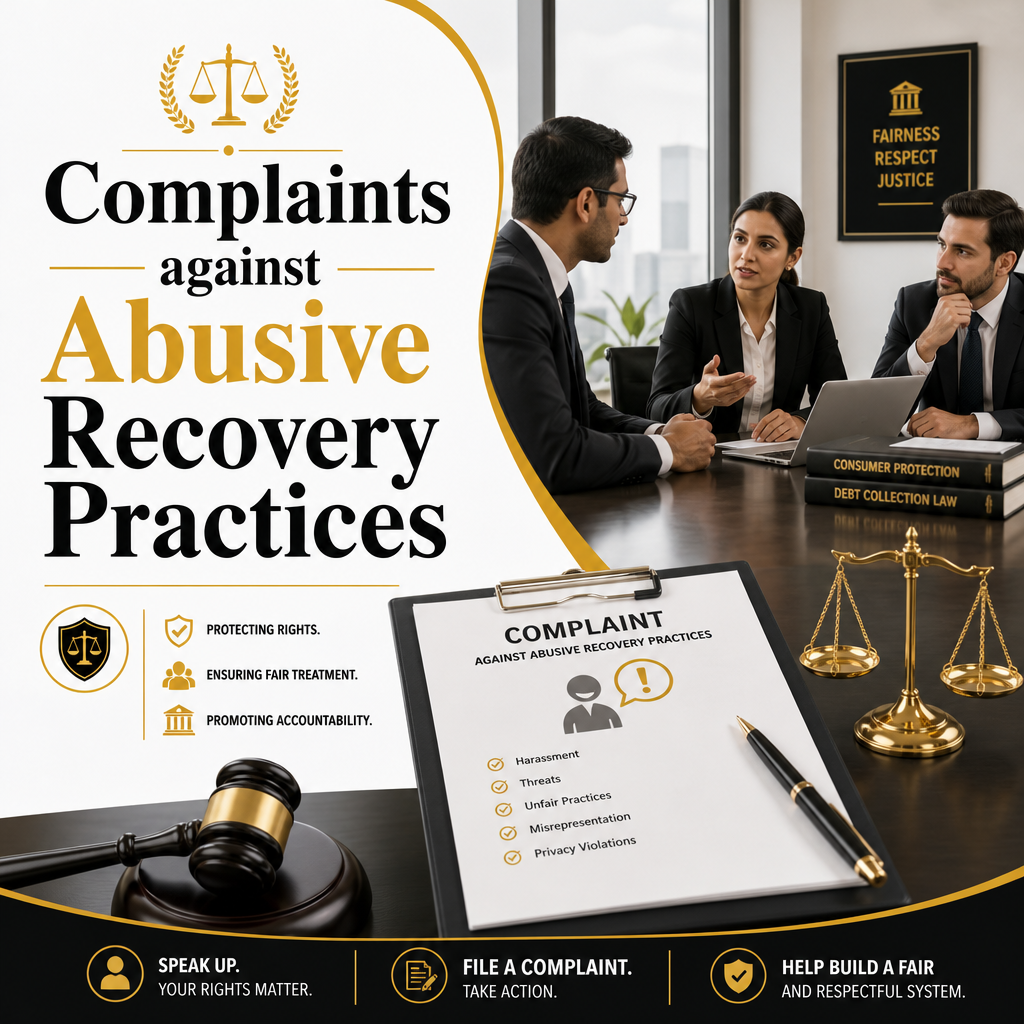
Key Takeaways: Individuals facing abusive recovery practices in India have legal protections under regulations set forth by the RBI and relevant judicial rulings. Borrowers can report unlawful practices like harassment and intimidation and seek redress through appropriate legal channels to reclaim their rights.
Introduction to Complaints against Abusive Recovery Practices in India
In 2026, there is an increasing awareness and growing concern about complaints against abusive recovery practices in India. As lenders attempt to reclaim outstanding debts, it is crucial to ensure that their tactics align with ethical and legal standards. Borrowers finding themselves on the receiving end of harassment or coercive tactics have the right to seek redress. Understanding the framework around these complaints can empower individuals to protect themselves against such unfair practices.
Statutory Framework & Governing Legal Provisions
The Reserve Bank of India (RBI) has established a stringent regulatory framework to curb abusive recovery practices. The Reserve Bank of India (Commercial Banks – Responsible Business Conduct) Second Amendment Directions, 2026 lays down explicit prohibitions against the use of threats, abuse, and other coercive tactics by recovery agents. This regulatory structure is supported by significant judicial decrees, such as the Supreme Court’s ruling in Manager, ICICI Bank Ltd v. Prakash Kaur, which highlights the illegality of forceful loan recovery methods. These legal standards provide a protective shield for borrowers against unnecessary and distressing recovery processes.
Comprehensive Analysis & Practical Evaluation of Abusive Recovery Practices
Complaints against abusive recovery practices commonly stem from behaviors such as verbal harassment, intimidation, and threats. The RBI's guidelines explicitly prohibit practices that demean borrowers or create undue pressure. Furthermore, the misuse of personal information and unauthorized contact with the borrower’s acquaintances are considered serious violations. Implementing proper due diligence when appointing recovery agents and ensuring adherence to specified codes of conduct are vital to maintaining ethical standards in debt recovery.
Comparative Parameters / Procedural Workflow Matrix
| Parameter / Option | Legal Basis & Requirements | Key Procedures / Considerations | Strategic Advantage with Counsel |
|---|---|---|---|
| Use of Threats | Prohibited under RBI Directions | Document Evidence and File a Complaint | Legal Expertise in Handling Intimidation |
| Verbal Harassment | Regulated by RBI, Penal Code | Record Calls and Report to Authorities | Advocate for Compensation and Apology |
| Unlawful Contact | Breach of Privacy Laws | Submit a Privacy Violation Report | Ensure Compliance with Data Protection |
| Unethical Methods | Against Consumer Protection Act | Seek Redress via Consumer Court | Experienced Litigation Support |
| Public Shaming | Violation of Right to Dignity | File a Police FIR and Civil Suit | Representation for Adequate Relief |
Key Insights & Data Infographic
Visual summary, statistical trends & procedural breakdown
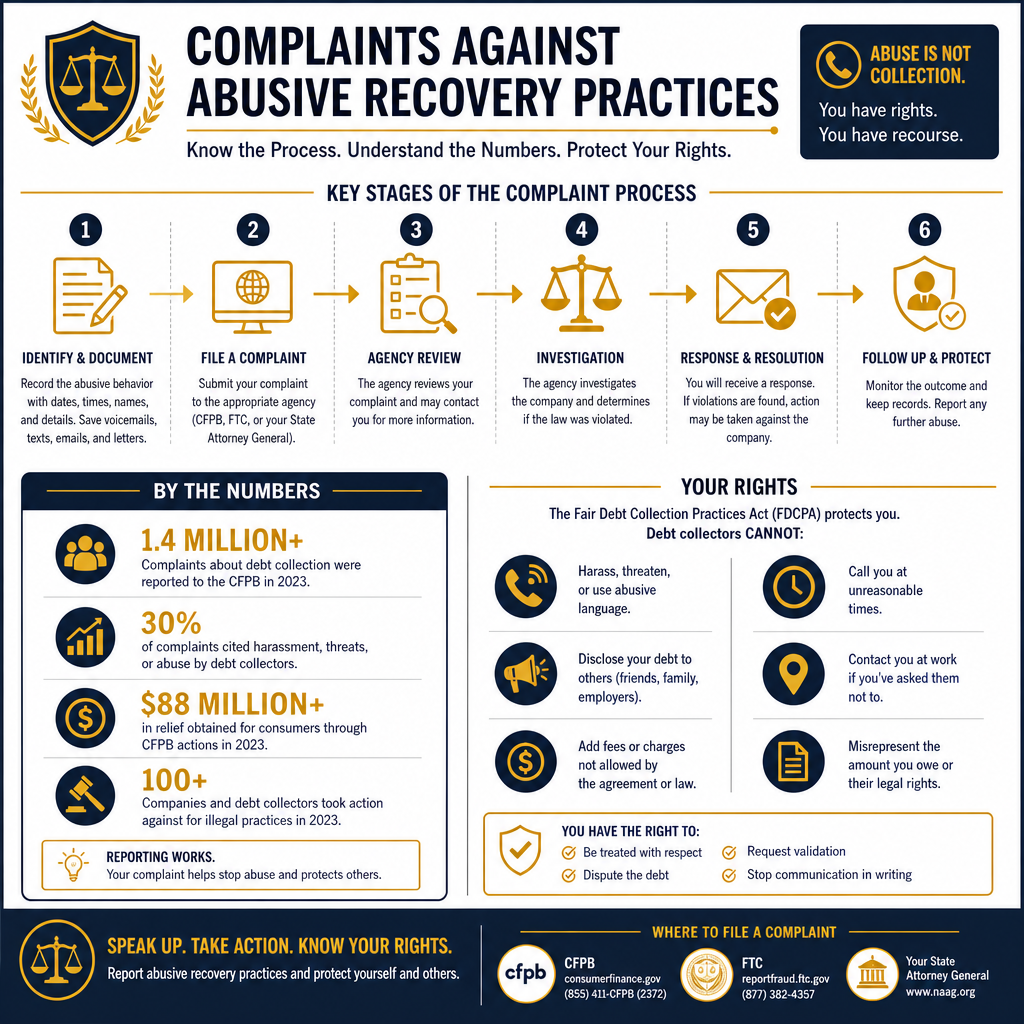
Prepared by AMA Legal Solutions Research & Analytics Team • Data & Compliance Overview

Halt Recovery Agent Harassment Legally
Legal Safeguards, Consumer Rights, and Critical Risks to Avoid
The complaints against abusive recovery practices are supported by several legal safeguards aimed at ensuring the fair treatment of borrowers. Borrowers are entitled to respect and privacy, with communication from recovery agents confined between 8 AM to 7 PM. Additionally, only authorized recovery agents identified by the banks should make contact. Violation of these guidelines can invite complaints to the RBI’s Ombudsman or appropriate legal forums. Consumers should avoid ignoring legitimate communication or failing to document interactions, as this could compromise their defense should disputes arise.
Step-by-Step Process for Filing a Complaint
Here is a step-by-step guide for borrowers wishing to file a complaint against abusive recovery practices:
- Gather Evidence: Collect comprehensive documentation of all interactions with the recovery agents, including call records, messages, and witness statements.
- Submit a Complaint to the Bank: Initiate the complaint process through the bank’s internal grievance redressal mechanism. The bank is mandated to address such issues within 30 days.
- Escalate to the RBI Ombudsman: If the bank’s response is unsatisfactory or delayed, escalate the matter to the RBI’s Integrated Ombudsman Scheme within 90 days of the initial complaint.
- Seek Legal Recourse: In the event of continued harassment, legal action through consumer forums or civil courts may be necessary.
- Consider Expert Legal Advice: Engaging a professional legal service like AMA Legal Solutions can provide expert navigation of the complaint process and representation.
Common Pitfalls and Misconceptions Regarding Recovery Practices
Despite legal frameworks in place, there are common misconceptions about the efficacy of filing complaints against abusive recovery practices. One prevailing myth is that small debts may not warrant legal protection, which is false as all borrowers are entitled to fair treatment regardless of the debt size. Additionally, some believe that private agents can override legal constraints which is contrary to Indian law requiring adherence to prescribed conduct regulations. Borrowers should inform themselves to circumvent these misunderstandings and make informed complaints.
Strategic Conclusion: Securing Legal Assurance with AMA Legal Solutions
Complaints against abusive recovery practices are a serious matter with significant repercussions for affected borrowers. Understanding the legal safeguards available and the procedural steps for complaints is crucial in navigating potential recovery agent misconduct. With the assistance of expert legal professionals such as those at AMA Legal Solutions, borrowers can secure the necessary legal assurance against abusive practices. Our firm offers specialized advocate-led counsel, ensuring a strategic approach to uphold borrower rights and facilitate equitable resolutions. For further assistance, contact AMA Legal Solutions for a consultation.
Popular Searches & Topics
Commonly searched legal queries and keywords related to this article
Need Strategic Legal Defense for Your Situation?
Our banking & litigation advocates review your notices, debt liability, and recovery issues under complete advocate-client secrecy.
AMA Legal Solutions
Trusted with a 4.7 Google Rating, over 10,000+ Clients Served, 25,000+ Cases Handled, and more than 40+ Years of Experience in providing strategic legal defense and debt resolution across India.
Our media coverages





Frequently Asked Questions
Related Articles

How to Not Trust Loan Settlement Agencies for Loan Settlement but a Law Firm
Discover reliable alternatives to loan settlement agencies with legal expertise for effective resolutions.
Read Article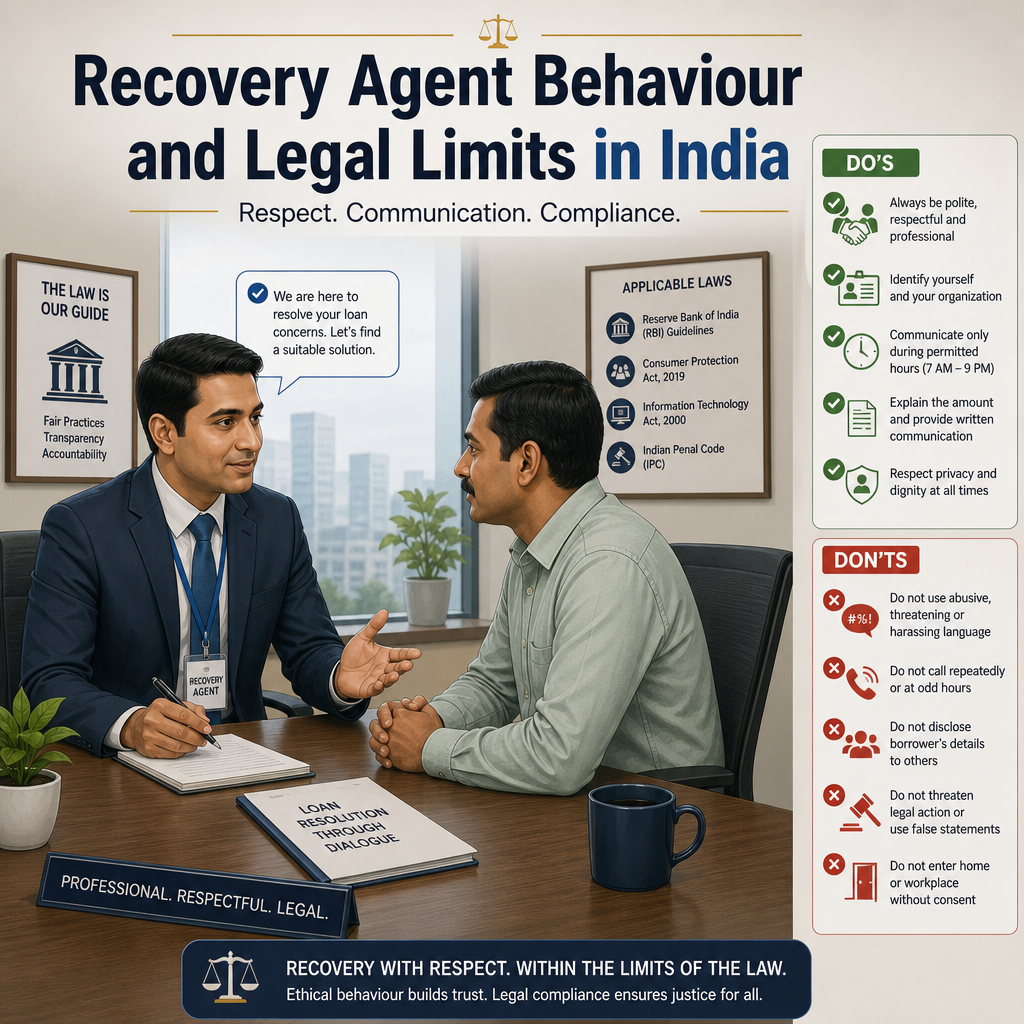
Recovery agent behaviour and legal limits in India (2026)
Understanding the legal framework for recovery agents and their conduct
Read Article
Recovery agents visiting home or workplace: Know Your Rights (2026)
Understand the legal landscape surrounding recovery agents at home or work.
Read ArticleAbout Author
Anuj Anand Malik
View ProfileAnuj Anand Malik, Founder of AMA Legal Solutions, is a trusted advocate, loan settlement expert, legal advisor, and banking lawyer. With over a decade of experience in loan settlement, corporate law, financial disputes, and compliance, he leads a result-driven law firm based in India that helps individuals, startups, and businesses achieve legal and financial stability.
Connect on LinkedInNeed Legal Representation?
Evaluate your defense against recovery agents, notices, or structure your loan settlement directly with Senior Advocates.
Call +91-8700343611