What Happens When a Bank Accepts Reduced Loan Settlement?
Explore if a borrower's liability ends with a reduced loan settlement.

Anuj Anand Malik
Reviewed by AMA Legal Solutions
Introduction to Primary Keyword
In the realm of financial dealings, particularly in the context of loans and borrowings, there are circumstances where a bank might agree to accept a reduced amount as a full and final settlement of a loan. This situation often arises when a borrower faces financial difficulties and is unable to repay the loan in full. The question that naturally arises is: when a bank accepts a reduced amount, what happens to the balance amount, and does the borrower’s liability end completely?
To understand this scenario, it is essential to delve into how banks operate under such agreements. Typically, when a bank agrees to a reduced settlement, it implies that it is foregoing the remaining balance of the loan. However, the legal implications of such settlements can be complex. Generally, once a bank agrees to a full and final settlement, the borrower’s liability concerning the specific loan may end. Nevertheless, this does not happen automatically; the terms of the settlement must be clearly documented and acknowledged by both parties involved.
From a legal perspective, it is crucial for borrowers to ensure that the settlement is documented comprehensively. This documentation should include a "No Dues Certificate" or a similar document provided by the bank, which serves as proof that the bank considers the loan settled. At AMA Legal Solutions, we offer expert guidance in banking and finance law to ensure that our clients' interests are protected during such transactions.
However, borrowers must be cautious about the potential implications on their credit history. A settled account, even when closed, may still be reported to credit agencies, affecting the borrower's credit score. At times, the term "settled" could be noted on credit reports, which might impact future borrowing capabilities. Therefore, understanding the nuances of credit scores and how settlements are viewed by credit bureaus is important. For borrowers seeking advice on managing such scenarios, AMA Legal Solutions can offer personalized assistance.
In conclusion, while a full and final settlement can be a relief for borrowers in financial distress, it is imperative to approach the process with thorough legal understanding and caution. The balance amount forgiven by the bank does not reappear, but ensuring all legal formalities are completed can safeguard against future disputes. Professional legal advice, such as that offered by AMA Legal Solutions’ civil law services, can be invaluable in navigating these complex settlements.
Understanding the Legal Framework of Loan Settlements
The legal framework surrounding loan settlements in India is primarily governed by the regulations set forth by the Reserve Bank of India (RBI) and the specific contractual agreements between the borrower and the lender. When a bank accepts a reduced amount as a full and final settlement of a loan, it signifies a mutual agreement between the parties involved. However, the completion of such a settlement requires meticulous attention to legal details to ensure that the borrower's liability is completely discharged.
In the Indian context, the process of settling a loan through a reduced payment is typically formalized through a written settlement agreement. This document must clearly outline the terms of the settlement, including the agreed-upon reduced amount and the implication that this payment serves as a full discharge of the debt. The legal validity of such an agreement relies heavily on the principle of 'accord and satisfaction,' under which the borrower provides consideration (the reduced amount) in exchange for the creditor's agreement not to pursue the remaining balance.
It is crucial to note that if the settlement agreement is not drafted with precision, legal complications may arise, potentially leading to litigation. Borrowers should ensure that the settlement agreement explicitly states that the lender will not pursue any further claims related to the remaining balance. Legal experts from AMA Legal Solutions can provide invaluable assistance in negotiating and drafting these agreements to safeguard borrowers' interests.
Additionally, understanding the implications of loan settlements on one's credit report is essential. The settlement of a loan for a reduced amount may be reported to credit bureaus, potentially impacting the borrower's credit score. The credit report may reflect the loan as "settled" rather than "paid in full," which can influence future borrowing decisions. Legal guidance from professionals specializing in banking and finance law can help borrowers navigate these complexities.
Finally, it is important for borrowers to ensure that they obtain a 'No Dues Certificate' from the bank once the settlement is concluded. This document serves as proof of the discharge of the borrower’s liability and protects against any future claims by the lender regarding the settled loan. Legal services such as those offered by drafting can aid in securing this critical documentation, ensuring that the borrower's financial and legal obligations are effectively resolved.
What Constitutes a Full and Final Settlement?
A full and final settlement in the context of a loan occurs when a lender, such as a bank, agrees to accept a lump sum payment from the borrower that is less than the total amount owed on the loan. This arrangement is often negotiated when the borrower is unable to meet the original repayment terms due to financial distress. The settlement amount is considered as a complete discharge of the borrower’s liability for the loan. However, there are several important legal and financial implications to consider.
The specifics of a full and final settlement are usually documented in a legally binding agreement that clearly outlines the terms and conditions. This agreement, which can be facilitated by professionals like those at AMA Legal Solutions' Banking and Finance team, ensures that both parties understand the consequences, and that the borrower’s liability is indeed concluded. The documentation will typically include details such as the agreed settlement amount, the deadline for payment, and any conditions that must be met for the settlement to be considered effective.
Once the settlement amount is paid, the balance amount of the loan is effectively waived by the lender. However, it is crucial to ensure that the waiver of the remaining balance is clearly stipulated in the settlement documentation. This is where expert legal advice, such as that from AMA Legal Solutions' Loan Settlement specialists, becomes invaluable. They can help verify that the settlement agreement is comprehensive and that the borrower’s liability is completely extinguished.
It is important to note that while a full and final settlement can relieve the borrower from further financial obligations, it can still have implications on their credit score. The settled status may be recorded in the credit report, potentially impacting future borrowing capabilities. Borrowers should be well-informed about these consequences and may seek guidance from professionals, such as those at AMA Legal Solutions' Corporate services, to understand the wider implications on their financial health.
Furthermore, in some cases, the borrower may need to negotiate the terms of the settlement agreement. Engaging with experienced negotiators or legal advisors, such as those available through AMA Legal Solutions' Arbitration services, can help in achieving a more favorable settlement outcome. These experts can navigate the complex legal terrain to ensure that all parties are satisfied with the resolution.
Ultimately, a full and final settlement signifies the end of a borrower's legal obligation to repay a loan, provided all agreed terms are met. As such, it is a critical financial decision that requires careful consideration and professional advice to protect the borrower's interests. For further assistance, borrowers can explore the array of litigation and drafting services offered by AMA Legal Solutions to ensure a secure and comprehensive settlement process.
Reasons Banks Accept Reduced Settlements
Banks may opt to accept a reduced loan settlement for several reasons, often as part of their strategic financial management and risk mitigation protocols. Understanding these reasons can shed light on how financial institutions operate when dealing with defaulting borrowers, especially in the Indian context.
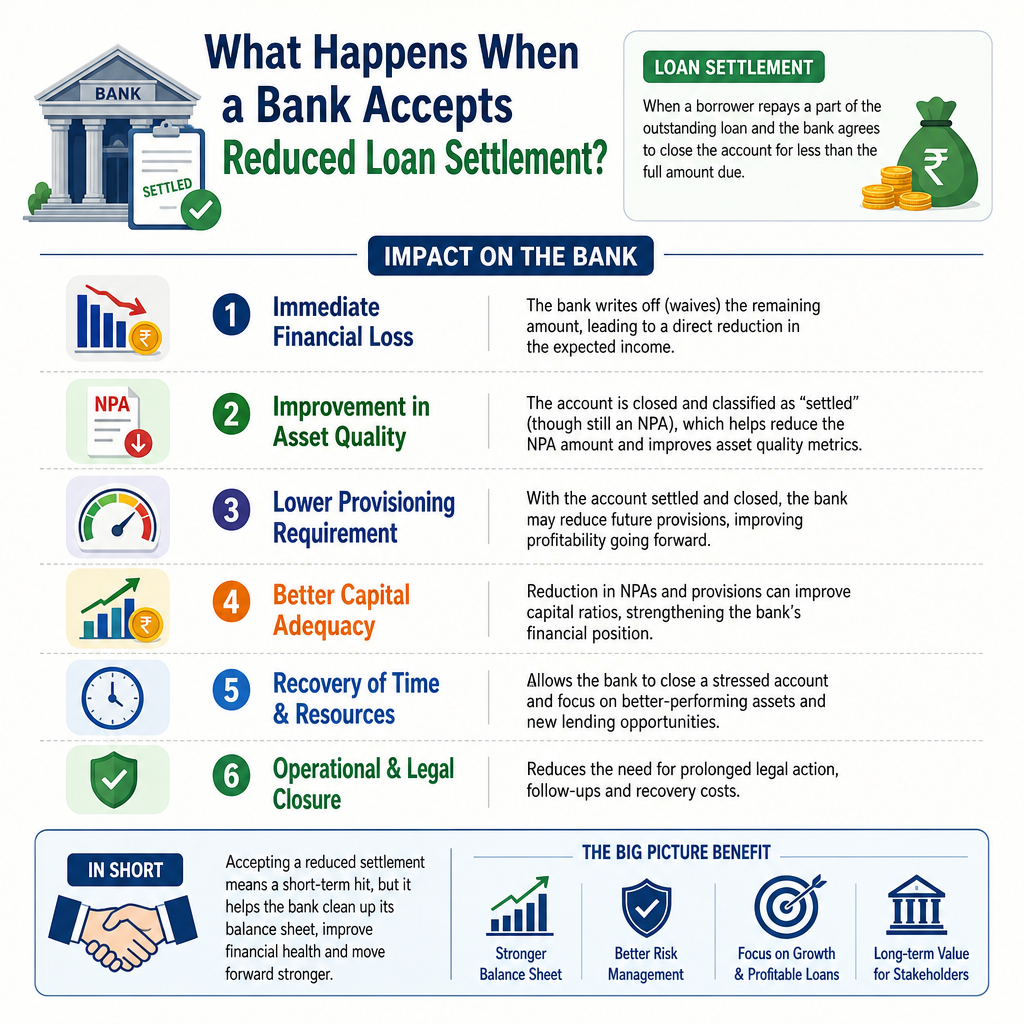
One primary reason banks may agree to a reduced settlement is to minimize losses. When borrowers default on their loans, the recovery process can be lengthy and expensive. By accepting a partial payment as full and final settlement, banks can recover a portion of the outstanding debt without incurring additional legal costs or administrative expenses. This approach can be particularly beneficial when the recovery of the full amount seems unlikely.
Another compelling reason for banks to settle for less is the recognition of financial distress or hardship faced by the borrower. In certain scenarios, borrowers may experience genuine financial difficulties that impair their ability to repay the loan in full. Banks, therefore, might choose to negotiate a reduced settlement if it is clear that the borrower is willing but unable to pay the entire amount. This not only helps maintain a positive relationship with the borrower but also enhances the bank's reputation as a flexible and understanding institution.
The regulatory environment and guidance from the Reserve Bank of India (RBI) can also influence such decisions. RBI guidelines may encourage banks to consider settlements in cases where recovery efforts are deemed non-viable. Moreover, banks are required to classify and manage non-performing assets (NPAs) carefully. A successful settlement allows the bank to reclassify the asset and improve its balance sheet health. For more information on banking regulations, you can refer to our Banking and Finance services.
Banks may also choose to accept reduced settlements to avoid prolonged litigation. Taking a borrower to court can be time-consuming and costly, with uncertain outcomes. By negotiating settlements, banks can achieve quicker resolutions without the need for protracted legal battles. For banks needing assistance with legal matters, exploring Litigation services can be advantageous.
Lastly, competitive market conditions may play a role. In a highly competitive banking environment, retaining customer goodwill can be crucial. By agreeing to settlements, banks can demonstrate customer-centric policies that may encourage future business and referrals. For borrowers seeking advice on negotiating settlements, our Loan Settlement service can provide valuable support.
The Process of Negotiating a Reduced Settlement with a Bank
When a borrower finds themselves unable to meet their loan repayment obligations, negotiating a reduced settlement with the bank can be a viable solution. This process involves several steps and requires a comprehensive understanding of both the borrower’s financial situation and the bank’s expectations. To begin with, the borrower should assess their financial capacity and determine a realistic settlement amount that they can offer to the bank as full and final settlement. This assessment is crucial, as it forms the basis of the negotiation process.
Once the borrower has a clear understanding of what they can afford, the next step involves initiating communication with the bank. This can be done by writing a formal letter to the bank’s loan recovery department, outlining the financial difficulties being faced and proposing a settlement amount. It is important for the borrower to be transparent about their financial situation, providing necessary documents such as income statements, expense reports, and any unforeseen financial obligations that have arisen. Our drafting services at AMA Legal Solutions can assist in crafting a compelling proposal.
After the initial proposal is submitted, the bank will evaluate the borrower’s financial status and the proposed settlement amount. This evaluation process may include a review of the borrower’s credit history, current financial obligations, and any assets that could be liquidated to fulfill the loan. The bank might also consider the cost of pursuing legal action versus accepting the proposed settlement. During this phase, it is advantageous for the borrower to seek professional guidance from experts in banking and finance to ensure all financial aspects are accurately presented.
Negotiations may involve back-and-forth discussions between the borrower and the bank. The borrower should be prepared for the possibility that the bank might counter the initial settlement offer. It is crucial during these negotiations to remain patient and professional, as maintaining a good rapport with the bank can facilitate a mutually agreeable resolution. In some cases, expert advice from professionals in loan settlement may be necessary to navigate complex negotiation tactics.
Once both parties reach an agreement on the reduced settlement amount, it is vital to obtain a written confirmation from the bank. This document should clearly state that the agreed amount is accepted as full and final settlement of the loan, thus releasing the borrower from further liability. Legal experts in civil law can ensure that the settlement agreement is comprehensive and protects the borrower’s interests. With this agreement in place, the borrower’s liability for the remaining balance effectively ends, paving the way for financial recovery and stability.
Legal Implications of Accepting a Reduced Loan Settlement
When a bank accepts a reduced amount as a full and final settlement of a loan, it raises several legal implications that borrowers must be aware of. Understanding these implications is crucial to determine whether the borrower’s liability ends completely or if there are potential future consequences. This understanding can significantly impact one's financial stability and future borrowing capacity.
Firstly, the acceptance of a reduced settlement often involves a legal agreement between the borrower and the bank. This agreement, typically documented in writing, should unequivocally state that the settlement amount is accepted in full satisfaction of the outstanding loan. Borrowers should ensure that this agreement explicitly mentions that the remaining balance will be written off and that no further claims will be pursued by the bank. For more comprehensive legal guidance on such agreements, borrowers can explore drafting services provided by legal experts.
Secondly, the impact on the borrower's credit history is another significant legal consideration. Even though the bank has agreed to the reduced settlement, it may report the settlement to credit bureaus as a settled account rather than a fully paid one. This can adversely affect the borrower’s credit score, making it more challenging to secure loans in the future. Consulting professionals in banking and finance law can help borrowers understand and mitigate the repercussions on their credit standing.
Another critical aspect is the potential tax implications. The amount forgiven by the bank could be considered as income by tax authorities, thereby making it taxable. Borrowers should consult with legal experts to understand how this may affect their tax liabilities. Engaging with firms offering services in corporate law and civil law can provide valuable insights into tax obligations arising from loan settlements.
Finally, borrowers should be aware of the possibility of future disputes. Even after reaching a settlement, issues might arise if the bank inadvertently continues to pursue the remaining balance. In such cases, expertise in arbitration and litigation is essential to resolve these disputes efficiently. Being proactive in understanding the legal implications can protect borrowers from unforeseen complications.

Halt Recovery Agent Harassment Legally
Does a Reduced Settlement Affect the Borrower's Credit Score?
When a borrower and bank reach an agreement for a reduced settlement to close a loan, it is often seen as a practical solution for both parties. However, borrowers must be aware of the potential implications this arrangement has on their credit score, which can significantly influence their financial future.
In India, credit scores are crucial for accessing financial services, and the Reserve Bank of India (RBI) guidelines dictate how financial institutions report settlements. When a bank accepts a reduced amount as full and final settlement, this information is typically reported to credit bureaus such as CIBIL or Experian. This reporting can negatively impact the borrower's credit score because the account is often marked as "settled" rather than "closed," indicating that the full amount was not repaid. This label can suggest to future lenders that the borrower posed a risk, as they did not fulfill the original loan terms.
A reduced settlement can lead to a decrease in credit score, which may affect the borrower's ability to secure loans in the future. The drop in credit score is due to the perception of increased credit risk. As a result, borrowers might face higher interest rates, reduced credit limits, or even denial of future credit applications. For individuals looking to improve their creditworthiness, consulting experts in banking and finance or loan settlement could provide valuable guidance on navigating these challenges.
It is essential for borrowers to weigh the long-term effects of a reduced settlement on their credit profile. While it may offer immediate relief from debt, the lasting impact on credit scores could necessitate strategic financial planning and advice from legal professionals. Engaging with services in corporate or civil law may provide additional insights on managing and mitigating such impacts.
To mitigate the adverse effects on their credit score, borrowers should focus on rebuilding their credit history. This can be achieved by maintaining timely payments on any existing obligations and avoiding additional debt until their credit score recovers. Borrowers might also benefit from personalized advice from experts in drafting and litigation to explore options for improving their credit standing.
What Happens to the Remaining Balance After Settlement?
When a bank agrees to accept a reduced amount as a full and final settlement of a loan, the outcome for the remaining balance largely depends on the terms negotiated between the borrower and the financial institution. This settlement process is often referred to as a "loan settlement" or "debt settlement," which can have varying implications on the borrower's financial obligations and credit standing.
In most cases, when the bank accepts a reduced payment, the remaining balance is written off by the bank. This means that the bank acknowledges that it will not pursue the borrower for the unpaid portion of the loan. However, it is crucial for borrowers to obtain a written agreement from the bank confirming that the settlement amount is indeed considered full and final. This documentation serves as protection against future claims by the bank or debt collectors. For expert guidance on negotiating such agreements, borrowers can explore the loan settlement services offered by AMA Legal Solutions.
Despite the settlement, the act of writing off the balance does not entirely shield borrowers from all consequences. One significant impact is on the borrower's credit report. The credit report will typically reflect the settlement, which may be viewed negatively by future lenders, as it indicates that the borrower was unable to repay the full loan amount. It's important for the borrower to understand these implications, and seeking advice from professionals in banking and finance law can provide clarity and strategic solutions.
Moreover, the borrower should be aware of potential tax implications. In India, under certain circumstances, the amount of debt forgiven can be considered as income, which may be taxable. Consulting with legal and financial experts can clarify these aspects and help in planning appropriately to avoid unexpected tax liabilities. Borrowers can leverage the knowledge of professionals from services like corporate law and taxation law to navigate these issues effectively.
Finally, while the borrower's immediate financial liability to the bank may cease after a settlement, it's essential to remain vigilant against any unforeseen claims. Engaging experienced legal professionals in litigation and arbitration can provide robust defense against any post-settlement disputes. In conclusion, while a reduced loan settlement can offer relief, it is essential to approach it with comprehensive legal understanding and strategic planning to safeguard one's financial future. AMA Legal Solutions offers a wide range of legal services to assist borrowers in managing these complexities efficiently.
Is the Borrower's Liability Completely Ended?
When a bank agrees to accept a reduced amount as full and final settlement of a loan, it signifies that the lender is willing to close the loan account by accepting less than the total amount due. However, this does not necessarily mean that the borrower's liability is entirely extinguished. Understanding the nuances of such agreements is crucial for borrowers, particularly in the Indian financial landscape, where the implications can be significant.
First and foremost, the acceptance of a reduced settlement amount does not automatically erase the borrower's liability unless explicitly stated in the settlement agreement. The language of the agreement is paramount. It must clearly indicate that the settlement is "in full and final settlement" of the outstanding amount. Without such clarity, borrowers may still be pursued for the remaining balance. Legal expertise, such as that offered by AMA Legal Solutions' Banking and Finance team, can be invaluable in ensuring that the terms are precisely articulated.
Moreover, even if the bank agrees to write off the remaining debt, this does not always shield the borrower from all consequences. In India, banks typically report such settlements to credit bureaus, which can adversely affect the borrower's credit score. A settlement may flag the borrower's credit report, potentially impacting future loan approvals or interest rates. This underscores the importance of engaging with legal professionals, like those in AMA Legal Solutions' Loan Settlement services, who can provide strategic advice tailored to the borrower's financial situation.
In some cases, the settlement may be accompanied by additional clauses that could have long-term implications, such as a confidentiality agreement or a non-disparagement clause. Such clauses may restrict the borrower’s actions or statements post-settlement. Thus, it is advisable to review these terms with a legal expert to fully comprehend their impact. For comprehensive legal assistance in understanding these clauses, AMA Legal Solutions' Drafting service can offer meticulous support.
Additionally, it's important to consider that while the bank may not pursue the borrower for the remaining balance, third-party collection agencies might still attempt to recover the written-off amount. Borrowers should be aware of their rights in such scenarios and may need to engage in litigation services to resolve any disputes that arise. Engaging in constructive dialogue facilitated by legal experts can often preempt such issues.
In conclusion, while the acceptance of a reduced settlement can potentially end the financial obligation towards the bank, it does not automatically eliminate all liabilities or consequences. Borrowers must approach these settlements with a clear understanding of the terms and a strategic plan for future financial management. Legal guidance from AMA Legal Solutions' Corporate team can provide the necessary insights and foresight in navigating these complex situations.
Potential Consequences for Borrowers Post-Settlement
When a bank accepts a reduced amount as full and final settlement of a loan, it often seems like a relief for borrowers. However, it is crucial to understand the potential consequences that follow such a settlement. While the immediate pressure of loan repayment may be alleviated, the borrower may still face various implications that could affect their financial standing and creditworthiness.
Firstly, settling a loan for a reduced amount typically results in a negative impact on the borrower's credit score. Although the outstanding balance may be considered settled, it is often reported to credit bureaus as a "settled" account rather than "paid in full." This distinction can adversely affect the borrower's credit report, potentially lowering their credit score and making it difficult to secure future loans or credit facilities. For comprehensive advice on managing credit post-settlement, borrowers can consult with experts in banking and finance at AMA Legal Solutions.
Additionally, while the legal obligation to repay the full loan amount may cease, the possibility of future financial disputes cannot be entirely dismissed. Sometimes, banks may still pursue the remaining balance through legal channels, especially if the settlement terms were not adequately documented or agreed upon. In such cases, borrowers might require legal assistance in litigation to resolve any ensuing conflicts and ensure their rights are protected.
Moreover, borrowers should be aware of the tax implications that might arise from a loan settlement. In India, the amount forgiven by the bank may be considered as income, subjecting the borrower to income tax on the forgiven debt amount. Consulting with legal professionals in corporate law at AMA Legal Solutions can provide clarity on these tax liabilities and help in making informed decisions.
Furthermore, loan settlements can also affect the borrower’s relationship with the bank. A settled loan might make future interactions with the same bank challenging, as it may view the borrower as a higher risk. Consequently, obtaining new loans might come with stringent terms and higher interest rates. It's advisable for borrowers to engage with loan settlement experts who can negotiate better terms on their behalf.
In conclusion, while a loan settlement can provide immediate relief, it is essential for borrowers to consider the potential long-term consequences carefully. Engaging with legal professionals and understanding the broader implications can help mitigate these risks and ensure financial stability moving forward.
Case Studies: Real-life Examples of Reduced Loan Settlements
In today's complex financial landscape, borrowers may find themselves struggling to meet their loan obligations. In such scenarios, banks sometimes accept a reduced amount as full and final settlement of a loan to facilitate recovery. However, understanding the implications on the remaining balance and the borrower's liability is crucial. Let's delve into some real-life case studies to gain a deeper understanding.
Case Study 1: The Small Business Owner
A small business owner in Mumbai faced significant financial challenges due to an economic downturn, resulting in her inability to repay her ₹20 lakh business loan. After negotiations, the bank agreed to accept ₹12 lakh as a full and final settlement. The remaining ₹8 lakh was written off by the bank, effectively ending her liability. However, this action impacted her credit score negatively, affecting her ability to secure loans in the future. For similar scenarios, it is advisable to consult with professionals in banking and finance to explore all possible options.
Case Study 2: The Homeowner's Dilemma
In another instance, a homeowner in Bangalore was unable to continue payments on his home loan due to job loss. The outstanding loan amount was ₹50 lakh. The bank agreed to a reduced settlement of ₹35 lakh. While the bank closed the case on their books, the homeowner was still listed as a defaulter. This underscores the importance of understanding the real estate nuances and seeking expert legal advice before proceeding with such settlements.
Case Study 3: The Entrepreneur's Rescue
An entrepreneur in Hyderabad with a ₹15 lakh personal loan found his business failing, making repayments impossible. The bank proposed a settlement where he paid ₹9 lakh. The bank waived the remaining balance, and the borrower was no longer pursued for the outstanding amount. Nonetheless, the record of settlement impacted his creditworthiness. Entrepreneurs can benefit from tailored advice from loan settlement specialists to navigate these challenges effectively.
Case Study 4: The Farmer's Relief
A farmer in Tamil Nadu, burdened by debt from crop failure, owed ₹5 lakh. The bank agreed to accept ₹3 lakh in settlement. While the remaining ₹2 lakh was written off, the farmer’s credit report reflected the settlement, affecting future borrowing potential. Engaging with civil law experts could provide guidance on managing such outcomes.
These cases illustrate the diverse outcomes of reduced loan settlements and the importance of informed decision-making. Borrowers must weigh the immediate relief against potential long-term consequences. Engaging with legal professionals, such as those at AMA Legal Solutions, can provide valuable insights and support in navigating these complex situations.
Conclusion: Navigating Reduced Loan Settlements Wisely
When a bank accepts a reduced amount as full and final settlement of a loan, understanding the implications on the remaining balance and the borrower's liability is crucial. In India, while such settlements can provide much-needed financial relief, they also require careful consideration and strategic management. A reduced settlement, once agreed upon, typically clears the borrower of further liability concerning that specific loan, provided all conditions of the settlement are met. However, it is essential to recognize that this does not necessarily mean the end of all financial responsibilities.
Firstly, borrowers should ensure that the settlement agreement is documented thoroughly and includes a clear statement that the reduced amount is accepted as full and final settlement. This legal safeguard can prevent future disputes over any remaining balances. Additionally, borrowers should obtain a 'No Objection Certificate' from the bank, confirming that their liability has been extinguished. Engaging legal experts from AMA Legal Solutions' Banking and Finance Services can provide valuable assistance in reviewing and drafting these critical documents.
It is also important to consider the potential impact on one's credit score. Although a settled loan may relieve immediate financial burdens, it can reflect negatively on a borrower's credit report, potentially affecting future borrowing capacity. Borrowers might benefit from consulting with financial advisors or legal consultants to fully understand these implications and develop strategies to rebuild their credit standing post-settlement. For personalized advice, AMA Legal Solutions' Loan Settlement Services can offer tailored guidance to navigate these challenges effectively.
In the event of any disputes or misunderstandings arising from the settlement agreement, borrowers may consider alternative dispute resolution methods such as arbitration. This can be a more efficient and less adversarial way to resolve conflicts without resorting to lengthy litigation. Arbitration Services at AMA Legal Solutions can help facilitate this process, ensuring fair and expedient outcomes.
Ultimately, while settling a loan for a reduced amount can be a beneficial step toward financial freedom, it requires a strategic approach. Borrowers should consider the long-term implications, including potential legal or financial repercussions, and proactively manage their financial health. By leveraging professional legal services, as provided by AMA Legal Solutions, borrowers can navigate the complexities of loan settlements with confidence and clarity.
Need Strategic Legal Defense for Your Situation?
Our banking & litigation advocates review your notices, debt liability, and recovery issues under complete advocate-client secrecy.

AMA Legal Solutions
Trusted with a 4.7 Google Rating, over 10,000+ Clients Served, 25,000+ Cases Handled, and more than 40+ Years of Experience in providing strategic legal defense and debt resolution across India.
Our media coverages





Client Reviews
"AMA Legal Solutions provided exceptional guidance during my loan settlement process. They ensured every detail was documented, giving me complete peace of mind."
Rahul Mehta
"Choosing AMA Legal Solutions was the best decision for my loan settlement. They handled everything professionally, ensuring no loose ends were left."
Sneha Reddy
"The team at AMA Legal Solutions was incredibly supportive and knowledgeable. Their expertise helped me navigate the loan settlement smoothly, protecting my interests."
Priya Kapoor
"Thanks to AMA Legal Solutions, I was able to settle my loan with confidence. Their attention to detail and thorough documentation were invaluable."
Vikram Gupta
"I was worried about my credit score post-settlement, but AMA Legal Solutions helped me understand all implications and secured my financial future. Highly recommend them!"
Anjali Sharma
Frequently Asked Questions
Related Articles
RuPay Credit Card on UPI Default & Credit Line on UPI Settlement (2026)
Micro-transactions on RuPay UPI Credit Cards and pre-approved 'Credit Lines on UPI' have triggered a massive wave of 42%+ APR revolving debt traps. Find out if defaulting blocks your personal savings UPI and how to settle RuPay UPI credit dues for 30%–50%.
Read Article
Paytm, PhonePe & BharatPe Daily EDI Merchant Loan Settlement (2026)
Drowning in Equated Daily Installment (EDI) merchant loans where 100% of your daily QR Soundbox collections are auto-swept before you can pay suppliers or rent? Learn how retail shopkeepers and MSMEs legally halt QR sweeps and negotiate a 50%+ OTS.
Read Article
Can Bank or Loan App Remotely Lock Phone for EMI Default? RBI Rules (2026)
An investigative breakdown of RBI's Remote Device Locking Directions—explaining why lenders cannot lock your phone for personal loans, the mandatory 30/60 DPD safeguards on financed devices, the Rs. 250/hour delay penalty, and how to settle device & app loans.
Read ArticleAbout Author
Anuj Anand Malik
View ProfileAnuj Anand Malik, Founder of AMA Legal Solutions, is a trusted advocate, loan settlement expert, legal advisor, and banking lawyer. With over a decade of experience in loan settlement, corporate law, financial disputes, and compliance, he leads a result-driven law firm based in India that helps individuals, startups, and businesses achieve legal and financial stability.
Connect on LinkedInNeed Legal Representation?
Evaluate your defense against recovery agents, notices, or structure your loan settlement directly with Senior Advocates.
Call +91-8700343611