Mastering Loan Settlement: A Law Firm's Perspective
Essential legal insights for successful loan settlements in India.

Anuj Anand Malik
Reviewed by AMA Legal Solutions
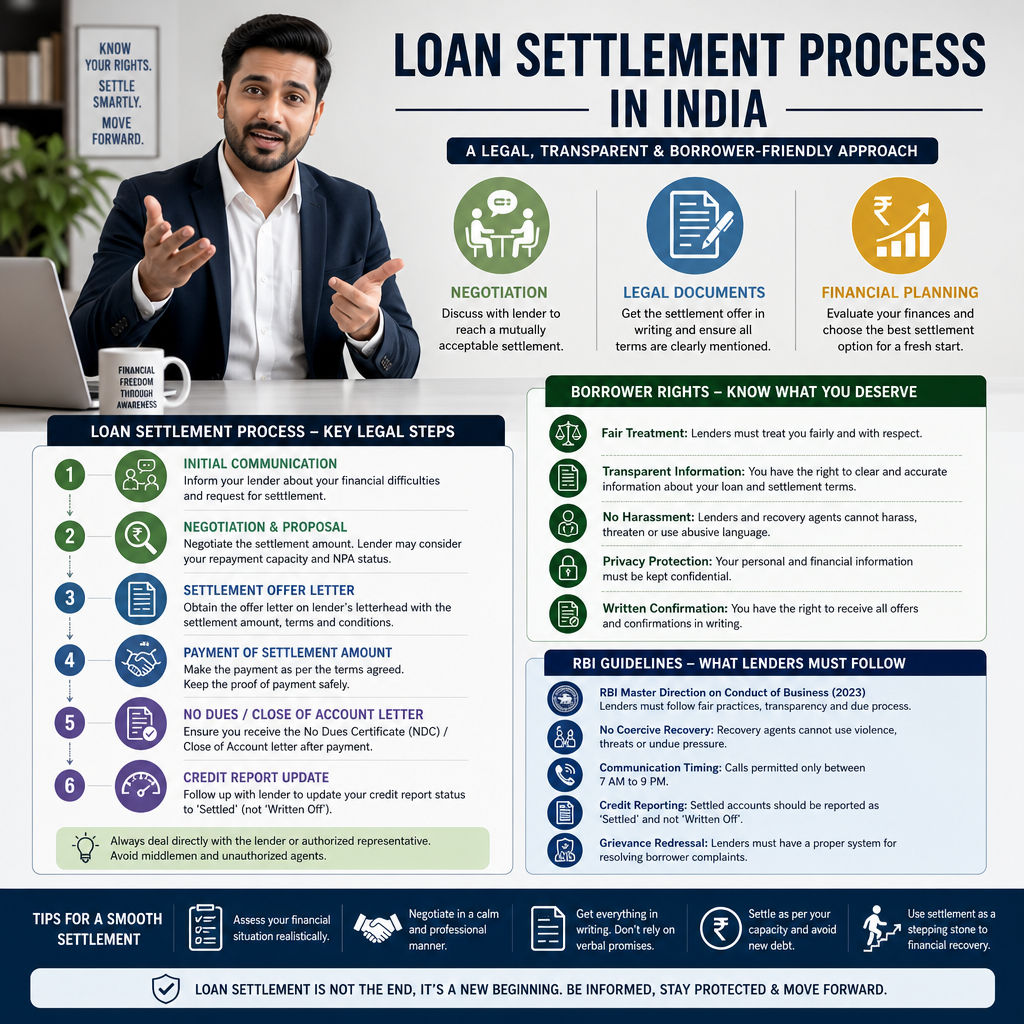
Introduction to Loan Settlement from a Legal Standpoint
Loan settlement is a crucial aspect of financial dispute resolution, particularly for Indian borrowers facing difficulties with debt repayment. From a legal standpoint, loan settlement involves negotiating with financial institutions to reach an agreement that reduces the outstanding debt amount for borrowers, enabling them to fulfill their obligations feasibly. This process can be intricate, as it requires a deep understanding of banking laws, regulatory guidelines, and practical negotiation strategies.
For borrowers, knowing the legal framework governing loan settlements is essential. The Reserve Bank of India (RBI) provides specific guidelines that banks must follow, which are designed to protect borrowers while ensuring that financial institutions can recover a portion of their loans. An effective loan settlement requires meticulous documentation, transparent communication, and a strategic approach to negotiation. Legal expertise can significantly aid borrowers in navigating these complexities by ensuring adherence to RBI guidelines and leveraging legal rights effectively.
Moreover, loan settlements are not just about reducing financial liabilities; they also involve safeguarding one's credit score and financial future. Engaging a law firm can provide borrowers with a strategic advantage by facilitating negotiations, preventing harassment by recovery agents, and ensuring that the settlement terms are fair and legally binding. This legal insight is pivotal in reaching a resolution that is beneficial for both borrowers and lenders.
Understanding the Legal Framework Governing Loan Settlements
Loan settlements in India are governed by a comprehensive legal framework that protects both borrowers and lenders. Central to this framework is the Reserve Bank of India (RBI) guidelines that dictate fair practices for loan recovery. These guidelines emphasize the need for transparent communication and prohibit harassment by recovery agents.
The Securitisation and Reconstruction of Financial Assets and Enforcement of Security Interest Act, 2002 (SARFAESI) empowers banks to recover non-performing assets (NPAs) without court intervention. However, borrowers retain rights to object and seek redressal, ensuring a balanced process.
Additionally, the Insolvency and Bankruptcy Code, 2016 offers an avenue for borrowers facing insolvency to negotiate settlements while protecting their rights. Courts often encourage out-of-court settlements to alleviate burdens on the judicial system, making mediation a viable option.
Key Legal Considerations
- Notice Period: Borrowers are entitled to a notice period before legal action under SARFAESI, allowing time for settlement negotiations.
- Fair Practices Code: Lenders must adhere to ethical collection practices, avoiding coercion.
- Legal Recourse: Disputes can be contested in Debt Recovery Tribunals (DRT).
Understanding these legal nuances is critical for borrowers aiming for a successful settlement. Legal expertise ensures compliance and maximizes the chances of an amicable resolution.
Navigating RBI Guidelines and Consumer Rights in Loan Settlements
Understanding RBI guidelines and consumer rights is critical in loan settlements. The Reserve Bank of India (RBI) has set frameworks that banks must follow, ensuring fair play and transparency. For borrowers, knowing these guidelines can empower them to negotiate effectively and safeguard their rights.
Key RBI Guidelines
- One-Time Settlement: RBI allows banks to offer a one-time settlement to clear non-performing assets, typically involving a waiver of interest or penalties.
- Fair Practices Code: Banks must adhere to the Fair Practices Code, ensuring clarity in communication and just treatment of borrowers.
- Grievance Redressal: Banks must have a robust grievance redressal mechanism, ensuring complaints are addressed promptly and fairly.
Consumer Rights in Loan Settlements
- Right to Information: Borrowers can request detailed information about their loan accounts, including outstanding amounts and settlement terms.
- Right to Fair Treatment: Recovery agents must adhere to ethical practices, respecting borrower dignity and privacy.
- Dispute Resolution: Borrowers can approach the Banking Ombudsman if disputes remain unresolved.
Leveraging these guidelines and rights ensures borrowers are well-informed and better positioned to negotiate favorable loan settlements, minimizing potential legal pitfalls and stress.
Common Challenges Faced by Borrowers in Loan Settlement Negotiations
Loan settlement negotiations can be daunting for borrowers, often due to a lack of understanding and preparedness. One primary challenge is the imbalance of power; banks have experienced legal teams, whereas borrowers might not be as knowledgeable about their rights under Indian banking laws. This can lead to unfair terms if borrowers are not adequately represented.
Another hurdle is the pressure to settle quickly. Borrowers often face aggressive recovery tactics, leading to rushed decisions. It's crucial to remain patient and consider long-term implications rather than succumbing to immediate pressure. Additionally, borrowers may encounter communication barriers. Complex financial jargon can obscure terms, making it essential to have legal assistance to ensure clarity.
Financial Documentation and Credibility
Maintaining accurate and organized financial documentation is another challenge. Banks require comprehensive records to assess settlement proposals, and any discrepancies can hinder negotiations. Borrowers need to ensure all financial statements are accurate and up-to-date to establish credibility.
- Emotional Stress: Financial distress can cloud judgment. It's vital to approach negotiations rationally rather than emotionally.
- Unrealistic Expectations: Borrowers often expect significant debt reductions, which may not align with the bank’s policies or financial assessments.
- Legal Complexities: Understanding the legal ramifications of settlement agreements requires expertise, emphasizing the importance of professional legal guidance.
By identifying these challenges early and seeking expert legal advice, borrowers can navigate the settlement process more effectively.
The Role of Banking Litigation in Loan Settlements
Banking litigation is a pivotal aspect of loan settlements, providing a structured mechanism for addressing disputes between borrowers and lenders. When negotiations stall or a borrower feels aggrieved by unfair practices, litigation can offer a legal avenue to resolve these issues. Through litigation, borrowers can challenge exorbitant interest rates, unfair terms, or arbitrary recovery actions.
When is Banking Litigation Necessary?
Litigation becomes necessary when amicable settlement discussions fail or when a borrower encounters legal violations by the lending institution. For instance, if a bank breaches the RBI guidelines on recovery practices, borrowers have the right to pursue legal action.
Common Litigation Processes
- Filing a complaint in the appropriate court or tribunal
- Presenting evidence and arguments for unfair practices
- Seeking judicial intervention for restructuring or waiving certain loan conditions
Engaging in banking litigation requires a thorough understanding of both legal intricacies and financial documentation. An experienced law firm can effectively navigate these complexities, ensuring that borrowers' rights are upheld while also seeking feasible loan restructuring solutions. It is crucial that borrowers partner with legal experts who specialize in banking law to maximize their chances of a favorable outcome.
Effective Strategies for Negotiating with Banks
Successfully negotiating with banks for loan settlement requires a strategic approach. As a borrower, understanding your rights and the bank's procedures is crucial. Here's how you can effectively negotiate a settlement:
Prepare Thoroughly
- Document Your Situation: Clearly outline why you're unable to meet current obligations. Include financial statements, employment status, and any extenuating circumstances.
- Understand the Bank's Position: Familiarize yourself with the bank's internal policies on non-performing assets (NPA) and typical recovery timelines.
Communicate Strategically
- Choose the Right Channels: Initiate discussions via email to keep a record of all communications. Reserve phone calls for urgent matters.
- Be Transparent: While speaking with bank officials, provide honest information about your repayment capacity and suggest feasible repayment plans.
Negotiate Terms
- Propose Realistic Offers: Base your offers on what you can realistically repay, considering a lump sum or structured payment plan.
- Highlight the Benefits: Emphasize how a settlement is beneficial for both parties, reducing prolonged recovery processes and legal costs.
Involve a Legal Expert
- Seek Professional Advice: Consult with a legal expert to understand the legal implications and to ensure the settlement is in your favor.
- Leverage Legal Precedents: Use relevant RBI guidelines and past judgments to strengthen your position.

Halt Recovery Agent Harassment Legally
Mistakes to Avoid During Loan Settlement Process
Settling a loan can be complex, and missteps can have lasting consequences. Here are critical mistakes to avoid:
1. Ignoring Communication from Banks
Failing to respond to bank notices can escalate issues. Always acknowledge receipt and communicate proactively. Silence might be misinterpreted as evasion, reducing negotiation leverage.
2. Missing Documentation
Inadequate documentation can weaken your case. Maintain records of all communications, repayments, and legal notices. Incomplete documentation can prolong settlement discussions.
3. Accepting Verbal Agreements
Verbal commitments hold no legal weight. Insist on written agreements, detailing terms and conditions, to avoid future disputes.
4. Underestimating Legal Help
Some believe they can handle settlements independently. However, legal advice ensures your rights are protected, and settlements are fair. A seasoned lawyer can navigate complexities efficiently.
5. Overlooking Financial Capacity
Commit only to what's feasible. Overcommitting can worsen financial strain. Analyze your financial capacity before agreeing to repayment terms.
6. Delaying Actions
Time-sensitive negotiations demand prompt actions. Delays can lead to unfavorable terms or legal actions. Address issues swiftly to maintain control over the settlement process.
By avoiding these pitfalls, borrowers can navigate the loan settlement process more effectively, ensuring a favorable outcome while preserving their financial health.
How Banks Classify NPAs and Its Impact on Settlements
Non-Performing Assets (NPAs) are loans or advances where the borrower has stopped making interest or principal repayments for 90 days. Banks categorize them as Substandard, Doubtful, or Loss assets. This classification impacts loan settlements significantly, as it influences a bank's strategy for recovery and provisions.
NPA Classification
- Substandard Assets: Assets which have remained NPA for less than or equal to 12 months. Banks focus on early recovery strategies for these assets.
- Doubtful Assets: Assets which have been in the substandard category for 12 months. They are considered risky, prompting banks to demand higher settlements.
- Loss Assets: Assets where the loss is identified by the bank or auditors but not wholly written off. Settlements here are often aggressive, as banks seek to minimize losses.
The classification affects settlements as banks must adhere to RBI guidelines which dictate the provision norms based on asset classification. Higher provisions reduce a bank's profit, making settlements a priority to improve their financial health.
Understanding this classification helps borrowers negotiate effectively, as banks may prefer settlements to move NPAs off their balance sheets quickly. However, borrowers should be aware of potential risks, such as unfavorable terms or excessive pressure during negotiations.
Legal Recourse: What to Do When Negotiations Fail
When settlement negotiations with banks or financial institutions do not yield favorable results, it's crucial to explore legal recourse as a viable option. Legal action can be both a shield and a sword, providing protection against aggressive recovery methods while also compelling financial institutions to reconsider their stance.
Understanding Your Legal Rights
Indian borrowers have specific rights under the RBI guidelines and consumer protection laws. Familiarize yourself with these rights to ensure banks do not exploit loopholes to your disadvantage. RBI mandates fair debt collection practices, and violations can be contested in court.
Filing a Civil Suit
If negotiations fail, consider filing a civil suit for relief. This could involve injunctions to halt asset seizure or claims for damages due to harassment. Engage a banking lawyer to draft a robust complaint highlighting the lender's unreasonable demands or breach of regulatory norms.
Approaching the Debt Recovery Tribunal (DRT)
The DRT is a specialized forum for resolving disputes between borrowers and banks. If the loan amount is significant, this could be an efficient route. Hiring an experienced lawyer can expedite the process, as they navigate the procedural complexities unique to DRT cases.
Alternative Dispute Resolution (ADR)
Consider ADR methods such as arbitration or mediation, which can be less adversarial and more cost-effective than court proceedings. This approach is often quicker and allows for creative solutions tailored to both parties' needs.
Case Studies: Successful Loan Settlements and Lessons Learned
Understanding successful loan settlements requires examining real-world examples where strategic negotiation and legal expertise have yielded positive outcomes for borrowers. Here, we delve into two case studies that illustrate critical approaches and lessons learned in the realm of loan settlements.
Case Study 1: The Struggling Entrepreneur
An MSME owner faced severe cash flow issues due to market downturns, resulting in a substantial loan default. Our firm intervened, initiating negotiations with the bank based on the entrepreneur's detailed financial plan outlining market recovery projections. The bank agreed to a 30% principal reduction with a flexible repayment plan over five years.
- Lesson Learned: Present a realistic and well-documented financial plan to show your commitment and capability to repay under revised terms.
Case Study 2: The Salaried Professional
A salaried individual lost employment amid a pandemic, leading to loan defaults. By leveraging RBI moratorium policies and negotiating with the lender, we secured a six-month payment deferral, followed by restructuring the loan to extend the tenure with reduced EMIs, easing financial pressure.
- Lesson Learned: Utilize governmental and regulatory relief measures effectively while engaging in proactive communication with lenders.
These cases emphasize the power of strategic negotiation, awareness of available relief measures, and the presentation of a credible repayment plan to achieve favorable loan settlements.
Lawyer's Tips for Managing Financial Stress During Settlements
Navigating loan settlements can be a daunting experience, especially under financial stress. Here are some seasoned tips to help manage this period effectively:
1. Prioritize Communication
Open and honest communication with your bank is crucial. Always inform them about your current financial constraints and propose realistic repayment plans. Keep all communications documented for future reference.
2. Budget Wisely
Analyze your current expenses and cut down on non-essential spending. Create a budget plan that allocates a portion of your income specifically towards settling the loan. This disciplined approach can ease financial pressure.
3. Seek Professional Guidance
Engage with a legal expert who specializes in banking law. A professional can negotiate on your behalf, help you understand legal terms, and ensure that your rights are protected throughout the settlement process.
4. Leverage RBI Guidelines
Familiarize yourself with the Reserve Bank of India's guidelines on loan settlements. Knowing these can empower you to negotiate better terms and recognize any overreach by banks.
5. Mental Health Matters
Do not neglect your mental well-being. Financial stress can take a toll on mental health. Consider consulting a counselor or joining support groups to share experiences and coping strategies.
Key Takeaways: Achieving a Favorable Loan Settlement Outcome
Achieving a successful loan settlement requires strategic planning and a nuanced understanding of the banking system. Here are key takeaways from a law firm's perspective to enhance your chances:
- Understand Your Rights: Familiarize yourself with RBI guidelines and consumer rights to ensure fair treatment during negotiations.
- Prepare Thorough Documentation: Gather all relevant documents, including loan agreements, payment history, and any communication with the bank. Comprehensive records bolster your position.
- Engage a Professional: Consulting a banking lawyer can provide insights into legal loopholes and negotiation tactics that aren't apparent to laypersons.
- Communicate Clearly: Opt for written communication for all discussions with the bank. This creates a verifiable paper trail and reduces the risk of misunderstandings.
- Know When to Negotiate: Timing can significantly affect settlement outcomes. Banks may be more amenable to settling at the end of a financial quarter or year.
- Be Aware of Bank's NPA Classification: Understanding how banks classify non-performing assets can guide your settlement strategy. Banks are motivated to reduce NPAs on their books.
- Aim for a Win-Win: Approach the settlement as a mutual benefit scenario. Both parties should feel that a fair agreement has been reached, enhancing cooperation.
Need Strategic Legal Defense for Your Situation?
Our banking & litigation advocates review your notices, debt liability, and recovery issues under complete advocate-client secrecy.

AMA Legal Solutions
Trusted with a 4.7 Google Rating, over 10,000+ Clients Served, 25,000+ Cases Handled, and more than 40+ Years of Experience in providing strategic legal defense and debt resolution across India.
Our media coverages





Client Reviews
"I was overwhelmed with legal notices, but AMA Legal's strategic advice helped me successfully negotiate a settlement with my lender."
Priya Sharma
"The legal team at AMA provided invaluable support during my SARFAESI proceedings. Their expertise was a game-changer in my case."
Nitin Gupta
"Thanks to AMA Legal, I avoided aggressive recovery practices and reached an amicable settlement, safeguarding my financial future."
Anjali Desai
"AMA Legal Solutions provided exceptional guidance during my loan settlement. Their expertise ensured a fair agreement with the bank."
Rajesh Kumar
"Their understanding of RBI guidelines was crucial in protecting my rights. The lawyers at AMA Legal are truly knowledgeable and supportive."
Vikram Patel
Frequently Asked Questions
Related Articles
RuPay Credit Card on UPI Default & Credit Line on UPI Settlement (2026)
Micro-transactions on RuPay UPI Credit Cards and pre-approved 'Credit Lines on UPI' have triggered a massive wave of 42%+ APR revolving debt traps. Find out if defaulting blocks your personal savings UPI and how to settle RuPay UPI credit dues for 30%–50%.
Read Article
Paytm, PhonePe & BharatPe Daily EDI Merchant Loan Settlement (2026)
Drowning in Equated Daily Installment (EDI) merchant loans where 100% of your daily QR Soundbox collections are auto-swept before you can pay suppliers or rent? Learn how retail shopkeepers and MSMEs legally halt QR sweeps and negotiate a 50%+ OTS.
Read Article
Can Bank or Loan App Remotely Lock Phone for EMI Default? RBI Rules (2026)
An investigative breakdown of RBI's Remote Device Locking Directions—explaining why lenders cannot lock your phone for personal loans, the mandatory 30/60 DPD safeguards on financed devices, the Rs. 250/hour delay penalty, and how to settle device & app loans.
Read ArticleAbout Author
Anuj Anand Malik
View ProfileAnuj Anand Malik, Founder of AMA Legal Solutions, is a trusted advocate, loan settlement expert, legal advisor, and banking lawyer. With over a decade of experience in loan settlement, corporate law, financial disputes, and compliance, he leads a result-driven law firm based in India that helps individuals, startups, and businesses achieve legal and financial stability.
Connect on LinkedInNeed Legal Representation?
Evaluate your defense against recovery agents, notices, or structure your loan settlement directly with Senior Advocates.
Call +91-8700343611