Mastering Debt Settlement for Unsecured Credit Cards in India
Navigate financial stress with expert legal strategies for credit card debt.

Anuj Anand Malik
Reviewed by AMA Legal Solutions
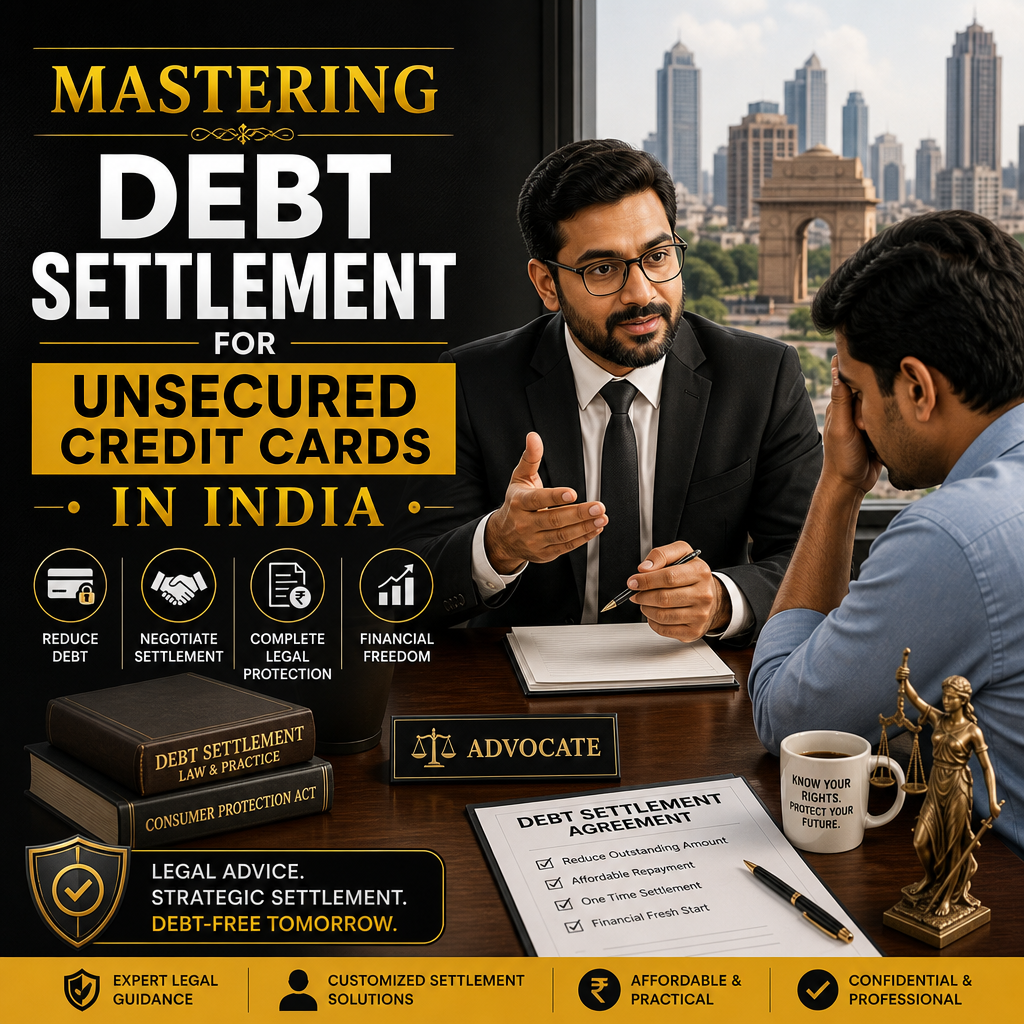
Key Takeaways: Unsecured credit card debt in India poses significant risks due to high-interest rates and potential legal actions for defaults. Borrowers must understand their liabilities and rights, utilize RBI guidelines for ethical recovery practices, and engage in strategic debt management. Legal frameworks such as the Indian Contract Act and Consumer Protection Act provide avenues for fair negotiations and protection against harassment, making legal advice crucial in navigating debt settlements effectively.
Understanding the Landscape of Unsecured Credit Card Debt in India
Unsecured credit card debt in India signifies the financial obligations arising from the use of credit cards without collateral backing. This form of debt is prevalent due to the convenience and purchasing power credit cards provide. However, it comes with the risk of spiraling into significant dues due to high-interest rates and penalties on defaults. Borrowers must comprehend their liabilities, given that missed payments can lead to legal actions and impact credit scores.
The Potential Pitfalls
Borrowers often overlook the pitfalls associated with unsecured credit card debt, such as aggressive collection tactics and the impact on credit ratings. Financial institutions typically categorize these debts as non-performing assets (NPAs) after 90 days of non-payment, which may prompt recovery actions. To understand how these matters are handled legally, explore our Banking and Finance Law resources.
Strategies for Management
- Prioritize paying off high-interest debts first to minimize financial strain.
- Consider options like Loan Settlement Services to negotiate reduced payoffs.
- Engage in debt consolidation to streamline repayments.
Managing these debts efficiently requires understanding the nuances of credit card agreements and leveraging legal advice, particularly in cases involving persistent defaults. For borrowers facing legal pressure or requiring assistance in settling their unsecured credit card debt, professional legal guidance is crucial.
Legal Framework Governing Debt Settlement
In India, the legal framework for debt settlement, especially concerning unsecured credit cards, is anchored in several key regulations and guidelines. The Reserve Bank of India (RBI) plays a pivotal role, providing directives that mandate how banks and financial institutions should manage settlement cases. Unsecured debt, such as credit card debt, does not involve collateral, making its recovery process unique and often more complex.
According to RBI guidelines, banks must follow fair practices codes, ensuring transparency and fairness in negotiations. Furthermore, the Indian Contract Act, 1872, governs the agreements made during settlement, ensuring they are legally binding and enforceable. Debt collection practices must adhere to the principles outlined in the Securitisation and Reconstruction of Financial Assets and Enforcement of Security Interest (SARFAESI) Act, applicable to secured debts but influential in setting recovery standards.
For borrowers, understanding their rights is crucial. The Consumer Protection Act, 2019, offers recourse against unfair practices, including harassment by recovery agents. Additionally, borrowers can seek redressal through the Banking Ombudsman Scheme for grievances related to settlement processes. To fully grasp the implications of debt settlement and navigate negotiations effectively, borrowers might consider consulting with experts in Banking and Finance Law.
RBI Guidelines on Debt Collection and Settlement
The Reserve Bank of India (RBI) has established comprehensive guidelines to protect borrowers during the debt collection process. These guidelines ensure that banks and financial institutions adhere to ethical practices while dealing with loan defaulters, including those with unsecured credit card debt.
Legal and Ethical Collection Practices
As per RBI directives, banks are required to appoint recovery agents who are trained and adhere to a code of conduct. Recovery agents must not engage in harassment or intimidation. All communications should be conducted in a civil manner, avoiding any form of coercion.
Settlement Negotiations
RBI guidelines encourage banks to offer settlement options for borrowers facing genuine financial difficulties. Borrowers can negotiate a structured plan, reducing the total outstanding amount. For detailed assistance, consult our Loan Settlement Services.
Borrower's Rights
- Banks must provide clear communication before initiating any recovery action.
- Borrowers have the right to receive a written statement of dues.
- Under RBI norms, borrowers can request settlement without facing unwarranted legal action.
Understanding these guidelines can empower borrowers to manage their debt more effectively. For more protection details, refer to the Legal Rights Against Recovery Agent Harassment.
Common Challenges Faced by Borrowers
Debt settlement for unsecured credit cards can be a daunting process for many Indian borrowers. One significant challenge is the overwhelming pressure from recovery agents. Borrowers often experience aggressive tactics, including frequent calls and harsh demands. Understanding your legal rights against recovery agent harassment is crucial to navigating these situations effectively.
Another challenge is the lack of awareness about the debt settlement process. Many borrowers are not familiar with the options available to them, such as negotiating a lump-sum payment or setting up a payment plan. This lack of knowledge can lead to unfavorable settlements. It's advisable to seek professional assistance through services like Loan Settlement Services to increase the chances of a favorable outcome.
Additionally, financial constraints hinder borrowers from negotiating effectively. Limited financial resources may restrict borrowers' ability to offer a reasonable settlement amount, leading to prolonged negotiations. Furthermore, borrowers must contend with the impact of settlements on their credit scores. While settlements can provide relief, they may adversely affect credit ratings, making it harder to secure future loans.
Overall, effective communication, knowing your rights, and seeking expert advice are key to overcoming these challenges and achieving a successful debt settlement for unsecured credit cards.
Exploring Debt Settlement vs Bankruptcy: A Comparative Analysis
When grappling with debt settlement for unsecured credit cards, many consider bankruptcy an alternative. Understanding the nuances can guide better decisions. Debt settlement involves negotiating with creditors to pay a reduced amount, while bankruptcy legally absolves debts but impacts credit scores severely. The choice between these depends on the individual's financial situation and long-term goals.
Debt settlement is often preferred for its potential to lower debt without the stigma of bankruptcy. However, it requires negotiation skills or professional help. On the other hand, bankruptcy offers a clean slate but can have repercussions, such as difficulty in availing loans in the future. Often, exploring options like loan settlement services can provide a balanced approach.
| Parameter / Criterion | Key Details / Legal Provision | Timeline / Practical Impact |
|---|---|---|
| Definition | Negotiation to reduce debt amount | Varies; typically 3-6 months |
| Legal Implications | Not legally binding | Flexible, case-dependent |
| Credit Score Impact | Partial negative impact | Lower impact than bankruptcy |
| Bankruptcy Impact | Complete debt discharge | Immediate; severe credit score impact |
Before deciding, it is crucial to assess the long-term financial consequences. Bankruptcy might offer relief but can limit future borrowing capabilities. Meanwhile, debt settlement can be a viable option with professional guidance, such as through debt consolidation & restructuring, to manage and settle debts effectively.
Negotiating with Creditors: Steps and Strategies
When it comes to debt settlement for unsecured credit cards, effective negotiation is crucial. The process starts by understanding your financial position, as transparency builds trust. Begin by assessing your debts, income, and expenses to offer realistic settlement proposals. Prioritize your debts based on interest rates and outstanding amounts.
Preparation
Before contacting creditors, prepare thoroughly. Gather all necessary documents like account statements, income proofs, and any correspondence with creditors. This demonstrates your willingness to resolve debts seriously. Know your rights under consumer protection laws to avoid unfair practices.
Initial Contact
Initiate contact by calling the customer service department. Explain your situation honestly, focusing on changes in circumstances like job loss or medical emergencies. Request a reduction in interest rates or a waiver of late fees. Remember, politeness and patience go a long way.
Proposing a Settlement
When proposing a settlement, offer a lump sum payment that is feasible for you. Creditors often prefer a one-time payment over long-term payment plans. If unable to pay in full, suggest a manageable installment plan.
- Maintain a professional tone throughout communications.
- Confirm any agreements in writing.
- Stay persistent if initial attempts are unsuccessful.
For complex negotiations, consider seeking professional advice from services like Loan Settlement Services to ensure the best outcome. Legal advisors can help mediate and formalize agreements, protecting your interests throughout the negotiation process.
Key Insights & Data Infographic
Visual summary, statistical trends & procedural breakdown
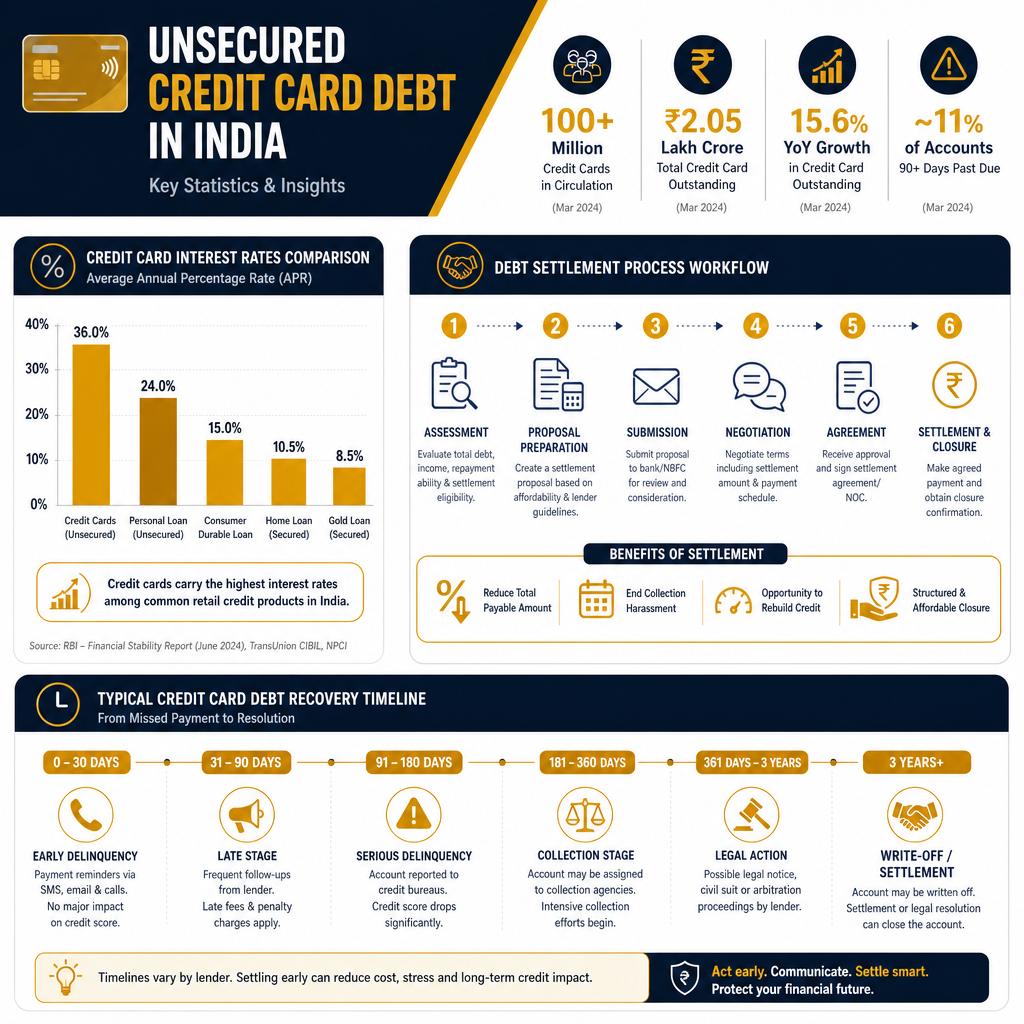
Prepared by AMA Legal Solutions Research & Analytics Team • Data & Compliance Overview
The Role of Credit Counseling Services
Navigating credit card debt settlement can be a daunting task for many in India, but credit counseling services play a pivotal role in guiding borrowers towards financial stability. These services are designed to provide individuals with the necessary tools and knowledge to manage and reduce unsecured credit card debt effectively.
How Credit Counseling Helps
Credit counseling services offer personalized financial assessments to understand the borrower's current financial situation. They work closely with lenders to negotiate favorable terms, helping to lower interest rates or extend payment periods. This negotiation is crucial for those seeking to avoid the adverse effects of non-payment, such as impacting credit scores.
- Budget Planning: Counselors assist in creating a realistic budget that aligns with the borrower's income and financial obligations.
- Debt Management Plans (DMPs): These structured plans help consolidate multiple credit card debts into one manageable payment.
- Financial Education: Borrowers receive guidance on money management, debt reduction strategies, and how to avoid future financial pitfalls.
Enlisting the help of credit counseling services can be an effective step towards debt resolution. For more information on managing debt through legal channels, explore our Banking and Finance Law services.
Key Legal Notices: How to Respond Effectively
Receiving a legal notice concerning debt settlement for unsecured credit cards can be daunting. Responding promptly and appropriately is crucial to protect your interests. Start by thoroughly reading the notice to understand the claims against you, focusing on the specified deadlines. Ignoring these can have severe consequences, including legal action.
Steps to Respond
- Verify the Details: Cross-check the notice details with your records for accuracy.
- Consult a Lawyer: Seek advice from an experienced banking lawyer to understand your legal position.
- Draft a Response: Your lawyer can help draft a response addressing each point raised in the notice, providing any necessary documentation.
- Negotiate: If the claims are valid, consider negotiating with the creditor. You might explore options like loan settlement or restructuring.
- Document Communication: Keep records of all communications and agreements with your creditor.
Responding effectively can often prevent escalation to a legal suit, especially if you can reach an amicable settlement. Always ensure your response is factual, professional, and timely, as these are critical to achieving a favorable resolution.
Timeline of Debt Settlement: What to Expect
Embarking on the journey of debt settlement for unsecured credit cards involves several steps, which can vary based on individual circumstances and creditor policies. Below is a typical timeline that outlines what you can generally expect as you navigate this process.
Initiation and Assessment
- Week 1-2: Identify the total outstanding amount and assess your financial situation. Engage with a legal expert or a debt settlement professional to evaluate your options.
Negotiation Phase
- Week 3-4: Begin negotiations with creditors. Present documented evidence of financial hardship. This is when you can decide whether to negotiate directly or hire a professional through Loan Settlement Services.
Agreement and Documentation
- Week 5-6: Reach a tentative settlement agreement. Ensure all terms are documented. Verify that the agreed terms include all necessary legal protections, potentially consulting with experts in Banking and Finance Law.
Execution and Payment
- Week 7-8: Execute the settlement agreement. Make the required payment to fulfil your end of the bargain. Monitor credit report updates to confirm the settlement reflects positively.
| Parameter / Criterion | Key Details / Legal Provision | Timeline / Practical Impact |
|---|---|---|
| Initial Assessment | Evaluate financial capability and outstanding debt | 1-2 weeks |
| Negotiation | Communicate with creditors to discuss terms | 3-4 weeks |
| Agreement Drafting | Create a legally binding settlement agreement | 5-6 weeks |
| Settlement Execution | Make the agreed payment and verify credit report | 7-8 weeks |
Understanding each step of the timeline helps in preparing for the debt settlement process effectively. Remember, engaging with professionals at stages like negotiation can enhance your outcomes, and it is crucial to remain proactive throughout the process.
Rights and Obligations of Borrowers
Borrowers dealing with unsecured credit card debt in India should be aware of their rights as well as their obligations. Understanding these can significantly impact the outcome of credit card debt settlement negotiations and protect borrowers from undue harassment.
Borrower Rights
- Right to Fair Treatment: Lenders and recovery agents must treat borrowers with due respect and follow ethical practices as per RBI guidelines.
- Right to Be Informed: Borrowers must be informed about the terms of the debt, any changes in terms, and the process of debt recovery.
- Right to Privacy: Borrowers’ personal information should not be disclosed publicly or used for coercion.
- Right to Dispute Resolution: Borrowers can approach the banking ombudsman for grievances against banks, especially concerning unethical recovery practices.
Borrower Obligations
- Repayment Responsibility: It is the borrower's duty to repay the borrowed amount as per the agreed schedule. Failure to do so can lead to legal consequences.
- Communication: Regular communication with the lender is vital. Borrowers should update creditors about financial difficulties and seek restructuring options.
- Honesty in Negotiations: Providing accurate financial information during debt settlement negotiations will facilitate a more favorable outcome.
For borrowers facing challenges with debt settlement, exploring services like Loan Settlement Services can provide strategic assistance in navigating complex negotiations.
Practical Case Studies of Successful Debt Settlements
Understanding successful debt settlement for unsecured credit card debt requires examining real-world examples. These cases highlight effective strategies and outcomes that can guide borrowers in similar situations.
Case Study 1: Strategic Negotiation
A salaried individual faced a credit card debt of INR 5 lakhs. After losing his job, he negotiated with the bank through loan settlement services. By presenting his financial constraints and future employment prospects, he managed to settle the debt for INR 2.5 lakhs, payable in six installments. This outcome was possible by providing documented evidence of his financial hardship.
Case Study 2: Consolidation Approach
An MSME owner had multiple unsecured credit card debts totaling INR 8 lakhs. By opting for debt consolidation & restructuring, he merged his liabilities into a single, more manageable loan. This method reduced his interest burden and allowed him to repay the consolidated amount over 24 months, ultimately saving INR 1.5 lakhs in interest payments.
Case Study 3: Legal Intervention
A business owner facing aggressive recovery tactics sought legal help. By engaging with arbitration and dispute resolution services, he successfully challenged the bank's recovery methods. The bank agreed to waive INR 1 lakh in penalties and interest, demonstrating the importance of understanding and invoking legal rights in debt settlements.
Leveraging Legal Expertise for Optimal Outcomes
Engaging a seasoned legal expert can significantly enhance your chances of successfully negotiating debt settlement for unsecured credit cards. A lawyer with experience in banking and financial laws can offer informed guidance tailored to your unique circumstances, ensuring that your rights are upheld while navigating complex negotiations.
Why Legal Expertise Matters
Experienced lawyers are proficient in assessing the implications of various settlement offers. They provide invaluable insight into the legal intricacies of debt settlements, including potential consequences on your credit score and the prevention of creditor harassment. This expertise is crucial in avoiding pitfalls that many borrowers face when handling settlements independently.
Steps Lawyers Take to Optimize Settlements
- Evaluate financial circumstances and creditor claims.
- Negotiate terms with creditors, aiming to minimize the settlement amount and maximize waivers.
- Draft legally sound agreements to ensure compliance with all parties involved.
Legal professionals also help shield you from aggressive recovery practices and can advise on strategies for loan settlements across various banks. This expert intervention not only simplifies the process but can also lead to more favorable terms, ultimately reducing financial stress and providing a clear path to debt resolution.
Popular Searches & Topics
Commonly searched legal queries and keywords related to this article
AMA Legal Solutions
Trusted with a 4.7 Google Rating, over 10,000+ Clients Served, 25,000+ Cases Handled, and more than 40+ Years of Experience in providing strategic legal defense and debt resolution across India.
Our media coverages





Frequently Asked Questions
Related Articles
Settle Credit Debt: Practical Strategies for Indian Borrowers (2026)
Explore effective legal strategies and insights to settle your credit debt successfully.
Read Article
Advocate for Bank Loan Settlement: Navigating Your Rights (2026)
Explore effective strategies and legal protections from an advocate for bank loan settlement.
Read Article
Settle Bank Debt: Essential Steps for Indian Borrowers (2026)
Discover practical advice and legal guidance on how to successfully settle bank debt in India.
Read ArticleAbout Author
Anuj Anand Malik
View ProfileAnuj Anand Malik, Founder of AMA Legal Solutions, is a trusted advocate, loan settlement expert, legal advisor, and banking lawyer. With over a decade of experience in loan settlement, corporate law, financial disputes, and compliance, he leads a result-driven law firm based in India that helps individuals, startups, and businesses achieve legal and financial stability.
Connect on LinkedInNeed Legal Help?
Get expert advice on loan settlement and debt relief.
Call +91-8700343611Request Callback