Navigating Debt Settlement Companies in India for Optimal Loan Waiver
Master the Art of Personal Loan Settlement with Expert Insights

Anuj Anand Malik
Reviewed by AMA Legal Solutions

Navigating Debt Settlement Companies in India for Optimal Loan Waiver
Discover how debt settlement companies in India help borrowers negotiate outstanding loans, understand loan waivers, manage financial distress, and choose reliable debt resolution services.
Managing outstanding loans can become overwhelming, particularly when financial difficulties make it challenging to pay monthly EMIs. Whether you are dealing with credit card dues, personal loans, or business loans, understanding your available options is essential for making informed financial decisions.
Debt settlement companies in India assist borrowers in navigating negotiations with lenders and exploring possible ways to resolve outstanding debt. However, choosing the right service provider requires an understanding of the loan settlement process, associated costs, legal considerations, and potential credit score implications.
This comprehensive guide explains how debt settlement works in India, what borrowers should know about loan waivers, and how to evaluate debt settlement companies before engaging their services.
What Is Debt Settlement in India?
Debt settlement is a negotiated arrangement between a borrower and a lender to resolve outstanding dues. Depending on the circumstances and the lender's approval, the agreed settlement may involve paying an amount that is lower than the total outstanding claim.
The Reserve Bank of India's Framework for Compromise Settlements and Technical Write-offs, issued on June 8, 2023, recognizes compromise settlements as a resolution mechanism for stressed accounts. Under the framework, a compromise settlement may involve a negotiated cash arrangement that results in a waiver of part of the lender's claims.
It is important to understand that loan settlement is not the same as an automatic loan waiver. The lender must agree to the proposed arrangement, and the final terms depend on the specific circumstances of the borrower and the lender's applicable policies.
How Do Debt Settlement Companies in India Work?
Debt settlement companies generally assist borrowers by assessing their financial situation, reviewing outstanding loan obligations, and supporting negotiations with lenders.
The process commonly involves the following steps:
1. Financial Assessment
The first step is to understand the borrower's overall financial position. This may include reviewing:
Total outstanding loan amounts.
Monthly income and essential expenses.
Existing EMI obligations.
Credit card dues and other unsecured debt.
Financial hardship or circumstances affecting repayment.
This assessment helps determine whether settlement discussions may be appropriate or whether alternatives such as restructuring or repayment assistance should be explored.
2. Review of Loan Documents
The service provider may examine loan statements, repayment records, sanction letters, and relevant correspondence. Reviewing these documents helps identify the outstanding principal, interest, charges, and the current status of the account.
3. Negotiation With the Lender
Where appropriate, the borrower or authorized representative may approach the lender to discuss possible settlement terms. The lender evaluates the request and decides whether to approve a settlement.
A debt settlement company cannot compel a bank or NBFC to accept a particular settlement amount.
4. Settlement Approval
If the lender agrees to a settlement, the borrower should obtain written documentation specifying the agreed amount, payment deadline, and applicable terms.
5. Payment and Closure Documentation
After fulfilling the agreed settlement conditions, the borrower should request appropriate confirmation from the lender, including a settlement letter, payment acknowledgment, and relevant account closure documentation.
Borrowers should retain these records for future reference and credit-reporting follow-up.
Loan Waiver vs Loan Settlement: What Is the Difference?
The terms loan waiver and loan settlement are sometimes used interchangeably in online discussions, but they have different meanings.
Loan waiver | Loan settlement |
|---|---|
Generally refers to the reduction or cancellation of a debt obligation under a specific arrangement or applicable scheme. | Refers to a negotiated agreement to resolve outstanding dues. |
May arise under particular government, institutional, or lender-approved arrangements. | Usually depends on negotiation and lender approval. |
Is not automatically available to every borrower. | Is not guaranteed and depends on the lender's decision. |
For most borrowers approaching debt settlement companies in India, the relevant process is negotiated settlement rather than an automatic waiver of loan dues.
When Should You Consider Debt Settlement?
Debt settlement may be worth exploring when a borrower is experiencing genuine financial hardship and is unable to maintain repayment under existing terms.
Circumstances that may prompt a borrower to seek professional assistance include:
Loss of employment or a significant reduction in income.
Accumulation of multiple unsecured loans.
Difficulty managing credit card balances.
Unexpected business losses.
Repeated missed EMIs.
Receipt of collection communications or legal notices.
However, borrowers should not assume that settlement is always the most suitable solution. If regular repayment remains possible, restructuring, refinancing, or negotiating revised repayment terms may also be worth considering.
A careful assessment of the borrower's financial position is essential before deciding how to proceed.
How to Choose a Reliable Debt Settlement Company in India
The growing demand for loan settlement services has made it important for borrowers to distinguish between transparent service providers and companies that make unsupported promises.
Before engaging a debt settlement company, consider the following factors.
1. Transparent Fees and Written Agreements
A reliable provider should clearly explain:
Registration or consultation charges.
Professional or service fees.
Any success-based fees.
Refund and cancellation terms.
Services included in the engagement.
Circumstances in which additional charges may apply.
Always review the written agreement before making payment.
2. No Unrealistic Waiver Guarantees
Be cautious of advertisements promising guaranteed loan waivers, fixed settlement percentages, or unconditional removal of all debt.
The final settlement amount depends on the lender's decision. No service provider should represent a negotiated outcome as guaranteed without a lawful and documented basis.
3. Clear Explanation of Credit Consequences
Loan settlement can affect a borrower's credit history. A provider should explain the potential implications and encourage the borrower to understand how the lender will report the account.
4. Qualified and Experienced Professionals
Borrowers may benefit from providers with experience in banking, finance, debt resolution, and applicable legal procedures.
Where legal notices, arbitration matters, or recovery disputes are involved, borrowers should understand which services are provided by qualified legal professionals and which involve financial negotiation assistance.
5. Proper Documentation
A professional service provider should maintain clear records of communications, agreements, payments, and settlement-related correspondence.
6. Genuine Customer Support
Borrowers should have access to a defined communication channel and a clear process for raising service-related concerns.
Types of Loans That May Be Considered for Settlement
Debt settlement services may be relevant to several categories of unsecured borrowing, subject to lender policies and individual circumstances.
Credit Card Debt Settlement
Credit card balances can become difficult to manage when interest, fees, and minimum payments accumulate.
A settlement discussion may be considered where the borrower faces financial hardship and cannot repay the full outstanding amount under the existing arrangement.
Borrowers should carefully review the total dues, settlement terms, payment deadline, and credit-reporting implications before accepting an offer.
Personal Loan Settlement
Personal loans are commonly used for medical expenses, education, emergencies, and other financial needs.
When a borrower is unable to maintain EMI payments, a lender-approved settlement may be one possible resolution option. The availability and terms of settlement depend on the lender and the borrower's circumstances.
Business Loan Settlement
Small business owners and entrepreneurs may experience cash-flow difficulties due to declining revenue, delayed receivables, or unexpected expenses.
In suitable cases, discussions with lenders may explore repayment restructuring or negotiated settlement. Business borrowers should consider the effect of any resolution arrangement on their business finances and future borrowing needs.
Secured Loans
Home loans, vehicle loans, and other loans backed by collateral involve additional legal and financial considerations.
A borrower should not assume that the process applicable to unsecured credit card or personal loan dues will apply in the same way to secured borrowing. Collateral-related rights, contractual terms, and applicable recovery laws must be reviewed separately.
RBI Guidelines and Legal Considerations
Understanding the regulatory environment is important when dealing with loan settlement companies in India.
RBI Framework for Compromise Settlements
The RBI's 2023 framework provides for compromise settlements by regulated entities, including applicable banks, NBFCs, and other covered institutions.
The framework requires regulated entities to maintain board-approved policies governing compromise settlements and technical write-offs. It does not establish a universal waiver percentage available to all borrowers.
The actual settlement decision remains subject to the lender's policies and applicable requirements.
Recovery Agent Conduct
The RBI has issued instructions concerning the conduct of recovery agents engaged by regulated entities.
These instructions prohibit intimidation and harassment in debt collection, including threatening communications, inappropriate contact, and conduct that intrudes upon the privacy of borrowers or their family members.
The RBI's outsourcing framework also makes clear that regulated entities remain responsible for the activities of their outsourced service providers.
Borrowers experiencing inappropriate recovery conduct should preserve relevant evidence and use the lender's grievance redressal mechanism or other appropriate complaint channels.
Legal Notices and Arbitration
A borrower who receives a legal notice, arbitration communication, or court-related document should not ignore it.
Debt settlement discussions do not automatically suspend legal proceedings or eliminate contractual obligations. The borrower should review the document promptly and seek appropriate legal advice regarding the applicable response and deadlines.
Key Insights & Data Infographic
Visual summary, statistical trends & procedural breakdown
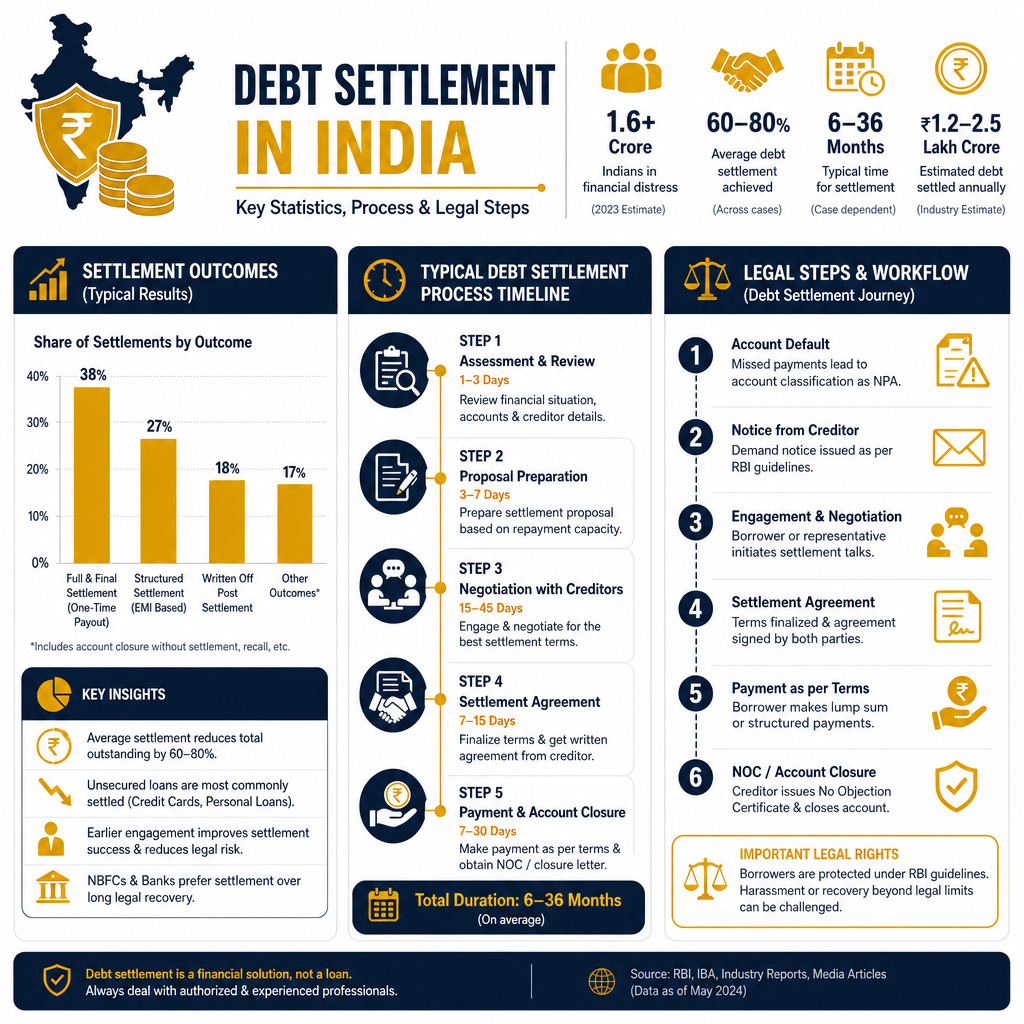
Prepared by AMA Legal Solutions Research & Analytics Team • Data & Compliance Overview

Halt Recovery Agent Harassment Legally
How Much Loan Waiver Can You Expect?
One of the most common questions borrowers ask is how much of their outstanding loan can be waived through settlement.
There is no universal percentage applicable to every borrower or every lender.
The outcome may depend on factors such as:
The total outstanding amount.
The age and status of the account.
The borrower's financial circumstances.
The lender's internal settlement policy.
The availability of funds for negotiated payment.
Applicable contractual and regulatory requirements.
A company that advertises a fixed waiver percentage should be evaluated carefully. Borrowers should ask whether the figure is a historical example, an estimate, or a guaranteed contractual commitment.
The most important objective is to understand the actual terms of any settlement offer and whether the borrower can comply with them.
How Does Loan Settlement Affect Your CIBIL Score?
Loan settlement may have a negative impact on a borrower's credit profile, depending on how the lender reports the account and the applicable credit-reporting framework.
A settled account may be viewed differently from an account reported as fully closed after repayment of all dues. This distinction can influence how future lenders assess credit applications.
Before accepting a settlement, borrowers should ask:
How will the account be reported to the credit bureau?
Will the lender issue a settlement confirmation?
What amount must be paid to complete the settlement?
Are any additional dues or conditions applicable?
How can the borrower verify that the credit report has been updated accurately?
Borrowers should obtain written documentation and review their credit report after the settlement process.
Documents Required for Loan Settlement
The exact requirements vary by service provider and lender. Commonly requested documents may include:
Loan account statements.
Credit card statements.
Identity and address proof.
Details of income and monthly expenses.
Relevant bank statements.
Evidence of financial hardship, where applicable.
Copies of legal notices or recovery communications.
Existing correspondence with the lender.
Providing accurate information helps the service provider understand the borrower's circumstances and identify appropriate next steps.
Common Mistakes to Avoid During Debt Settlement
Ignoring Lender Communications
Ignoring calls, notices, or formal correspondence can create additional complications. Borrowers should maintain communication and seek professional advice when necessary.
Paying Without Reviewing the Agreement
Before paying a service provider, review the engagement terms, fee structure, refund provisions, and scope of services.
Assuming Settlement Is Guaranteed
A settlement company may assist with negotiations, but the lender's approval remains essential.
Taking New Loans to Pay Service Fees Without Assessment
Borrowers facing financial hardship should carefully evaluate whether taking additional debt is affordable and appropriate.
Failing to Obtain Written Settlement Confirmation
Verbal assurances are not a substitute for written settlement documentation from the lender.
Why Professional Debt Resolution Assistance Matters
Debt settlement involves more than requesting a reduction in outstanding dues. It may require financial assessment, communication with lenders, document review, and an understanding of legal and credit-related consequences.
Professional assistance can help borrowers organize their information, understand their options, and approach the process more systematically.
However, the role of a service provider should be explained accurately. Assistance with negotiation, documentation, or legal consultation does not mean that the provider can guarantee a waiver, stop every recovery action, or eliminate a borrower's obligations without lender approval.
How AMA Legal Solutions and CredSettle Can Assist
At AMA Legal Solutions and CredSettle, borrowers can explore professional support for debt-related concerns, including loan settlement assistance and legal consultation.
Depending on the borrower's circumstances and the services agreed upon, assistance may include:
Reviewing outstanding loan and credit card obligations.
Understanding possible debt resolution options.
Supporting communication and negotiation with lenders.
Providing legal guidance concerning loan-related notices and disputes.
Helping borrowers understand relevant documentation and settlement terms.
Every case is different. The availability of services, applicable fees, and potential outcomes should be discussed during the consultation.
Important: Loan settlement is subject to lender approval. No specific waiver amount or settlement outcome is guaranteed.
Frequently Asked Questions
1. What is a debt settlement company in India?
A debt settlement company assists borrowers in understanding and pursuing negotiated debt resolution options. Services may include financial assessment, lender communication, negotiation support, and documentation assistance.
2. Can a debt settlement company guarantee loan waiver?
No. A lender decides whether to approve a settlement and on what terms. A fixed waiver percentage should not be treated as guaranteed without a valid, documented basis.
3. Is loan settlement legal in India?
Negotiated compromise settlements are recognized within the RBI framework for applicable regulated entities. The legality and suitability of a particular arrangement depend on the facts, applicable regulations, contractual terms, and lender approval.
4. Can credit card dues be settled?
Credit card dues may be eligible for negotiated settlement, depending on the lender's policies and the borrower's circumstances.
5. Can personal loans be settled through a settlement company?
A service provider may assist with settlement discussions for eligible personal loans. The lender's approval is required, and settlement is not automatic.
6. Does loan settlement affect CIBIL?
It may affect the borrower's credit profile. Borrowers should understand the lender's reporting approach and obtain appropriate documentation.
7. What should I check before hiring a settlement company?
Review the company's identity, written agreement, fees, scope of services, refund terms, documentation process, and explanations of potential risks.
8. Should I choose loan settlement or restructuring?
The appropriate option depends on your income, repayment capacity, loan terms, and financial circumstances. Compare both options carefully before making a decision.
Conclusion
Navigating debt settlement companies in India requires careful consideration, realistic expectations, and an understanding of the available resolution options.
Loan settlement may provide a potential path for borrowers facing financial hardship, but it is not an automatic loan waiver or a guaranteed reduction in debt. The final outcome depends on the lender's approval, the borrower's circumstances, and the terms of the negotiated arrangement.
By evaluating service providers based on transparency, documentation, professional experience, and responsible guidance, borrowers can make more informed decisions about managing outstanding loans.
If you are struggling with credit card dues, personal loans, or other unsecured debt, professional consultation may help you understand the next steps available for your situation.
Need assistance with your loan settlement or debt-related legal concerns? Contact AMA Legal Solutions or CredSettle to discuss your circumstances and explore the available options.
Disclaimer: This article is for general educational information and does not constitute legal, financial, or credit advice. Loan settlement outcomes depend on lender approval and individual circumstances. Seek professional advice for your specific situation.
Need Strategic Legal Defense for Your Situation?
Our banking & litigation advocates review your notices, debt liability, and recovery issues under complete advocate-client secrecy.
AMA Legal Solutions
Trusted with a 4.7 Google Rating, over 10,000+ Clients Served, 25,000+ Cases Handled, and more than 40+ Years of Experience in providing strategic legal defense and debt resolution across India.
Our media coverages





Client Reviews
"AMA Legal Solutions provided exceptional guidance through my loan settlement, securing terms I thought impossible."
Ramesh Nair
"I am grateful for their expert handling of my debt settlement. They provided clear communication and excellent results."
Vikram Patel
"From start to finish, the team was professional and attentive, delivering a favorable settlement outcome."
Suresh Kumar
"Their expertise in banking law made a complex process smooth and stress-free. Highly recommend their services!"
Priya Verma
"Thanks to AMA Legal Solutions, I managed to negotiate a significant debt reduction. Their support was invaluable."
Anjali Gupta
Frequently Asked Questions
Related Articles
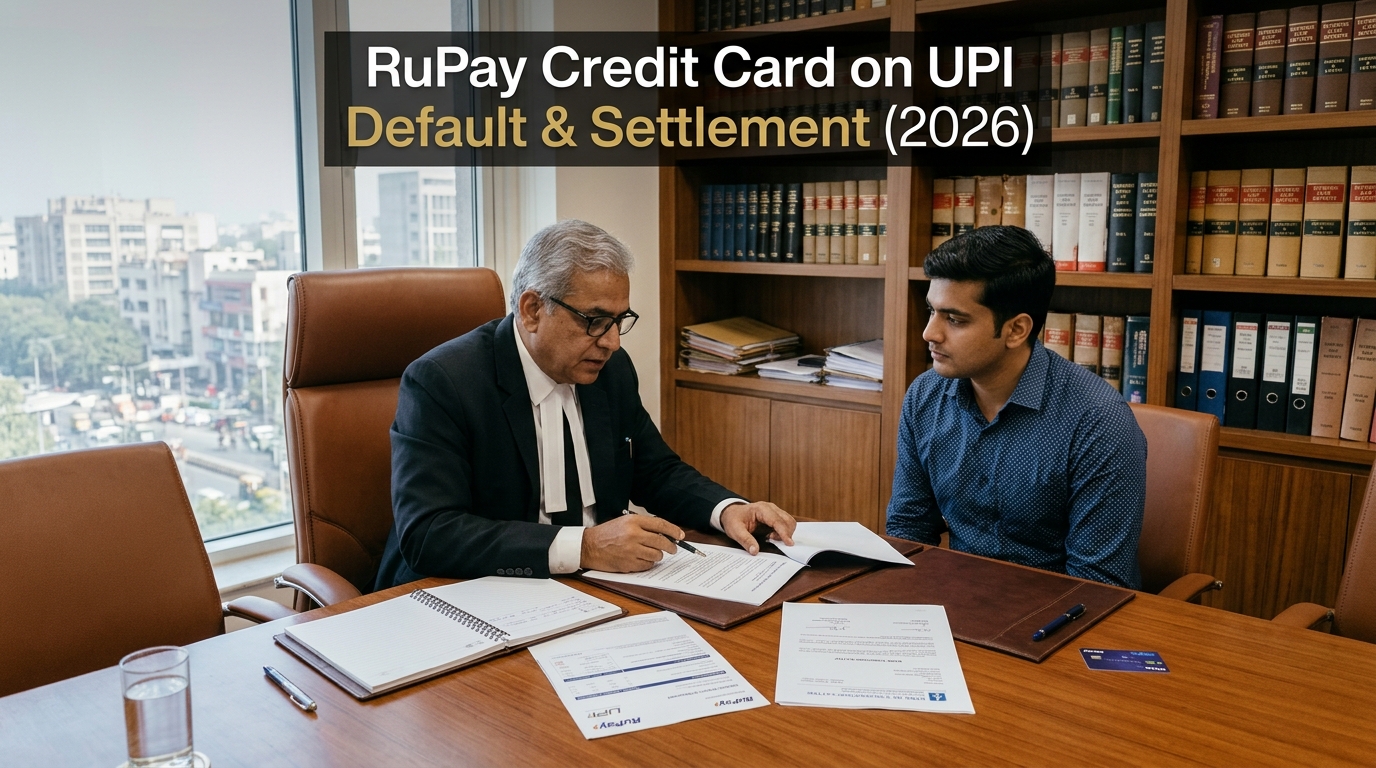
RuPay Credit Card on UPI Default & Credit Line on UPI Settlement (2026)
Micro-transactions on RuPay UPI Credit Cards and pre-approved 'Credit Lines on UPI' have triggered a massive wave of 42%+ APR revolving debt traps. Find out if defaulting blocks your personal savings UPI and how to settle RuPay UPI credit dues for 30%–50%.
Read Article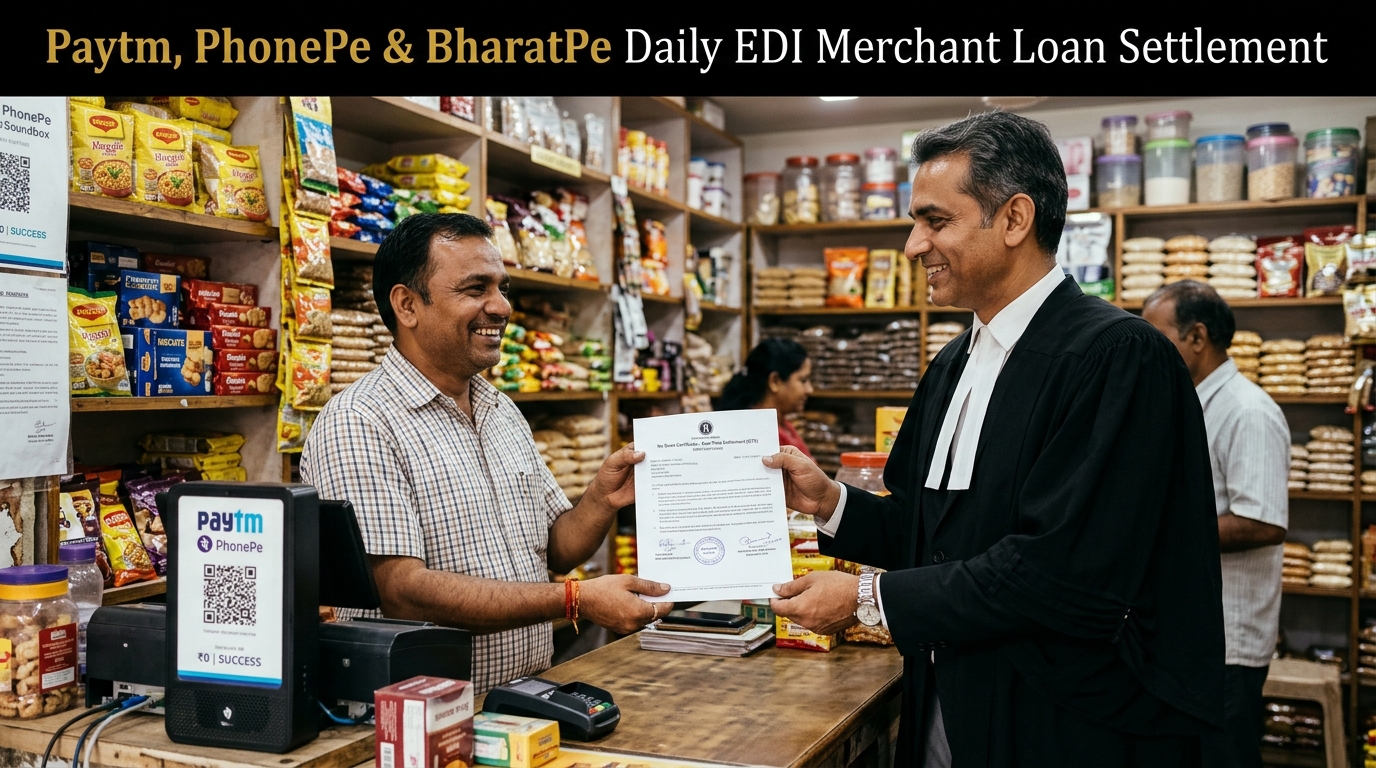
Paytm, PhonePe & BharatPe Daily EDI Merchant Loan Settlement (2026)
Drowning in Equated Daily Installment (EDI) merchant loans where 100% of your daily QR Soundbox collections are auto-swept before you can pay suppliers or rent? Learn how retail shopkeepers and MSMEs legally halt QR sweeps and negotiate a 50%+ OTS.
Read Article
Can Bank or Loan App Remotely Lock Phone for EMI Default? RBI Rules (2026)
An investigative breakdown of RBI's Remote Device Locking Directions—explaining why lenders cannot lock your phone for personal loans, the mandatory 30/60 DPD safeguards on financed devices, the Rs. 250/hour delay penalty, and how to settle device & app loans.
Read ArticleAbout Author
Anuj Anand Malik
View ProfileAnuj Anand Malik, Founder of AMA Legal Solutions, is a trusted advocate, loan settlement expert, legal advisor, and banking lawyer. With over a decade of experience in loan settlement, corporate law, financial disputes, and compliance, he leads a result-driven law firm based in India that helps individuals, startups, and businesses achieve legal and financial stability.
Connect on LinkedInNeed Legal Representation?
Evaluate your defense against recovery agents, notices, or structure your loan settlement directly with Senior Advocates.
Call +91-8700343611