Understanding Settlements: How They Work
Explore settlements in banking law, their processes, and practical insights.

Anuj Anand Malik
Reviewed by AMA Legal Solutions

Introduction to Settlements in Banking Law
In the realm of banking law, settlements serve as a strategic avenue for borrowers facing financial distress. They provide a legally binding agreement between the borrower and lender, allowing the borrower to pay a reduced amount to settle a debt. Settlements are crucial for those unable to fulfill their original loan obligations due to unforeseen circumstances, such as job loss or business downturns.
The process typically begins with a proposal from the borrower or their legal representative, detailing a feasible repayment plan. This proposal is carefully evaluated by the bank, considering factors like the borrower's past payment history, current financial status, and the bank’s internal recovery targets. It's vital to approach this process with transparency and honesty to build trust and credibility with the lender.
Banks often view settlements as a practical resolution to avoid lengthy and costly litigation. However, borrowers must be aware of the implications, such as potential impacts on their credit score and the need for legal documentation to prevent future claims. Understanding the nuances of settlements in banking law can empower borrowers to negotiate effectively, safeguarding their interests while fulfilling their financial obligations. This underscores the importance of seeking skilled legal advice to navigate the complexities of banking settlements.
Understanding the Legal Framework of Settlements
In India, settlements are governed by a robust legal framework designed to protect both creditors and debtors. The legal process involves various statutes and regulations, primarily the Negotiable Instruments Act, 1881, the Insolvency and Bankruptcy Code, 2016, and specific Reserve Bank of India (RBI) guidelines. These laws facilitate mutual agreements between parties to resolve debts without prolonged litigation.
Key Legal Provisions
- Negotiable Instruments Act, 1881: This act addresses negotiable instruments like cheques and promissory notes, providing a legal basis for settlements through instruments.
- Insolvency and Bankruptcy Code, 2016: This code offers a time-bound process to resolve insolvency, allowing businesses to either get back on their feet or close in an orderly manner.
- RBI Guidelines: The Reserve Bank of India periodically issues circulars that dictate how settlements should be handled by financial institutions, emphasizing borrower rights and fair practices.
Legal Process of Settlements
Settlements often begin with negotiations, where both parties discuss terms that are mutually acceptable. A settlement agreement is then drafted, outlining the agreed terms. This document, once signed, is legally binding. It is crucial for borrowers to ensure clarity in terms to prevent future disputes.
Understanding these legal frameworks is essential for borrowers to effectively navigate the settlement process while safeguarding their rights.
Types of Settlements in Banking and Finance
Settlements in banking and finance can take various forms, each designed to address different financial situations and needs. Here's a comprehensive look at the types commonly encountered:
1. Loan Settlements
Loan settlements occur when borrowers negotiate with lenders to repay a portion of the outstanding loan amount, usually when they face financial stress. This type of settlement helps borrowers avoid default and the lender recovers part of the dues. It requires careful negotiation and understanding of the lender's policies.
2. Debt Settlements
Debt settlements involve negotiating with creditors to pay a lump sum that is less than the total owed. This is usually applicable when multiple debts consolidate into a manageable payment, often facilitated by a debt settlement company. It's vital to consider the effects on credit scores and potential tax implications.
3. Structured Settlements
Structured settlements are typically used in legal claims, where the settlement amount is paid in installments rather than a single lump sum. This is common in insurance claims and personal injury cases, providing a steady income stream to the claimant.
4. NPA Settlements
In cases of Non-Performing Assets (NPAs), banks might offer settlements to recover the loan amount partially. These settlements are guided by RBI regulations and usually involve waiving a portion of the interest or principal to facilitate recovery.
- Each settlement type has its own set of legal and financial implications.
- Understanding RBI guidelines and legal frameworks is crucial in navigating settlements.
- Negotiations should be documented and transparent to protect all parties involved.
The Role of RBI Guidelines in Settlements
The Reserve Bank of India (RBI) plays a crucial role in facilitating settlements through its comprehensive guidelines aimed at protecting borrowers and ensuring fair practices by banks. RBI guidelines ensure transparency in the settlement process, mandating banks to disclose all relevant information to borrowers. This helps borrowers make informed decisions and seek equitable resolutions.
Key Provisions Under RBI Guidelines
- Loan Restructuring: RBI guidelines allow for the restructuring of loans, enabling borrowers to negotiate revised terms to ease their financial burden without defaulting entirely.
- One-Time Settlement Schemes: These schemes are encouraged under RBI guidelines to permit borrowers to settle outstanding dues by paying a lump sum amount, often at a negotiated discount.
- Recovery Process Fairness: RBI mandates that banks follow a fair process during recovery, including adequate notice periods and legal procedures, ensuring that borrowers' rights are upheld.
- Grievance Redressal: Borrowers can approach the RBI’s Banking Ombudsman for disputes relating to settlements, thus offering a legal framework for addressing grievances.
In summary, RBI guidelines are instrumental in shaping the settlement landscape, ensuring that both banks and borrowers engage in a fair, transparent, and legally compliant manner. Understanding these guidelines can significantly aid borrowers in navigating the complexities of loan settlements.
Step-by-Step Settlement Process Explained
Settlements, particularly in the context of banking and loan disputes, involve a structured negotiation process between borrowers and lenders to resolve outstanding debts. This process requires careful navigation and understanding. Here, we outline a typical settlement process:
1. Initial Assessment
- Examine the outstanding loan details and any correspondence from the bank or financial institution.
- Evaluate the borrower's current financial situation, including income, expenses, and available assets.
2. Communication Initiation
- Contact the bank's loan settlement department to express intent to settle the debt.
- Request a meeting or formal communication detailing the borrower's hardship and willingness to negotiate.
3. Proposal Submission
- Prepare a detailed settlement proposal. Include proposed repayment terms, lump-sum offers, or revised payment schedules.
- Submit the proposal to the bank, ensuring all documentation supporting the borrower's case is attached.
4. Negotiation
- Engage in discussions with the bank to reach mutually agreeable terms.
- Be prepared to provide further financial documents or explanations as requested.
5. Agreement Drafting
- Once terms are agreed upon, both parties draft a settlement agreement outlining the conditions and repayment plan.
- Review the agreement thoroughly and seek legal advice if necessary.
6. Execution and Compliance
- Sign the finalized agreement and adhere to the outlined repayment terms.
- Maintain regular communication with the bank to ensure compliance and address any further issues.
This structured approach not only helps in effectively managing debt but also in potentially improving credit scores over time. A well-negotiated settlement can provide significant financial relief for borrowers under distress.
Common Challenges in Loan Settlements
Loan settlements can be a complex process fraught with challenges that borrowers need to navigate skillfully. Understanding these challenges can significantly impact the settlement outcome.
Understanding Lender Priorities
Banks prioritize recovering the maximum amount possible from defaulted loans. Borrowers often struggle to negotiate favorable terms due to lack of insight into the bank's internal policies and objectives.
Documentation Issues
Incomplete or incorrect documentation is a frequent hurdle. Borrowers should ensure all required documents are accurate and submitted promptly to avoid delays.
Communication Barriers
Effective communication with the bank is crucial. Miscommunication can lead to misunderstandings about settlement terms or missed deadlines, impacting the borrower's ability to settle effectively.
Legal Complications
Legal complexities arise when borrowers face multiple debts or legal actions simultaneously. Understanding the implications of each step is critical to avoid further legal entanglements.
Emotional Stress
The pressure of negotiations and uncertainty can cause significant stress. Borrowers often make impulsive decisions under pressure, which can negatively affect the settlement outcome.
- Tip: Remain calm, analyze options, and seek professional advice when needed.
Addressing these challenges requires strategic planning, informed decision-making, and occasionally, professional guidance to ensure a favorable settlement.

Halt Recovery Agent Harassment Legally
Negotiation Tips for Successful Settlements
Effective negotiation is crucial for achieving a favorable settlement. Start by understanding your financial situation and documenting all relevant details. Being well-prepared gives you leverage. Here are some key tips:
1. Understand the Bank's Perspective
Recognize that banks aim to recover as much as possible. Knowing this helps in structuring proposals beneficial for both parties. Highlighting your willingness to cooperate can positively impact negotiations.
2. Offer a Realistic Proposal
Your proposal should be grounded in reality. Propose repayment amounts you can afford, backed by your financial statements. Unrealistic offers can lead to a breakdown in negotiations.
3. Communicate Professionally
Maintain professionalism in all interactions. Avoid confrontational language. Opt for written communication to ensure clarity and avoid misunderstandings. This is especially critical if disputes arise.
4. Leverage Legal Expertise
Engage an experienced banking lawyer to guide you through the process. They can provide insights into RBI guidelines and ensure your rights are preserved.
5. Be Patient and Persistent
Settlements can be time-consuming. Demonstrate patience and persistence, but be open to compromise. Flexibility can often lead to successful outcomes.
By applying these tips, you increase your chances of reaching a satisfactory settlement. Remember, preparation, and understanding are your strongest allies in negotiation.
Legal Rights of Borrowers During Settlements
Borrowers in India have specific legal rights during the settlement process to ensure fair treatment and transparency. It's crucial to know these rights to navigate settlements effectively and protect your interests.
Right to Fair Treatment
Borrowers are entitled to respectful and fair treatment by banks and recovery agents. The Reserve Bank of India (RBI) mandates that recovery agents must adhere to the Fair Practices Code.
Right to Information
Borrowers have the right to full disclosure of the loan terms, outstanding amounts, and settlement options. Banks must provide this information without withholding any details.
Right to Dispute Resolution
If there are discrepancies in the settlement offer, borrowers can dispute the terms or amounts. The borrower can escalate the matter to the bank’s nodal officer or the Banking Ombudsman.
Right to Privacy
Borrowers' personal information must be kept confidential. Banks and agents cannot share data without explicit consent, following the guidelines under the Data Protection Act.
Right to Legal Recourse
Should negotiations fail, borrowers have the right to seek legal recourse. They can challenge unreasonable terms or harassment in appropriate forums, including civil courts.
Understanding these rights not only empowers borrowers but also ensures a balanced and just settlement process.
Case Studies: Real-World Settlement Examples
Understanding settlements through real-world examples provides invaluable insights into the practicalities involved. Let's explore some cases that illustrate how settlements can be effectively navigated:
Case 1: Loan Default by an MSME
An MSME faced financial difficulties due to declining market demands, leading to a loan default of ₹50 lakhs. The bank initiated recovery proceedings under the SARFAESI Act. The business owner, with legal assistance, requested a settlement meeting. During negotiations, the owner presented a realistic repayment plan and pledged additional collateral, resulting in a settlement for ₹35 lakhs, payable over 18 months. This case highlights the importance of proactive communication and negotiation skills.
Case 2: Personal Loan Overdue by a Salaried Individual
A salaried individual had an outstanding personal loan of ₹10 lakhs, with repayments overdue by 12 months. Facing constant recovery calls, the individual sought legal advice to propose a lump-sum settlement. After reviewing the borrower’s financial status and potential future earnings, the bank agreed to a one-time settlement of ₹7 lakhs, allowing the borrower to clear the debt by liquidating some assets. This demonstrates how transparency and financial clarity can lead to favorable settlement terms.
Both cases emphasize the necessity for borrowers to engage with financial institutions strategically and with proper legal guidance to achieve mutually beneficial settlements.
Mistakes to Avoid in Settlement Negotiations
Settlement negotiations can be fraught with complexities, and a few common missteps can jeopardize your chances of a favorable outcome. Here are critical mistakes to avoid:
1. Ignoring the Importance of Documentation
Always ensure all communications, offers, and agreements are thoroughly documented. Failing to do so can lead to misunderstandings and weaken your position. Maintain written records to safeguard your interests.
2. Overlooking the Opponent’s Perspective
Understanding the bank or creditor's objectives is crucial. By acknowledging their standpoint, you can tailor your negotiation strategy to address mutual interests, potentially leading to a more amicable settlement.
3. Letting Emotions Drive Decisions
Negotiations should be driven by logic and strategy, not emotions. Stay composed and focused on your goals, avoiding rash decisions influenced by frustration or anxiety.
4. Failing to Seek Professional Advice
Engaging a legal expert can drastically improve your negotiation outcomes. Experienced banking lawyers can provide insights into the bank's likely strategies and help craft effective counteroffers.
5. Underestimating the Value of Silence
Effective negotiators know when to speak and, crucially, when to remain silent. Allowing the other party to fill the silence can often yield valuable information or concessions.
6. Rushing the Process
Settlement negotiations require patience. Rushing can lead to overlooked details or missed opportunities for better terms. Take the time to thoroughly review all options and implications.
Impact of Settlements on Credit Scores
Settlements can significantly affect your credit score, often negatively. When a borrower and lender agree on a settlement, it typically means the borrower is unable to pay the full debt amount. This resolution is recorded on your credit report, usually as "settled" rather than "paid in full," which alerts future lenders of past financial difficulties.
Why does this matter? The "settled" status indicates to creditors that you were unable to fulfill your original loan terms, potentially making you a higher risk for future borrowing. This can lead to higher interest rates or even disqualification from future loans.
How long does it affect your score? A settlement can remain on your credit report for up to seven years. During this time, it weighs down your credit score, though its impact may lessen as time progresses and new, positive credit behavior is demonstrated.
Are there exceptions? Yes, if a settlement is part of a broader financial rehabilitation plan, some creditors may view it more favorably, especially if subsequent credit behavior is positive.
In summary, while settlements can provide immediate relief from debt, they can also pose a lasting challenge in maintaining a healthy credit profile, necessitating careful consideration and financial planning.
Future Trends in Banking Settlements
The landscape of banking settlements is evolving rapidly, influenced by technological advancements and regulatory changes. One significant trend is the growing adoption of blockchain technology. Blockchain promises enhanced transparency and security in settlement processes, reducing fraud risks and improving efficiency. Banks are increasingly exploring smart contracts to automate and streamline settlement procedures, ensuring faster transaction times.
Additionally, the rise of artificial intelligence and machine learning is set to revolutionize how banks assess risk and negotiate settlements. AI can provide predictive analytics to forecast borrower behavior, enabling more tailored settlement strategies. This trend is particularly beneficial for loan settlements, where personalized solutions can improve recovery rates.
Regulatory frameworks are also adapting to these technological shifts. The Reserve Bank of India (RBI) is actively considering guidelines to integrate fintech solutions, ensuring settlements are both innovative and compliant. As financial systems become more interconnected globally, cross-border settlements will also undergo transformation, with initiatives like the ISO 20022 messaging standard facilitating smoother international transactions.
Overall, these trends indicate a future where banking settlements become more efficient, transparent, and customer-centric, driven by technology and enhanced regulatory cooperation.
Need Strategic Legal Defense for Your Situation?
Our banking & litigation advocates review your notices, debt liability, and recovery issues under complete advocate-client secrecy.

AMA Legal Solutions
Trusted with a 4.7 Google Rating, over 10,000+ Clients Served, 25,000+ Cases Handled, and more than 40+ Years of Experience in providing strategic legal defense and debt resolution across India.
Our media coverages





Client Reviews
"AMA Legal Solutions resolved my banking litigation efficiently. Their knowledge and proactive approach saved me considerable time and stress."
Arjun Mehta
"AMA Legal Solutions provided exceptional guidance during my loan settlement process, ensuring a fair agreement and safeguarding my interests effectively."
Rajesh Kumar
"I was in financial distress and AMA Legal Solutions negotiated a favorable settlement with my bank. Their legal acumen is unmatched."
Vikram Singh
"The expertise at AMA Legal Solutions made navigating the complexities of debt settlement much easier. Their attention to detail was impressive."
Anjali Patel
"Thanks to AMA Legal Solutions, I was able to settle my debts with minimal impact on my credit score. Their service is truly invaluable."
Sunita Rao
Frequently Asked Questions
Related Articles
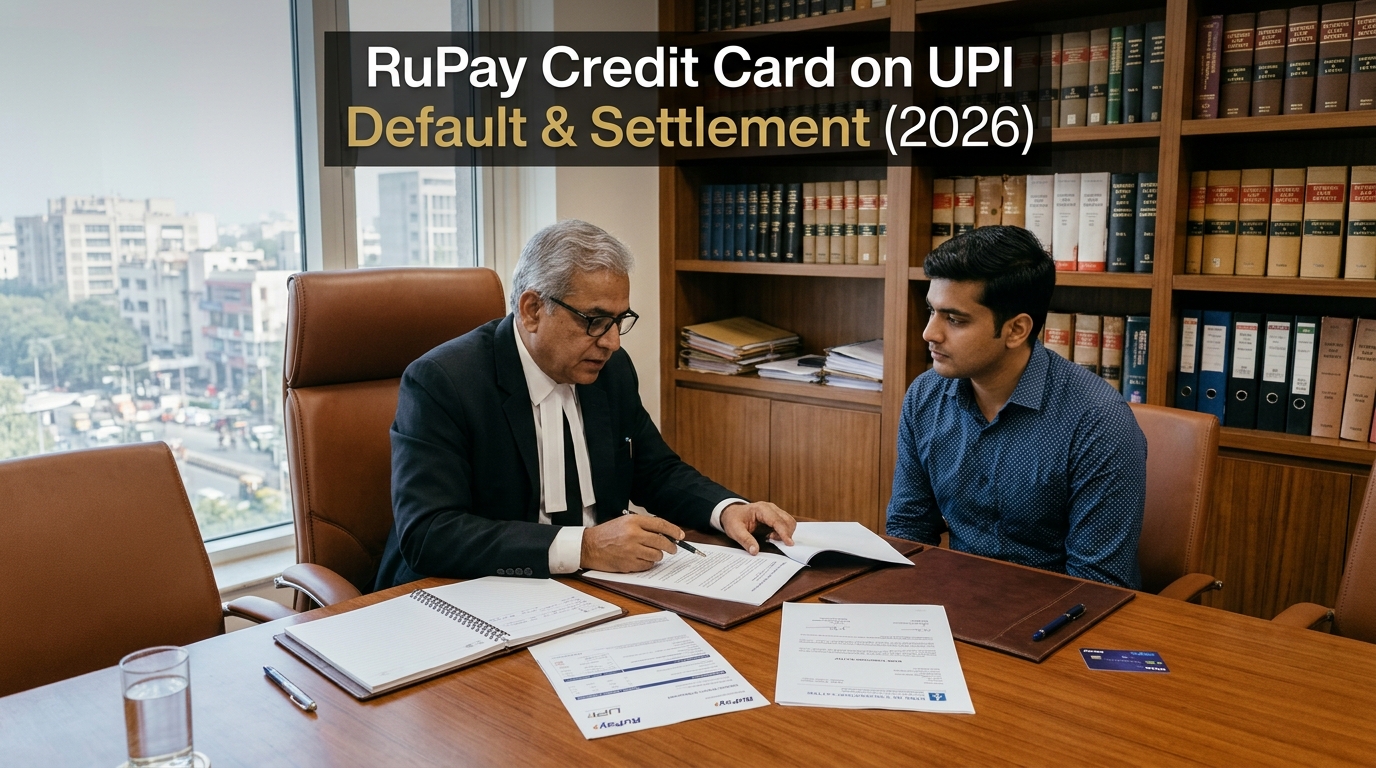
RuPay Credit Card on UPI Default & Credit Line on UPI Settlement (2026)
Micro-transactions on RuPay UPI Credit Cards and pre-approved 'Credit Lines on UPI' have triggered a massive wave of 42%+ APR revolving debt traps. Find out if defaulting blocks your personal savings UPI and how to settle RuPay UPI credit dues for 30%–50%.
Read Article
Paytm, PhonePe & BharatPe Daily EDI Merchant Loan Settlement (2026)
Drowning in Equated Daily Installment (EDI) merchant loans where 100% of your daily QR Soundbox collections are auto-swept before you can pay suppliers or rent? Learn how retail shopkeepers and MSMEs legally halt QR sweeps and negotiate a 50%+ OTS.
Read Article
Can Bank or Loan App Remotely Lock Phone for EMI Default? RBI Rules (2026)
An investigative breakdown of RBI's Remote Device Locking Directions—explaining why lenders cannot lock your phone for personal loans, the mandatory 30/60 DPD safeguards on financed devices, the Rs. 250/hour delay penalty, and how to settle device & app loans.
Read ArticleAbout Author
Anuj Anand Malik
View ProfileAnuj Anand Malik, Founder of AMA Legal Solutions, is a trusted advocate, loan settlement expert, legal advisor, and banking lawyer. With over a decade of experience in loan settlement, corporate law, financial disputes, and compliance, he leads a result-driven law firm based in India that helps individuals, startups, and businesses achieve legal and financial stability.
Connect on LinkedInNeed Legal Representation?
Evaluate your defense against recovery agents, notices, or structure your loan settlement directly with Senior Advocates.
Call +91-8700343611