Repo Rate Affect on People with Low Salary? Oct 2026 Update
Understanding the implications of the repo rate for low-income earners in India.

Anuj Anand Malik
Reviewed by AMA Legal Solutions

Key Takeaways: The Repo rate has a significant impact on individuals with low salaries, leading to increased borrowing costs that can strain their financial capacity. Understanding the statutory framework governing these changes can aid in managing potential risks, such as rising EMIs on loans. Exploring practical remedies, such as negotiating repayment terms or seeking financial advice, is vital for maintaining financial stability.
Introduction to Repo Rate and Its Impact on Earnings in India
The recent decision by the RBI's Monetary Policy Committee to increase the repo rate by 25 basis points to 5.50% is a crucial development, particularly for people with low incomes. The Repo rate affect on people with low salary ? Oct 2026 update is significant because it has direct consequences on their loan repayment capacity, savings, and overall financial stability. This change correlates with higher borrowing costs, impacting how individuals manage their finances, especially those dependent on modest earnings.
Statutory Framework & Governing Legal Provisions
The Reserve Bank of India's authority to adjust the repo rate is derived from the Reserve Bank of India Act, 1934. The repo rate is central to the monetary policy aimed at controlling inflation and promoting economic growth. As mandated by Section 45ZB of the RBI Act, the Monetary Policy Committee (MPC) is responsible for setting this rate to achieve the targeted inflation objectives. The Repo rate affect on people with low salary ? Oct 2026 update emerges under this legislative backdrop, influencing macroeconomic indicators sensitive to legal and policy changes.
Comprehensive Analysis of Repo Rate Changes and Their Effects
Understanding the implications of repo rate adjustments is essential. A hike often leads to increased interest rates on loans and credit products. For individuals on a low salary, these changes can be disadvantageous as they struggle with rising EMIs. The Repo rate affect on people with low salary ? Oct 2026 update has made it clear that loan affordability may decrease, posing challenges to maintaining current financial commitments without adjusting lifestyle or priorities.
Evaluating Borrowing Costs: How Repo Rate Affects Loans
When the repo rate is raised, banks typically increase loan interest rates, affecting personal, home, and car loans. For low-salary earners, this translates to higher monthly payments. To illustrate, consider a low-income borrower with a Rs 10 lakh home loan at a current interest rate of 7%. Following the Repo rate affect on people with low salary ? Oct 2026 update, this borrower might see the rate rise to 7.25%, increasing EMIs significantly. Calculating the compounded effect of such increases illustrates the stark realities borrowers face.
The Relationship Between Inflation, Repo Rate, and Low Salaries
Inflation erodes purchasing power, and the repo rate is a tool to control it. However, the Repo rate affect on people with low salary ? Oct 2026 update suggests a paradox for low-income earners: while the RBI aims to stabilize prices, the immediate result is often higher costs of borrowing. In environments where salaries do not rise proportionately, individuals may find it increasingly difficult to manage essential expenses amidst rising inflation.
Key Insights & Data Infographic
Visual summary, statistical trends & procedural breakdown
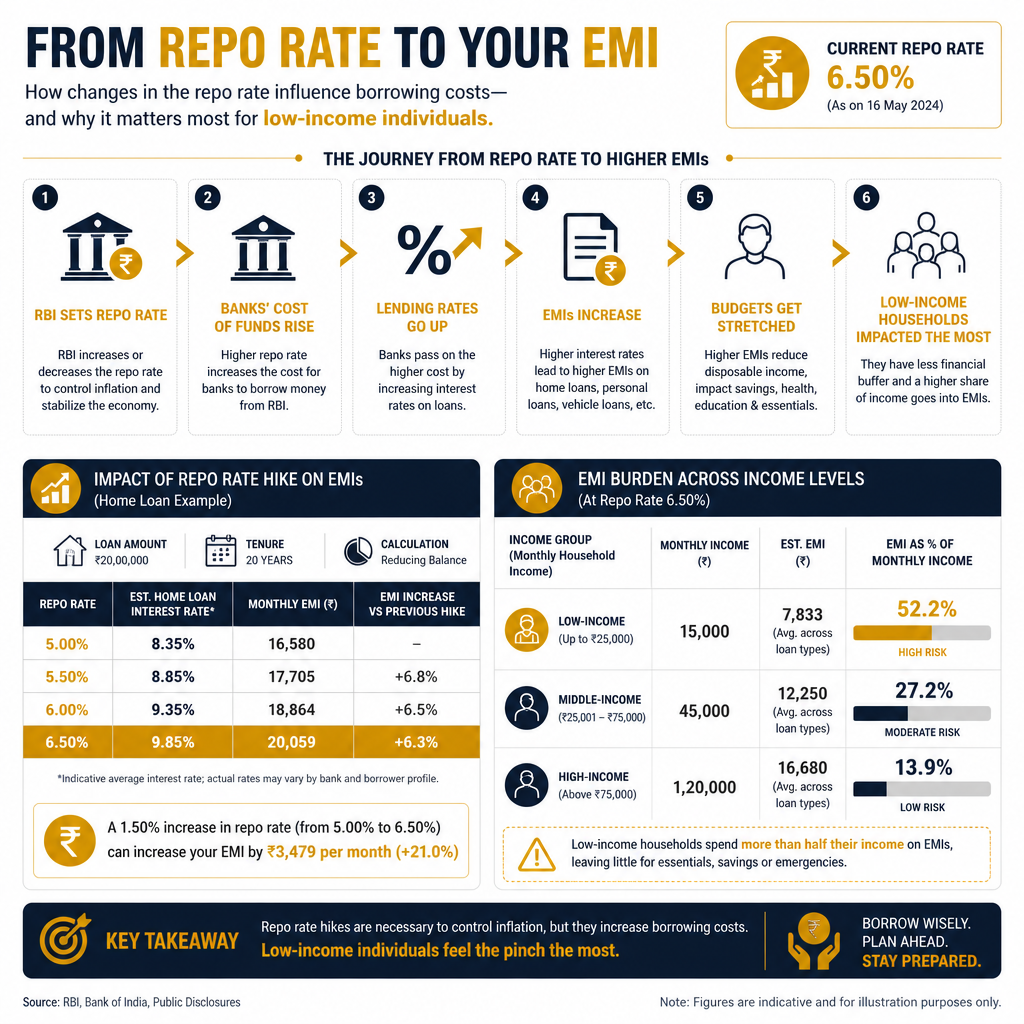
Prepared by AMA Legal Solutions Research & Analytics Team • Data & Compliance Overview

Recover Withheld Salary & FnF Dues
Comparative Parameters: Different Income Levels and Repo Rate Impact
Individuals across varying income levels experience the repo rate affects differently. High-income earners might absorb rising costs with minimal impact on their financial health. In contrast, for people with low salaries, financial burdens amplify. The Repo rate affect on people with low salary ? Oct 2026 update underscores this disparity, influencing financial stress levels and everyday decision-making, from health care to education expenditures.
| Income Level | Loan Dependency | Effect of Repo Rate Hike | Recommended Action | Access to Financial Counsel |
|---|---|---|---|---|
| Low Income | High | Severe Increase in EMIs | Refinancing, Financial Counseling | Limited |
| Middle Income | Moderate | Manageable, with Adjustments | Budget Realignment | Moderate |
| High Income | Low | Minimal | Investment Diversification | High |
Legal Safeguards for Low-Income Borrowers in the Context of Repo Rate
Indian law offers protections for borrowers facing adversity due to repo rate hikes. The Repo rate affect on people with low salary ? Oct 2026 update highlights the Consumer Protection Act, 2019, which ensures fair treatment in financial services. Additionally, borrowers have rights under the SARFAESI Act, allowing them to contest unfair banking practices. Borrowers should remain informed about these legal avenues and consider seeking legal advice when necessary from credible sources such as corporate lawyers.
Strategies for Borrowers: Navigating Loan Repayments During High Rates
Adjusting to higher repayment demands calls for strategic financial planning. The Repo rate affect on people with low salary ? Oct 2026 update suggests several strategies for borrowers, such as refinancing existing loans at better rates, consolidating multiple debts, and negotiating terms with creditors. Consulting financial advisors or legal experts, particularly those with experience in banking and finance law, can provide tailored solutions.
Risk Assessment: Common Pitfalls for Low Salary Borrowers
Low-income earners should be aware of the risks associated with rising repo rates. The Repo rate affect on people with low salary ? Oct 2026 update implies potential pitfalls like financial overextension, poor credit rating from missed payments, and reliance on short-term credit solutions. Borrowers should strategize against these risks by maintaining emergency funds and exploring protective measures, such as insurance products to cushion against unexpected financial downturns.
Strategic Conclusion: Securing Financial Stability Amidst Changing Rates
In conclusion, the Repo rate affect on people with low salary ? Oct 2026 update underscores the importance of proactive financial planning. Individuals must adapt to repo rate hikes through practical steps such as effective debt management and exploring new financial products. With informed decisions and well-structured financial plans, low-income earners can navigate the challenges posed by fluctuating economic conditions and strive for long-term financial stability.
Connecting with AMA Legal Solutions for Expert Guidance
At AMA Legal Solutions, we specialize in providing expert legal advice tailored to borrowers affected by repo rate changes. Our banking and finance law services offer comprehensive assistance from negotiation strategies to litigation support. Understand your rights and explore options by consulting with our seasoned professionals, dedicated to guiding you through these financially challenging times.
Popular Searches & Topics
Commonly searched legal queries and keywords related to this article
Need Strategic Legal Defense for Your Situation?
Our banking & litigation advocates review your notices, debt liability, and recovery issues under complete advocate-client secrecy.

AMA Legal Solutions
Trusted with a 4.7 Google Rating, over 10,000+ Clients Served, 25,000+ Cases Handled, and more than 40+ Years of Experience in providing strategic legal defense and debt resolution across India.
Our media coverages





Frequently Asked Questions
Related Articles

Will Drafting Services for NRI: How Global Indians Can Protect Indian Assets from Abroad (2026)
A comprehensive legal guide on modern Will drafting services for Non-Resident Indians (NRIs) and OCIs managing real estate, bank accounts, and investments across India.
Read Article
Will Drafting Services for Indians Living Abroad (NRIs & OCIs): The Complete Cross-Border Legal Guide (2026)
How Non-Resident Indians can protect their Indian real estate, NRE/NRO accounts, and Demat investments without flying to India or risking multi-year probate disputes.
Read Article
Online Will Drafting in India: The Complete Legal Guide to Estate Planning (2026)
Protect your family's legacy, prevent bitter inheritance disputes, and discover how to create a legally binding, court-ready Will online under the Indian Succession Act, 1925.
Read ArticleAbout Author
Anuj Anand Malik
View ProfileAnuj Anand Malik, Founder of AMA Legal Solutions, is a trusted advocate, loan settlement expert, legal advisor, and banking lawyer. With over a decade of experience in loan settlement, corporate law, financial disputes, and compliance, he leads a result-driven law firm based in India that helps individuals, startups, and businesses achieve legal and financial stability.
Connect on LinkedInNeed Legal Representation?
Evaluate your defense against recovery agents, notices, or structure your loan settlement directly with Senior Advocates.
Call +91-8700343611