Mastering Debt Settlement for Unsecured Personal Loans
Navigate the complexities of unsecured loan settlements with expert insights

Anuj Anand Malik
Reviewed by AMA Legal Solutions
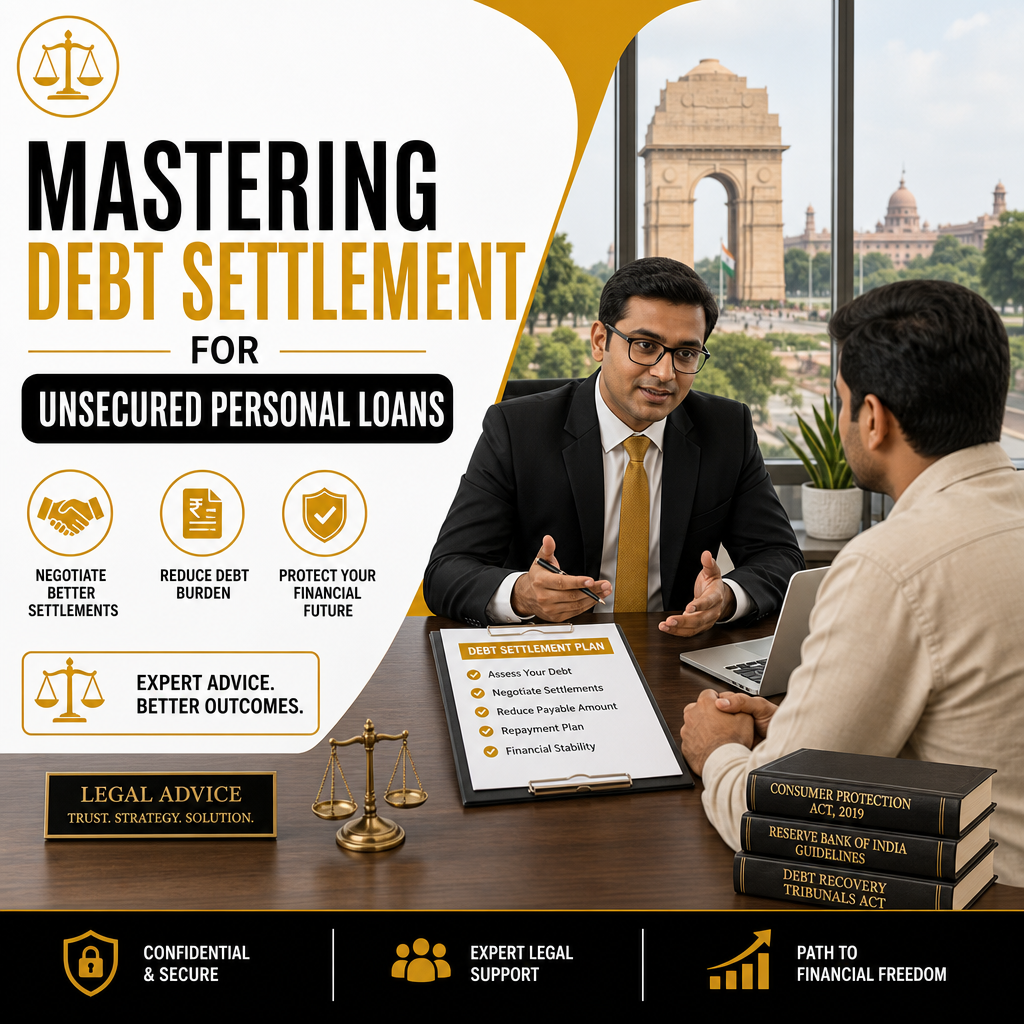
Key Takeaways: Unsecured personal loans don't require collateral, making them riskier with higher interest rates. RBI guidelines and legal frameworks like the SARFAESI Act and Consumer Protection Act provide structure and protection against unfair practices. Borrowers should engage expert legal services for effective debt management and settlement negotiation, ensuring fair treatment and mitigating credit score impacts.
Understanding the Basics of Unsecured Personal Loan Debt
Unsecured personal loans are borrowed funds not backed by collateral, meaning the lender relies solely on the borrower's creditworthiness and ability to repay. These loans often come with higher interest rates due to the increased risk for lenders. Understanding the terms is crucial, as defaulting can lead to significant financial and legal repercussions.
Key Characteristics of Unsecured Personal Loans
- No Collateral Required: Unlike secured loans, unsecured loans do not require any asset as security, making them accessible but riskier for lenders.
- Interest Rates: Due to the lack of collateral, interest rates are generally higher, which can increase the overall cost of borrowing.
- Fixed Repayment Terms: Borrowers must adhere to a fixed schedule of payments, which can be monthly, for the duration of the loan term.
It’s important for borrowers to manage these loans carefully. In case of financial strain, loan settlement services can provide valuable solutions. Consulting an expert in banking and finance law can also be beneficial in understanding potential legal implications and navigating debt management effectively. Remember, proactive communication with lenders can often help in negotiating terms and avoiding defaults.
Legal Framework Governing Debt Settlement in India
Debt settlement for unsecured personal loans in India is intricately governed by an array of legal provisions and regulatory guidelines. The foremost among these is the Reserve Bank of India (RBI) directives, which provide broad instructions on how banks should handle non-performing assets (NPAs) and negotiate settlements with borrowers.
For borrowers, understanding the loan settlement services processes is crucial. The SARFAESI Act is another significant piece of legislation, empowering banks to recover dues without court intervention, though it primarily applies to secured loans. While the act does not directly address unsecured loans, its principles can influence recovery practices.
Furthermore, the Consumer Protection Act offers a protective layer for borrowers against unfair practices and harassment by recovery agents. Engaging a legal expert from banking and finance law services becomes vital when borrowers face aggressive recovery tactics.
For those in default, the Insolvency and Bankruptcy Code (IBC) provides a structured framework for resolving insolvencies, though it is more commonly associated with corporate debt. On an individual level, the IBC can offer a respite from creditor actions, allowing for a systematic plan to address outstanding debts.
- Reserve Bank of India's guidelines for NPAs
- Securitisation and Reconstruction of Financial Assets and Enforcement of Security Interest (SARFAESI) Act
- Consumer Protection Act
- Insolvency and Bankruptcy Code (IBC)
How Banks Handle Unsecured Loan Defaults
When borrowers default on unsecured personal loans, banks initiate a structured approach to recover dues. Initially, banks might send gentle reminders and offer loan settlement services to encourage repayment. If this proves ineffective, banks escalate their efforts. Borrowers may receive formal notices, followed by calls from recovery agents. These agents, however, must adhere to legal guidelines and cannot use coercive tactics.
If informal recovery fails, banks may pursue legal actions. Filing a case under the Negotiable Instruments Act for bounced cheques or invoking arbitration clauses in loan agreements are common strategies. Banks often prefer arbitration due to its faster resolution compared to traditional court proceedings. Arbitration and dispute resolution services can provide a platform for negotiation, where banks might agree to restructure the loan terms or offer a settlement amount.
Throughout this process, banks assess the borrower's financial status and repayment capacity before making any settlement offers. They may classify the loan as a Non-Performing Asset (NPA) after 90 days of non-payment, which affects internal provisioning and impacts the borrower's credit score. Borrowers facing such defaults should consider engaging legal counsel to protect their rights and negotiate favorable terms with the bank.
Rights of Borrowers Under RBI Guidelines
The Reserve Bank of India (RBI) has established comprehensive guidelines to protect borrowers facing debt settlement for unsecured personal loans. First and foremost, borrowers have the right to be treated with dignity and respect by banks and recovery agents. Harassment and abusive practices are strictly prohibited. Additionally, borrowers should be informed about the Loan Settlement Services available and any charges involved.
The RBI also mandates that banks must provide detailed loan statements upon request, enabling borrowers to understand their outstanding dues clearly. Borrowers have the right to negotiate repayment options and request restructuring of loans if they face genuine financial difficulties. Importantly, banks must consider the borrower's financial situation before deciding on the course of action, such as settlements or restructuring.
| Parameter / Criterion | Key Details / Legal Provision | Timeline / Practical Impact |
|---|---|---|
| Harassment Prohibition | Recovery agents must follow ethical practices without harassment. | Immediate effect upon violation. |
| Loan Statement Request | Borrowers can request loan statements to verify dues. | Generally fulfilled within 30 days. |
| Repayment Negotiation | Right to negotiate terms based on financial hardship. | Discussions initiated within a few days. |
| Loan Restructuring | Consideration of restructuring due to financial distress. | Process duration varies based on complexity. |
For borrowers seeking guidance on these rights or facing challenges, consulting a professional in Banking and Finance Law can provide invaluable assistance in navigating the complexities of debt settlement processes.
Effective Strategies for Negotiating Debt Settlements
Mastering debt settlement for unsecured personal loans requires tactful negotiation. Begin by thoroughly evaluating your financial position to present a realistic repayment proposal. Knowing your income versus expenditure ratio aids in formulating feasible offers. Communicate with creditors honestly about your financial distress, and prepare to provide documentation if necessary.
Understanding Creditor Motivations
Creditors often prefer settlements over prolonged litigation or complete defaults. Therefore, highlight the advantages of receiving a settlement offer: immediate partial repayment and mitigation of risks associated with bankruptcy or complete default. Tailoring discussions to emphasize these aspects can improve your odds of success.
- Prioritize Debts: Focus on negotiating your highest interest debts first. Credit card debts often have higher interest rates than other personal loans.
- Leverage Expert Help: Consider engaging Loan Settlement Services for professional negotiation assistance.
- Seek Waivers: Request waivers for penalties, additional interest, or late fees to reduce the outstanding balance.
Stay calm and avoid emotional exchanges; focus instead on pragmatic, solution-oriented discussions. If negotiations become challenging, consider involving an expert in Arbitration and Dispute Resolution to mediate an agreement. Consistently documenting your communications can serve as valuable evidence if disputes arise later.
Common Mistakes in Debt Settlement and How to Avoid Them
Debt settlement for unsecured personal loans can be a lifeline, but it's rife with pitfalls if not approached carefully. One major mistake is ignoring communication with your lender. Always maintain an open dialogue to understand available options and avoid legal notices. For guidance, consider exploring Loan Settlement Services.
Avoid offering a settlement amount prematurely. Without evaluating your financial situation and understanding potential legal and credit implications, you risk making commitments you can't keep. Work with an expert advisor to determine a realistic figure.
Underestimating Legal Implications
- Borrowers often overlook the impact on their credit score. Settlements leave a mark, so calculate the long-term credit repercussions.
- Failing to formalize agreements can lead to misunderstandings. Always insist on a written settlement agreement.
Another frequent error is neglecting the significance of professional legal advice. Engaging in debt settlement discussions without a legal expert can lead to unfavorable terms. Leverage resources like our Civil Litigation and Disputes services to protect your interests.
Lastly, be cautious of misleading promises from third-party settlement companies. Research thoroughly and check for an established track record before proceeding.
Key Insights & Data Infographic
Visual summary, statistical trends & procedural breakdown
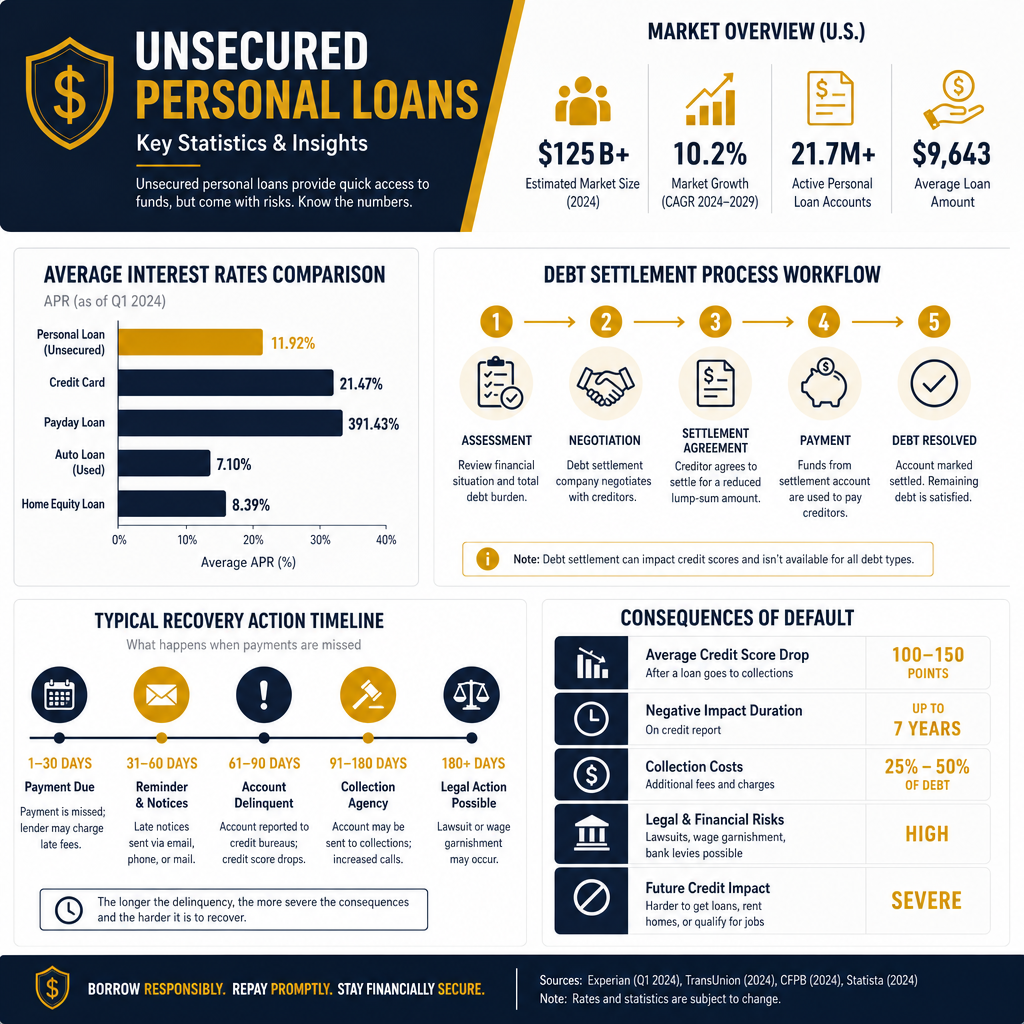
Prepared by AMA Legal Solutions Research & Analytics Team • Data & Compliance Overview
What Recovery Agents Can and Cannot Do Legally
In the realm of debt settlement for unsecured personal loans, understanding the legal boundaries of recovery agents is crucial. Recovery agents are engaged by banks to collect outstanding debts, but their actions are regulated to protect borrowers from harassment and unfair practices.
What Recovery Agents Can Legally Do
- Contact borrowers through phone calls and letters to remind them of overdue payments.
- Visit the borrower's residence or workplace to engage in discussions regarding repayment.
- Negotiate repayment plans that are feasible for both the borrower and the financial institution.
- Provide detailed information about the debt and any applicable interest or penalties.
What Recovery Agents Cannot Legally Do
- Use abusive or threatening language during any form of communication.
- Contact borrowers at odd hours, such as late night or early morning.
- Engage in any form of physical intimidation or harassment.
- Publicly shame the borrower or disclose debt information to third parties.
- Misrepresent themselves as officers of the court or legal authorities.
If you experience harassment or any unlawful practice, it's vital to know your rights. You can learn more about your legal rights against recovery agent harassment, which can provide guidance on how to proceed should such situations arise.
Step-by-Step Process for Debt Settlement Negotiations
Negotiating a debt settlement for an unsecured personal loan requires a careful, structured approach. Each step in the process can significantly impact the outcome, so it's essential to proceed with clarity and strategy.
1. Assess Your Financial Situation
Before negotiating, evaluate your current financial standing. Determine how much you can afford to pay as a lump sum or in installments. This assessment forms the basis for your negotiation strategy.
2. Contact Your Creditor
Initiate communication with your creditor. Express your intention to settle the debt and explain your financial constraints. This establishes a foundation for negotiation and sets a cooperative tone.
3. Propose a Settlement Offer
Present a realistic settlement offer. This should be a percentage of the total debt you can afford. Be prepared to justify your offer with documentation if necessary.
Learn more about Loan Settlement Services4. Negotiate Terms
Engage in discussions to reach agreeable terms. This may involve multiple rounds of negotiation. Be persistent yet flexible, adapting to the creditor’s counteroffers.
| Parameter / Criterion | Key Details / Legal Provision | Timeline / Practical Impact |
|---|---|---|
| Initial Contact | Communicate intent to settle debt | Within 1-2 weeks |
| Offer Proposal | Submit a realistic settlement offer | 2-4 weeks |
| Negotiation Phase | Engage in discussions for agreeable terms | 4-8 weeks |
| Settlement Agreement | Finalize terms and conditions in writing | 1-2 weeks |
5. Finalize the Agreement
Once terms are agreed upon, ensure the settlement is documented in writing. This should include payment terms and any waivers or releases. Such documentation protects both parties.
Explore Debt Consolidation & Restructuring6. Fulfill Settlement Terms
Adhere to the settlement terms by making timely payments. This concludes the negotiation process and resolves the debt, impacting your credit profile positively over time.
Internal Classification of NPAs by Banks
The internal classification of Non-Performing Assets (NPAs) by banks is a critical process that influences their decision-making and recovery strategies, especially in situations involving debt settlement for unsecured personal loans. Banks primarily categorize NPAs based on the duration of overdue payments and the asset's creditworthiness.
Sub-Classification of NPAs
- Substandard Assets: Loans that remain overdue for a period of 90 days to 12 months. Bankers consider this category least risky among NPAs but closely monitor them for any improvement or deterioration.
- Doubtful Assets: These are loans overdue for more than 12 months. Banks usually assess the borrower's financial status to decide on recovery or restructuring measures.
- Loss Assets: When a loan is deemed irrecoverable, banks classify it as a loss asset. Although written off, banks may still attempt recovery through legal channels.
Understanding these classifications can help borrowers strategize their repayment plans and negotiate effectively during the arbitration and dispute resolution process. Each classification affects how banks decide on settlement offers and the terms they are willing to negotiate.
By being aware of a bank's internal processes, borrowers can better position themselves during negotiations, potentially leading to more favorable settlement terms. This understanding is crucial for those navigating the complexities of banking and finance law.
Impact of Credit Score on Debt Settlement Offers
The credit score plays a pivotal role in debt settlement negotiations, specifically for unsecured personal loans. A higher credit score often positions a borrower more favorably, potentially leading to better settlement terms. Conversely, a low credit score can imply greater financial distress, prompting banks to offer settlements to recover some portion of the debt rather than risk default.
When negotiating a debt settlement, lenders evaluate the borrower's creditworthiness. If a borrower maintains a good credit score, it indicates a history of timely repayments and financial responsibility, which can influence the lender's confidence in recovering the amount owed. On the other hand, a poor credit score might lead lenders to conclude that a settlement is their best recourse.
Factors Affecting Settlement Offers
- Credit History: A consistent repayment record enhances negotiation leverage.
- Current Financial Situation: Demonstrating a temporary setback rather than ongoing financial issues may help secure favorable terms.
- Lender's Risk Assessment: If the lender perceives higher risk due to a poor credit score, they may expedite settlements.
For borrowers, understanding these dynamics is crucial. Before entering negotiations, evaluate how your credit score might influence lender decisions. For more in-depth guidance on settlement strategies, explore our Loan Settlement Services or learn about Banking and Finance Law for comprehensive support.
Case Studies: Successful Debt Settlement Scenarios
Understanding real-life cases can provide valuable insights into the process of debt settlement for unsecured personal loans. Here, we explore two successful scenarios where borrowers managed to negotiate favorable terms, illustrating the importance of strategic negotiation and legal support.
Scenario 1: Freelancer Facing Financial Stress
A freelance graphic designer was struggling with a ₹5 lakh personal loan due to inconsistent income. After receiving multiple recovery calls and a legal notice, he sought legal counsel from AMA Legal Solutions. With guidance, he was able to present his financial hardships to the bank, showcasing a partial payment offer. The bank agreed to a 60% reduction on the outstanding amount, payable in three installments. This settlement not only reduced his financial burden but also preserved his credit score from further damage.
Scenario 2: Family Business Hit by Economic Slowdown
A family-owned business experienced a downturn, leading to defaults on a ₹10 lakh unsecured loan. The owners engaged our Banking and Finance Law experts to negotiate with the lender. Through detailed explanations of their cash flow issues and future business projections, they secured a settlement for 50% of the debt, structured over a year. This allowed the business to stabilize financially and maintain its operations.
These cases highlight the potential for achieving significant debt relief through a combination of clear communication, legal backing, and strategic negotiation. By seeking professional advice, borrowers can protect their interests and explore feasible settlement options.
Practical Tips for Communicating with Banks and Agents
Effective communication with banks and recovery agents is crucial when navigating debt settlement for unsecured personal loans. Always maintain a composed and respectful tone, even if the conversation becomes challenging. Begin by clearly stating your situation, outlining any financial hardships you are facing. Transparency is key; banks appreciate borrowers who are upfront about their circumstances.
Prepare Before You Communicate
Before initiating contact, gather all necessary documents, such as loan agreements and payment records. This preparation allows you to provide precise information and helps in negotiating better terms. Calculate what you can realistically afford to pay and use this as a basis for your proposal.
- Listen carefully and take notes during conversations to ensure you understand the bank's terms and conditions.
- Politely request any agreements or terms discussed in writing to avoid any misunderstandings later.
- Consider seeking legal advice for complex negotiations. Consult a banking and finance law expert to guide you through the process.
Additionally, be aware of your rights when dealing with aggressive agents. You can refer to resources like Legal Rights Against Recovery Agent Harassment to understand permissible practices and protect yourself from possible harassment.
Popular Searches & Topics
Commonly searched legal queries and keywords related to this article
AMA Legal Solutions
Trusted with a 4.7 Google Rating, over 10,000+ Clients Served, 25,000+ Cases Handled, and more than 40+ Years of Experience in providing strategic legal defense and debt resolution across India.
Our media coverages





Frequently Asked Questions
Related Articles
Settle Credit Debt: Practical Strategies for Indian Borrowers (2026)
Explore effective legal strategies and insights to settle your credit debt successfully.
Read Article
Advocate for Bank Loan Settlement: Navigating Your Rights (2026)
Explore effective strategies and legal protections from an advocate for bank loan settlement.
Read Article
Settle Bank Debt: Essential Steps for Indian Borrowers (2026)
Discover practical advice and legal guidance on how to successfully settle bank debt in India.
Read ArticleAbout Author
Anuj Anand Malik
View ProfileAnuj Anand Malik, Founder of AMA Legal Solutions, is a trusted advocate, loan settlement expert, legal advisor, and banking lawyer. With over a decade of experience in loan settlement, corporate law, financial disputes, and compliance, he leads a result-driven law firm based in India that helps individuals, startups, and businesses achieve legal and financial stability.
Connect on LinkedInNeed Legal Help?
Get expert advice on loan settlement and debt relief.
Call +91-8700343611Request Callback