Debt Settlement Strategies for Jumbo Loans: Expert Legal Insights
Master the art of negotiating jumbo loan settlements with proven legal strategies.

Anuj Anand Malik
Reviewed by AMA Legal Solutions

Key Takeaways: Jumbo loans in India present unique challenges due to stringent requirements and higher risks. Understanding RBI guidelines and employing strategic legal recourse can significantly impact settlement outcomes. Borrowers should leverage legal advice to navigate complex regulations and negotiate favorable terms, while being aware of potential pitfalls such as negative equity and limited restructuring options.
Understanding Jumbo Loans and Their Unique Challenges
Jumbo loans are a type of mortgage that exceed the limits set by the Reserve Bank of India (RBI) for conforming loans. These loans are typically used for high-value property purchases and come with unique challenges. Due to their size, jumbo loans often have more stringent credit score requirements, higher interest rates, and larger down payment demands.
Borrowers may face difficulty in securing a loan settlement due to stringent terms. Additionally, because jumbo loans are not backed by any government entity, lenders impose stricter underwriting criteria. This includes extensive documentation and proof of substantial income. Furthermore, the debt consolidation & restructuring options available for smaller loans may not be applicable, making management and settlement more complex.
The risks associated with jumbo loans include greater exposure to financial instability during economic downturns. Borrowers often find themselves in precarious situations if property values decline, potentially leading to negative equity. As a result, crafting a strategic approach to banking and finance law that takes into account the borrower's financial situation and the lender’s requirements is critical.
- Higher credit score requirements
- Increased down payment needs
- Limited settlement options
- Potential for negative equity
Legal Framework Governing Jumbo Loan Settlements in India
The legal framework for settling jumbo loans in India is primarily governed by various guidelines and regulations issued by the Reserve Bank of India (RBI). These guidelines are designed to protect borrowers while ensuring that banks and financial institutions maintain a healthy credit ecosystem. Jumbo loans, being substantial in amount, often require tailored approaches for settlement.
Important RBI Guidelines
RBI guidelines emphasize the importance of fair practice codes, which banks must adhere to during recovery processes. Borrowers should familiarize themselves with these codes to understand their rights and obligations. Notably, the RBI’s Prudential Framework for Resolution of Stressed Assets outlines parameters for restructuring and settlement of large loans.
Legal Recourse and Settlement Options
Borrowers facing difficulties in repaying their jumbo loans have several legal options, including restructuring or settlement under the Insolvency and Bankruptcy Code. It is crucial for borrowers to explore loan settlement services and debt consolidation options with legal assistance to avoid potential financial pitfalls.
- Negotiations with lenders can lead to settlements that waive a portion of the debt.
- Formal legal proceedings might be initiated if an amicable settlement isn’t possible.
Understanding these legal frameworks and seeking guidance from experienced professionals can significantly affect the outcome of the settlement process, ensuring borrowers achieve the most favorable terms possible.
Key RBI Guidelines Impacting Jumbo Loan Settlements
The Reserve Bank of India (RBI) provides a framework for banks to handle jumbo loan settlements efficiently. Understanding these guidelines is crucial for borrowers to navigate their financial challenges effectively. One significant guideline is the Prudential Framework for Resolution of Stressed Assets, which aids in the restructuring of large, defaulted loans.
Prudential Framework for Resolution of Stressed Assets
This framework mandates banks to identify stressed assets early and take appropriate measures to prevent defaults. It encourages timely resolution plans, ensuring they are implemented within a specific timeline to avoid classification of the loan as a Non-Performing Asset (NPA). Borrowers should engage with banks proactively to benefit from these planned resolutions.
- Early Identification: Banks must classify loans based on their risk and initiate corrective action early.
- Resolution Timeline: Banks are required to finalize a resolution plan within 180 days of loan default.
- Flexibility in Restructuring: The framework allows restructuring options such as term extension and loan rescheduling.
Additionally, loan settlement services involve negotiations that are deeply influenced by these RBI guidelines, as banks aim to recover dues while maintaining borrower relationships. Borrowers can also explore more about related services like banking and finance law to fully utilize these guidelines for their benefit.
Common Pitfalls in Jumbo Loan Negotiations and How to Avoid Them
Navigating the complexities of debt settlement for Jumbo Loan requires a strategic approach. Many borrowers unknowingly make critical mistakes that can jeopardize their negotiation efforts. Understanding these pitfalls can significantly enhance your chances of a favorable outcome.
Overlooking Professional Advice
A common mistake is attempting to negotiate without expert assistance. Engaging a lawyer experienced in Banking and Finance Law can provide invaluable insights into lender strategies and negotiation techniques. Professionals can help you evaluate settlement offers objectively and propose counteroffers that align with your financial goals.
Failing to Document Communications
Many borrowers make verbal agreements with lenders, which can lead to misunderstandings or disputes later. Always request written confirmation for every agreement, proposal, and communication during the negotiation process. This documentation serves as evidence should any discrepancies arise.
Underestimating Financial Disclosures
Transparency is crucial in negotiations. Providing inaccurate or incomplete financial information can damage credibility and hinder progress. Prepare comprehensive and truthful documentation of your financial situation before negotiations commence.
Ignoring Long-term Implications
Borrowers often focus solely on immediate debt relief without considering long-term financial health. Evaluate how a settlement will affect your credit score, tax obligations, and future borrowing capabilities. Seek advice on potential long-term impacts and explore options like Debt Consolidation & Restructuring for sustainable financial recovery.
Step-by-Step Guide to Initiating a Jumbo Loan Settlement
Initiating a settlement for a jumbo loan requires a strategic approach. Start by assessing your financial situation to understand the feasibility of settling the loan. Calculate all your debts and assets to determine a realistic settlement amount.
Step 1: Review Your Loan Documents
Carefully review the loan agreement and any related documents. Understanding the original terms will help you when negotiating with the lender. Look for any clauses that might support your case for a settlement.
Step 2: Analyze Your Financial Position
Prepare a comprehensive financial statement, including income, expenses, and assets. This will form the basis of your negotiation. Clearly identify how much you can offer as a lump sum or periodic payments.
Step 3: Contact Your Lender
Reach out to your lender's settlement department to discuss your situation. Be honest about your financial difficulties and propose a settlement offer. Remember, banks may consider settlements when they believe a borrower genuinely faces financial stress.
Step 4: Negotiate Terms
Engage in negotiations with the lender, aiming for the lowest possible settlement amount. Highlight any hardships you've faced. For advanced strategies, consider consulting with a loan settlement expert.
Step 5: Draft a Settlement Agreement
Once terms are agreed upon, ensure all aspects are documented. Having a legally binding agreement will protect your interests. Consider involving a professional for drafting legal agreements accurately.
Negotiation Tactics: Maximizing Your Settlement Offer
Successfully negotiating a settlement for a jumbo loan requires strategic planning and informed communication. Begin by understanding the bank's position, which often hinges on their interest in recovering as much of the outstanding amount as possible. Here are some key tactics to enhance your negotiation leverage:
Assess Your Financial Situation
Before entering negotiations, thoroughly evaluate your financial capabilities. Document your income, expenses, and any extraordinary financial burdens. A clear picture of your financial status can help you present a persuasive case for a reduced settlement amount.
Gather Relevant Documentation
Compile all pertinent documents, including loan statements, bank notices, and correspondence. This evidence supports your position and demonstrates your preparedness. Ensure you have any documentation that might justify financial hardship, such as job loss or medical expenses.
- Be transparent about your financial limitations, but avoid over-disclosing sensitive information.
- Request that all proposals and agreements be documented in writing to prevent future disputes.
- Negotiate the waiver of penalties and additional fees to reduce the total settlement amount.
Engage professional assistance if negotiations stall. Consider enlisting the expertise of a loan settlement specialist or a professional experienced in banking and finance law to enhance your chances of reaching a favorable settlement.
Key Insights & Data Infographic
Visual summary, statistical trends & procedural breakdown
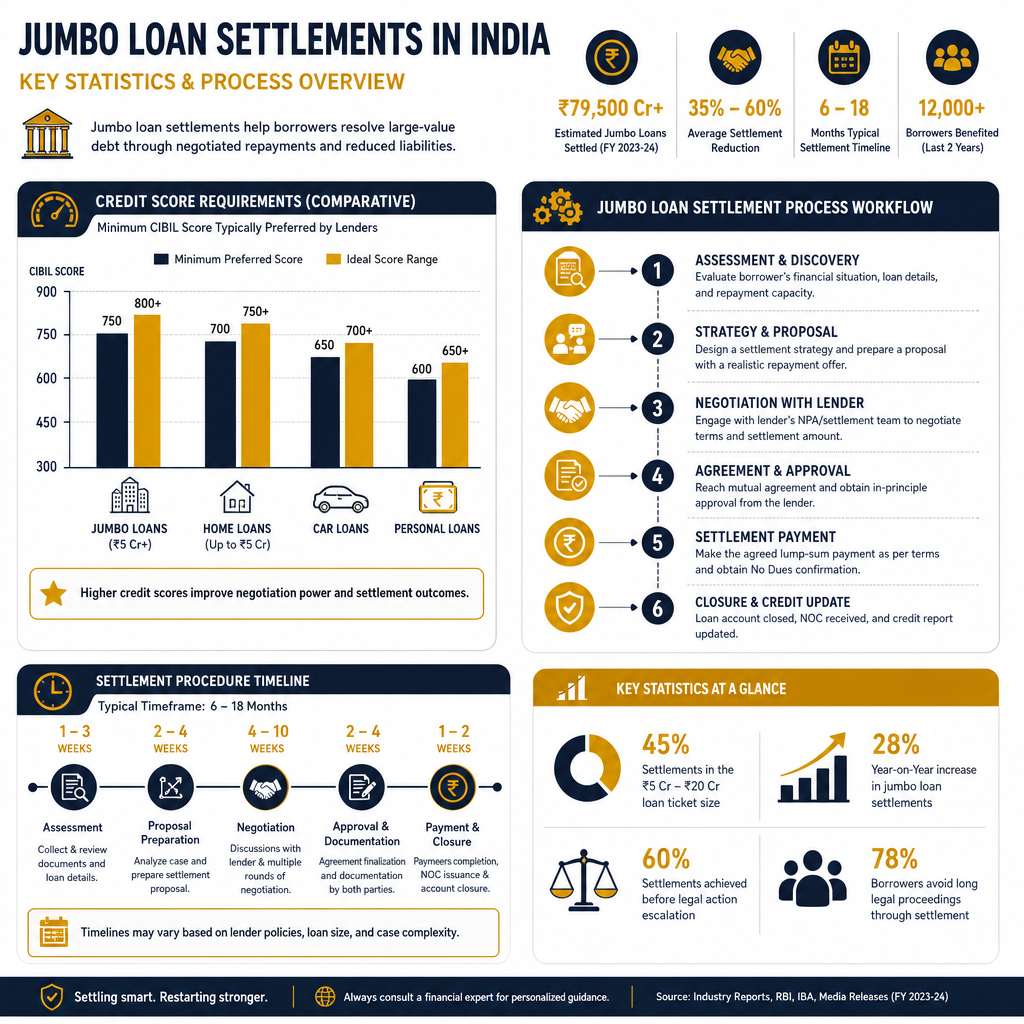
Prepared by AMA Legal Solutions Research & Analytics Team • Data & Compliance Overview
Rights and Obligations of Borrowers During Debt Settlement
Borrowers engaging in debt settlement for Jumbo Loan need to be aware of their rights and obligations to effectively navigate the process. Understanding these can significantly impact the outcome of the settlement negotiations.
Understanding Your Rights
- Right to Information: Borrowers have the right to access all pertinent information regarding their loan, including outstanding balances, interest rates, and penalty charges.
- Protection from Harassment: Borrowers are protected under RBI guidelines against unfair recovery practices. Any harassment by recovery agents can be reported for legal action.
- Fair and Transparent Process: Lenders must handle settlements with transparency, keeping borrowers informed about each step and offering clear communication.
Borrower Obligations
- Timely Communication: It is vital for borrowers to maintain open communication with the lender, providing updates on financial situations, which can influence negotiation outcomes.
- Documentation: Ensure all communications and agreements are documented. Written records can serve as evidence in case of disputes.
- Adherence to Agreement: Once a settlement is reached, borrowers must adhere to the terms to prevent future legal complications or credit score impact.
For comprehensive assistance, consider consulting with an expert in Banking and Finance Law to ensure your rights are fully protected during the settlement process.
What Banks Typically Don’t Disclose About Jumbo Loan Settlements
When dealing with jumbo loan settlements, banks often withhold critical information. Understanding these nuances can empower borrowers to negotiate more effectively. One key aspect is that banks internally classify non-performing assets (NPAs) based on their potential recovery value, which impacts their willingness to settle. This internal classification isn't disclosed to borrowers, yet it significantly affects settlement offers.
Banks are also unlikely to reveal that they might accept a lump-sum settlement below the outstanding balance, especially if the loan is significantly delinquent. Although this information is crucial for borrowers, banks prefer not to disclose it openly. Instead, they focus on recovering as much as possible through initial demands and negotiations.
Understanding Bank Motivations
Banks aim to maximize recovery by keeping borrowers uninformed about settlement thresholds. They are motivated to settle quickly to enhance their balance sheets, particularly at the end of fiscal quarters. Borrowers can leverage this timing for better negotiation outcomes.
- Borrowers should be aware that banks may prioritize loan settlement over prolonged litigation.
- Another undisclosed factor is the bank's willingness to restructure a loan if vital financial documentation demonstrating hardship is provided.
Engaging with a banking and finance law expert can uncover these concealed opportunities, ensuring borrowers make informed decisions. Understanding these hidden dynamics is vital for achieving favorable settlement terms.
Case Studies: Successful Jumbo Loan Settlement Stories
Successfully navigating jumbo loan settlements often requires strategic planning and negotiation skills. Here, we present case studies of borrowers who effectively managed their debt settlement for jumbo loans, illustrating practical approaches and outcomes.
Case Study 1: Business Owner's Negotiation Tactics
A business owner facing financial distress due to market fluctuations negotiated a significant reduction on a ₹5 crore jumbo loan. By providing detailed financial statements and a realistic repayment proposal, the borrower convinced the bank of their genuine intent to repay. The bank agreed to a 40% waiver on the loan after evaluating the business's potential recovery. This case highlights the importance of transparency and a well-drafted proposal.
- Outcome: 40% loan waiver
- Strategy: Detailed financial disclosure
- Key lesson: Transparency builds trust with lenders
Case Study 2: Individual's Legal Assistance
An individual borrower utilized legal advice for debt settlement on a ₹3 crore jumbo loan, resulting in favorable terms. Engaging with experienced loan settlement services, they crafted a compelling narrative backed by legal precedents. The bank, persuaded by the legal argument, settled for a 35% reduction. This case underlines the importance of professional legal support in complex negotiations.
- Outcome: 35% loan reduction
- Strategy: Legal assistance and precedents
- Key lesson: Leveraging legal expertise can significantly impact outcomes
For more insights on how legal strategies can optimize loan settlements, explore our banking and finance law services.
Structured Table: Comparison of Legal Remedies for Debt Settlement
When dealing with debt settlement for jumbo loans, understanding the various legal remedies available can make a significant difference. Borrowers often face unique challenges due to the size of these loans, which necessitates a strategic approach. Below is a comparison of legal remedies, highlighting key provisions, timelines, and impact. This can guide individuals toward the most effective resolution, whether through negotiation or litigation.
| Parameter / Criterion | Key Details / Legal Provision | Timeline / Practical Impact |
|---|---|---|
| Debt Restructuring | Involves altering the terms of the existing loan; includes changes in the interest rate or extending the loan tenure. | Typically resolved within 3-6 months; can provide immediate financial relief. |
| One-Time Settlement (OTS) | Lump sum payment agreed upon with the lender to settle the debt at a reduced amount. | Resolution usually within 1-3 months; beneficial for those with access to immediate funds. |
| Insolvency Proceedings | Legal process initiated in court to declare inability to repay the debt, leading to asset liquidation. | Can take 1-2 years; offers a fresh start but impacts credit score severely. |
| Negotiated Settlement | Involves direct discussions with lenders to reach a mutually acceptable payment plan. | Flexible timeline; depends heavily on lender-borrower relations. |
For more personalized assistance, consider exploring our Loan Settlement Services or consult our Banking and Finance Law experts to navigate complex jumbo loan settlements effectively.
Structured Table: Timeline of Debt Settlement Process for Jumbo Loans
Understanding the debt settlement process for jumbo loans is crucial for borrowers facing financial challenges. This structured timeline provides clarity on the steps involved, key legal provisions, and practical impacts. Being well-informed allows borrowers to negotiate effectively and make informed decisions. Here is a detailed breakdown of the process:
| Parameter / Criterion | Key Details / Legal Provision | Timeline / Practical Impact |
|---|---|---|
| Initial Assessment | Borrower's financial situation and loan terms are reviewed. Relevant for deciding negotiation strategies. | 1-2 weeks. Sets the foundation for the settlement process. |
| Negotiation Phase | Engagement with lenders to discuss settlement terms. Legal provisions under RBI guidelines apply. | 4-6 weeks. Critical for achieving favorable terms. |
| Drafting Settlement Agreement | Legal documentation outlining settlement terms and borrower obligations. Requires careful legal scrutiny. | 1-3 weeks. Essential for formalizing agreements. |
| Finalization and Implementation | Agreement is signed and executed. Borrower begins fulfilling the settlement terms. | 1-2 weeks. Marks the transition from negotiation to action. |
For a comprehensive understanding of Loan Settlement Services and strategies, explore our resources on Banking and Finance Law. These insights can assist borrowers in navigating the complexities of jumbo loan settlements effectively.
Practical Tips for Communicating with Banks and Recovery Agents
Effective communication with banks and recovery agents is crucial for a successful loan settlement, especially in the case of a jumbo loan. Here are some practical strategies:
Be Transparent About Your Situation
Explain your financial difficulties honestly. Providing upfront details about your inability to pay can foster trust and open the door to negotiation. Banks appreciate borrowers who communicate proactively.
Document Everything
Always keep a detailed record of all communications, including emails and call logs. This documentation is vital in case disputes arise. It also helps in tracking promises made by the bank or recovery agents.
Know Your Rights
Familiarize yourself with your legal rights to prevent harassment. For more detailed insights, you can explore Legal Rights Against Recovery Agent Harassment. Knowing your rights empowers you to stand firm against undue pressure.
Request Written Communication
Wherever possible, ask for all communications to be in writing. This not only provides a clear record but also reduces the risk of miscommunication. Written communication can be crucial if you need to escalate the matter later.
Seek Professional Guidance
Consider hiring a legal expert for guidance on banking and finance law. Professional advice can help you navigate complex settlements and protect your interests effectively.
- Maintain a calm demeanor during all interactions to avoid escalating tensions.
- Set clear negotiation objectives before entering discussions.
- Be patient; resolution processes can take time but persistence often pays off.
Popular Searches & Topics
Commonly searched legal queries and keywords related to this article

AMA Legal Solutions
Trusted with a 4.7 Google Rating, over 10,000+ Clients Served, 25,000+ Cases Handled, and more than 40+ Years of Experience in providing strategic legal defense and debt resolution across India.
Our media coverages





Frequently Asked Questions
Related Articles

Settle Credit Debt: Practical Strategies for Indian Borrowers (2026)
Explore effective legal strategies and insights to settle your credit debt successfully.
Read Article
Advocate for Bank Loan Settlement: Navigating Your Rights (2026)
Explore effective strategies and legal protections from an advocate for bank loan settlement.
Read Article
Settle Bank Debt: Essential Steps for Indian Borrowers (2026)
Discover practical advice and legal guidance on how to successfully settle bank debt in India.
Read ArticleAbout Author
Anuj Anand Malik
View ProfileAnuj Anand Malik, Founder of AMA Legal Solutions, is a trusted advocate, loan settlement expert, legal advisor, and banking lawyer. With over a decade of experience in loan settlement, corporate law, financial disputes, and compliance, he leads a result-driven law firm based in India that helps individuals, startups, and businesses achieve legal and financial stability.
Connect on LinkedInNeed Legal Help?
Get expert advice on loan settlement and debt relief.
Call +91-8700343611Request Callback