Can Recovery Agents Enter My House Legally in India?
Understanding Your Rights and Legal Standpoints in India

Anuj Anand Malik
Reviewed by AMA Legal Solutions

Can Recovery Agents Enter My House Legally in India?
The financial landscape in India is rapidly evolving, as are the mechanisms for debt recovery. One common concern for borrowers is whether recovery agents have the legal authority to enter one's home. This question generates anxiety and confusion for many, but understanding your rights and the legal frameworks in India can help ensure you are protected. In this elaborate discussion, we will explore whether recovery agents can lawfully enter your house and what protections and recourses are available to borrowers in India.
Financial institutions have increasingly relied on recovery agents to regain dues from borrowers. With the emergence of various lending platforms, the need for debt recovery has intensified, leading to more frequent interactions between borrowers and recovery agents. An understanding of your rights as a borrower regarding these interactions is crucial to navigating debt recovery processes smoothly.
Understanding Debt Recovery: A Comprehensive Overview
Debt recovery is a process initiated by lenders to ensure the repayment of money borrowed by individuals or entities. This process can involve a variety of methods, including the engagement of recovery agents. However, the legal nuances and ethical considerations involved in debt recovery practices are critical in ensuring borrowers' rights are upheld. Let's delve into this multifaceted process.
The Role of Recovery Agents
Recovery agents are intermediaries employed by banks and financial institutions to facilitate the collection of overdue payments from borrowers. Their primary objective is to recover the bank's money through structured interactions. However, the actions of these agents must conform to legal standards to protect borrowers from harassment and undue pressure.
Bank's Perspective on Debt Recovery
- Maintaining Financial Health: For any financial institution, ensuring the recovery of debts is crucial to maintaining its liquidity and operational viability.
- Regulatory Compliance: Banks are required to comply with various regulatory standards when engaging recovery agents to ensure the process is transparent and ethical.
- Stakeholder Trust: Successfully managing debt recovery processes without infringing on borrowers’ rights helps maintain trust with customers and stakeholders.
Legal Framework Governing Recovery Agents in India
The Reserve Bank of India (RBI) has set forth guidelines that govern the conduct of recovery agents. However, these guidelines do not specifically permit recovery agents to enter a borrower’s residence. Let’s explore the legal framework and guidelines.
RBI Guidelines on Recovery Agents
The RBI guidelines are crucial in ensuring fair practices in the recovery process. Key points include:
- Authorization: Recovery agents must be properly authorized and trained by the lending institution.
- Conduct: Agents must maintain decorum and should not resort to harassment or intimidation.
- Hours of Contact: Agents should contact borrowers only between the hours of 7 AM to 7 PM, unless the borrower has given permission otherwise.
Impact of RBI Guidelines on Borrowers
- Borrowers benefit from both a legal and ethical shield against aggressive collection techniques, as banks are held accountable for their agents' conduct.
- Detailed training requirements ensure that agents are aware of their legal boundaries, promoting borrower rights.
Legal Rights of Borrowers
Borrowers are entitled to several rights that protect them against unlawful recovery practices. These include:
- Right to Privacy: Recovery agents do not have the authority to forcibly enter your home without consent or a legal warrant.
- Right to Confidentiality: Agents must maintain privacy and not disclose information related to the borrower's debts inappropriately.
Case Study: Borrowers Exercising Their Rights
Consider a borrower, Mr. A, who faced aggressive tactics from a recovery agent. Upon being confronted, Mr. A reminded the agent of his legal rights, emphasizing the RBI's guidelines. This prompted the recovery agent to retract and approach the negotiation more amicably, demonstrating the empowerment provided by awareness of one's rights.
Privacy and Property Rights
Your home is your sanctuary, and Indian law respects the sanctity of one's abode. According to various legal codes, any unauthorized entry may tantamount to trespassing, which is a punishable offense. This ensures that borrowers are protected under the purview of privacy and property rights.
Implications of Breaching Privacy Rights
Breaches of privacy by recovery agents can have both legal and psychological implications:
- Legal Repercussions: Trespassing laws under the Indian Penal Code can apply, leading to penalties for recovery agents.
- Psychological Impact: Intrusive recovery methods can lead to distress and anxiety, significantly impacting the mental health of borrowers.
Consequences of Trespass by Recovery Agents
Legal repercussions for recovery agents or lenders trespassing include:
- Legal Action: Borrowers can file a complaint with the local police station regarding unlawful entry.
- Compensation: In some courts, borrowers have successfully claimed damages for psychological distress and invasion of privacy.
Statistics on Trespass and Recovery Practices
| Year | Cases Reported | Resolution Success Rate (%) |
|---|---|---|
| 2021 | 1500 | 65% |
| 2022 | 1700 | 70% |
| 2023 | 1900 | 75% |

Halt Recovery Agent Harassment Legally
Practical Steps if Confronted by Recovery Agents
If approached by a recovery agent, here are steps you should consider:
Know Your Rights
Awareness is your first line of defense. Familiarize yourself with the specific guidelines issued by the RBI. If a recovery agent is aggressive, document the interaction, noting the date, time, place, and demeanor.
Communication with Lender
Initial attempts to resolve the debt issue directly with the lender might circumvent the need for recovery agents. Open communication channels can sometimes lead to a negotiated settlement or revised repayment plans.
Steps for Effective Communication with Lenders
- Gather Documentation: Ensure you have all relevant documents and correspondence related to the debt.
- Schedule Discussions: Request a formal meeting with the lender to discuss repayment options.
- Negotiate Terms: Be prepared to negotiate your repayment plan based on your current financial capacity.
Seek Legal Counsel
Legal assistance might be necessary if a resolution cannot be reached or if the recovery agents engage in inappropriate conduct. At AMA Legal Solutions, we offer expert legal advice and services to protect your rights during loan recoveries.
Legal Recourse in Case of Harassment or Trespass
Filing a Complaint
Should you encounter harassment, it is within your right to file a complaint with the local police. Narrate the details clearly with all supporting documentation.
Steps to File a Police Complaint
- Document Everything: Keep precise records of all interactions with recovery agents.
- Draft the Complaint: Include all necessary details such as names, dates, and a chronology of events.
- Follow Up: Maintain communication with law enforcement to track the progress of your complaint.
Approaching the Debt Recovery Tribunal (DRT)
The DRT is a specialized court established to facilitate debt recovery. A borrower can approach the tribunal for resolution should there be discrepancies or unfair practices.
DRT Proceedings and Borrower Advantages
- Expedited Process: DRTs focus exclusively on financial cases, leading to faster resolutions.
- Borrower Protections: Borrowers can present their case in a legal setting specifically designed to handle financial disputes.
Involvement of a Civil Lawyer
Civil law provisions enable individuals to take legal action against unlawful conduct, which includes harassment and unwarranted entry by recovery agents. AMA Legal Solutions offers comprehensive civil lawyer services to assist affected borrowers in seeking justice.
Conclusion: Protecting Your Rights
Your legal rights and personal dignity as a borrower are paramount. While recovery agents play a necessary role in the debt recovery ecosystem, their operations must align with legal and ethical guidelines. As someone potentially facing such circumstances, taking preemptive steps and understanding your rights is vital.
Protect yourself by staying informed, seeking counsel when necessary, and handling interactions with recovery agents with clarity and calmness. For professional legal assistance, consider engaging with our banking and finance services to ensure your rights are defended effectively.
Empower yourself by staying informed and consider legal support if necessary. Visit AMA Legal Solutions for more guidance on this and related issues.
Need Strategic Legal Defense for Your Situation?
Our banking & litigation advocates review your notices, debt liability, and recovery issues under complete advocate-client secrecy.

AMA Legal Solutions
Trusted with a 4.7 Google Rating, over 10,000+ Clients Served, 25,000+ Cases Handled, and more than 40+ Years of Experience in providing strategic legal defense and debt resolution across India.
Our media coverages





Client Reviews
"Their guidance helped me keep recovery agents in check. Professional and thorough service!"
Deepa Mehra
"AMA Legal Solutions provided invaluable insights on my rights against recovery agents. Highly recommend their services."
Arjun Kapoor
"Excellent support in handling intrusive recovery agents. They know the legal landscape inside out."
Ravi Narayan
"Their legal counsel helped me resolve my debt issues efficiently. Highly recommended for anyone facing similar challenges."
Vikram Singh
"AMA Legal Solutions made a significant difference in my case. Thankful for their strategic advice."
Nisha Agarwal
Frequently Asked Questions
Related Articles
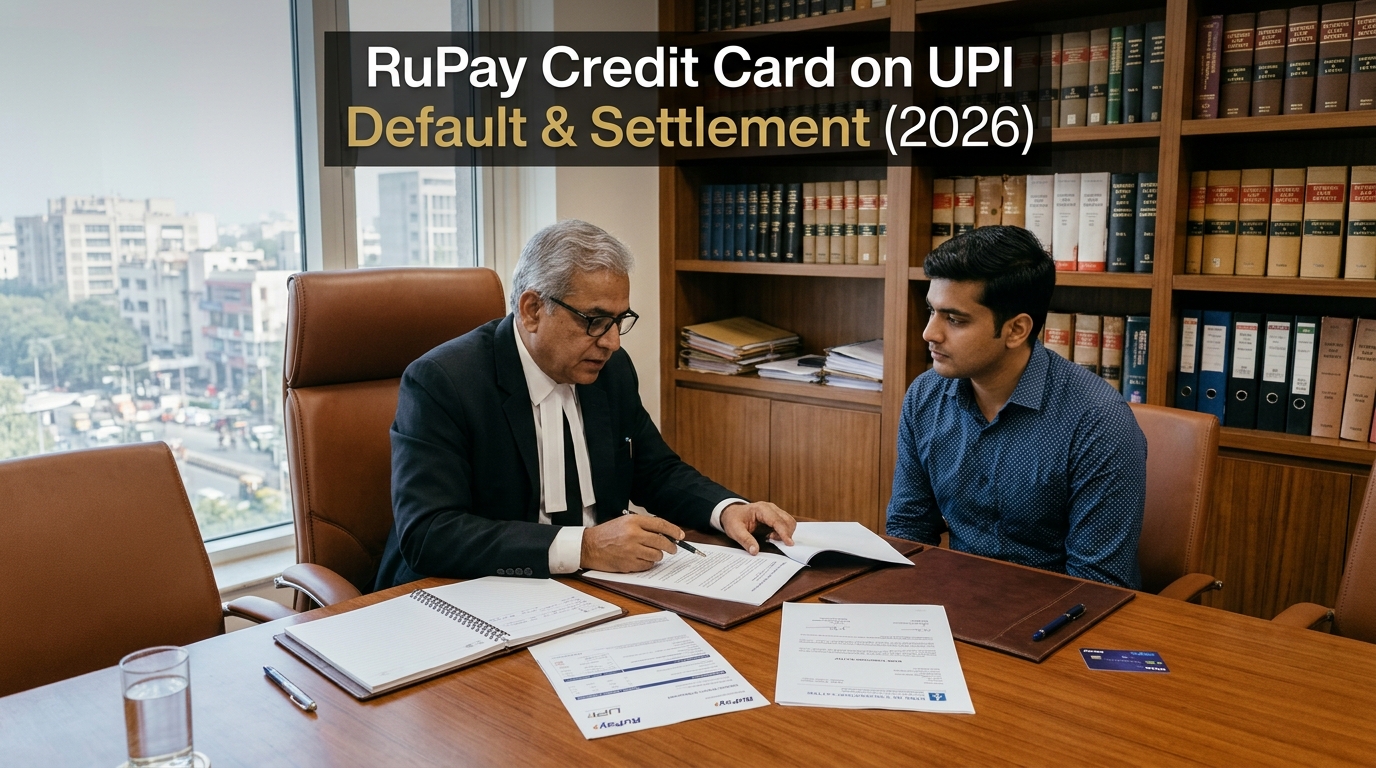
RuPay Credit Card on UPI Default & Credit Line on UPI Settlement (2026)
Micro-transactions on RuPay UPI Credit Cards and pre-approved 'Credit Lines on UPI' have triggered a massive wave of 42%+ APR revolving debt traps. Find out if defaulting blocks your personal savings UPI and how to settle RuPay UPI credit dues for 30%–50%.
Read Article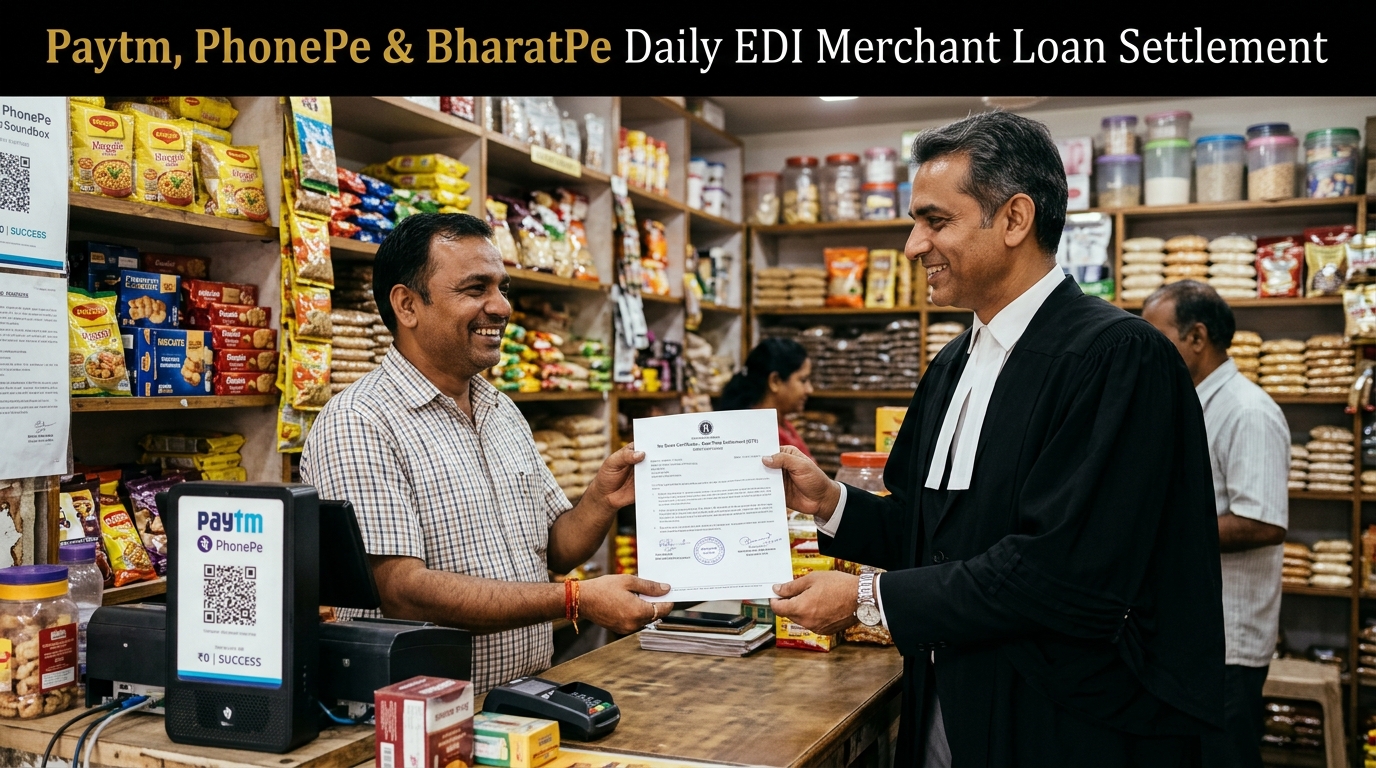
Paytm, PhonePe & BharatPe Daily EDI Merchant Loan Settlement (2026)
Drowning in Equated Daily Installment (EDI) merchant loans where 100% of your daily QR Soundbox collections are auto-swept before you can pay suppliers or rent? Learn how retail shopkeepers and MSMEs legally halt QR sweeps and negotiate a 50%+ OTS.
Read Article
Can Bank or Loan App Remotely Lock Phone for EMI Default? RBI Rules (2026)
An investigative breakdown of RBI's Remote Device Locking Directions—explaining why lenders cannot lock your phone for personal loans, the mandatory 30/60 DPD safeguards on financed devices, the Rs. 250/hour delay penalty, and how to settle device & app loans.
Read ArticleAbout Author
Anuj Anand Malik
View ProfileAnuj Anand Malik, Founder of AMA Legal Solutions, is a trusted advocate, loan settlement expert, legal advisor, and banking lawyer. With over a decade of experience in loan settlement, corporate law, financial disputes, and compliance, he leads a result-driven law firm based in India that helps individuals, startups, and businesses achieve legal and financial stability.
Connect on LinkedInNeed Legal Representation?
Evaluate your defense against recovery agents, notices, or structure your loan settlement directly with Senior Advocates.
Call +91-8700343611