RBI Alert: Avoid Loan Waiver Scam Campaigns
The Central Bank Warns Against Deceptive Loan Waiver Schemes

Anuj Anand Malik
Reviewed by AMA Legal Solutions
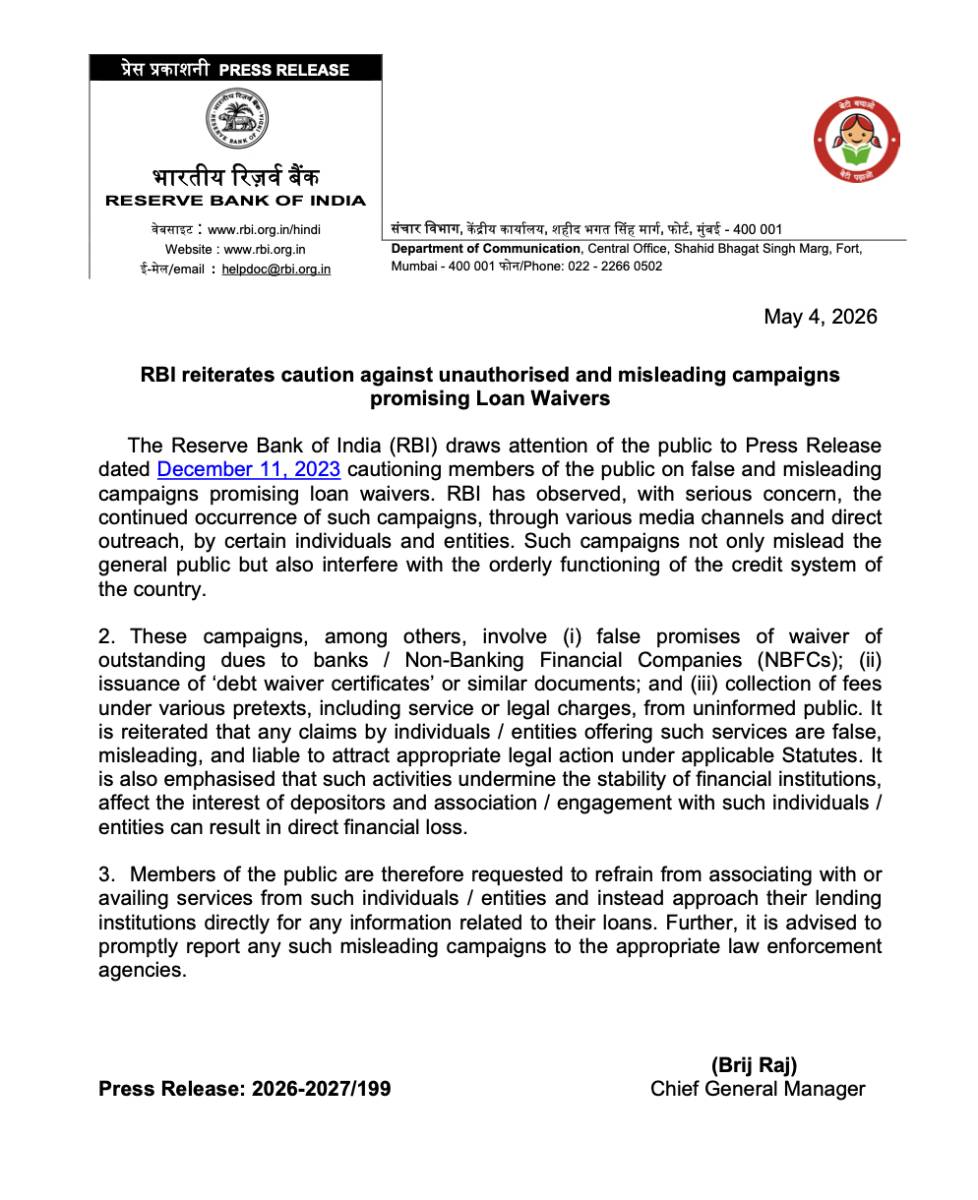
 The financial landscape in India has recently been marred by a surge in fraudulent activities targeting vulnerable borrowers. In a critical press release dated May 4, 2026, the Reserve Bank of India (RBI) issued a stern warning: RBI: Beware of misleading campaigns on loan waivers: Central bank appeals public not to fall prey to such scammers. This directive comes after a significant rise in unauthorized entities promising total debt forgiveness in exchange for upfront fees.
As a leading legal authority based in Gurugram, AMA Legal Solutions stands at the forefront of protecting borrower rights. We understand that financial distress can lead to desperate measures, but falling for "loan waiver" scams only exacerbates the crisis. This comprehensive guide dissects the RBI's warning, provides legal clarity on debt settlement, and outlines the legitimate path to financial recovery under Indian law.
The Anatomy of a Loan Waiver Scam
Scammers typically operate through social media, WhatsApp, and targeted SMS campaigns. They use the primary keyword "RBI: Beware of misleading campaigns on loan waivers:Central bank appeals public not to fall prey to such scammers" as a shield, ironically often misquoting the central bank's regulations to appear legitimate.
"The RBI has observed, with serious concern, the continued occurrence of such campaigns... Such campaigns not only mislead the general public but also interfere with the orderly functioning of the credit system of the country." RBI Press Release, May 2026.
How Scammers Deceive You:
Debt Waiver Certificates: Issuing forged documents that look like official bank or RBI clearances.
Upfront Fee Collection: Demanding "legal fees" or "service charges" ranging from 5% to 10% of the loan amount.
Isolation Tactics: Advising borrowers to stop all communication with their banks, leading to "Willful Defaulter" tags.
Misleading Claims: Promising a waiver of outstanding dues to banks and Non-Banking Financial Companies (NBFCs) that have no legal basis.
Legitimate Debt Resolution vs. Fraudulent Waivers
It is crucial to distinguish between a fraudulent "waiver" and a legal loan settlement. A waiver implies the total cancellation of debt without payment, which is virtually non-existent in commercial banking. A settlement, however, is a negotiated agreement between the borrower and the lender to pay a reduced amount to close the account.
Feature | Fraudulent Waiver Campaign | Legitimate Loan Settlement |
Authority | Third-party individuals/unauthorized entities. | Directly with the Bank or through legal counsel. |
Payment | Fees paid to the scammer upfront. | Payment made directly to the Bank's settlement account. |
Documentation | "Waiver Certificates" (Legally invalid). | "No Dues Certificate" (NDC) issued by the Bank. |
Impact | Financial loss and legal liability. | Orderly closure of debt obligations. |
Legal Framework: Banking and Finance Laws in India
The banking and finance sector is governed by strict RBI mandates. Under the July 1, 2026, RBI Harmonized Recovery Norms, borrowers have rights that protect them from harassment, but these rights do not include arbitrary debt cancellation.
If you are facing litigation, you should consult experts in civil law or explore arbitration to resolve disputes. For businesses, protecting assets through corporate legal strategies is more effective than seeking fake waivers. Furthermore, those dealing with property-related debt should consult real estate legal experts to ensure their assets are shielded from illegal recovery tactics.
Step-by-Step Guide to Responding to Scammers
Verify the Source: If someone promises a waiver, ask for their license under the RBI or SEBI.
Check with your Bank: Contact your lending institution directly for any information related to your loans.
Report to Authorities: Promptly report misleading campaigns to appropriate law enforcement agencies or the cyber-crime portal.
Seek Professional Drafting: Ensure all settlement terms are legally sound through professional drafting services.
Key Insights for Borrowers
To provide immediate value for users searching for "RBI loan waiver news," here are the core facts:
Is there an RBI loan waiver scheme in 2026? No. The RBI has explicitly reiterated that such claims are false.
What is the July 1, 2026, RBI update? It refers to Harmonized Recovery Norms, focusing on fair recovery practices, not waivers.
Can a third party stop bank recovery? Only through legal stays or litigation in competent courts.
What are the consequences of engaging with scammers? It can result in direct financial loss and attract legal action under applicable statutes.
Frequently Asked Questions (FAQs)
1. What does the RBI mean by "misleading campaigns on loan waivers"? It refers to unauthorized entities promising to cancel your bank loans for a fee, which the RBI warns is a scam that interferes with the credit system.
2. Can I get a "Debt Waiver Certificate" from a private agency? No. Such documents are false and misleading. Only the lending bank can issue a "No Dues Certificate" after full or agreed settlement payment.
3. Are there any legal ways to reduce my debt? Yes, through loan settlement, restructuring, or Lok Adalats, but never through "waiver" campaigns by third parties.
4. What should I do if a recovery agent threatens me? You are protected under RBI recovery guidelines. You can file a complaint or seek help from criminal law experts if the harassment is severe.
5. Does the RBI appeal public not to fall prey to scammers apply to home loans? Yes, it applies to all types of credit including home, personal, and business loans from banks and NBFCs.
6. Can engaging with these scammers lead to legal trouble for me? Yes, the RBI emphasizes that such activities undermine financial stability and can result in legal action.
7. Who should I contact for genuine loan information? You should approach your lending institutions directly for any information related to your loans.
8. Is there any "RBI Approved" third-party waiver agency? No. The RBI has cautioned that claims by any individuals or entities offering such services are false.
Conclusion
The Reserve Bank of India’s message is clear: RBI: Beware of misleading campaigns on loan waivers:Central bank appeals public not to fall prey to such scammers. These fraudulent schemes not only drain your finances but can also lead to severe legal complications and damage your creditworthiness. Always remember that there is no shortcut to debt relief that involves paying a third party to "erase" your bank obligations.
Protect your financial future by staying informed and choosing legitimate legal pathways. If you are struggling with debt or facing aggressive recovery tactics, don't let scammers compromise your standing. Contact AMA Legal Solutions today for professional, ethical, and effective legal guidance in banking and finance matters.
Contact us: www.amalegalsolutions.com | Visit us at Sector 57, Gurugram
AMA Legal Solutions
Trusted with a 4.7 Google Rating, over 10,000+ Clients Served, 25,000+ Cases Handled, and more than 40+ Years of Experience in providing strategic legal defense and debt resolution across India.
Our media coverages





Client Reviews
"AMA Legal's guidance helped me understand the legalities better, ensuring my protection."
Amit Kumar
"The professional, easy-to-understand advice offered here proved life-saving against scammers."
Neeta Desai
"Thanks to the article, I avoided a loan waiver scam that could have cost me heavily."
Rohan Mehta
"The insights provided were invaluable. Feel secure knowing I can combat such frauds!"
Sakshi Patel
"I shared this article with family to educate them on avoiding financial scams. Highly recommended!"
Raj Malhotra
Frequently Asked Questions
Related Articles

How to Trust Law Associates for Loan Settlement
Ensure Successful Loan Settlement with Trusted Legal Experts
Read Article
Expert Loan Settlement Lawyer: Minimize Amount, Maximize Waiver
Unlocking the Secrets to Successful Loan Settlements in India
Read Article
Mastering Loan Settlement of Personal Loan by Bajaj Finance
Navigate Bajaj Finance Loan Settlements with Expert Legal Insights
Read ArticleAbout Author
Anuj Anand Malik
View ProfileAnuj Anand Malik, Founder of AMA Legal Solutions, is a trusted advocate, loan settlement expert, legal advisor, and banking lawyer. With over a decade of experience in loan settlement, corporate law, financial disputes, and compliance, he leads a result-driven law firm based in India that helps individuals, startups, and businesses achieve legal and financial stability.
Connect on LinkedInNeed Legal Help?
Get expert advice on loan settlement and debt relief.
Call +91-8700343611Request Callback