Quick Answer: How Does Personal Loan Debt Settlement Work?
Personal loan debt settlement is a structured legal process in India wherein a borrower facing genuine financial distress negotiates a discounted One Time Settlement (OTS) with lending banks or NBFCs. Governed by the Reserve Bank of India (RBI) compromise settlement guidelines, authorized advocates negotiate to waive penal charges, reduce total principal balances by 40% to 75%, stop third-party recovery harassment, and secure an official No Dues Certificate (NDC). This legal compromise extinguishes the entire debt obligation permanently without criminal liabilities.
The Commercial Debt Crisis and Unsecured Personal Loans in India
The aggressive expansion of retail credit, instant fintech loan apps, and digital banking platforms across India has led to a historic surge in unsecured consumer debt. Unlike secured home or vehicle loans backed by tangible collateral, personal loans are issued purely on personal credit standing and employment credentials. Consequently, commercial lenders price this uncollateralized risk by charging exorbitant annual percentage rates (APR) ranging between 13% and 36%, coupled with steep penal compounding upon default.
When unexpected macroeconomic disruptions occur—such as sudden corporate downsizing, prolonged medical hospitalization, or catastrophic commercial revenue losses—borrowers can quickly find their monthly equated installments (EMIs) mathematically impossible to service. Missing successive payments triggers automated penal interest rates, late fee levies, and immediate assignment to aggressive third-party recovery agencies. In such distress, pursuing a formal personal loan debt settlement through an established legal advisory firm becomes the most prudent, statutory, and cost-effective strategy to achieve debt freedom.
What Is Personal Loan Debt Settlement? (Commercial OTS Mechanics)
"Personal loan debt settlement is an enforceable legal contract executed between a lending bank or NBFC and a borrower, wherein the creditor agrees to accept a negotiated, discounted lump-sum payment as full and final satisfaction of the total loan account, waiving all remaining balances and future claims."
From a commercial banking perspective, when an unsecured personal loan crosses 90 days of non-payment, Indian banking regulations classify the account as a Non-Performing Asset (NPA). Because the loan carries no collateral for physical asset seizure under the SARFAESI Act, banks must maintain heavy capital provisioning against bad debts on their balance sheets. Prolonged civil litigation in Debt Recovery Tribunals (DRT) or civil courts is both resource-draining and commercially unviable for retail personal loan portfolios.
Under explicit directives issued by the Reserve Bank of India (RBI), commercial banks and Non-Banking Financial Companies (NBFCs) maintain board-approved compromise settlement policies. These policies authorize institutional credit committees to accept compromised One Time Settlements (OTS) from distressed borrowers, writing off unrecoverable interest and portions of the principal to recover immediate cash liquidity.
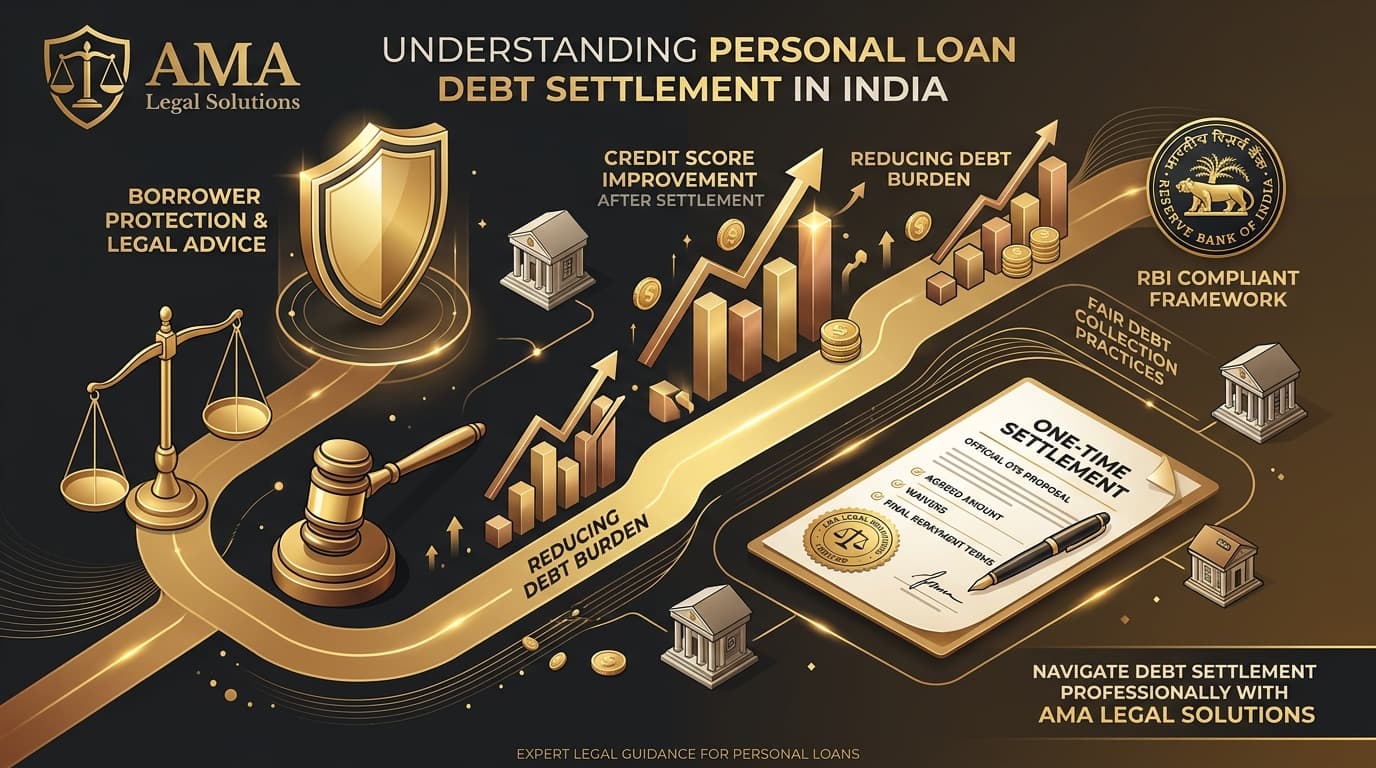
RBI Fair Practices Code & Anti-Harassment Regulations
The Reserve Bank of India has established comprehensive, mandatory regulations governing how financial institutions and their recovery agents must treat borrowers. Unlawful collection practices are strictly prohibited under Indian law, and engaging specialized debt settlement advocates ensures that your statutory protections are vigorously enforced:
"Lenders shall ensure that recovery agents do not resort to intimidation, harassment, or verbal abuse of any kind against borrowers. Lenders shall strictly refrain from calling at uncivil hours, contacting unrelated third parties, or attempting public humiliation." — RBI Master Direction on Fair Practices Code.
Recovery calls and agent visits are legally restricted to between 08:00 AM and 07:00 PM. Telephonic calls before 8 AM or after 7 PM constitute punishable harassment.
Lenders cannot contact your workplace colleagues, supervisors, family members, or neighbors to disclose your loan default or settlement proceedings.
Threatening arrest, confiscation of household goods, or using musclemen violates the Indian Penal Code and triggers regulatory sanctions.
Verbal settlement promises by recovery agents carry zero legal validity. All settlement offers must be issued on official bank letterhead.
Borrower Rights & Statutory Legal Remedies Under Indian Law
Experiencing an involuntary loan default does not compromise your constitutional and statutory rights as an Indian citizen. The legal system provides robust remedies to protect borrowers from predatory practices:
- ▶RBI Integrated Ombudsman Scheme: Distressed borrowers facing persistent collection harassment, unauthorized bank charges, or denial of compromise settlement reviews can escalate complaints via the RBI Integrated Ombudsman Portal for rapid regulatory inquiry and binding resolution.
- ▶Consumer Protection Act, 2019: Unfair trade practices, illegal debiting of accounts, and mental agony caused by aggressive recovery agents can be aggressively challenged before District, State, and National Consumer Commissions, including the National Consumer Disputes Redressal Commission (NCDRC), seeking punitive damages.
- ▶Supreme Court Precedents on Borrower Dignity: In seminal judgments such as ICICI Bank Ltd. v. Prakash Kaur and Manager, ICICI Bank Ltd. v. Prakash Kaur & Ors., the Supreme Court of India established that recovery through strong-arm tactics is illegal and that banks are vicariously liable for the unlawful acts of their recovery agents.
- ▶Statutory Defenses (Section 138 NI Act & Section 25 PSS Act): In situations where lenders deposit security cheques or trigger automated NACH dishonors, our legal team files comprehensive replies, demonstrates that the cheques were issued as security rather than existing debt discharge, and facilitates peaceful compromise settlements before National Lok Adalats.
The 5-Step Legal Settlement Protocol for Personal Loans
Executing a commercially viable and legally binding personal loan debt settlement requires a disciplined, multi-stage protocol. AMA Legal Solutions utilizes a proven 5-stage legal methodology:
Comprehensive Forensic Debt & Hardship Audit
Our banking legal team performs a rigorous audit of your loan agreements, interest compounding calculations, penalty surcharges, and verified hardship proofs (job termination, hospital bills, or business revenue loss).
Immediate Advocate Representation & Anti-Harassment Shield
We serve an official legal representation notice and Cease-and-Desist mandate on all lending banks, NBFCs, and collection agencies, requiring all communications to be routed exclusively through our law firm under RBI mandates.
Drafting the Statutory One Time Settlement (OTS) Proposal
We draft a comprehensive legal OTS proposal outlining your genuine financial distress, statutory defenses, and an affordable, realistic lump-sum settlement figure grounded in regulatory precedent.
High-Tier Executive & Credit Committee Negotiations
Our senior advocates interface directly with the bank's zonal recovery heads, Stressed Asset Management (SAM) verticals, and credit committees to strike down extortionate penalties and maximize principal waivers.
Settlement Letter Scrutiny & Securing the No Dues Certificate (NDC)
Before any payment is released, our attorneys rigorously verify the authenticity of the bank's official settlement letter. Upon payment, we enforce prompt issuance of the No Dues Certificate and reporting updates to CIBIL.
Self-Settlement vs. Advocate-Led Personal Loan Debt Settlement
While borrowers technically possess the option to approach banks individually, negotiating against structured banking credit committees without professional legal representation involves significant risks:
| Strategic Dimension | Self-Negotiation Attempt | AMA Legal Solutions Representation |
|---|---|---|
| Anti-Harassment Shield | Recovery calls and home visits persist unabated | Immediate legal Cease-and-Desist halts all agent contact |
| Debt Waiver Percentage | Typically 10% to 25% (penal fees usually retained) | 40% to 75% waiver negotiated on total ledger balance |
| Statutory Notice Defense | High risk of ex-parte orders in Sec 138 or Arbitration | Formal advocate replies & Lok Adalat representation |
| Legal Document Validity | Vulnerable to fake WhatsApp settlement letters by agents | Thoroughly vetted bank letters & enforceable No Dues Certificates |
Credit Score (CIBIL) Impact & 24-Month Credit Repair Roadmap
Transparency regarding credit score consequences is paramount in commercial debt resolution. When a personal loan account is settled under an OTS scheme, credit bureaus (CIBIL, Equifax, Experian, CRIF High Mark) record the status as "Settled" rather than "Closed."
Freezes interest compounding, removes active default status, and terminates all imminent judicial recovery actions permanently.
Acquire a secured credit card backed by a fixed deposit. Maintain credit utilization strictly below 25% to build positive payment cycles.
As on-time payment records accumulate, the impact of the historical settled tag diminishes, restoring creditworthiness for major loans.
Why Choose AMA Legal Solutions for Personal Loan Debt Settlement?
Practicing Advocates
High Court and Supreme Court advocates with deep statutory mastery in banking laws, debt recovery, and consumer protection.
Zero-Harassment Shield
We mandate all recovery communication through our legal firm, safeguarding your peace of mind and family dignity.
Success-Driven Fee
No predatory upfront fees. Our success fee is directly tied to the actual debt reduction we achieve on your behalf.

Written by Advocate Anuj Anand Malik
Managing Partner at AMA Legal Solutions. Supreme Court and High Court Advocate specializing in commercial debt resolution, banking litigation, and borrower rights defense.
View Full Verified Legal Profile & Credentials →📚 Statutory Authorities & Legal References
- • Reserve Bank of India (RBI) — Master Directions on Compromise Settlements and Regulatory Framework for Stressed Assets.
- • RBI Integrated Ombudsman Scheme — Mechanism for Resolving Deficiencies in Banking Services & Harassment Grievances.
- • National Consumer Disputes Redressal Commission (NCDRC) — Redressal of Unfair Trade Practices under the Consumer Protection Act, 2019.
- • India Code — SARFAESI Act, 2002 & Recovery of Debts and Bankruptcy Act, 1993.
- • Supreme Court of India — Landmark Judgments on Borrower Dignity and Prohibition of Coercive Recovery Tactics.
- • Income Tax Department of India — Capital vs. Revenue Treatment of Compromise Personal Loan Waivers.
📖 Explore Related Legal Debt Relief Guides
Frequently Asked Questions on Personal Loan Debt Settlement
Reclaim Your Peace of Mind & Financial Independence
Do not let insurmountable loan debt and persistent recovery harassment overwhelm your life. Consult senior debt settlement advocates today for an authoritative, confidential case review.
Advocate-Client Privilege Protected • Pan-India Coverage • 100% Legal & Ethical
AMA Legal Solutions
AMA Legal Solutions is India's premier legal advisory and litigation law firm. Trusted with a 4.7 Google Rating, over 10,000+ Clients Served, 25,000+ Cases Handled, and more than 40+ Years of Combined Legal Experience providing strategic legal defense and debt resolution across India.