The Indian food and beverage industry represents a highly dynamic yet vulnerable segment of the retail economy. Cafe proprietors, cloud kitchen operators, and fine dining restaurant owners in prime commercial hubs like Connaught Place in Delhi, Bandra in Mumbai, and Indiranagar in Bengaluru face exceptional financial pressures. Sudden shifts in consumer preferences, high overhead costs, and aggressive market competition make managing debt highly challenging.
To fund kitchen setups, interior branding, and working capital requirements, restaurateurs frequently secure large commercial loans, working capital limits, and credit facilities. However, when cash flows contract due to seasonal drops or raw material inflation, these liabilities quickly turn into non-performing assets. Handling escalating debt pressure while maintaining daily kitchen operations requires a specialized strategic legal approach.
At AMA Legal Solutions, led by Advocate Anuj Anand Malik, we specialize in helping restaurant owners navigate the complexities of commercial debt defaults and bank negotiations. Our team represents business owners to stop aggressive recovery harassment, secure maximum haircuts under banking frameworks, and draft binding settlement agreements to ensure long-term business recovery.
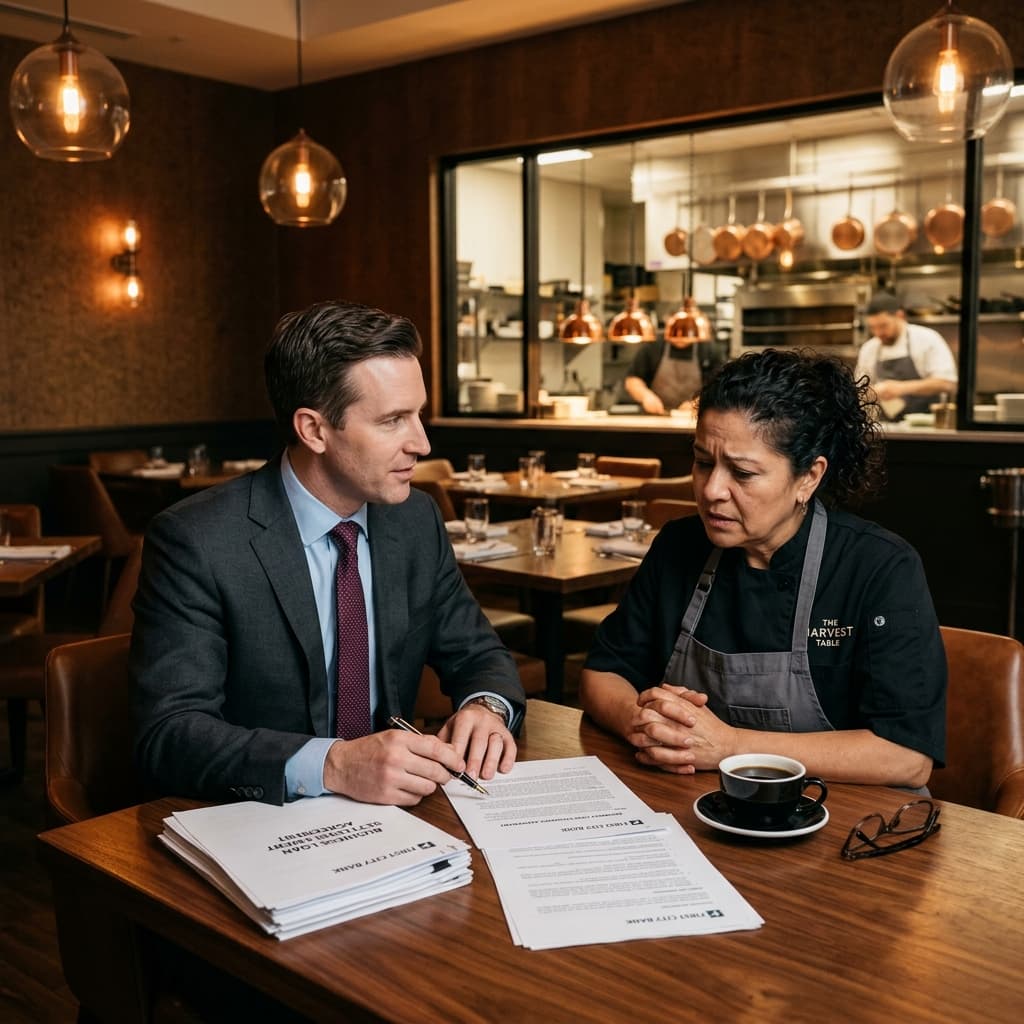
Figure 1: Food business owners reviewing debt restructuring documentation with financial advocates in a modern dining setting.
Why do restaurant owners default on loans?
Restaurant owners default on loans primarily due to exorbitant commercial rentals in prime spots like Delhi or Mumbai, severe kitchen staff turnover, and high aggregator commissions from platforms like Zomato or Swiggy. These factors squeeze net profit margins, turning manageable credit lines into severe defaults.
High Fixed Overhead Costs and Rents
Securing prime retail locations is vital for attracting restaurant footfall, but it demands massive commercial rental deposits and high monthly leases. During seasonal revenue slumps or economic downturns, these fixed rentals do not decrease. When lease payments, electricity bills, and licensing fees consume all incoming revenues, restaurant owners are forced to default on bank loan EMIs to keep their doors open.
Severe Labor Shortages and High Turnover
The hospitality sector suffers from exceptionally high employee turnover rates. Chefs, kitchen technicians, and service staff frequently change employers, disrupting food quality and operational consistency. Recruiting, training, and retaining skilled staff in competitive markets like Bengaluru or Pune increases payroll costs significantly, leaving little liquidity to service active credit facilities.
Eatery Aggregator Commission and Margin Squeeze
Eateries rely heavily on digital platforms like Zomato and Swiggy for delivery orders. However, these aggregators charge commission fees ranging from eighteen to twenty-five percent per transaction. Compounded by platform-mandated customer discounts and advertising costs, the restaurant's margins are severely compressed. Cloud kitchens and small eateries are left with insufficient cash reserves to repay commercial debts.
How does default affect restaurant businesses?
Loan default affects restaurant businesses through direct personal liability risks for proprietors, bank attachments on kitchen assets, and severe reputation damage. While corporate structures offer limited shield, lenders use personal guarantees to attach owners' residential assets and freeze operational bank accounts.
Personal Liability Risks for Business Owners
A major portion of food businesses operate under sole proprietorships or partnerships. Legally, there is no separation between the owner's personal wealth and the restaurant's liabilities. If the business defaults, banks can file civil recovery suits targeting your personal bank savings, vehicles, and residential property, creating severe personal distress.
Seizure of Restaurant Assets and Inventory
Most business loans are secured against the restaurant's physical assets, such as commercial ovens, cold storage systems, and interior furniture. In case of continuous default, the bank has the legal right to seize these kitchen assets under hypothecation agreements. Without essential equipment, restaurant operations halt immediately, leading to permanent closure.
Damage to Reputation and Franchise Value
Lenders utilize recovery agents who may visit your restaurant location during peak operational hours to demand payments. This creates severe scenes in front of dining customers, delivery riders, and nearby businesses. The resulting loss of local reputation can destroy years of brand-building and ruin franchise value, accelerating the restaurant's downfall.
What are the legal rules for settlement?
The legal rules for restaurant loan settlement require classifying the account as a Non-Performing Asset after ninety days of delinquency. Lenders must adhere to the RBI Fair Practices Code, and they are legally obligated to issue a formal No Dues Certificate upon payment.
Classification of Loan Accounts as NPA
According to the Reserve Bank of India, a loan account is classified as delinquent when an EMI payment is missed. If the default continues for over 90 days, the lender formally categorizes the loan as a Non-Performing Asset (NPA). Banks generally do not approve a One Time Settlement (OTS) proposal before this NPA classification, as they must exhaust basic collection processes first.
RBI Guidelines on Debt Recovery Conduct
The RBI strictly regulates how recovery activities must be conducted. Lenders and their recovery agencies are prohibited from visiting restaurants during odd hours, threatening restaurant staff, or creating public disturbances. Any violation of these codes gives the borrower the legal right to approach the RBI Ombudsman or file an injunction in civil court.
Legal Validation of the No Dues Certificate
A restaurant loan settlement is only complete once the bank issues an official No Dues Certificate (NDC) or No Objection Certificate (NOC). This document represents a binding legal release stating that the lender has waived the remaining debt balance and has no further claims on your business assets. Without this certificate, the debt remains active, and the bank can sell it to recovery firms.
How to rebuild restaurant credit scores?
Restaurant owners can rebuild credit scores by securing business credit cards backed by personal fixed deposits, maintaining low credit utilization, and correcting bureau errors. These positive actions help offset the negative 'Settled' tag on personal and commercial credit reports.
Opening Secured Credit Lines with FDs
Once your credit report is tagged as 'Settled', securing an unsecured business loan is virtually impossible. To rebuild your credit profile, you must obtain a secured credit card. By pledging a fixed deposit of ₹1,00,000, banks will issue a credit card with a ₹80,000 limit. Utilizing this card for small restaurant purchases and paying the bill on time helps build a clean payment record.
Correcting Credit Bureau Reporting Discrepancies
Banks frequently delay reporting the resolved settlement status to credit bureaus like CIBIL. This causes the account to show up as an 'Active Default' on your report, further lowering your score. You must monitor your report quarterly and file online disputes with credit agencies using your No Dues Certificate as proof to correct these errors.
Managing Working Capital Debt Responsibly
For future growth, restaurant owners must avoid over-leveraging. Ensure your business credit utilization ratio remains strictly below 30% of your available limits. Managing your operational capital requirements through cash flow rather than relying on short-term high-interest credit lines demonstrates financial discipline, accelerating score recovery.
Why hire an advocate for restaurant debt?
Restaurant owners should hire an advocate to block illegal recovery agent harassment at their eatery, negotiate maximum haircuts with senior bank managers, and verify the validity of OTS agreements. A legal expert protects your personal assets and guarantees full compliance with RBI codes.
Stopping Aggressive Recovery Agent Visits
Defaulters often face persistent harassment at their business premises, which hurts client footfall. By appointing a legal advocate, you establish a professional barrier. We issue formal legal representations to lenders, directing them to stop all direct contacts and route communications through our offices. This legally protects your restaurant's daily business operations.
Maximizing the Haircut in Settlement Negotiations
Lenders seek to recover the maximum amount possible and might offer unfavorable terms to individual restaurateurs. A specialized banking advocate presents your financial distress with backing of business loss statements and rentals. This legal positioning allows us to negotiate haircut discounts ranging from 50% to 75% on outstanding unsecured debts.
Vetting Settlement Agreement Terms and Validity
Many business owners are scammed by unauthorized collection agents issuing fake settlement letters. An advocate verifies the authenticity of the OTS letter directly with the bank's nodal department, checks internal codes, and ensures that the final agreement releases your personal guarantees and business assets from all future liabilities.
How to negotiate a restaurant loan settlement?
To negotiate a restaurant loan settlement, you must submit a detailed business hardship application, present financial evidence of revenue drops and rental liabilities, and pay the agreed lump sum via secure banking methods. Specialized advocates help structure this process for a binding resolution.
Drafting a Comprehensive Hardship Proposal
The negotiation process starts with a formal letter sent to the lender's credit committee or recovery head. This letter must outline the specific reasons for default, such as a drop in local footfall, rental hikes, or key staff losses. The application must show a cooperative intent to settle the account within your current financial limits.
Providing Financial Evidence of Business Distress
Lenders require solid proof of insolvency before approving a settlement. You must submit audited profit and loss accounts showing operating losses, bank statements highlighting drop in sales, and rental agreements proving high overheads. This data confirms your inability to pay, making the bank receptive to offering waivers.
Executing Traceable Lump Sum Payments
Once the bank issues a valid settlement letter, you must make the payment within the agreed schedule. Avoid any cash payments. Utilize secure, traceable channels like NEFT or RTGS sent directly to the loan account. Make sure to receive immediate receipts, followed by the formal No Dues Certificate within 30 days of payment.
Frequently Asked Questions
Can a restaurant owner get a business loan after a loan settlement?
Yes, but you must wait for a cooling-off period of three to five years. During this time, you should build a clean history using secured credits. Regular banks will reject unsecured applications until your CIBIL score recovers from the settled tag.
Will a business loan settlement show up on my personal CIBIL report?
Yes, because most restaurant business loans are taken as proprietorships or have personal guarantees from the partners. Lenders report these defaults under the owner's personal PAN, which directly drops your personal credit score and tags the loan as settled.
How long does a settled status remain on the business credit report?
The settled status remains on your credit information report for seven years from the date of the agreement. While its negative effect reduces over time, new lenders will see this record during credit checks and might demand higher collateral or interest.
Can I convert my restaurant loan from settled to closed?
Yes, you can convert the status by paying the remaining waived amount to the lender. Once the balance is cleared, request a No Dues Certificate and verify that the bank updates your status to closed with all the credit bureaus.
What is the typical haircut percentage for restaurant loan settlement?
Restaurant owners can expect a haircut or discount of fifty to seventy-five percent on unsecured business loans. The final percentage depends on default duration, bank policy, and documented hardship. Collateralized loans will have a significantly lower discount.
What should I do if recovery agents visit my restaurant during business hours?
You should immediately ask them to leave and demand they route all communications through your legal counsel. If they create a scene or threaten you, record their actions and file a complaint with the police and the RBI Ombudsman for violating recovery guidelines.
Can the bank auction my restaurant equipment if I default on a loan?
Yes, if the equipment was pledged as collateral or if the bank obtains an attachment order from a court. For unsecured loans, lenders cannot touch your kitchen assets without a direct decree, though they will initiate legal notices to pressure you.
Does a restaurant loan default affect my personal assets?
Yes, if the business is a sole proprietorship, partnership, or if you signed a personal guarantee for a corporate loan. Under Indian law, the owner's personal assets can be attached to recover the dues if the lender files a civil recovery suit.
Is it better to close the restaurant or settle the loan?
Settling the loan is better because it gives you legal closure and halts escalating interest and penalties. Closing the business does not extinguish your personal liability, and lenders will continue recovery actions against you until the debt is resolved.
Do I need a lawyer for restaurant loan settlement negotiations?
Yes, hiring a specialized banking advocate is highly recommended. Lawyers can shield you from recovery agent harassment, present your business hardship with legal backing, negotiate the highest haircut, and verify that the settlement letter is authentic and legally binding.
Can a restaurant partner settle their share of the loan separately?
No, partners in a partnership firm are jointly and severally liable for the entire business debt. A bank will not release one partner unless the entire settlement amount is paid or a specific mutual agreement is signed by all parties.
How does the SARFAESI Act apply to restaurant loan defaults?
The SARFAESI Act applies if your restaurant loan is secured by commercial or residential property and has defaulted for over ninety days. Lenders can take possession of the secured property without court intervention after serving a sixty-day demand notice.
What happens to post-dated cheques after a loan settlement?
Lenders must return all unused post-dated cheques and cancel NACH mandates once the settlement is fully paid. If they present a cheque after settlement, it violates the agreement, and you can file a criminal case against them.
Can a restaurant settle a loan during a Lok Adalat?
Yes, Lok Adalats are excellent forums for settling restaurant loans. Banks offer high discounts at Lok Adalats to resolve pending disputes quickly. The settlement decree passed by a Lok Adalat is legally binding and cannot be appealed.
How can a restaurant owner prepare for settlement negotiation?
You must compile detailed profit and loss statements showing business losses, bank statements proving drop in sales, and a list of fixed overheads. Submit this evidence along with a formal hardship proposal through your advocate to the bank.
Legal Disclaimer: The information in this guide is for educational purposes and does not constitute formal legal counsel. If you are facing default notices or recovery harassment, please consult a registered advocate to evaluate your specific circumstances.
For more details on our services, visit our About Us page, read our Privacy Policy, or check our Terms and Conditions.