Loan Settlement Criteria for Year 2027: Navigating New Norms
Understanding the evolving loan settlement criteria for 2027 and how to leverage them effectively.

Anuj Anand Malik
Reviewed by AMA Legal Solutions

Key Takeaways: The loan settlement criteria for 2027 provide borrowers with structured avenues for negotiating settlements with banks, rooted in guidelines from the RBI and frameworks like the IBC. Understanding these criteria helps borrowers navigate disputes effectively, ensuring compliance and favorable outcomes in resolution processes.
Introduction to Loan Settlement Criteria in India
Navigating the complexities of loan settlements in 2027 requires a profound understanding of the loan settlement criteria for the year 2027. These criteria have been meticulously crafted to address the challenges faced by borrowers and lenders in India's dynamic economic landscape. This guide aims to provide an exhaustive overview of the regulatory frameworks, procedures, and strategic insights necessary for successful loan settlements.Statutory Framework & Governing Legal Provisions
The loan settlement criteria for 2027 are grounded in an array of statutory provisions and regulatory guidelines. The Reserve Bank of India (RBI) holds a pivotal role in shaping these criteria, primarily through its "Framework for Compromise Settlements and Technical Write-offs" (RBI/2023-24/40) issued in 2023. This framework mandates that banks establish board-approved policies for settlements, ensuring clear guidelines on permissible sacrifices across various exposure categories. Additionally, the Insolvency and Bankruptcy Code (IBC) of 2016 provides an organized framework for resolving insolvency and bankruptcy issues for both individuals and corporations. The Securitisation and Reconstruction of Financial Assets and Enforcement of Security Interest (SARFAESI) Act, 2002 empowers banks to recover dues through asset enforcement sans judicial intervention. Cases like Mardia Chemicals Ltd. v. Union of India affirm the legality and effectiveness of the SARFAESI Act in facilitating asset recovery.Comprehensive Analysis of Loan Settlement Procedures
Understanding the loan settlement criteria for the year 2027 necessitates a deep dive into the procedural mechanics that govern settlements. Here's a step-by-step walk-through:Evaluation of Current Bank Policies and Protocols
Banks are continuously re-evaluating their policies to align with the RBI's loan settlement criteria for 2027. These policies must be transparent, non-discriminatory, and inclusive of a wide array of borrower circumstances. Banks like the Jammu & Kashmir Bank's "RAHAT" scheme serve as examples, targeting accounts with the principal amounts up to ₹5 crore, demonstrating a structured approach to expedite NPA resolution.Key Parameters for Successful Loan Settlements in 2027
Successful navigation of the loan settlement criteria for 2027 requires comprehension of key parameters influencing settlement viability:Key Insights & Data Infographic
Visual summary, statistical trends & procedural breakdown
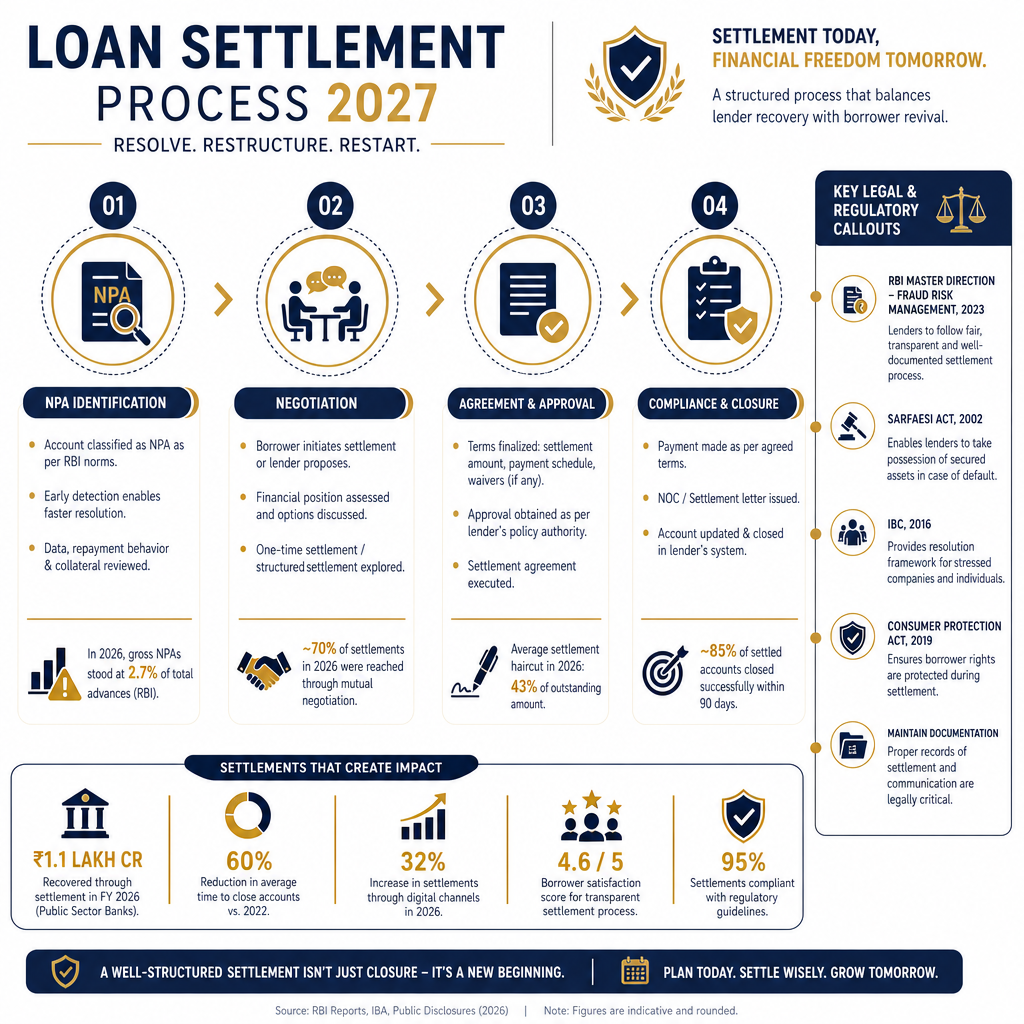
Prepared by AMA Legal Solutions Research & Analytics Team • Data & Compliance Overview

Halt Recovery Agent Harassment Legally
Legal Safeguards and Consumer Rights for Borrowers
Borrowers should fully utilize their rights when engaging in settlements. The RBI's Fair Practices Code obliges banks to ensure fair treatment, comprehensive information, and transparency in all dealings. Additionally, recovery agents are bound by strict conduct guidelines, protecting borrowers from harassment. Mistreatment can be reported first to the lender's grievance redress mechanism, and potentially escalated to the RBI.Common Pitfalls in the Loan Settlement Process
Several common pitfalls impede the settlement process:Impact of RBI Guidelines on Loan Settlements
The RBI's guidelines significantly shape the loan settlement criteria for 2027 by enforcing strict adherence to process regularity and borrower rights protection. This approach ensures that settlements are conducted fairly, with due consideration of existing financial predicaments of borrowers while protecting lender interests.Navigating Negotiations with Financial Institutions
Navigations through negotiations with financial institutions require strategic foresight. Important considerations include:Strategic Conclusion: Securing Legal Assurance with AMA Legal Solutions
In navigating the loan settlement criteria for the year 2027, professional legal guidance proves invaluable. AMA Legal Solutions, with its robust legal acumen and exemplary track record in handling complex settlements, stands as a steadfast ally for borrowers. Equipped with 20+ years of experience, their legal team is versed in current regulatory landscapes and skilled in executing strategic settlements aligned with the latest RBI guidelines. Ensuring that your interests are championed throughout the process of navigating loan settlement criteria for 2027, AMA Legal Solutions remains committed to empowering borrowers with practical and authoritative legal advocacy.Popular Searches & Topics
Commonly searched legal queries and keywords related to this article
Need Strategic Legal Defense for Your Situation?
Our banking & litigation advocates review your notices, debt liability, and recovery issues under complete advocate-client secrecy.

AMA Legal Solutions
Trusted with a 4.7 Google Rating, over 10,000+ Clients Served, 25,000+ Cases Handled, and more than 40+ Years of Experience in providing strategic legal defense and debt resolution across India.
Our media coverages





Frequently Asked Questions
Related Articles

How to Settle Your Loan in 2027: The Best Loan Settlement Guide
Effective strategies and insights for navigating loan settlements in 2027.
Read Article
Guide for Loan Settlement in 2027: Important Points to Remember
Essential strategies and insights for navigating loan settlements in 2027.
Read Article
Loan Default Due to Diwali Credit Card Spent? Make Sure Youre Aware of These Facts
Understanding the implications and solutions for managing credit card debt during Diwali.
Read ArticleAbout Author
Anuj Anand Malik
View ProfileAnuj Anand Malik, Founder of AMA Legal Solutions, is a trusted advocate, loan settlement expert, legal advisor, and banking lawyer. With over a decade of experience in loan settlement, corporate law, financial disputes, and compliance, he leads a result-driven law firm based in India that helps individuals, startups, and businesses achieve legal and financial stability.
Connect on LinkedInNeed Legal Representation?
Evaluate your defense against recovery agents, notices, or structure your loan settlement directly with Senior Advocates.
Call +91-8700343611